
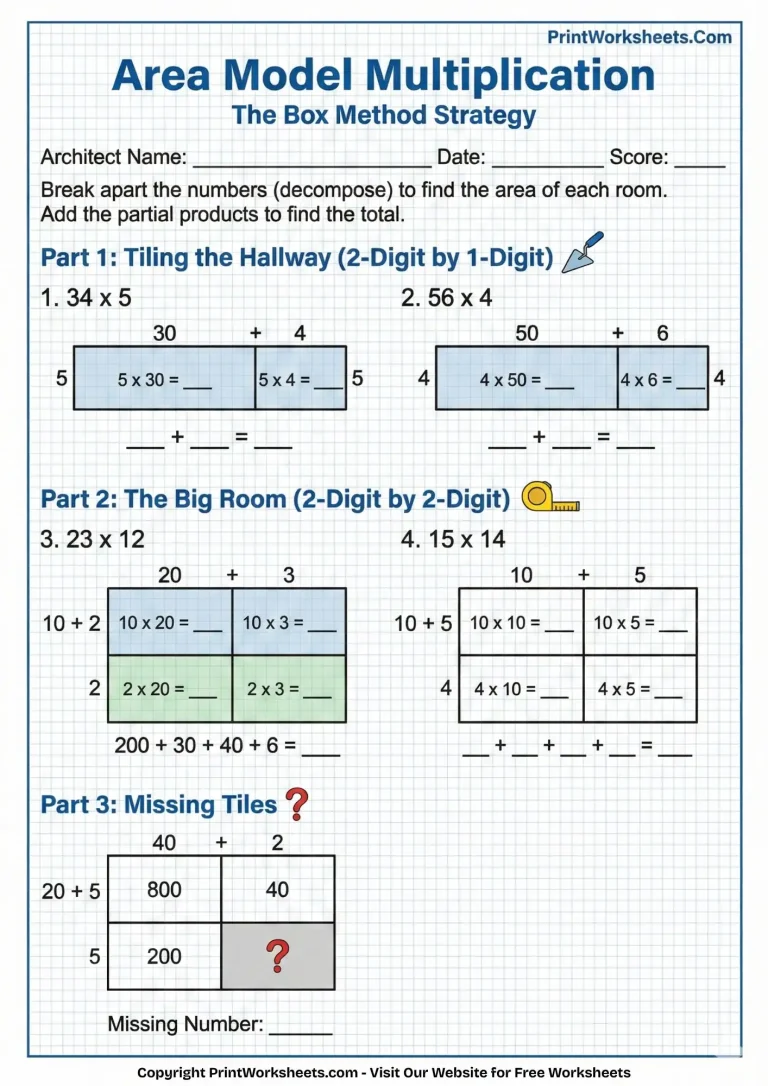
This area model multiplication grade 4 worksheet introduces students to the box method (area model) strategy using a tiling and construction theme. The approach makes abstract multiplication tangible by relating it to calculating the area of a space—each smaller rectangle represents a partial product.
How It Works:
Students first decompose (break apart) two-digit numbers into tens and ones (e.g., 34 becomes 30 + 4). They then multiply each part separately using a grid or box, and finally add the partial products to find the total. This method visually reinforces place value understanding and builds a strong foundation for multi-digit multiplication.
Why It’s Effective for Grade 4:
- Visual & Conceptual: Turns numbers into measurable “tiles” or “areas.”
- Scaffolded: Starts with 2-digit by 1-digit problems before advancing to 2-digit by 2-digit.
- Real-World Context: The tiling/construction theme helps students see math in everyday situations.
Worksheet Sections Explained:
- Tiling the Hallway (2-Digit × 1-Digit): Simple introduction with decomposed numbers.
- The Big Room (2-Digit × 2-Digit): Expands the model with more boxes and partial products.
- Missing Tiles: Challenges students to apply the model in reverse to find missing factors.
This area model multiplication grade 4 resource is designed to make multiplication visual, structured, and accessible—perfect for building confidence before moving to the standard algorithm.