





Free Printable Sorting and Matching Worksheets
Build early math and thinking skills with free printable sorting and matching worksheets for preschool and kindergarten. These activities help children compare objects, identify similarities and differences, match related items, and sort objects by attributes such as size, color, shape, and category.
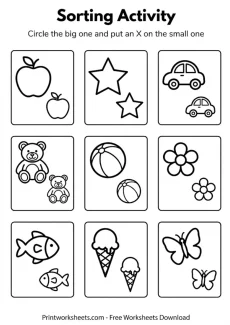
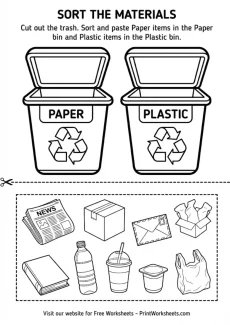
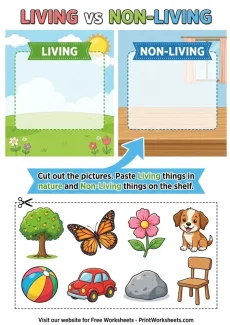
Students can practice visual discrimination and classification through simple, age-appropriate activities including matching pairs, same and different exercises, cut-and-paste sorting, and size comparison.
Sorting Objects by Size, Color, Shape, and Category
Sorting helps young learners notice the features that objects have in common. Children may group objects by size, color, shape, type, or another shared characteristic.
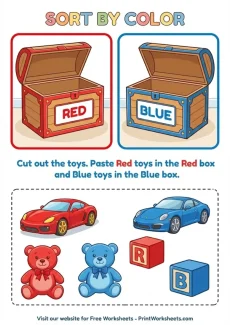
Our sorting worksheets may include activities such as:
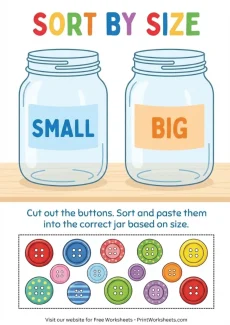
- Sorting big and small objects
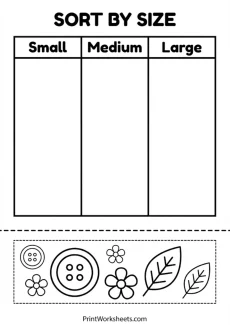
- Ordering small, medium, and large items
- Sorting objects by color
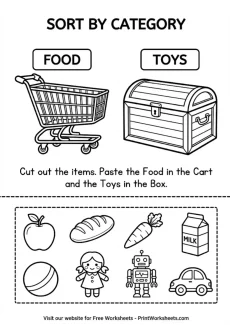
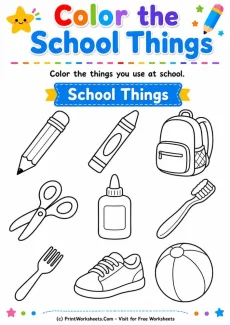
- Grouping objects by category
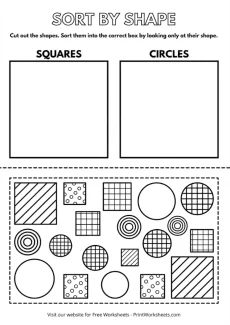
- Sorting shapes by attributes
- Living and non-living sorting
- Matching objects that belong together
Same and Different Worksheets
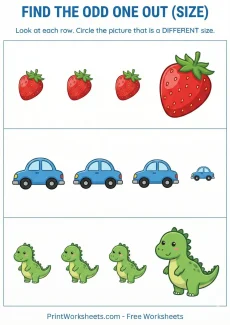
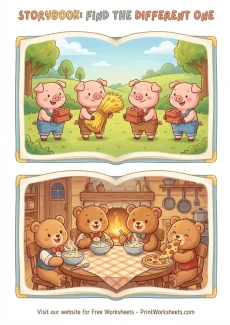
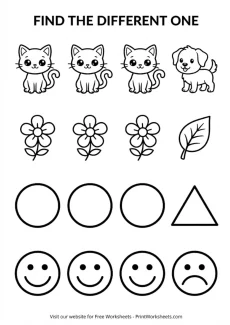
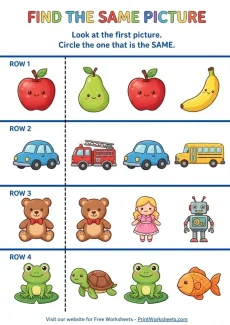
Same and different activities encourage children to look closely at pictures and identify matching or non-matching features. Students may find identical objects, circle the item that is different, match pictures, or identify objects with the same size or shape.
These visual activities can support attention to detail, comparison skills, and early problem solving.
Matching Activities for Early Learners
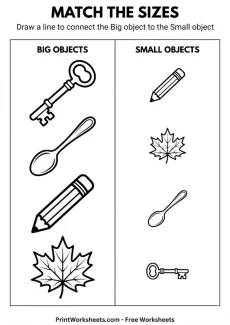
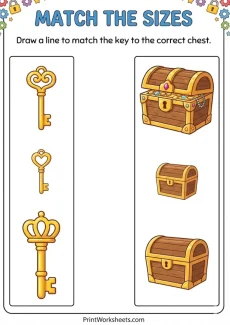
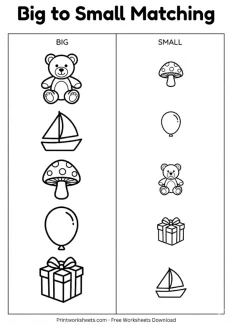
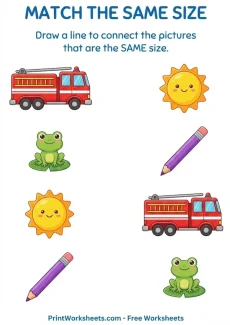
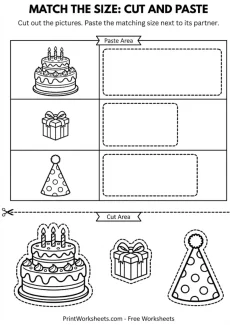
Matching worksheets give children practice connecting objects based on a shared relationship. Students may match identical pictures, objects of the same size, shadows with objects, or items that naturally belong together.
Many matching activities also involve drawing lines between pairs, which gives young learners additional pencil-control practice.
Size Sorting and Comparison
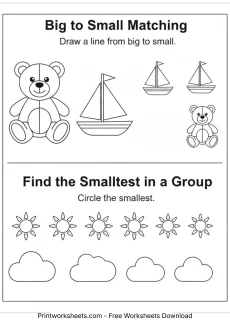
Size is one of the easiest attributes for young children to compare. Activities involving big and small or small, medium, and large help students develop comparison vocabulary and prepare for more formal measurement concepts.
For more activities focused specifically on comparing size, explore our
Size Comparison Worksheets.
Why Sorting and Matching Matter
Sorting and matching are early classification skills that children use before working with more advanced math concepts. When students decide why objects belong together, they practice observing attributes, recognizing patterns, making comparisons, and explaining relationships.
These skills can support later work with counting, measurement, patterns, and organizing information.
How to Use Sorting and Matching Worksheets
These printable activities can be used for:
- Preschool math centers
- Kindergarten morning work
- Small-group activities
- Independent practice
- Homeschool lessons
- Cut-and-paste activities
- Early math review
You can also introduce the concept with real classroom objects before using a worksheet. For example, children can sort blocks by color, toys by size, or classroom items by type and then complete a similar printable activity.
Related Early Math Worksheets
Sorting and Matching Worksheets FAQ
What skills do sorting worksheets teach?
Sorting worksheets help children classify objects according to shared attributes such as size, color, shape, or category. They also support comparison, observation, and early reasoning skills.
What age are these worksheets for?
Most of the activities in this collection are designed for preschool and kindergarten students, with some worksheets also suitable for early 1st grade practice.
What is visual matching?
Visual matching asks students to identify objects or pictures that share the same appearance or another common feature. Activities may involve matching identical pictures, shadows, sizes, shapes, or related objects.
Can I use these worksheets with hands-on sorting activities?
Yes. Sorting real objects before completing a worksheet can help children understand the concept. Blocks, buttons, toys, classroom supplies, and other familiar objects can all be used for hands-on sorting practice.