
Free Cross Out Method Subtraction Strategy (Guide)
Subtraction can be a difficult concept for young learners because it is abstract. The cross out method subtraction strategy bridges this gap by turning “taking away” into a physical action.
This guide explains how to teach this strategy step-by-step, moving from concrete pictures to abstract equations.
Step 1: Start with Visuals
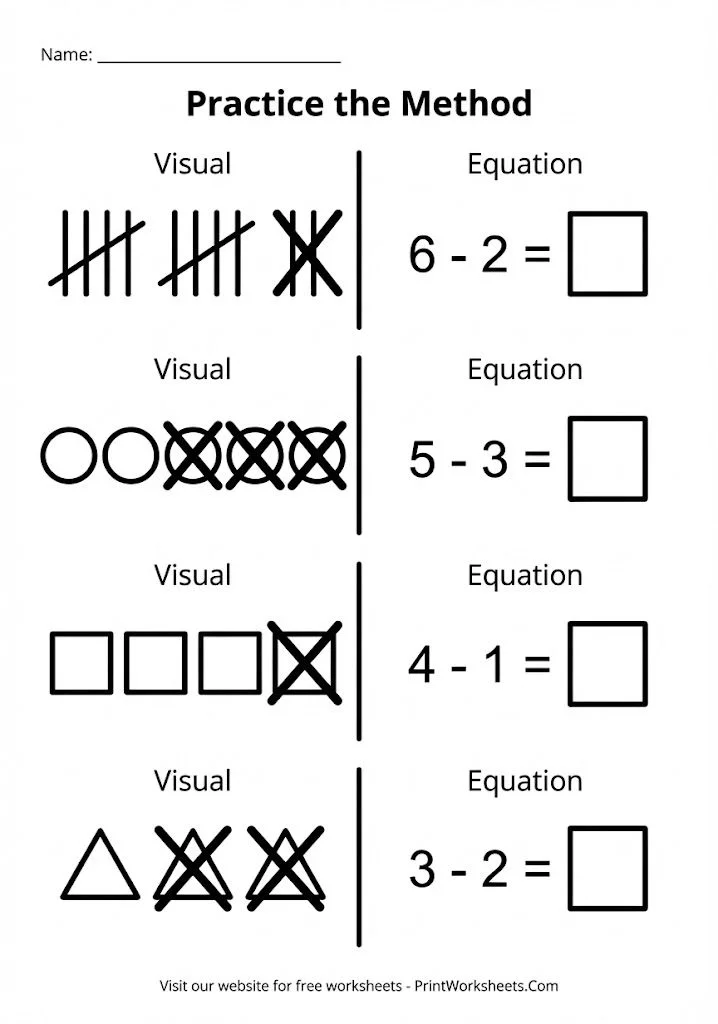
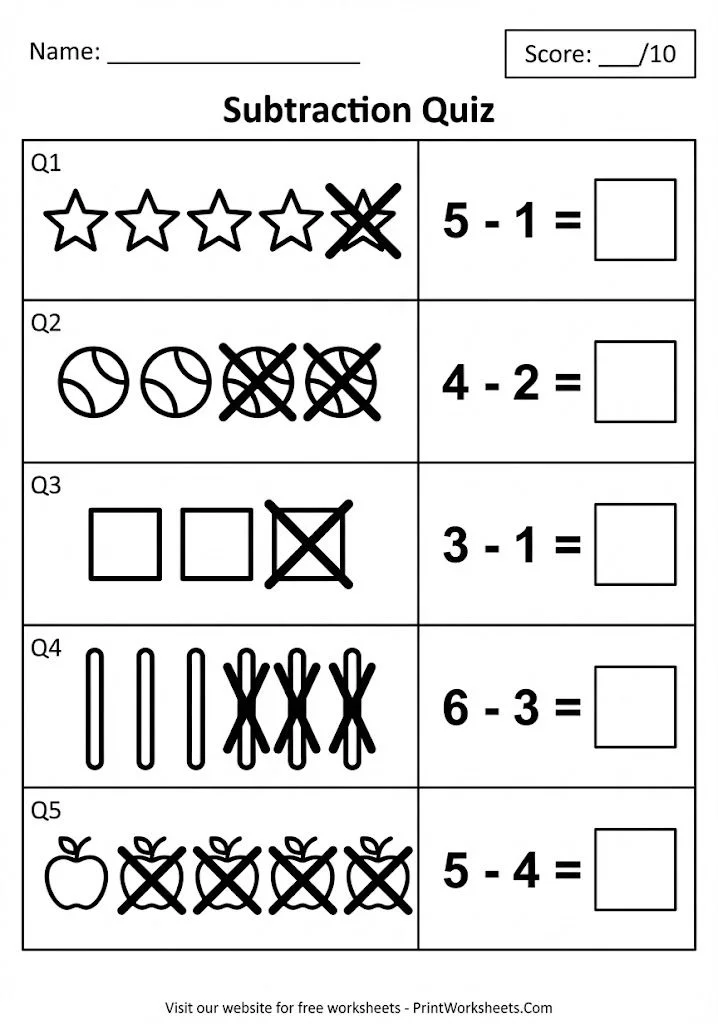
The best way to introduce this concept is with picture subtraction. Using familiar objects helps students understand that “X” means “gone.”
- Resource: Start with our cross out pictures to subtract worksheets using apples and cars.
Step 2: Active Engagement
Once they understand the concept, let them create the math. Ask them to draw lines and cross out the items themselves. This builds a stronger memory of the operation because they are physically drawing the problem.
Step 3: Simplify with Shapes
If drawings are too messy or distracting, switch to geometric forms. Using cross out shapes to subtract (like circles or squares) keeps the focus purely on the numbers without visual distractions.
Step 4: Focus on the Result
The final goal is to solve the equation independently. Students need to perform the action and then write the difference clearly. This connects the visual method to the written number.
Why This Strategy Works
The cross out strategy provides visual proof. When a child sees 5 items and crosses out 2, they can physically count the 3 remaining. There is no guessing involved.
FAQ
When should I stop using the cross out method?
Once students can fluently write the difference without needing to draw or count visuals, they are ready for mental math or vertical subtraction drills. This usually happens after mastering subtraction within 10.
Is this effective for special education?
Extremely. The cross out method is a tactile and visual strategy that supports students who struggle with abstract processing.