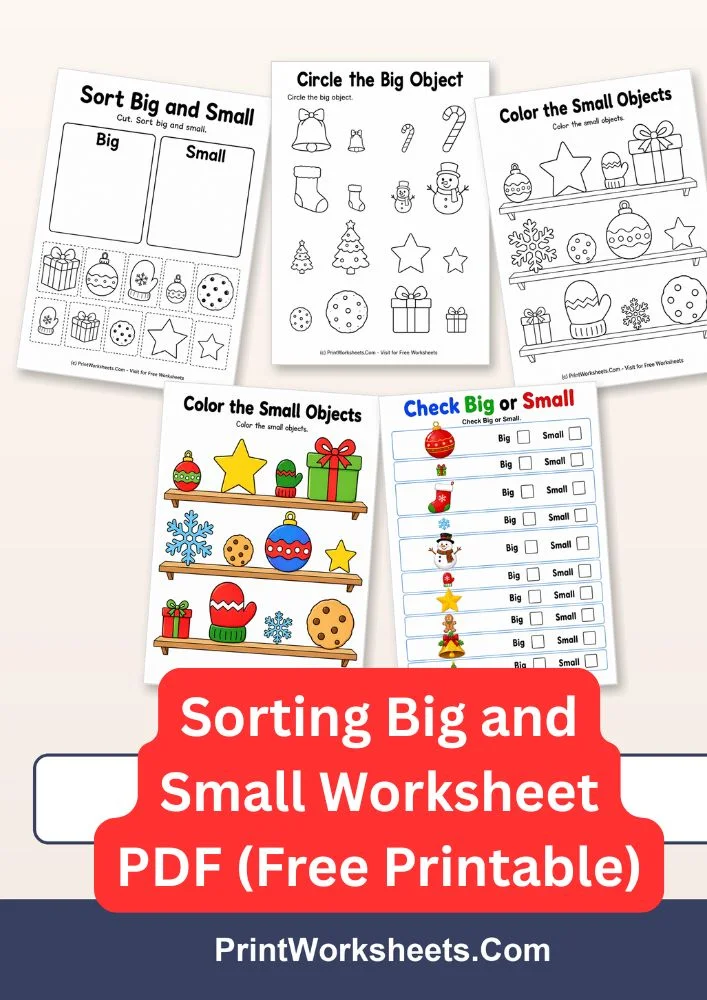
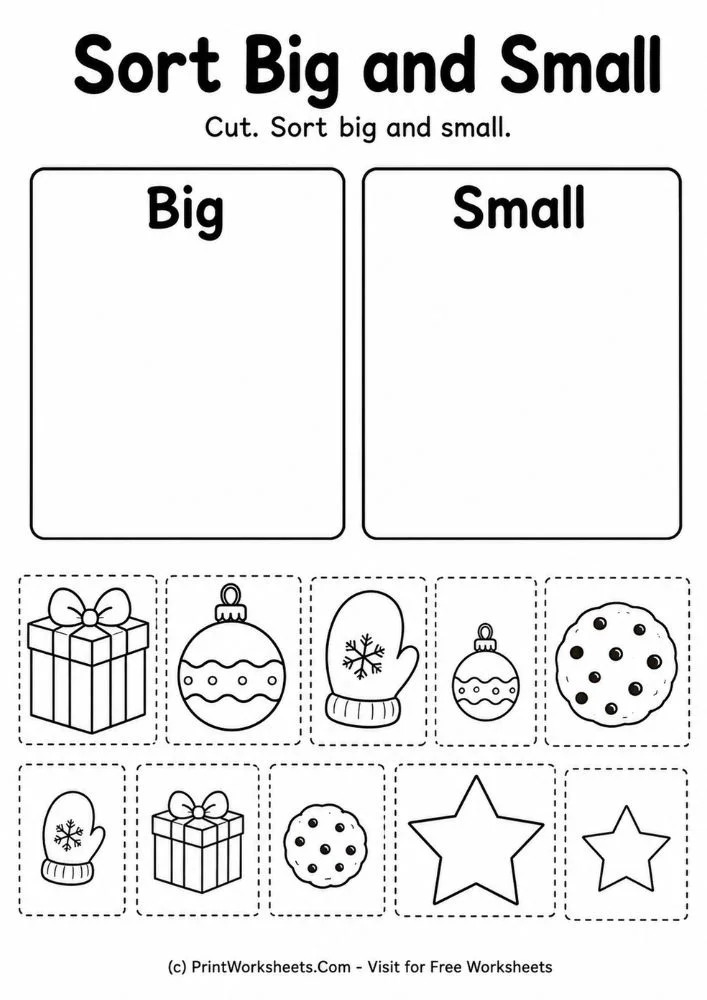
Print a sorting big and small worksheet to provide targeted visual measurement practice for preschool and kindergarten students. Understanding spatial dimensions and relative size is a mandatory early math skill. This free printable PDF pack delivers structured learning centers focusing strictly on physical size comparison. By utilizing cut-and-paste activities, visual circling, coloring exercises, and attribute checklists, educators guarantee comprehensive foundational geometry and measurement development. Printing these ready-to-use math printables ensures young learners correctly identify scale before transitioning to standard measurement tools like rulers.
Educators and parents utilize sorting big and small worksheet pages during morning work, independent math centers, and early intervention assessments. Consistent exposure to direct size comparisons prevents spatial reasoning errors. To build a continuous mathematical progression, pair this specific measurement packet directly with our empty vs full sorting worksheet. Continuous practice isolating physical attributes secures the cognitive logic required for advanced primary grade mathematics.
Inside the Size Comparison Math PDF
Clear formatting and structured winter-themed illustrations make these printables highly effective for early mathematicians. The layouts prevent visual distraction, forcing students to focus entirely on dimensional evaluation. Each printable activity page targets specific early childhood core math standards:
- Sort Big and Small: A physical cut-and-paste math activity. Students cut out ten distinct object tiles (gifts, mittens, cookies, stars). They must evaluate the scale of each item and glue it into the correct “Big” or “Small” classification box. This tactile sorting proves spatial comprehension.
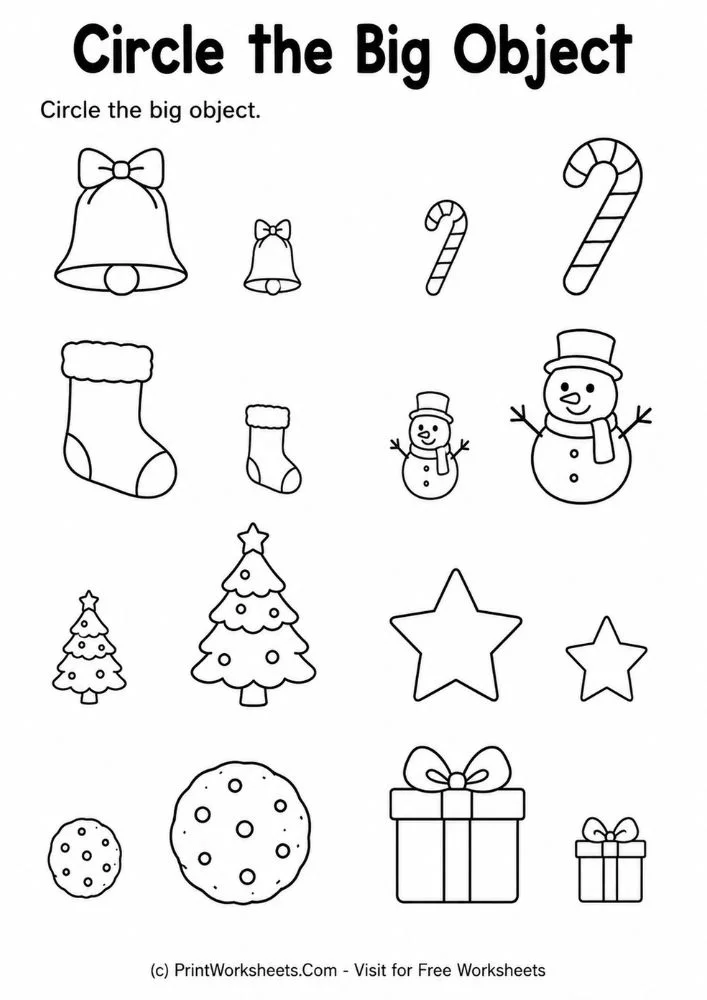
- Circle the Big Object: A direct visual comparison worksheet. Students view paired objects positioned side-by-side. The student must analyze the dimensions and circle the physically larger item in each pair, reinforcing rapid visual discrimination.
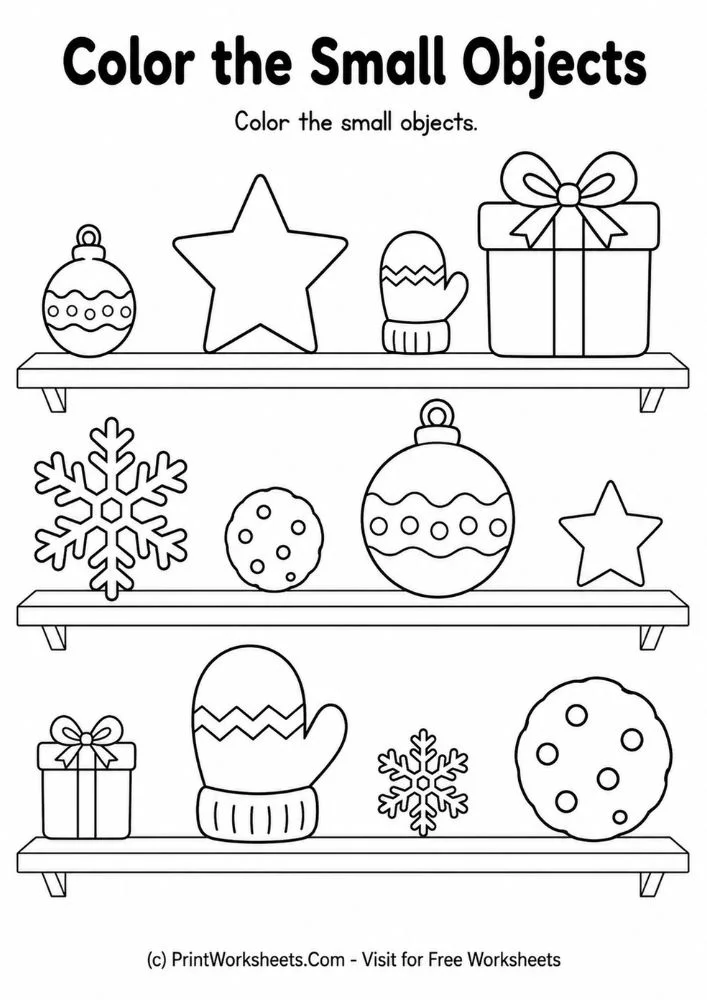
- Color the Small Objects: A targeted fine motor and measurement worksheet. Students view multiple items resting on printed shelves. Following the specific text directive, students must scan the row, identify the smaller scale objects, and color only those specific items while leaving the larger items blank.
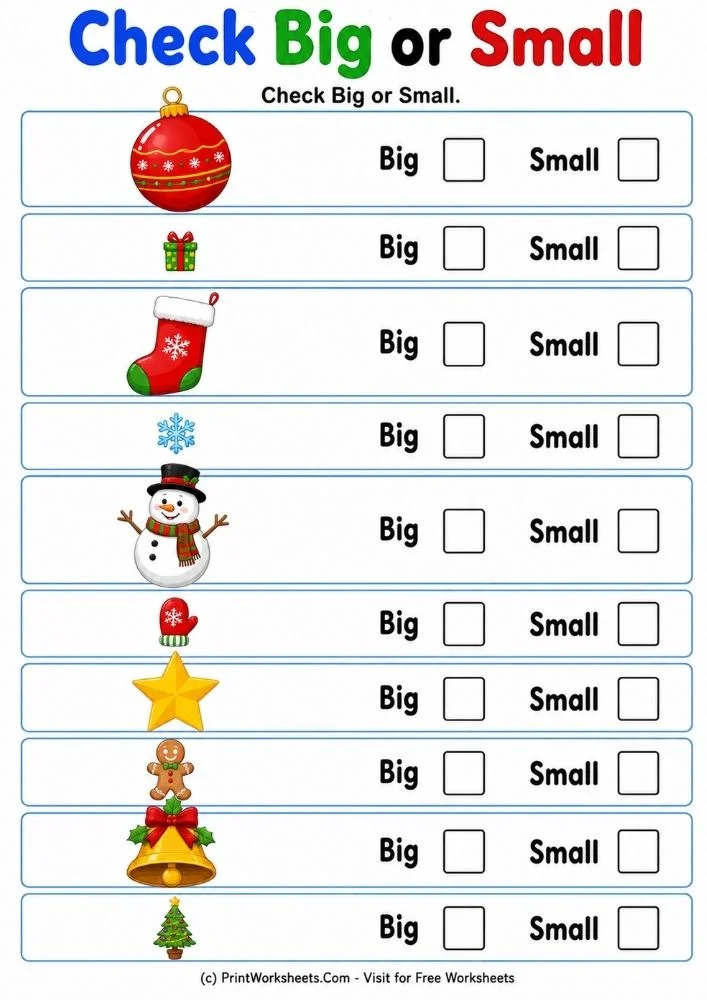
- Check Big or Small: An attribute evaluation checklist. Students view an isolated object on the left margin. They must evaluate its printed size relative to the page and place a checkmark in either the “Big” or “Small” column. This activity mimics formal assessment formatting for kindergarten readiness.
Effective Math Center Implementation
Print these high-resolution measurement pages directly on standard 8.5″ x 11″ copy paper. Integrating physical math manipulatives directly alongside the sorting big and small worksheet guarantees maximum skill retention. Before assigning the “Circle the Big Object” page, provide students with physical classroom items (e.g., a large block and a small block). Instruct students to physically hold and compare the objects before writing on the paper. This concrete tactile method isolates the size rule visually.
To maximize math center efficiency, place the checklist and coloring pages inside heavy-duty dry-erase sleeves. Provide students with fine-tip washable markers. This straightforward preparation allows multiple classroom groups to practice size classification repeatedly throughout the instructional week without consuming excess printer ink or copy paper.
Frequently Asked Questions
Why is sorting by size important for preschool math?
Sorting objects by physical attributes like size establishes the cognitive foundation for data analysis and geometry. Before a preschool or kindergarten student can measure with abstract numbers, they must visually grasp relative scale. Identifying what is big and what is small allows children to process and organize spatial information accurately.
What grade levels use these size comparison worksheets?
These measurement activities align directly with preschool, Pre-K, and kindergarten core math expectations. Preschool educators utilize the cut-and-paste sorting pages to introduce basic physical classification. Kindergarten educators frequently print the checklist and comparison pages for formal early-year assessments to verify spatial reasoning mastery.