These compare two texts worksheets give second graders repeated practice turning what they notice while reading into a clear written response. Instead of stopping after students name one similarity or difference, the activities ask them to sort details, connect evidence to the correct source, use comparison words, plan a response, and revise weak writing. The set works especially well when students are learning that a strong comparison must be supported by information from both texts.
How These Compare Two Texts Worksheets Build the Skill
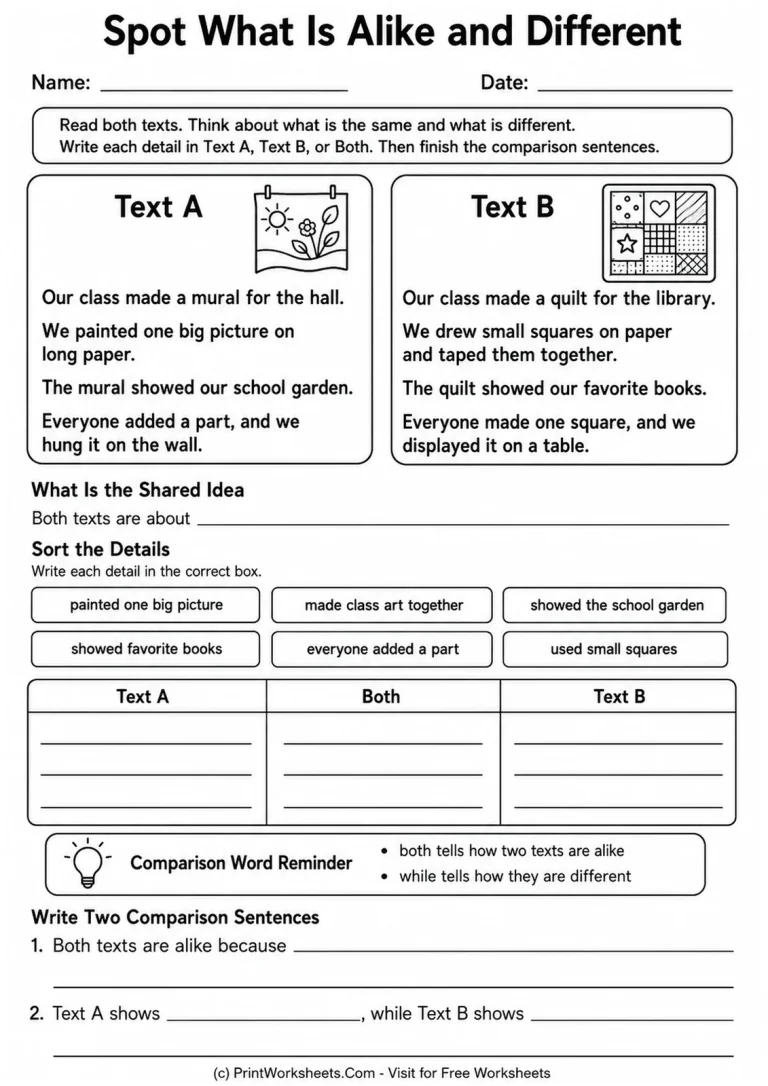
The practice begins with a highly visual comparison between two class art projects. In one text, a class paints a large mural showing the school garden. In the other, students create small squares that become a quilt about favorite books. Students identify the shared idea, sort details into Text A, Both, or Text B, and then complete comparison sentences. This format helps children see that some details belong to only one source while broader ideas can connect both sources.
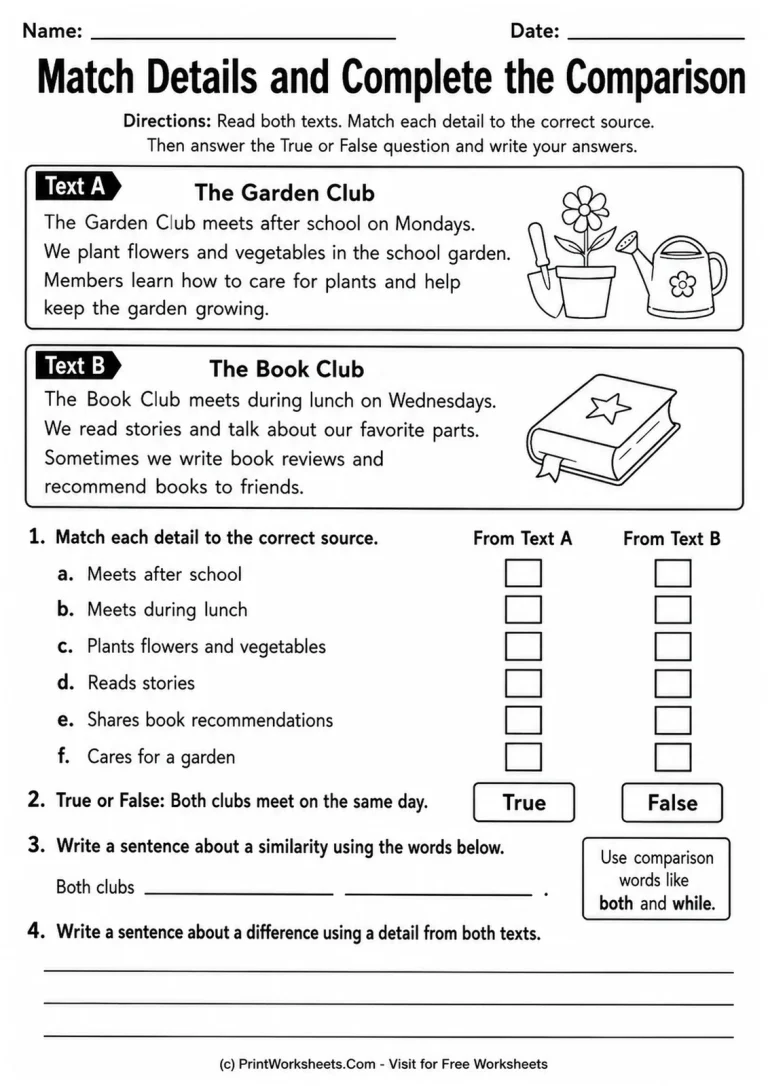
Another activity shifts from art projects to two school clubs. Students read about a Garden Club that meets after school and a Book Club that meets during lunch. They match six details to the correct text, decide whether a statement about the clubs is true or false, and write both a similarity sentence and a difference sentence. Because the source-matching task comes before the writing, students have concrete evidence available when they begin composing their own response.
Move from Comparing Details to Writing a Paragraph
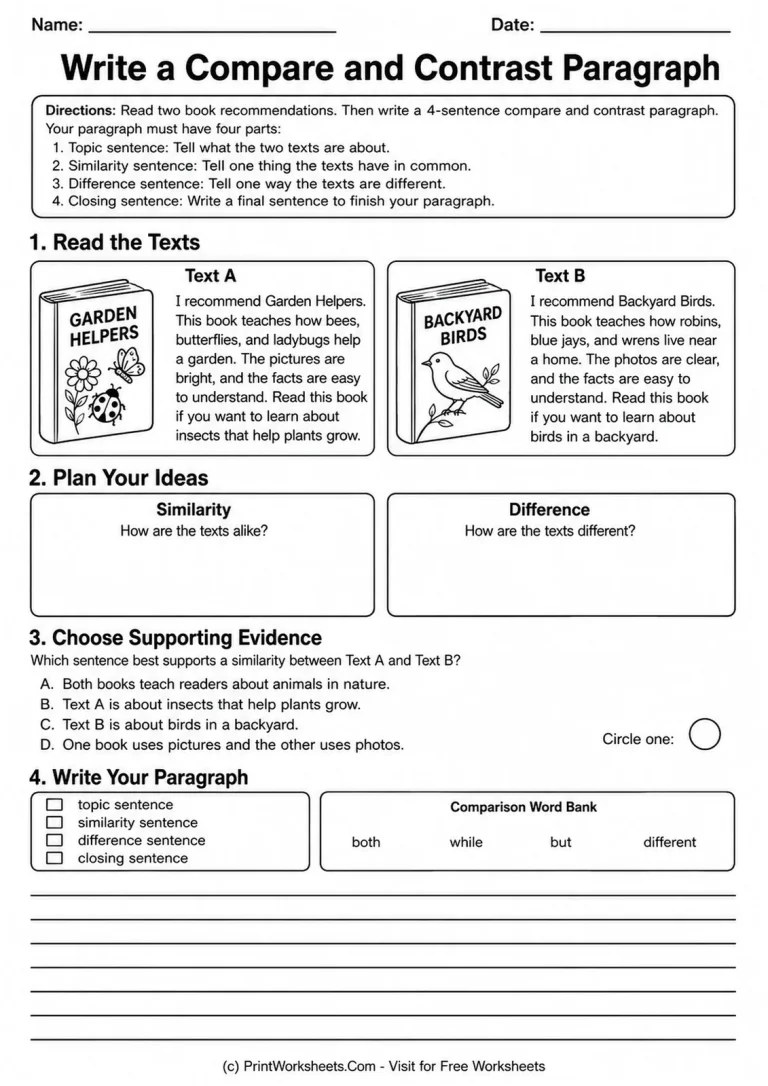
The set also includes a more extended writing task built around two book recommendations. One text recommends Garden Helpers, a book about insects that help plants grow, while the other recommends Backyard Birds, a book about birds that live near a home. Students first plan one similarity and one difference, then choose the sentence that best supports a shared idea between the texts.
After gathering evidence, students write a four-sentence compare-and-contrast paragraph. The structure calls for a topic sentence, a similarity sentence, a difference sentence, and a closing sentence. A comparison word bank with words such as both, while, but, and different provides language support without writing the response for the student. This makes the page useful for children who understand the texts but still need help organizing their ideas into a complete paragraph.
Practice Revising an Evidence-Based Comparison
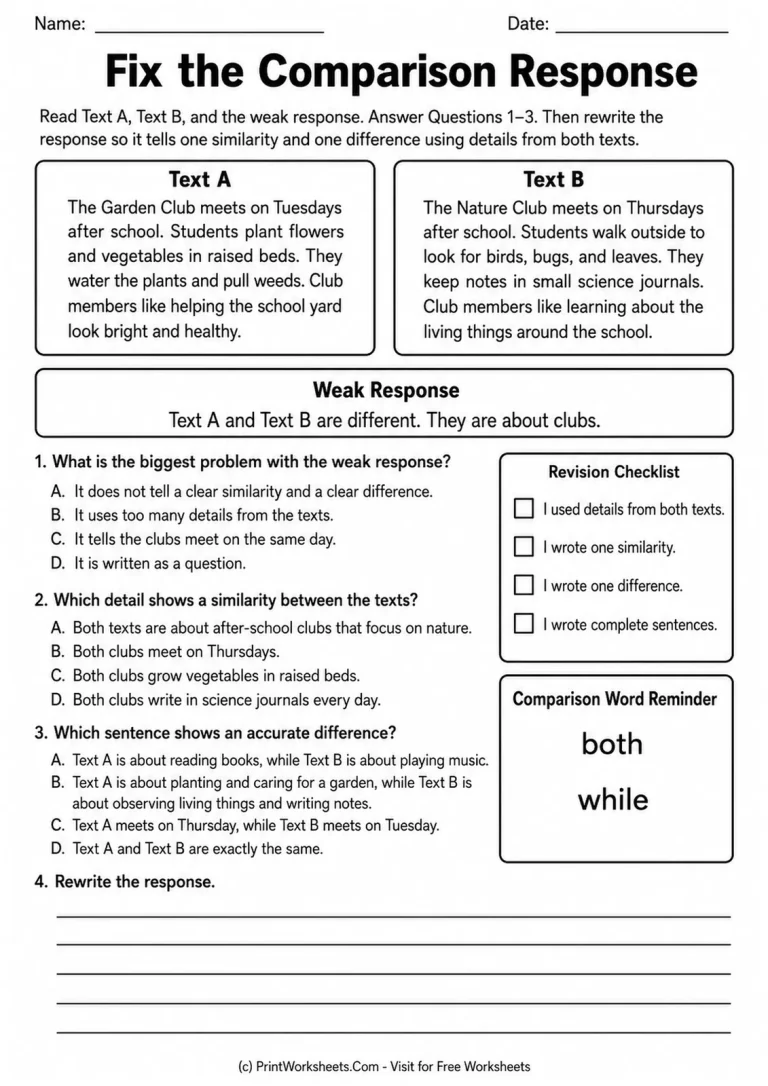
A later activity asks students to improve a weak comparison response instead of starting from a blank page. The paired passages describe a Garden Club and a Nature Club. Students examine the statement that the texts are different and that both are about clubs, then decide what is missing. Multiple-choice questions guide them toward an accurate similarity and an accurate difference before they rewrite the response.
This revision format adds an important layer to the skill. Students must recognize that simply saying two texts are different is not enough. A useful comparison names what the texts have in common, explains how they differ, and uses details from both sources. A checklist reinforces those expectations by reminding students to include evidence, one similarity, one difference, and complete sentences.
Ways to Use the Worksheets in Grade 2
For whole-group instruction, model the first comparison by thinking aloud about which details are unique and which ideas belong in the Both category. During small-group work, ask students to underline one supporting detail in each passage before they write. Independent readers can complete the club or book-recommendation activities and then compare answers with a partner, explaining where each piece of evidence came from.
Differentiation can focus on the amount of writing support rather than changing the reading goal. Students who need extra scaffolding can orally rehearse a sentence with both or while before writing it. More confident writers can add a second similarity or difference, combine two ideas into a longer sentence, or explain why one piece of evidence is stronger than another.
Quick Checks, Extensions, and Exit Tickets
A simple exit ticket is to give students two short familiar texts and ask them to write one sentence beginning with Both and one sentence using while. For an extension, students can return to the paired passages and locate one additional detail that was not used in their original response. They can also revise a classmate’s comparison by checking whether both texts are represented accurately.
Together, these worksheets create a practical path from noticing details to producing an organized comparison. Students read, sort, match, select evidence, write, and revise, giving teachers several ways to see whether a child can move beyond identifying information and actually use it in a Grade 2 writing response.