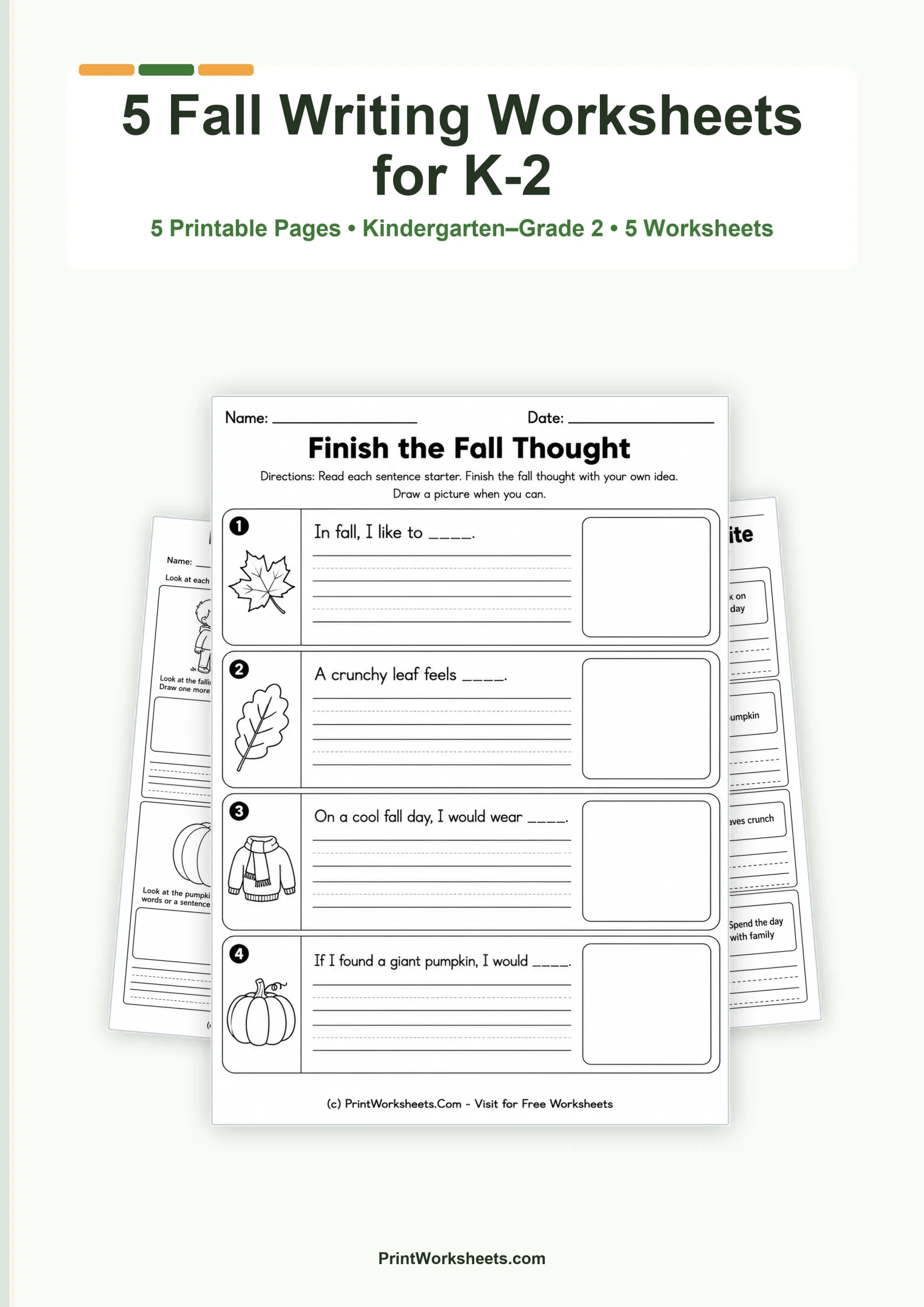
Fall gives young writers plenty to notice, imagine, and describe, and these fall writing prompts turn those familiar seasonal ideas into manageable writing practice for kindergarten through Grade 2. Across five printable pages, students move from looking closely at pictures and adding details to completing sentence starters, choosing between writing ideas, extending simple story situations, and planning a longer piece of their own. The mix of drawing space and handwriting lines makes the set especially useful for children who are still building confidence with written language.
Fall writing prompts with drawing and picture support
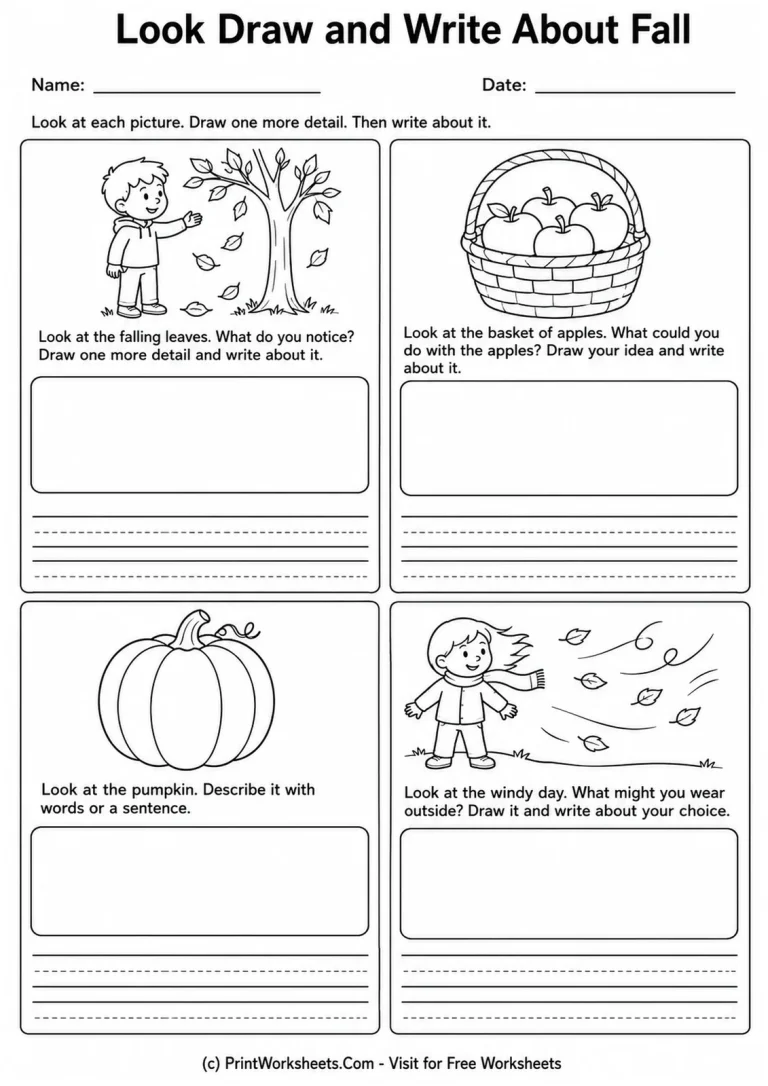
The first worksheet begins with four clear fall scenes: a child watching leaves fall, a basket of apples, a pumpkin, and a windy day. Each prompt asks students to look at the picture, add a detail, and then write about what they notice or imagine. This creates a natural bridge from visual thinking to written language. A child can sketch another leaf, add something near the apples, decorate the pumpkin, or show an outfit for windy weather before putting the idea into words.
This page works well when students need a concrete starting point. Instead of facing an empty writing page, they can use the illustration as evidence for a sentence or short response. Teachers can also invite children to say their idea aloud first, then write it on the lines.
From sentence starters to independent fall writing
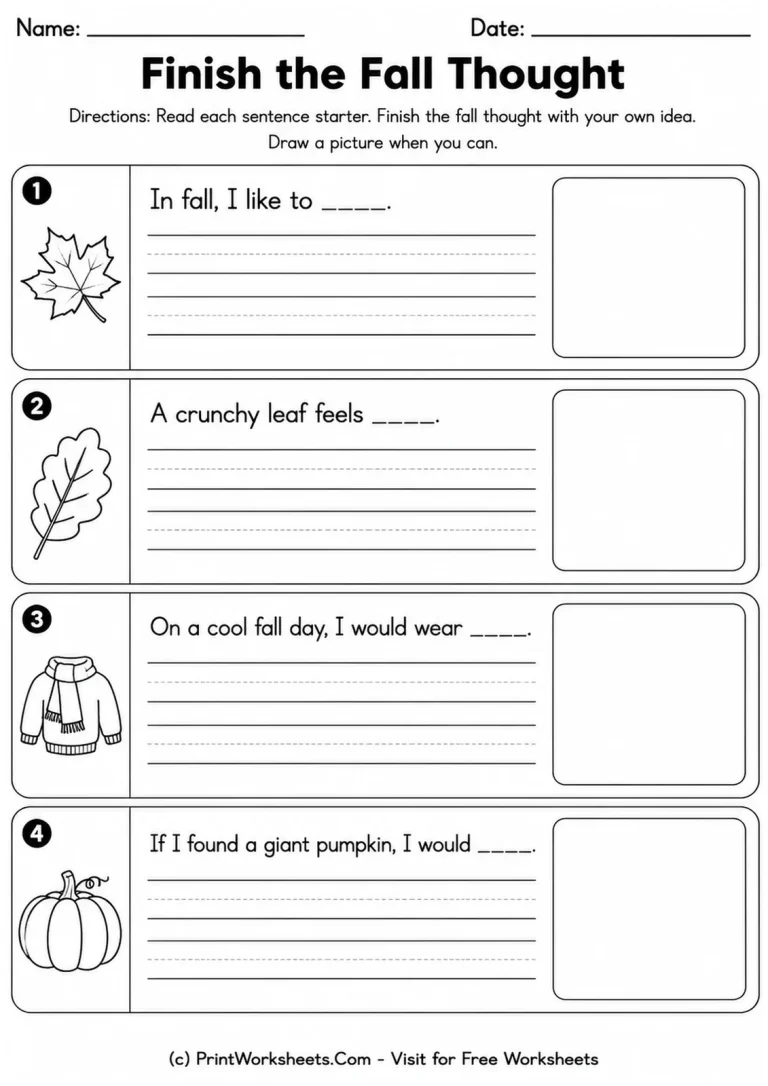
The second page provides four sentence starters that lower the difficulty of getting started. Students complete ideas such as what they like to do in fall, how a crunchy leaf feels, what they would wear on a cool fall day, and what they would do if they found a giant pumpkin. These prompts encourage personal response, descriptive language, and simple imaginative thinking without requiring a single correct answer.
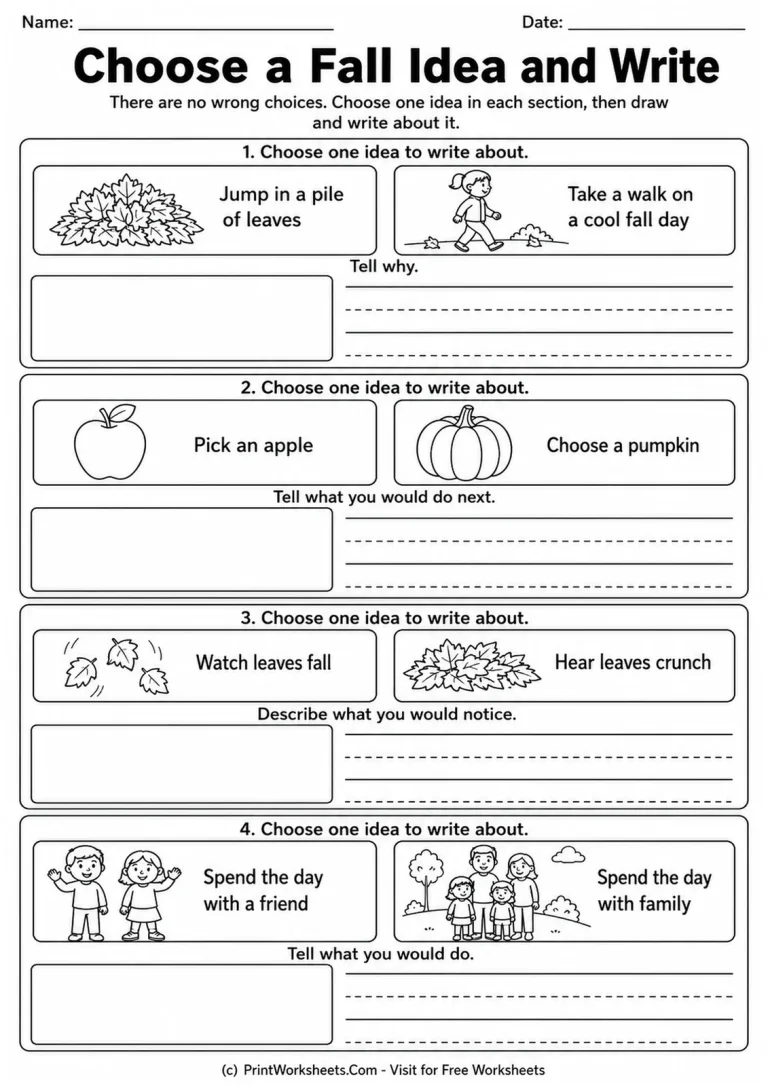
The third page adds choice. In each section, students select one of two fall ideas and then draw and write about it. They might choose between jumping in a pile of leaves or taking a walk on a cool day, picking an apple or choosing a pumpkin, watching leaves fall or hearing them crunch, and spending time with a friend or family. Follow-up directions such as “Tell why,” “Tell what you would do next,” and “Describe what you would notice” help children move beyond naming an idea and give a reason, sequence an action, or add a sensory detail.
Simple story prompts for beginning writers
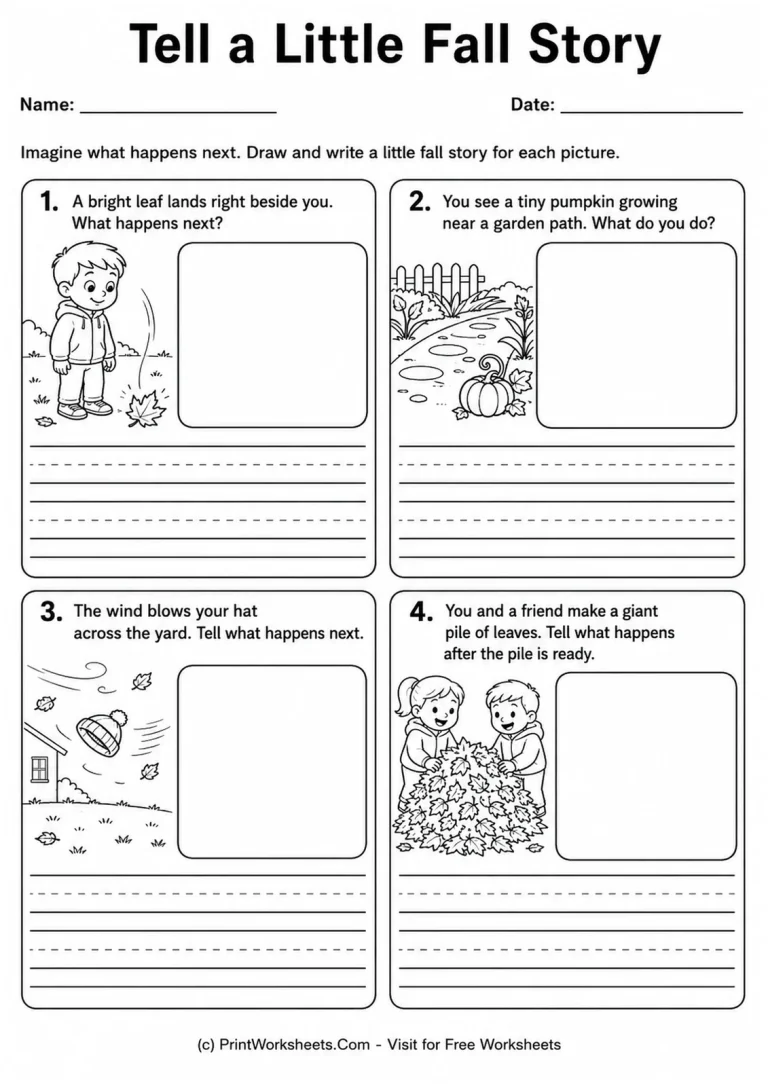
The fourth worksheet shifts into short narrative thinking. Four picture-supported situations ask students to imagine what happens next: a bright leaf lands beside them, a tiny pumpkin grows near a garden path, the wind blows a hat across the yard, and two friends finish making a giant pile of leaves. These scenes provide enough information to spark a story while leaving the ending open. Students can practice cause and effect, sequencing, and character actions in a format that still feels playful.
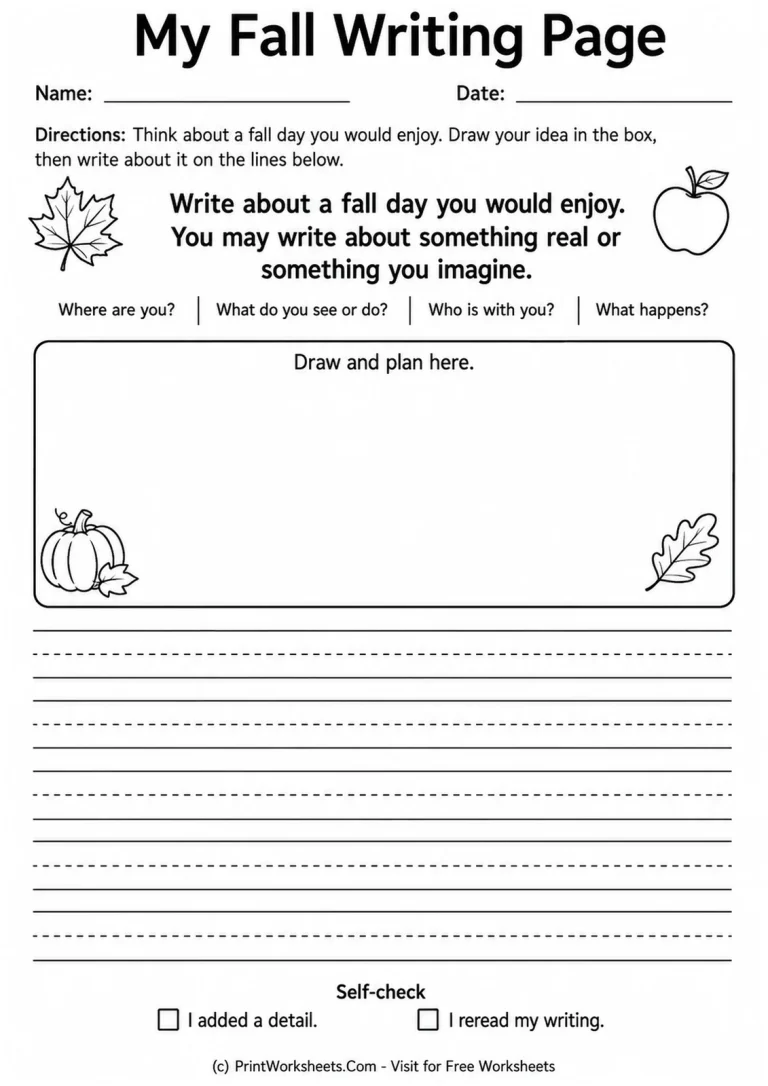
For children who are ready for more independence, the fifth page brings the earlier skills together. Students think about a fall day they would enjoy, decide whether it is real or imagined, and use guiding questions about place, actions, companions, and events. A large planning box gives room for a picture before students write on several primary-style lines. The page ends with a brief self-check asking whether they added a detail and reread their writing, introducing an age-appropriate revision habit.
Ways to use this five-page fall writing set
Because the worksheets vary in support level, they can be used in order or selected individually. Kindergarten students may rely heavily on drawing, oral rehearsal, labels, and short phrases. First graders can complete the sentence starters and choice prompts with one or more complete sentences. Second graders can expand the story situations and independent writing page with additional details, stronger sequence, and descriptive words.
The pages fit easily into a fall literacy center, morning work, independent writing time, small-group instruction, or a seasonal take-home activity. They can also be spread across several days so students experience a gradual progression from observation to personal response and then to narrative writing.
For another seasonal writing option, try Father’s Day writing prompts for 1st grade. Older students who are ready for a different seasonal theme can also use summer vacation writing prompts for Grade 3.
Build confidence with short, meaningful responses
This set is designed around approachable topics children can picture and discuss: leaves, apples, pumpkins, cool weather, friends, family, and outdoor fall moments. The repeated draw-and-write structure gives emerging writers a dependable routine, while the changing prompt types keep the work from feeling repetitive. By the final page, students have practiced observing, choosing, describing, imagining, sequencing, planning, writing, and rereading—all within one consistent fall theme.