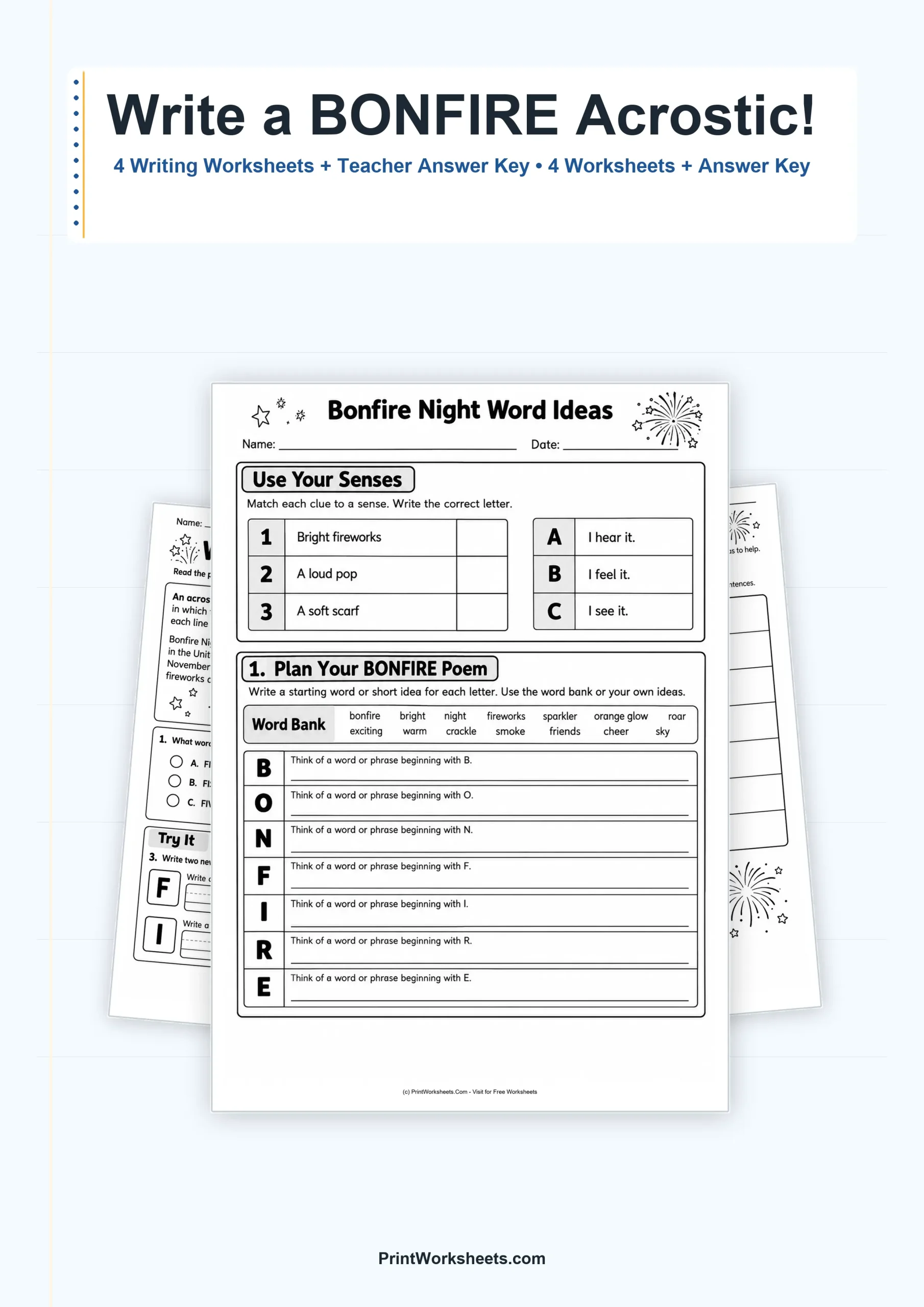
A Bonfire Night acrostic poem can turn bright fireworks, crackling sounds, and a November evening into meaningful creative writing. These free printable worksheets guide children through the process of reading an example, collecting descriptive vocabulary, and writing their own poems. The set includes four student worksheets and a teacher answer key, with activities that move from guided practice to independent poetry writing. It is especially suited to 2nd and 3rd grade English language arts lessons.
Start with a Bonfire Night Acrostic Poem Example
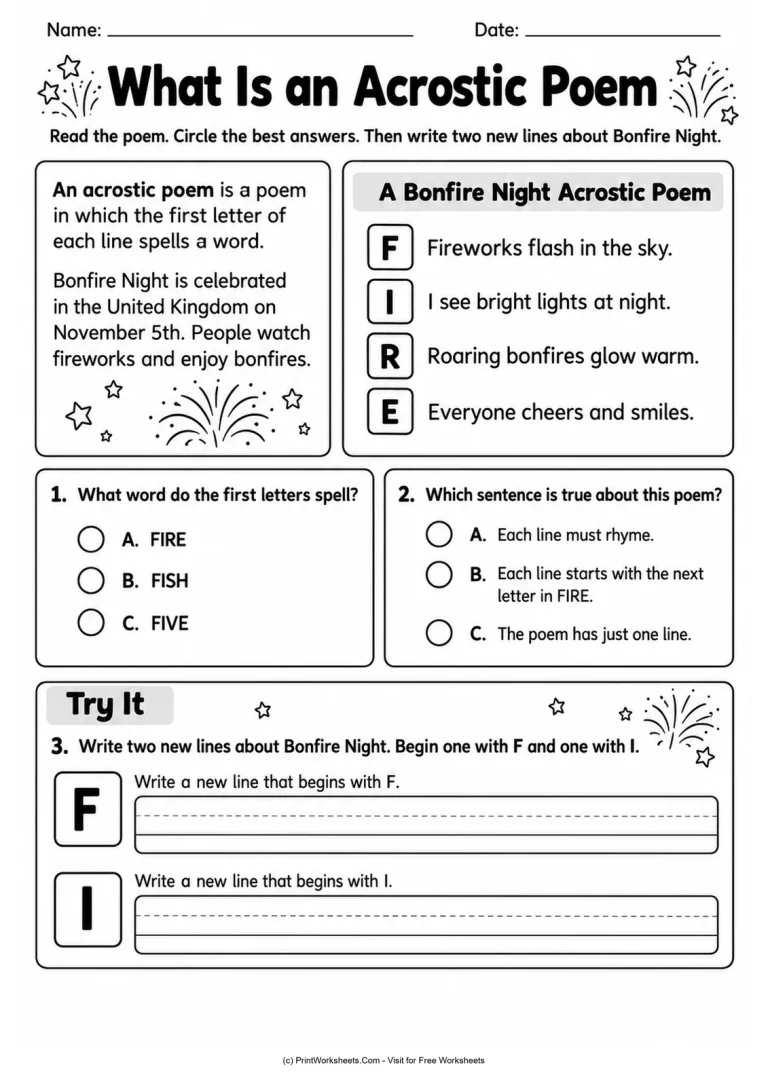
The first worksheet, What Is an Acrostic Poem, introduces the central idea: the first letter of each line combines with the others to spell a word. A short explanation also introduces Bonfire Night, celebrated in the United Kingdom on November 5, and describes fireworks and bonfires as familiar features of the occasion.
Children read a four-line poem spelling FIRE. Its lines describe fireworks flashing, bright lights at night, glowing bonfires, and people cheering. Two multiple-choice questions check whether students can identify the hidden word and understand how the first letters work. The page finishes with a small creative challenge: write two new Bonfire Night lines, one beginning with F and another beginning with I. This helps children practise the structure before attempting a longer poem.
Collect Sensory Words Before Writing
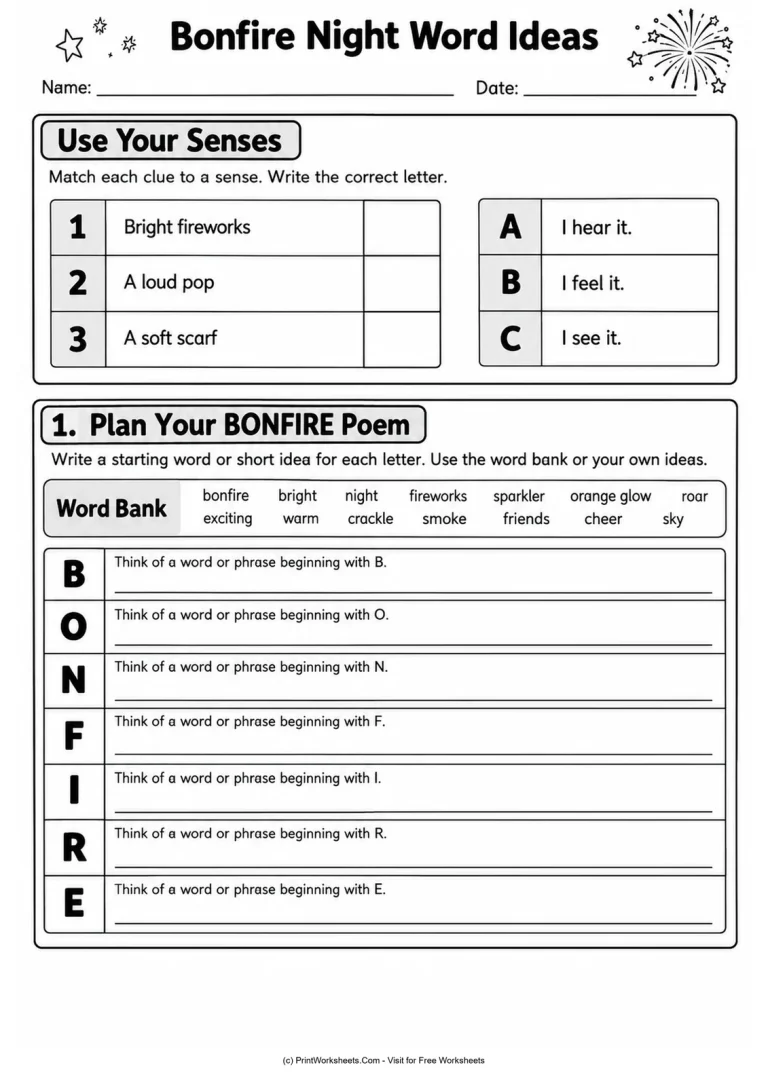
The second worksheet, Bonfire Night Word Ideas, helps students prepare ideas rather than immediately filling empty poetry lines. Its opening activity asks children to connect three clues with their senses. Bright fireworks belong with seeing, a loud pop belongs with hearing, and a soft scarf belongs with feeling. Students match each clue to the correct response.
Next comes a planning organizer for the seven letters in BONFIRE. Each row invites a starting word or short idea beginning with the corresponding letter. A themed word bank includes bonfire, bright, night, fireworks, sparkler, orange glow, roar, warm, crackle, smoke, friends, cheer, and sky.
Encourage students to select words that help a reader imagine the scene. They might consider what the sky looks like, what a fire sounds like, or how a warm scarf feels on a cold evening. Not every word-bank choice will fit every starting letter, so children can also invent their own phrases. The organizer works as a useful bridge between discussing vocabulary and composing complete lines.
Write a Seven-Line BONFIRE Acrostic
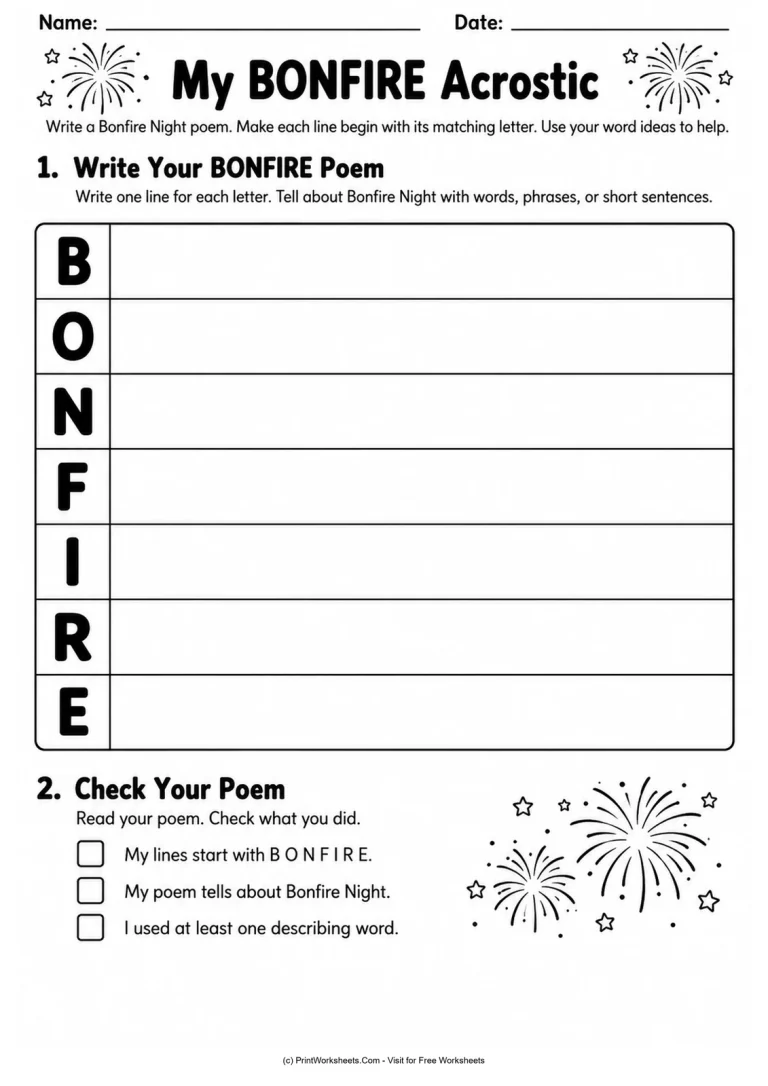
On the third worksheet, My BONFIRE Acrostic, students use their planning ideas to create a complete original poem. The letters B, O, N, F, I, R, and E appear vertically beside seven generous writing spaces. Each line should begin with its matching letter and contain a word, phrase, or short sentence connected to Bonfire Night.
There is no requirement to make the lines rhyme. Students can concentrate instead on choosing meaningful details and using the correct starting letters. A description of glowing fireworks, a roaring fire, or friends enjoying an evening celebration can become part of an original poem.
At the bottom, a three-part checklist reminds writers to check the BONFIRE letter order, make sure their poem stays on topic, and include at least one describing word. This provides a simple way to introduce self-assessment without interrupting the creative process.
Create a NIGHT Poem and Improve One Line
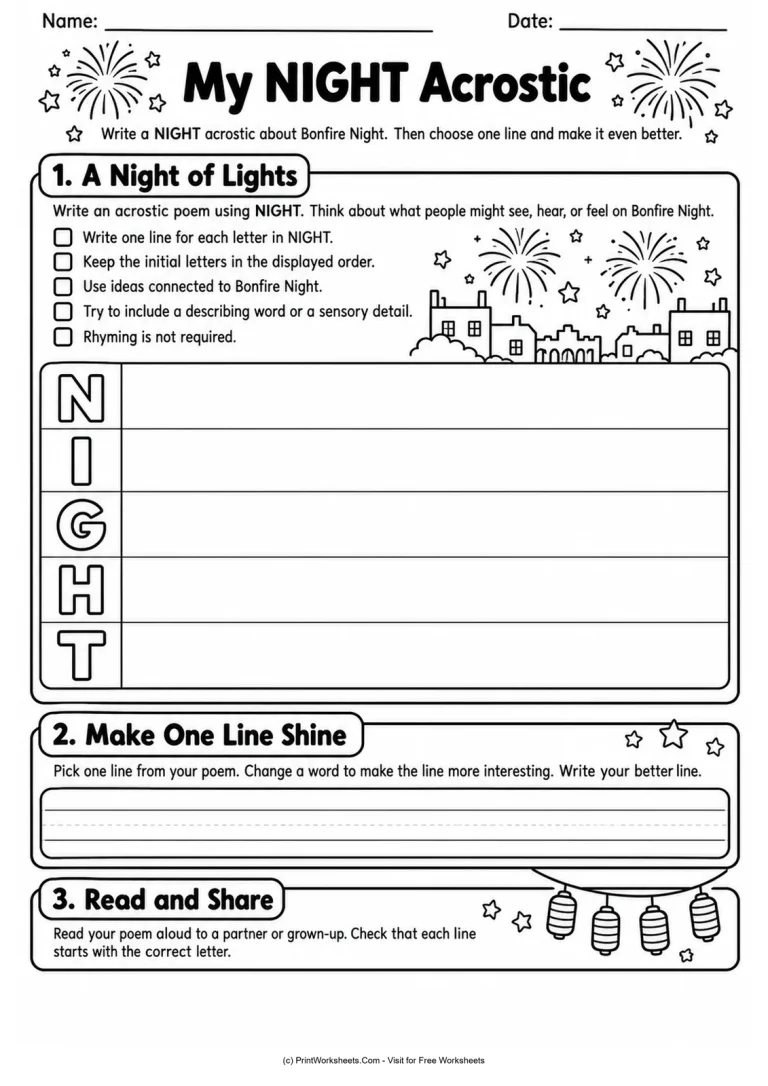
The fourth worksheet, My NIGHT Acrostic, gives students a second opportunity to apply the skill using a shorter five-letter word. Children write one line for N, I, G, H, and T, thinking about what people might see, hear, or feel on Bonfire Night.
The page includes reminders about maintaining the letter order, using relevant details, adding sensory or descriptive language, and remembering that rhyming is optional. Its separate Make One Line Shine activity asks students to choose one line from their poem and replace a word with something more interesting.
This revision task is an important addition to the writing sequence. Rather than treating the first draft as finished, students practise improving expression through word choice. The final Read and Share section encourages them to read their poems aloud to a partner or grown-up and check the starting letters.
Teaching the Worksheets as a Short Poetry Unit
For a classroom lesson, begin by reading the FIRE example together. Point to each initial letter and have students say the completed word. Discuss why an acrostic does not need matching end sounds. Then move to the senses activity, inviting children to explain how they know which sense matches each clue.
Once students have developed a vocabulary bank, let them complete their BONFIRE planning organizer. They can use those ideas on the seven-line writing page before moving to the NIGHT challenge. The shorter second poem gives learners another opportunity to practise the structure while focusing more closely on vivid language and revision.
For younger or less confident writers, completing a few planning rows together can provide support. More confident students can be encouraged to use specific describing words and vary their sentence openings. The activities also work across multiple sessions, allowing time for drafting and improving the poems.
Answer Key and Creative Writing Assessment
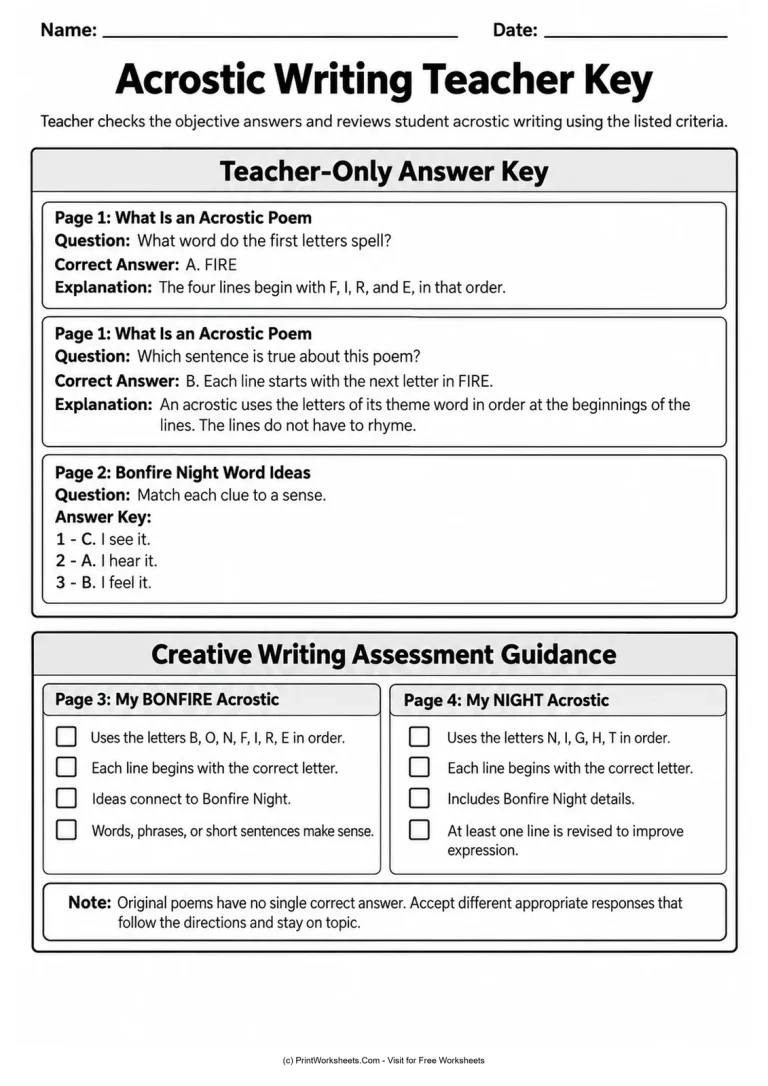
The fifth printable page is a teacher-only answer key. It identifies FIRE and the correct explanation of letter order for the first worksheet. For the senses activity, the correct matches are bright fireworks with seeing, a loud pop with hearing, and a soft scarf with feeling.
Because original poetry has many acceptable answers, the key also provides assessment guidance instead of a single model poem. Teachers can check the BONFIRE and NIGHT letter sequences, relevant ideas, understandable wording, and evidence of revision. This makes the set practical for classroom feedback as well as home learning.
Use these Bonfire Night acrostic worksheets for seasonal literacy practice, a creative writing lesson, a poetry station, or a take-home writing activity. Students finish with two original poems and experience the complete process of exploring a poetic pattern, gathering ideas, writing, checking, and improving their work.