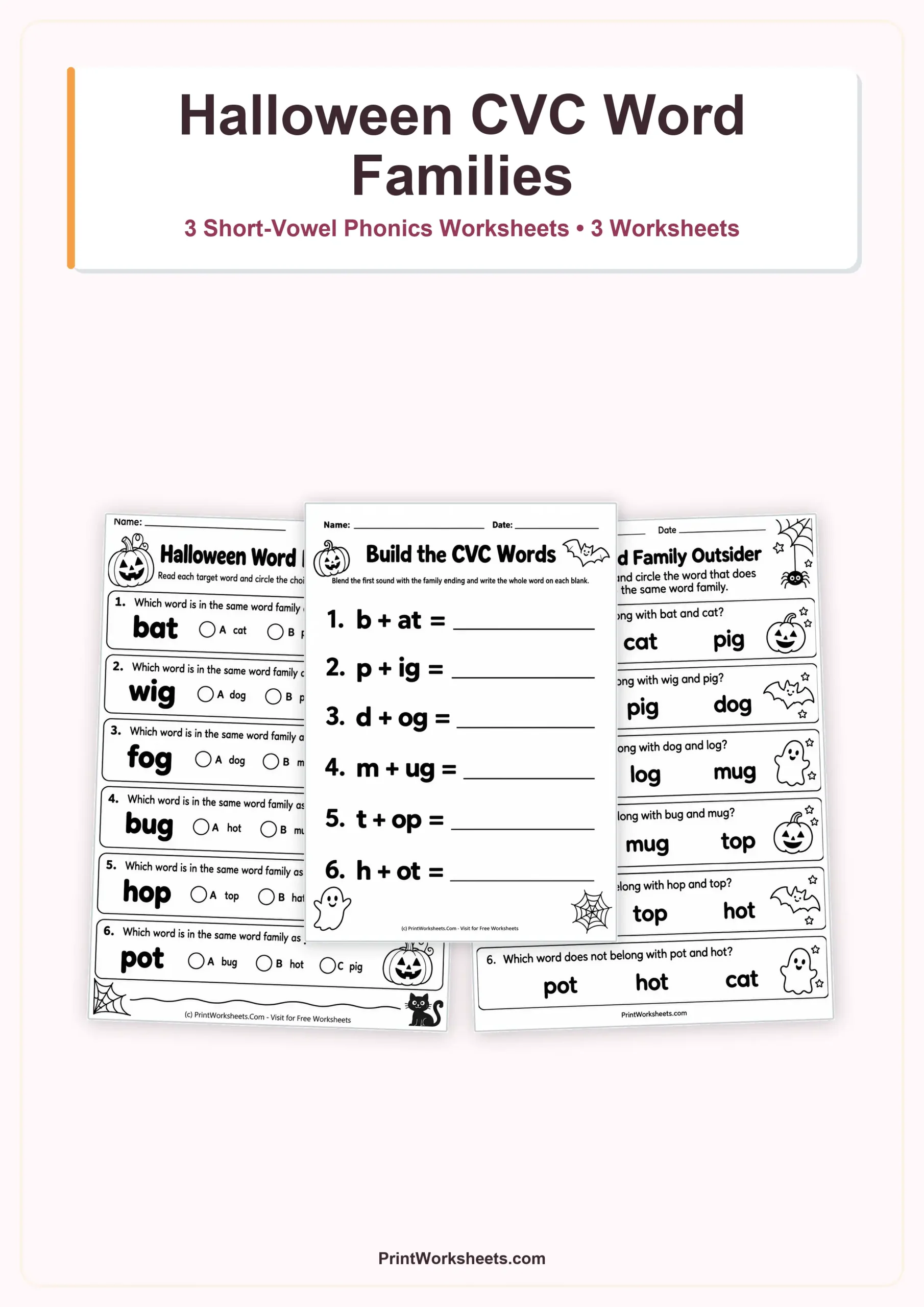
Halloween CVC word families give beginning readers a seasonal way to notice how short-vowel words are built and grouped. This three-worksheet set focuses on six clear families: -at, -ig, -og, -ug, -op, and -ot. Students first recognize words that share an ending, then build complete CVC words from an initial consonant and a family ending, and finally decide which word does not belong in a group. The Halloween theme adds pumpkins, ghosts, bats, spiders, and webs without changing the phonics target.
What Students Practice with Halloween CVC Word Families
The set keeps the reading load short so students can concentrate on the relationship between beginning sounds, short vowels, and final consonants. Across the pages, children work with familiar words such as bat, cat, wig, pig, fog, dog, bug, mug, hop, top, pot, and hot. Because the same word-family endings appear in different task formats, students see that a family is defined by a shared ending pattern rather than by position on a worksheet.
Word Family Hunt
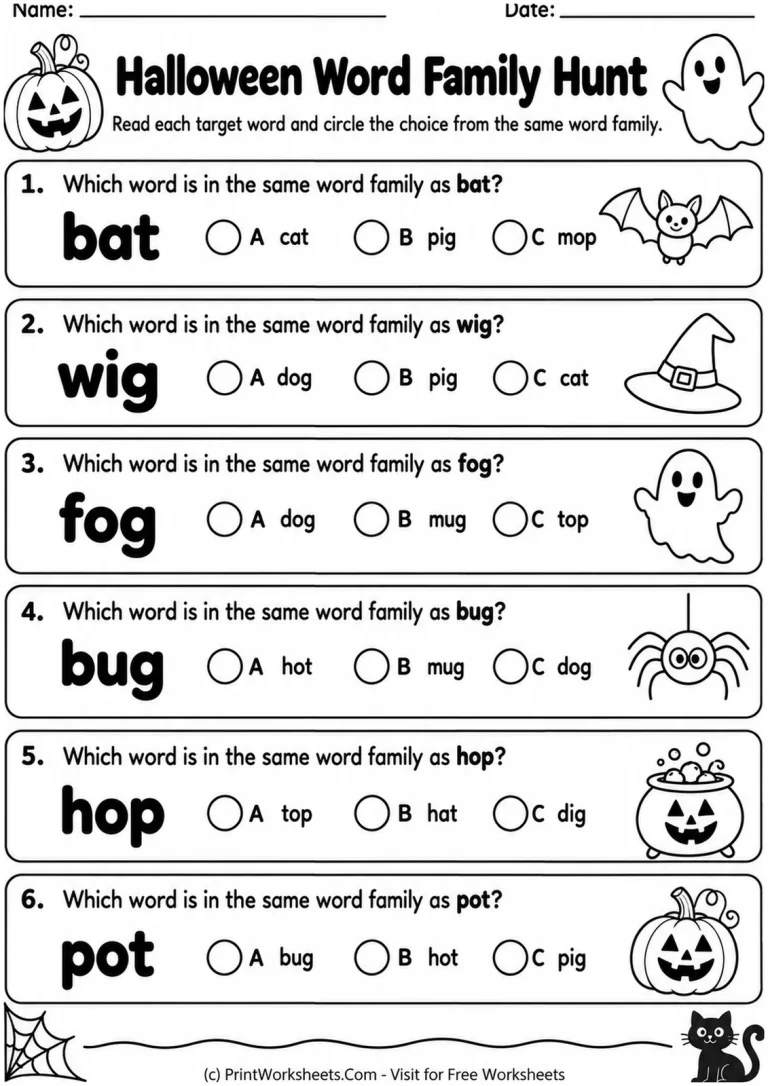
The first worksheet, Halloween Word Family Hunt, presents six target words: bat, wig, fog, bug, hop, and pot. For each target, students choose the one word from three options that belongs to the same family. For example, bat pairs with cat because both end in -at, while fog pairs with dog because both end in -og. The choices make students compare the complete printed words rather than simply copy an ending. This page works well as a quick check after a lesson on short-vowel CVC patterns because every item has one clear match.
Build the CVC Words
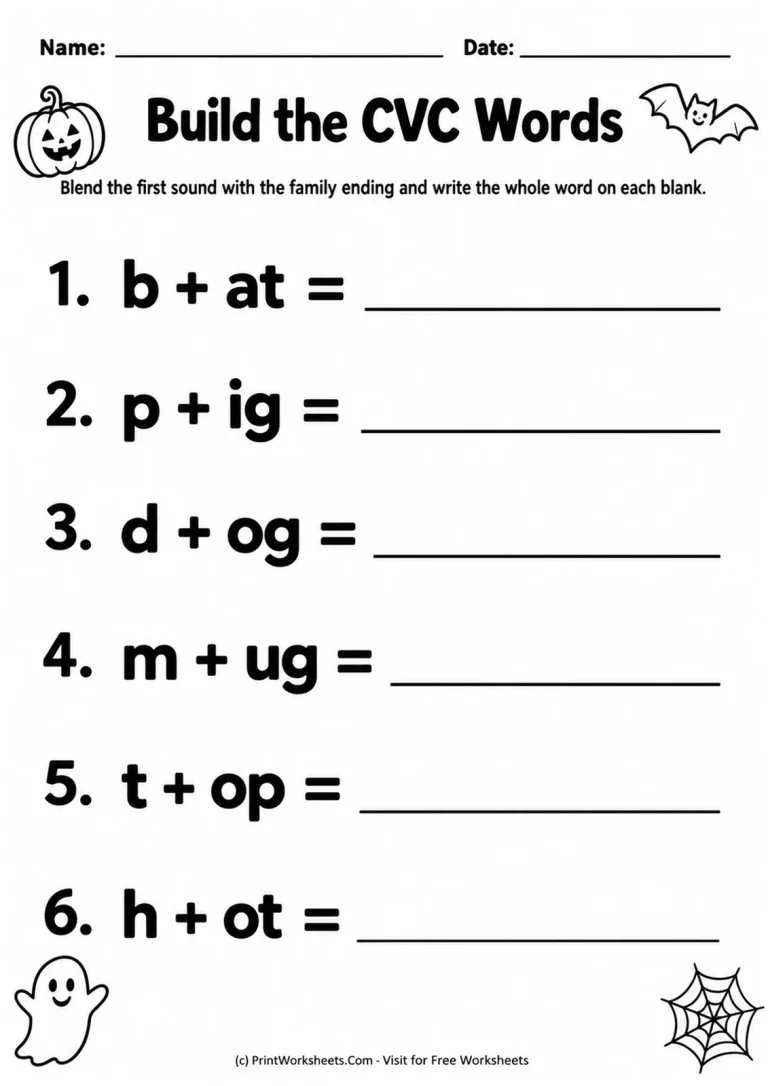
Build the CVC Words shifts from recognition to construction. Students blend a first sound with a printed family ending and write the completed word on the line. The six combinations are b + at, p + ig, d + og, m + ug, t + op, and h + ot, producing bat, pig, dog, mug, top, and hot. This format gives children a direct onset-and-rime practice routine: say the beginning sound, read the ending chunk, blend the parts, and write the whole word. The writing step also reinforces spelling patterns that students met visually on the hunt page.
Find the Word Family Outsider
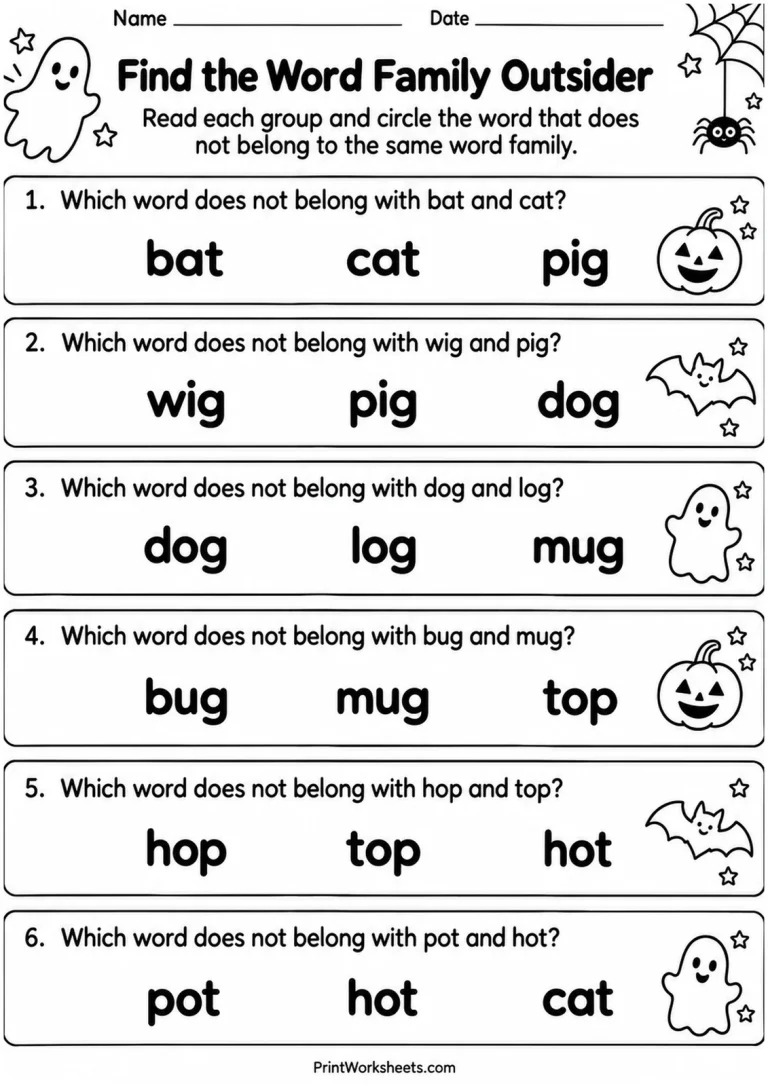
The third worksheet asks students to compare three words and circle the one that does not belong to the same family. Groups include bat, cat, pig; wig, pig, dog; dog, log, mug; bug, mug, top; hop, top, hot; and pot, hot, cat. Students must identify the shared ending in two words and reject the word with a different ending. This task is useful because it requires classification rather than simple matching. Children have to notice why two words belong together and why the third does not.
How the Three Worksheets Build the Skill
The progression moves from selecting a matching family word, to forming a word from sound parts, to sorting words by spelling pattern. That sequence supports both decoding and encoding. Students repeatedly see six common short-vowel endings while changing the first consonant, which helps them notice that a single beginning sound can create a new word without changing the rest of the family pattern. The pages also give teachers an easy way to observe whether a child is relying on the first letter only or actually reading through the vowel and final consonant.
Ways to Use These Halloween Phonics Worksheets
In a kindergarten or early first-grade phonics block, the pages can be used on separate days so the same word families return in a new format each time. The hunt page can follow teacher modeling with a few sample CVC words. The build page fits naturally into guided practice because students can tap or say the two parts before writing. The outsider page can be saved for independent work, a literacy center, or a short exit activity after students have practiced the six endings.
For extra oral practice, ask students to read each correct word aloud after they finish an item. On the building page, they can underline the family ending in each completed word. On the outsider page, students can explain the shared ending in the two words that belong together. These small extensions use the same printed material while making the phonics thinking more visible.
A Focused Halloween Word-Family Set
This set is best for learners who are already beginning to blend simple CVC words and are ready to compare repeating spelling patterns. The Halloween artwork keeps the pages seasonal, while the actual work stays centered on short-vowel decoding, blending, spelling, and word-family classification. With three distinct activity types built around the same six endings, the worksheets can be used as a compact practice sequence rather than three unrelated printables.