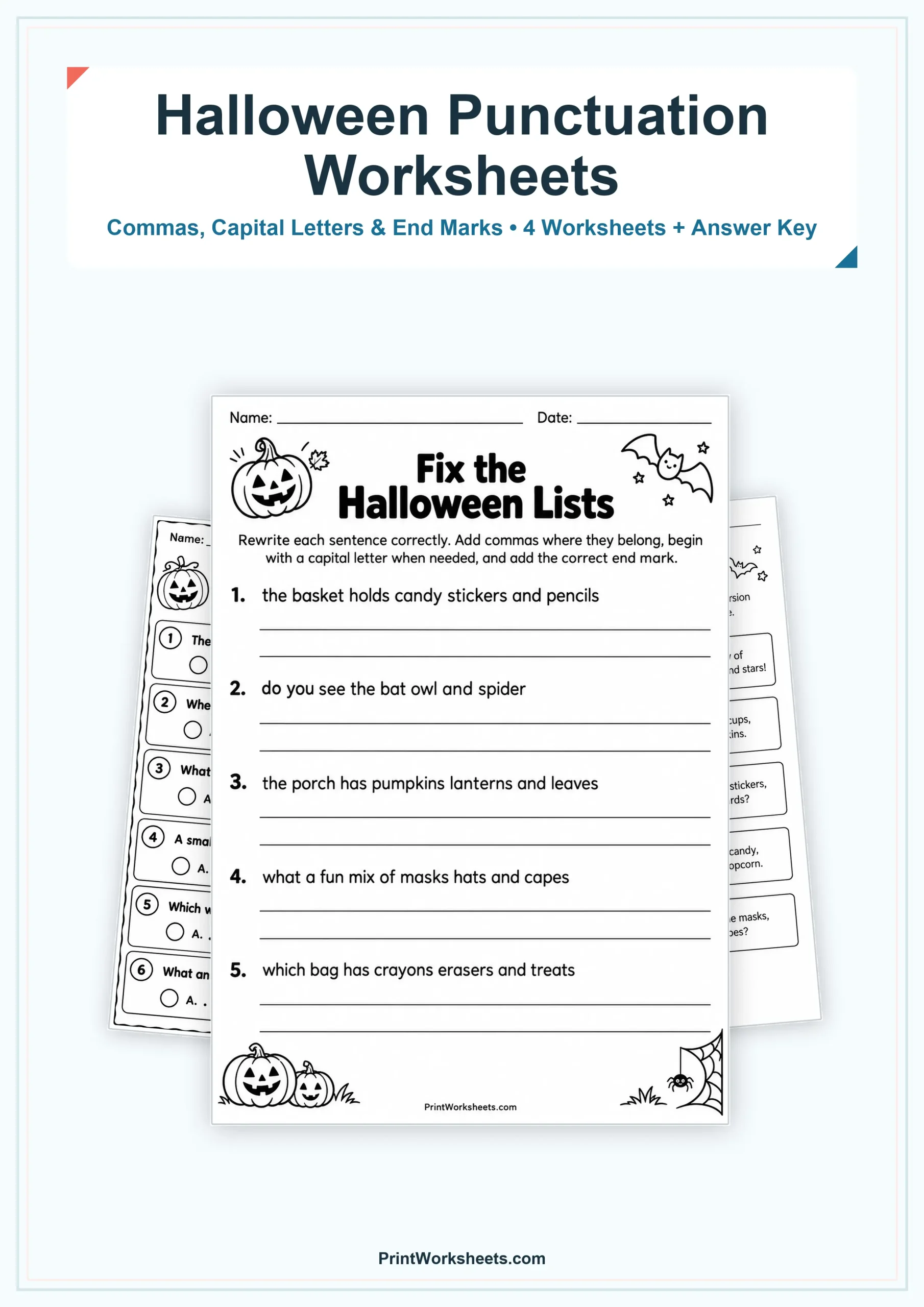
A pumpkin, a bat, and a ghost give young writers a simple reason to pay closer attention to punctuation. These Halloween punctuation worksheets combine familiar seasonal vocabulary with focused practice using periods, question marks, exclamation points, commas in a series, and capital letters. The four student pages move from quick recognition tasks to full sentence correction and independent writing, making the set useful for classroom lessons, literacy centers, homework, or seasonal review.
Halloween Punctuation Worksheets for End Marks and Commas
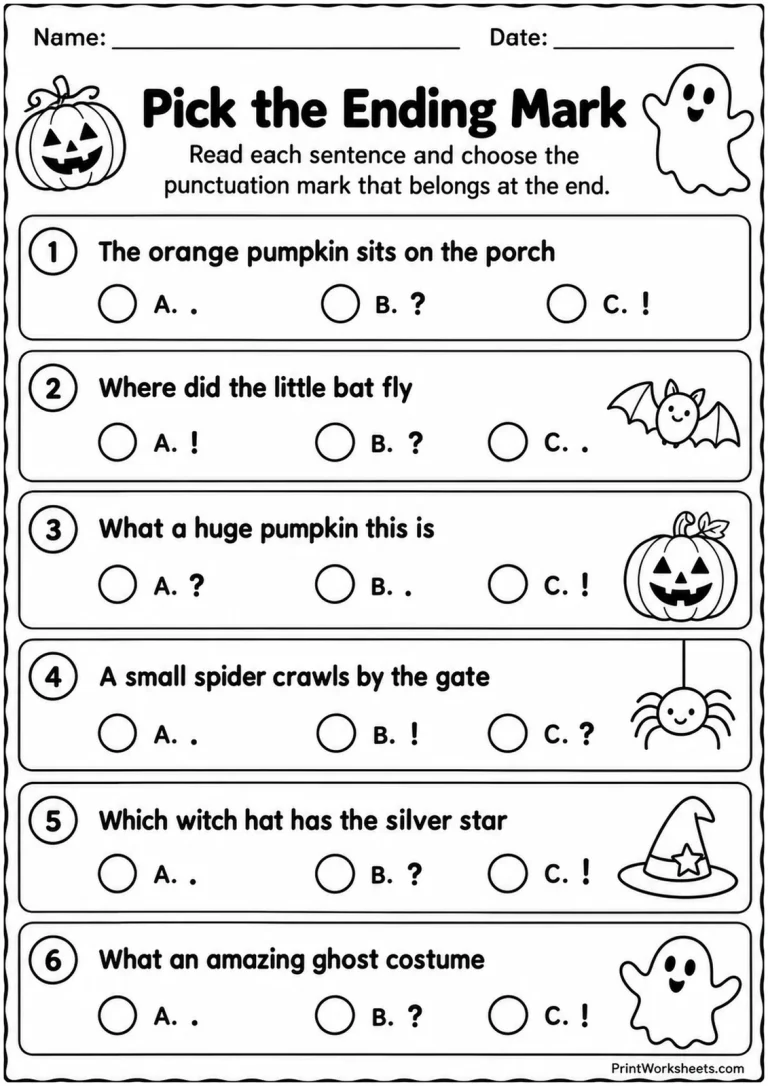
The first worksheet, Pick the Ending Mark, concentrates on one of the most important early punctuation skills: deciding how a sentence should end. Students read six short Halloween sentences and choose a period, question mark, or exclamation point. The examples include statements such as an orange pumpkin sitting on a porch, a question about where a little bat flew, and excited sentences about a huge pumpkin or an amazing ghost costume. Because each item offers all three punctuation marks, students must identify the purpose and tone of the sentence rather than simply copy a mark that is already shown.
This page works especially well as a warm-up, independent practice activity, or quick check before students move into more demanding editing tasks. It also gives teachers a clear way to see whether a child can distinguish statements, questions, and exclamations.
Practice Editing Halloween Sentences
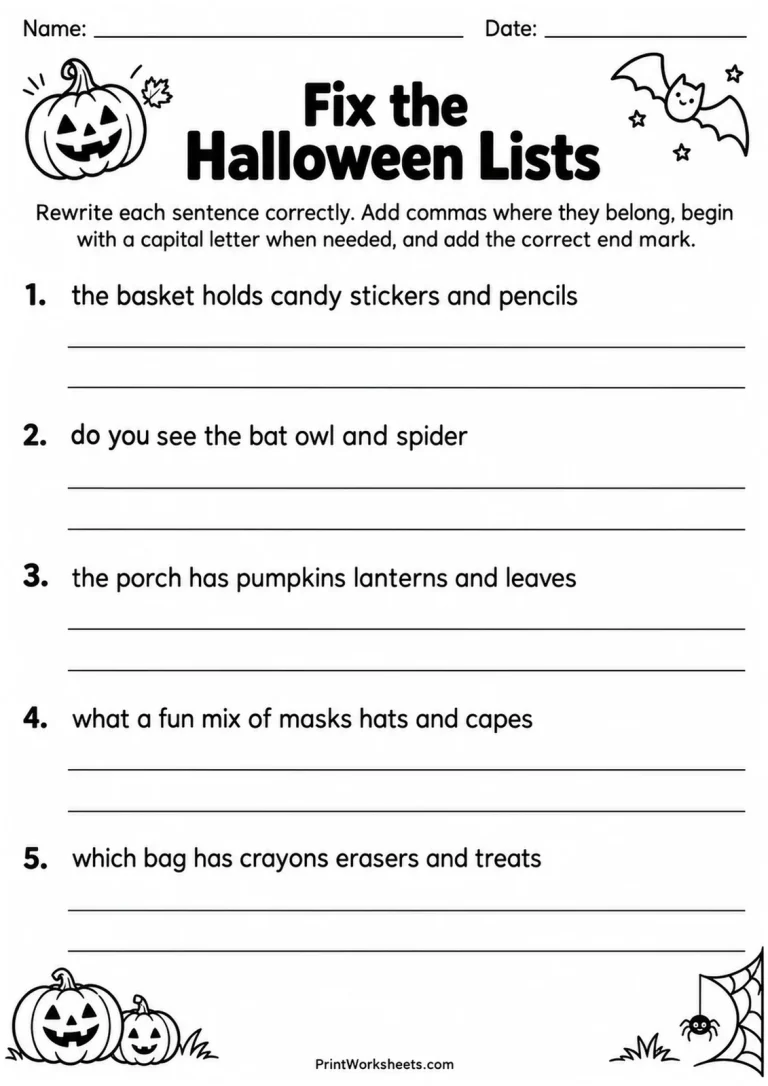
The second worksheet, Fix the Halloween Lists, asks students to rewrite five sentences correctly. Each sentence begins without the necessary capitalization and punctuation, so learners must make several decisions at once. They add a capital letter at the beginning, commas between three listed items, and the correct ending mark.
The Halloween-themed lists include candy, stickers, and pencils; bats, owls, and spiders; pumpkins, lanterns, and leaves; and masks, hats, and capes. Some sentences are statements, while others are questions or exclamations. That mixture helps students understand that punctuation rules work together inside a complete sentence rather than as isolated exercises.
Match Incorrect Sentences to Their Correct Forms
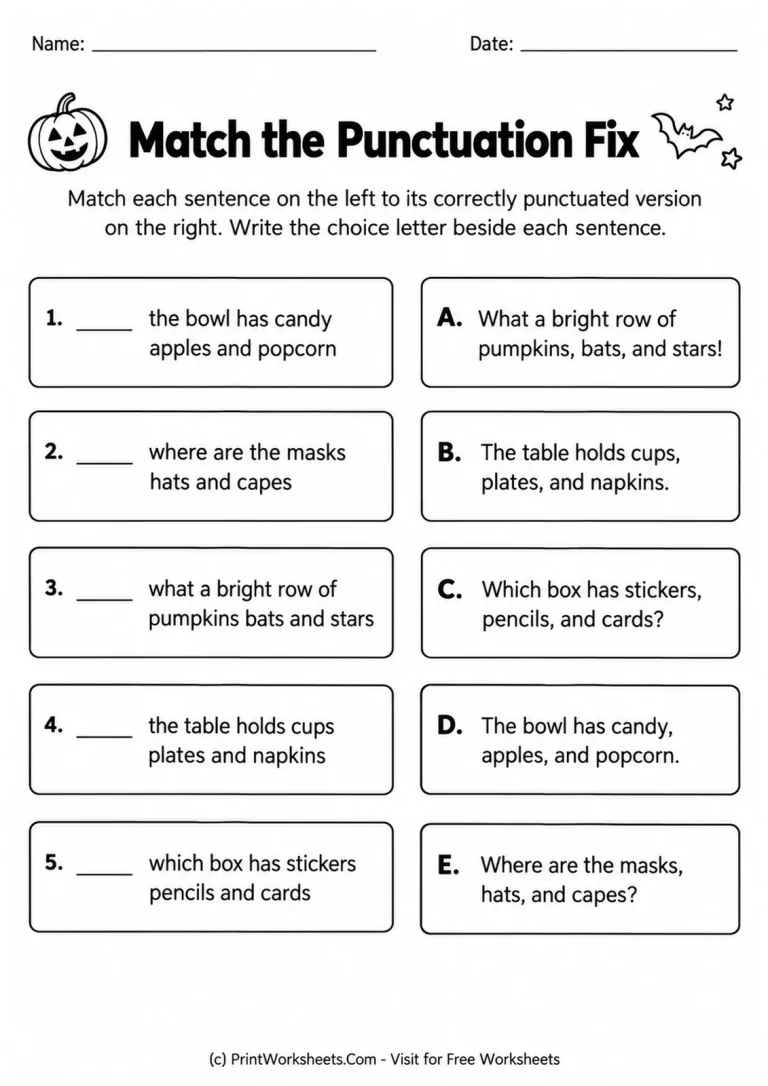
The third page changes the format with Match the Punctuation Fix. Students see five unpunctuated sentences on the left and five corrected versions labeled A through E on the right. They write the correct letter beside each original sentence. The answers are deliberately mixed rather than placed in matching rows, so students need to compare capitalization, commas, sentence wording, and end punctuation carefully.
This matching activity can be useful after direct instruction because it gives students practice recognizing fully corrected sentences without requiring them to rewrite every example. It also introduces another way to review the same punctuation skills before independent writing.
Move from Editing to Original Sentence Writing
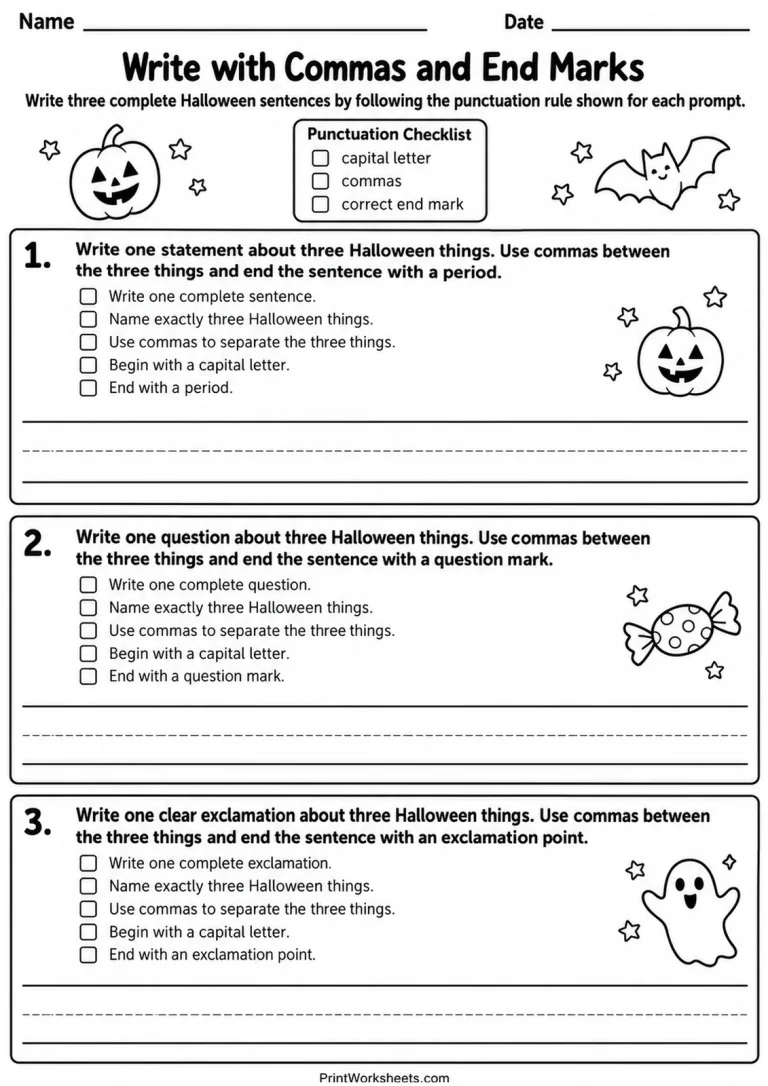
The final student worksheet, Write with Commas and End Marks, asks children to create three complete Halloween sentences of their own. Each prompt requires exactly three Halloween things and provides a specific punctuation goal. Students write one statement ending with a period, one question ending with a question mark, and one exclamation ending with an exclamation point.
Each writing section includes a checklist reminding students to write a complete sentence, name exactly three items, separate the items with commas, begin with a capital letter, and use the required ending mark. This structure makes the page useful for guided practice because students can check their own work before turning it in.
Ways to Use This Halloween Punctuation Set
The four-page progression makes it easy to use the worksheets across several short lessons. Begin with the ending-mark multiple-choice page, continue with the sentence-rewriting activity, use the matching page for review, and finish with the guided writing task. Teachers can also divide the pages among literacy centers or use selected sheets for homework and intervention practice.
For students who need additional language practice, work through one example aloud and ask why a sentence needs a particular end mark. When teaching commas, have students read each three-item list slowly and identify the separate things before adding punctuation. More confident writers can extend the final page by creating additional Halloween statements, questions, and exclamations with new sets of three items.
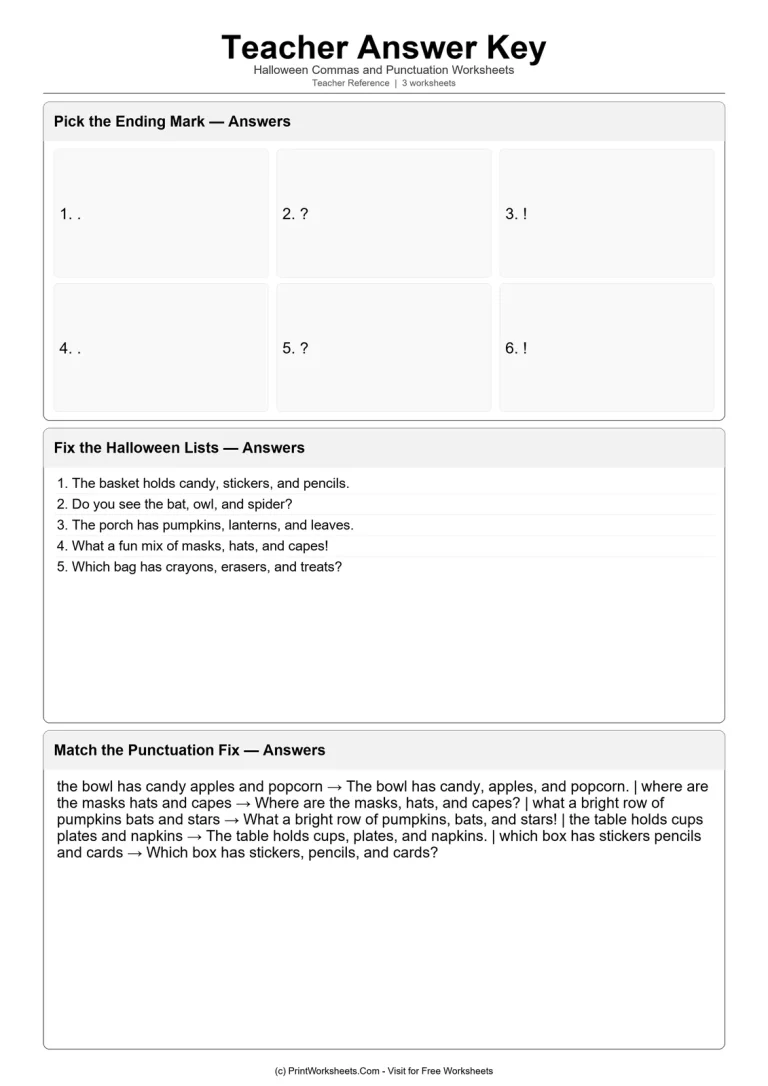
A teacher answer key is included for the objective and sentence-correction activities, which makes checking work faster. For broader seasonal language practice, the Halloween grammar worksheets for Grades 2-3 provide additional grammar-focused activities. Used on their own or as part of a short Halloween language arts unit, these punctuation pages give students repeated practice with the marks and sentence conventions they need for clear writing.