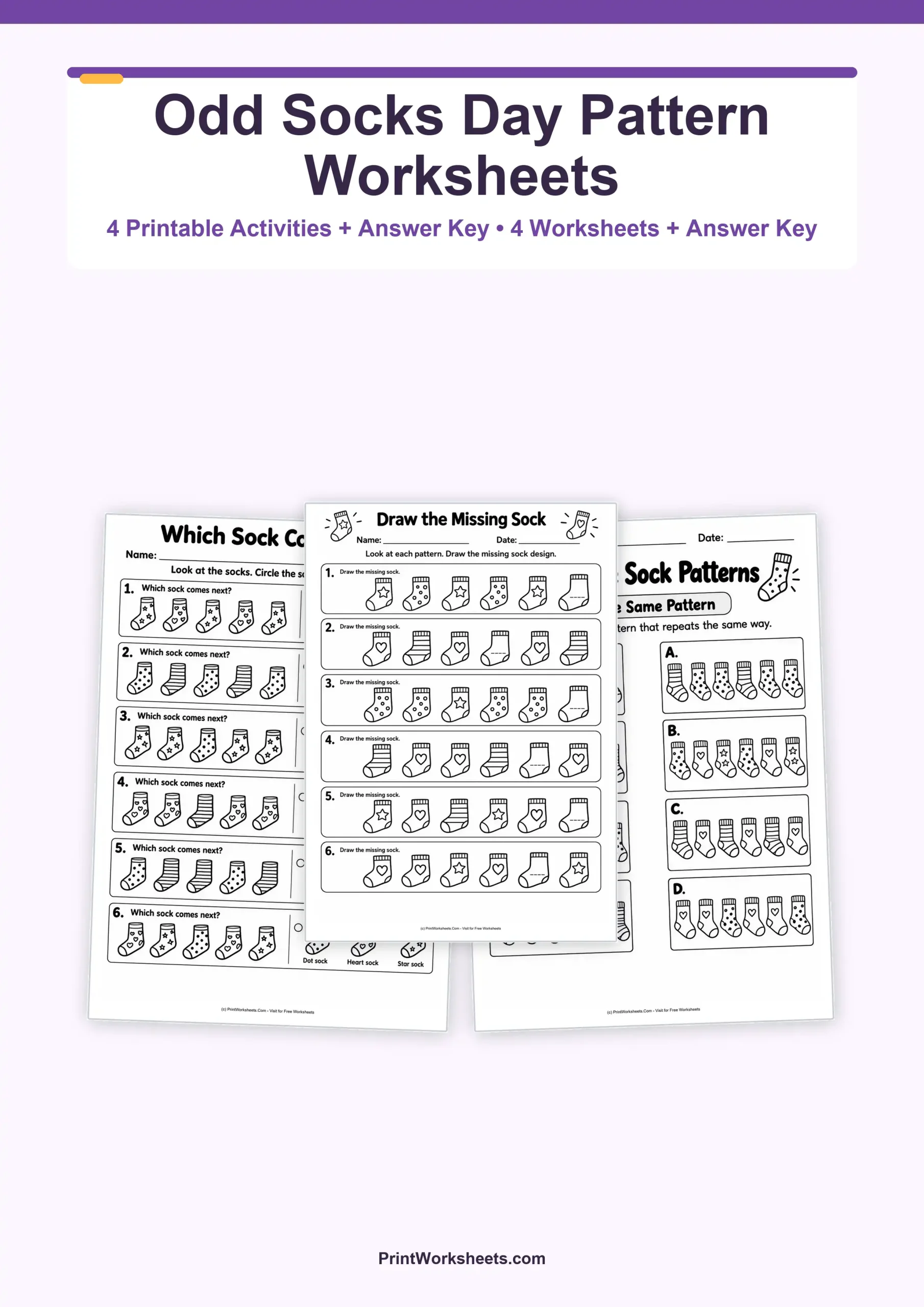
Odd Socks Day can turn a row of mismatched socks into a visual math challenge. These sock pattern worksheets invite young learners to notice what repeats, predict the next design, and build patterns of their own. Across four black-and-white activity pages, children work with socks decorated in stars, hearts, dots, and stripes. The tasks move from circling an answer to drawing, matching, and independent creation, so students have several ways to show that they understand a repeating rule. A separate teacher answer key supports checking the activities with fixed answers.
What’s Inside These Sock Pattern Worksheets?
The four pages are designed as a small progression rather than four copies of the same exercise. Students first work with recognizable pictures and answer choices, then fill gaps in sequences, compare patterns made with different designs, and finally invent their own. Each student page has a place for a name and date.
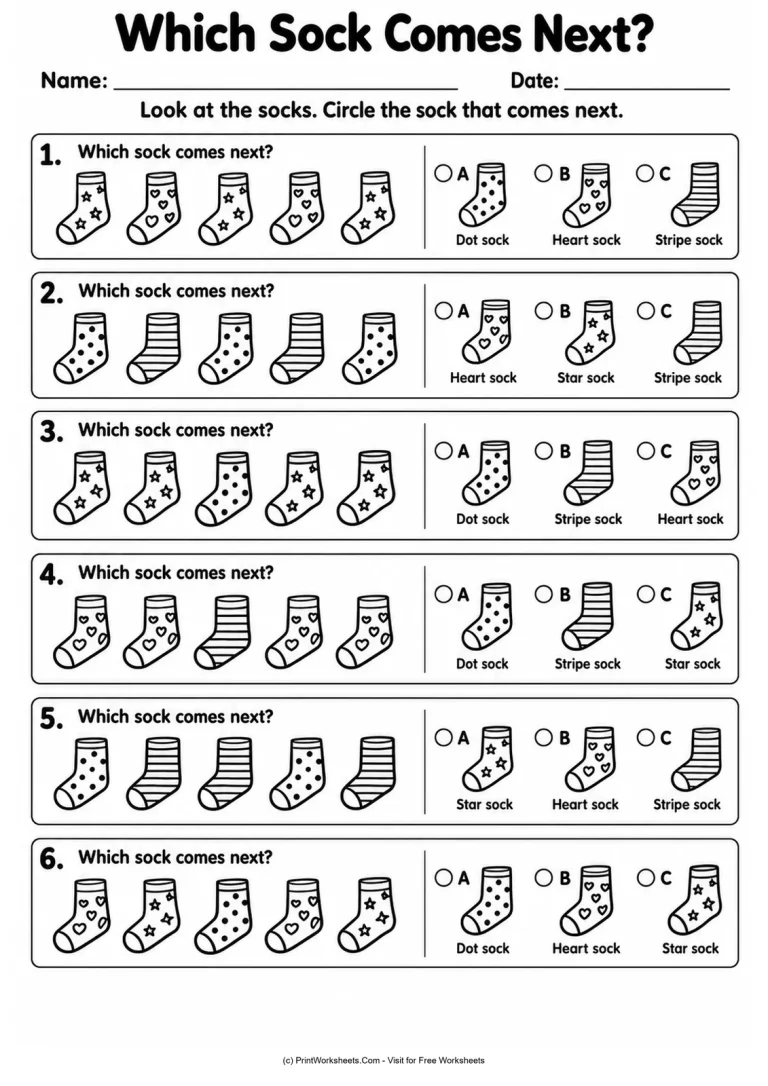
1. Which Sock Comes Next?
The first page presents six sock sequences. For each one, children study five socks and circle one of three possible next socks. The choices use clearly different designs, such as a dotted sock, a heart sock, or a striped sock. Some rows alternate two designs; others repeat a pair before switching or cycle through three designs. Instead of asking students to guess from the last picture alone, encourage them to read the entire row aloud: “star, heart, star, heart…” Then ask which design would keep the rule going.
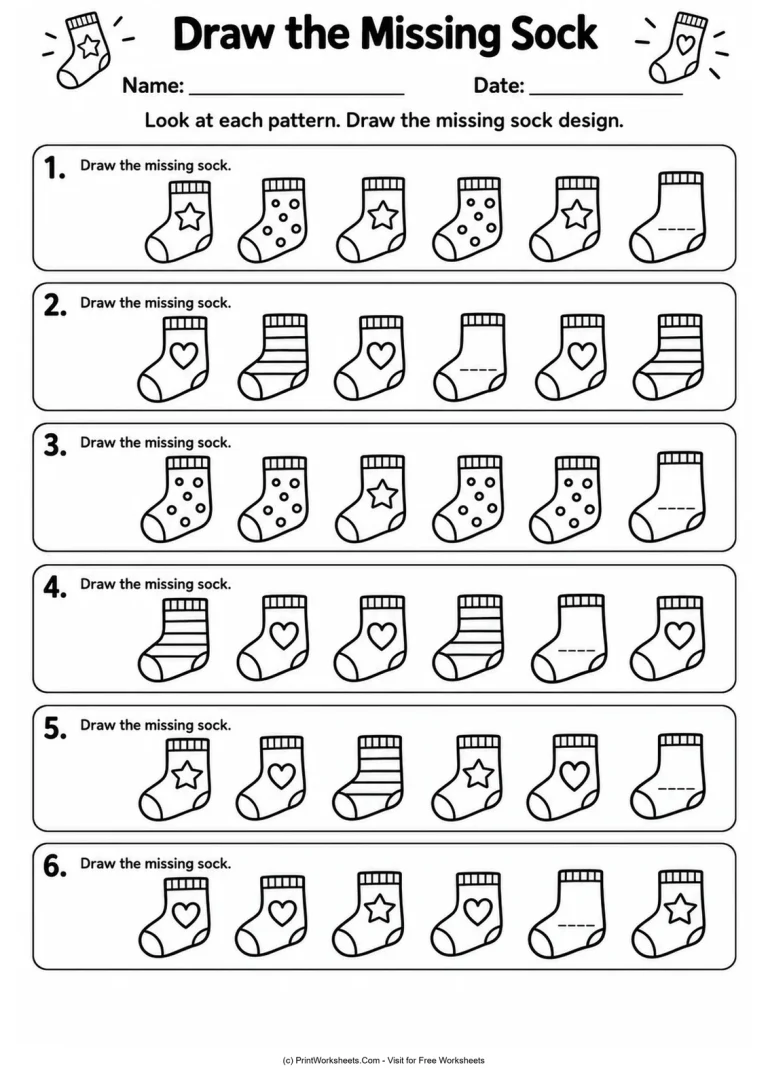
2. Draw the Missing Sock
On the second page, six more sequences contain one blank sock outline. Children must draw the appropriate design inside it. Some blanks appear at the far right; others occur in the middle, where students can use the socks on both sides as clues. Examples include alternating stars and dots, hearts and stripes, and sequences in which one design appears twice before another. This page adds a useful step: learners cannot rely on printed answer choices and must represent the missing element themselves.
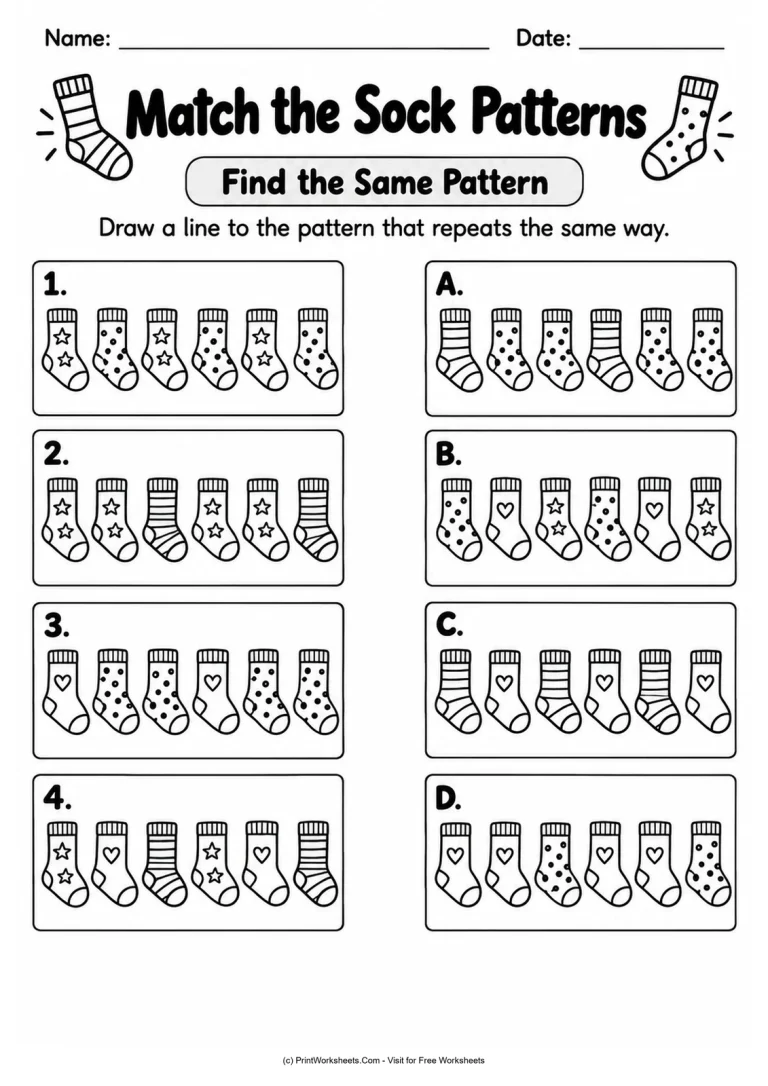
3. Match the Sock Patterns
The third page asks students to connect four numbered sequences with four lettered sequences that follow the same pattern structure. The pictures are intentionally different between the two sides. A star-and-dot alternating sequence, for example, may match a stripe-and-heart alternating sequence because both follow ABABAB. Other examples involve AAB, ABB, and ABC structures. This makes the exercise more than picture matching: children must recognize how a pattern repeats, even after its pictures change.
4. Make Your Own Sock Patterns
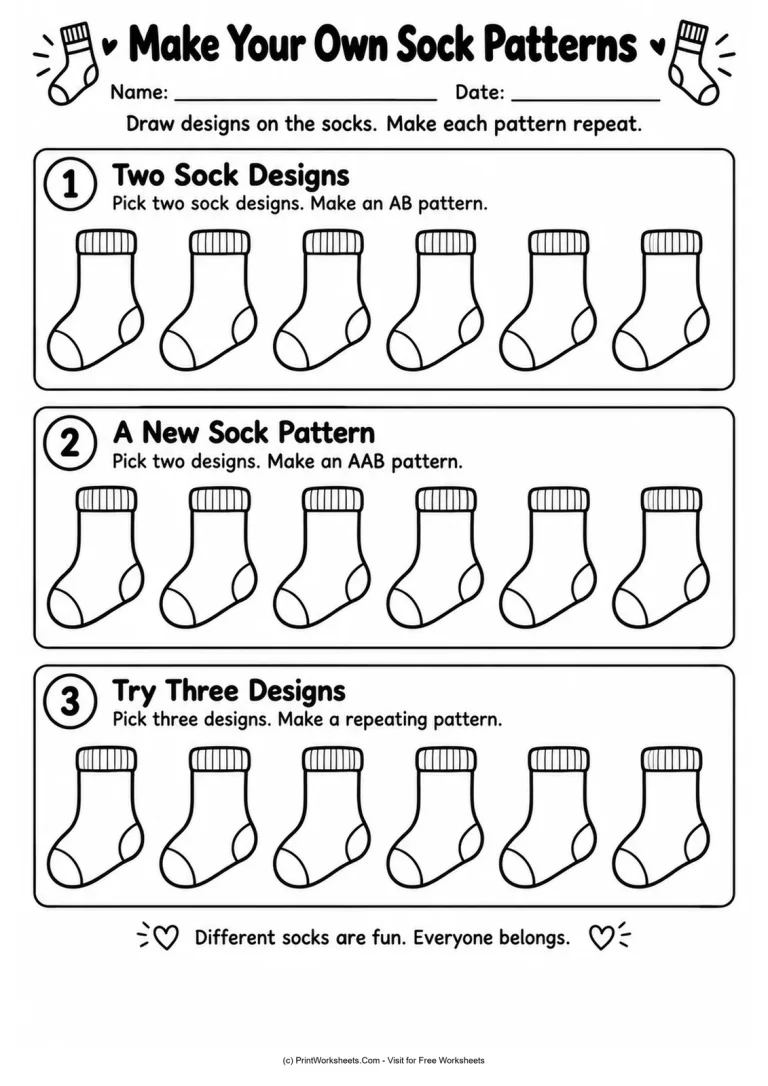
The final student page provides three rows of six blank socks. In “Two Sock Designs,” children choose two designs and create an AB pattern. In “A New Sock Pattern,” they arrange two designs into an AAB pattern. “Try Three Designs” asks them to choose three different designs and make a repeating sequence. Stars, spots, hearts, stripes, or original marks can all work if the repetition is consistent. Students can explain their choices to a partner, and different valid drawings can lead to the same repeating structure.
Teaching the Repeating Rule
Before handing out the pages, show two quick patterns on the board using letters or simple symbols. For AB, repeat two symbols in order: A B A B A B. For AAB, repeat the group A A B. Point out that the letters stand for designs, not particular colors or pictures. Once children understand this, they can transfer the rule to star, heart, dot, and stripe socks without memorizing a specific drawing.
For students who need more support, cover the later socks in a row and reveal them one at a time. Ask, “What is the smallest group that repeats?” For a stronger challenge, ask students to explain why a tempting wrong choice would break the pattern. On the matching page, have children say the letter pattern before drawing a line. On the creation page, invite a classmate to identify the rule from the finished socks.
An Odd Socks Day Activity About Patterns and Belonging
The worksheet theme fits a day focused on celebrating differences: the socks do not need to look alike for the group to follow an organized rule. The creative page ends with the message, “Different socks are fun. Everyone belongs.” That sentence can open a short, age-appropriate classroom conversation about including classmates who have different interests or preferences. Keep the math goal clear while letting students choose their own sock designs and notice how many different-looking patterns can still be correct.
Printing and Checking the Activities
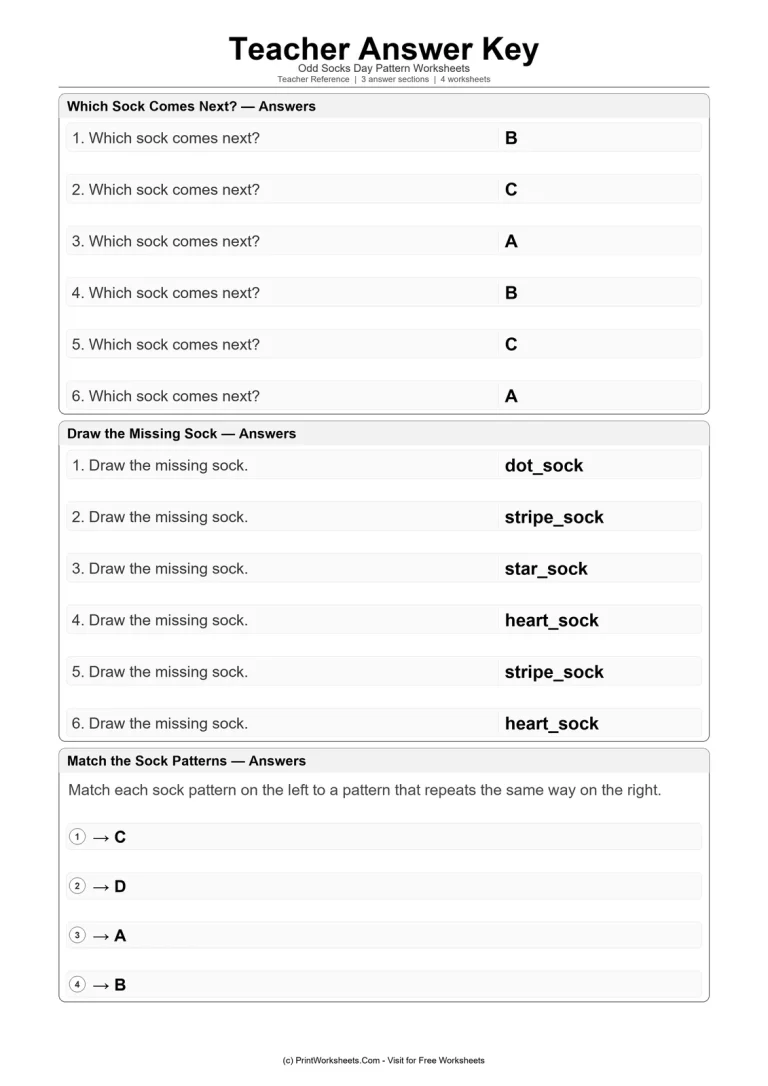
Print the four student worksheets for individual practice, math centers, or a short sequence of lessons. Start with the multiple-choice page for a quick introduction, use the drawing and matching pages for practice, and save the design-your-own page for an independent finish. The teacher key includes answers to the six next-sock questions, six missing-design prompts, and four matching items. The creative page has no single fixed solution, so check whether each child’s designs follow the stated AB, AAB, or three-design repeating rule.
Families can use the same pages at home with pencils or crayons. Ask children to point to the part that repeats before completing each problem, then invite them to invent another row of socks on scrap paper. This turns a classroom theme into practice with a foundational early-math idea: identifying, continuing, and creating visual patterns.