
Finding high-quality, standards-aligned resources for environmental education can be challenging. This Earth Day recycling worksheets printable packet provides a complete, no-prep solution for early elementary classrooms. Designed specifically for Grades K-2, this print-and-go resource focuses on environmental awareness while reinforcing foundational math and fine motor skills.
For teachers expanding their seasonal lesson plans, these activities pair seamlessly with our broader collection of Earth Day worksheets and visual resources like our Earth Day coloring pages.
What Skills Are Included in This Earth Day Recycling Worksheets Printable?
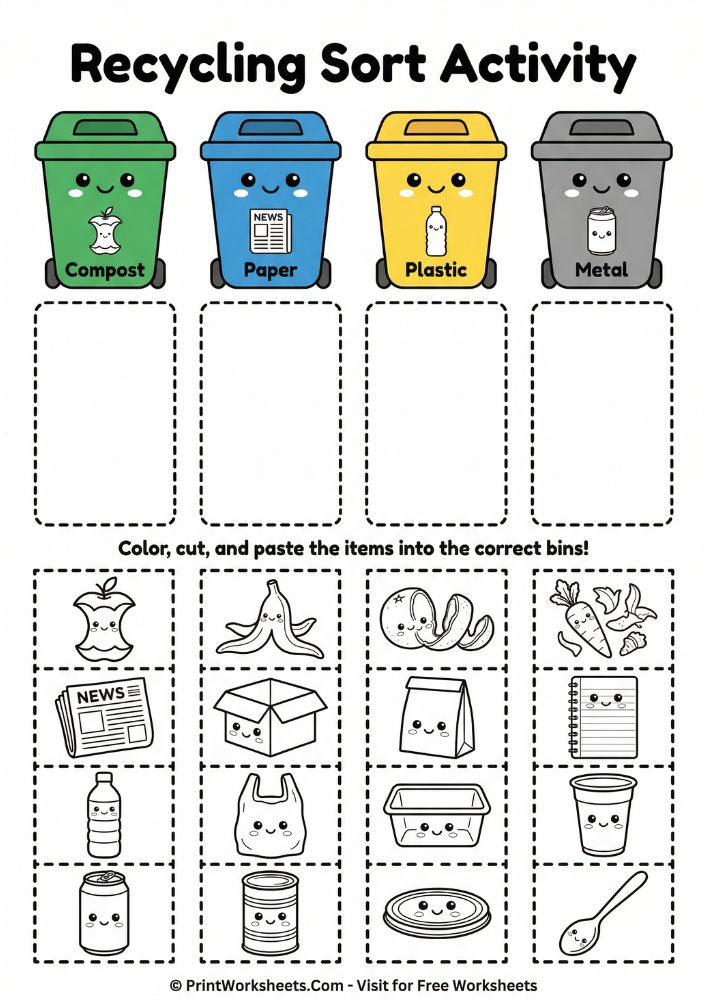
- Recycling Sort Activity: Students color, cut, and paste items into correct bins labeled compost, paper, plastic, and metal, building early categorization skills.
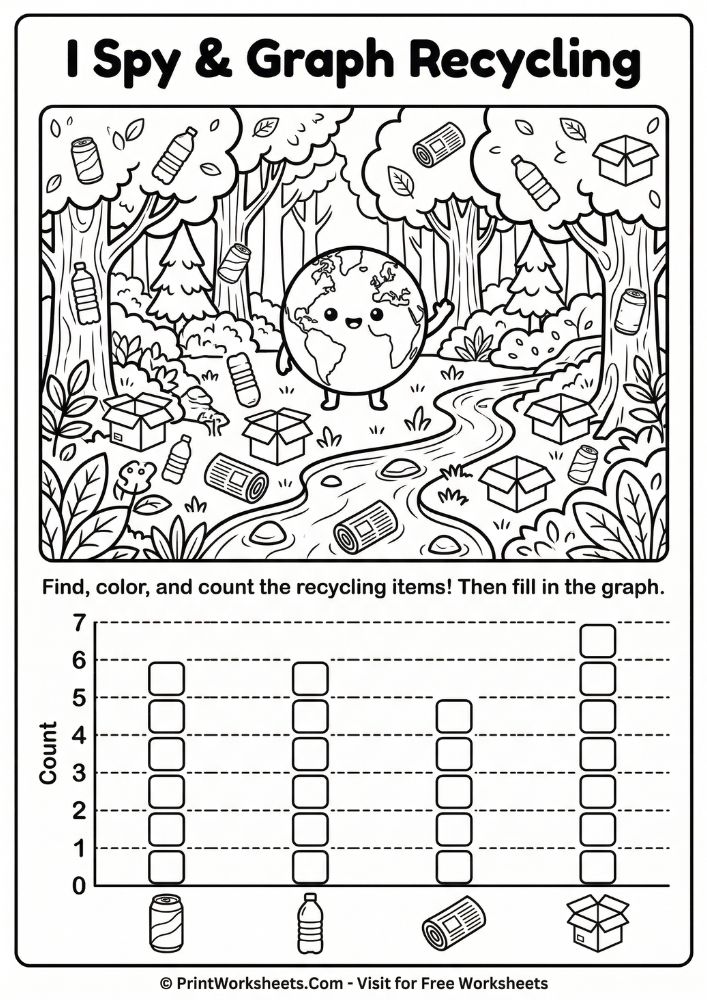
- I Spy & Graph Recycling: Integrates visual discrimination with counting and graphing practice as children find, count, and chart specific recycling items.
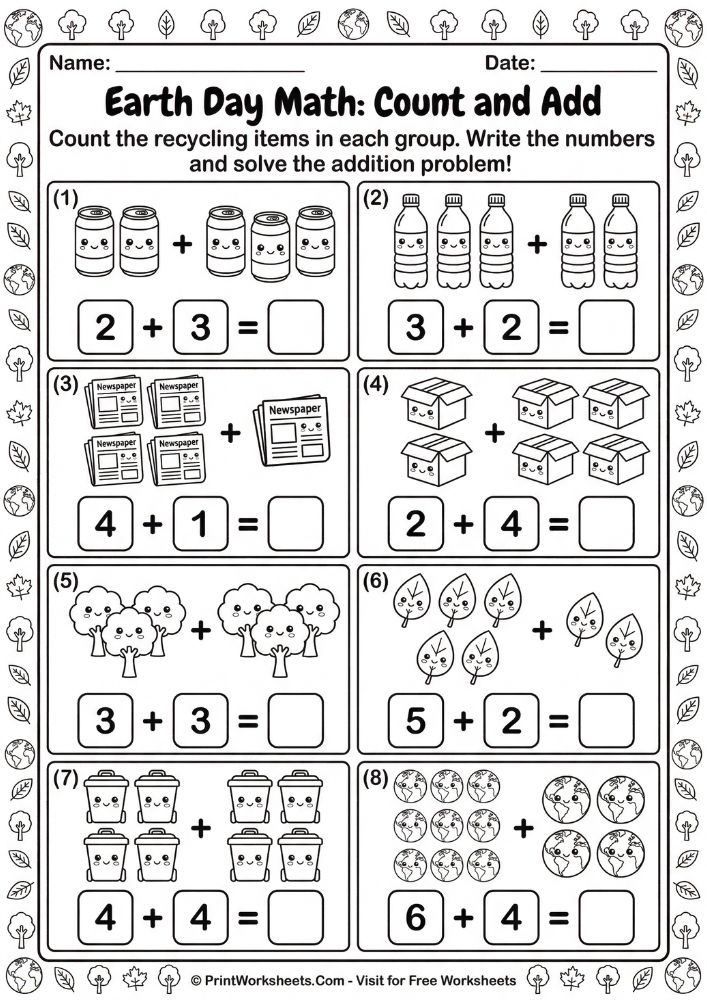
- Earth Day Math: Provides foundational addition practice by having students count recycling items in groups and solve basic math problems.
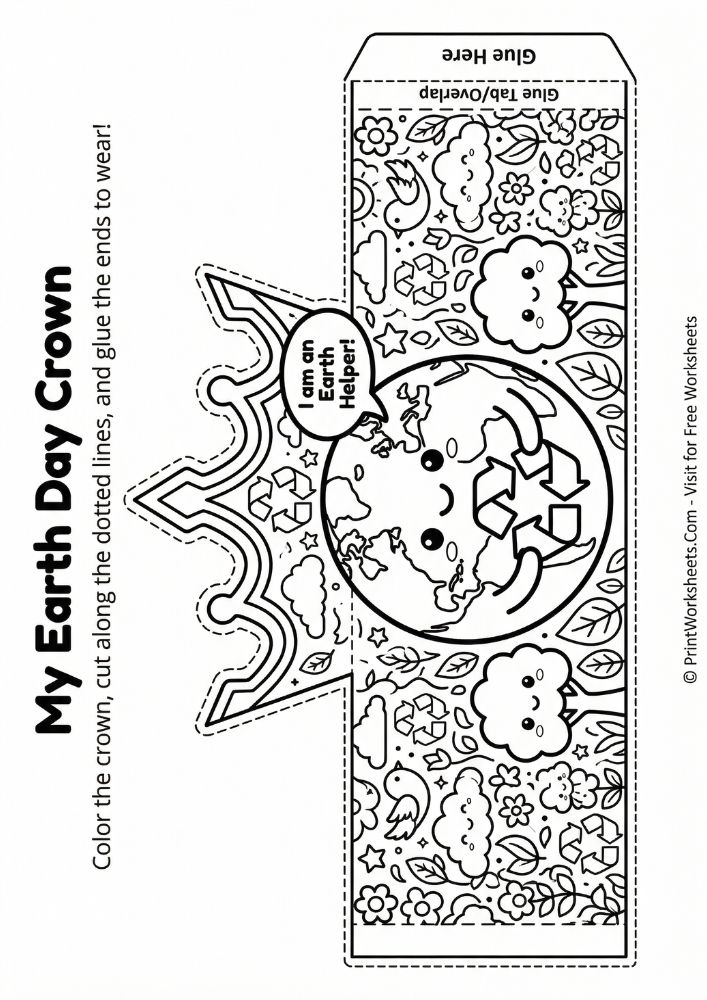
- Earth Day Crown: A hands-on craft developing scissor skills and following directions, resulting in an “I am an Earth Helper!” wearable hat.
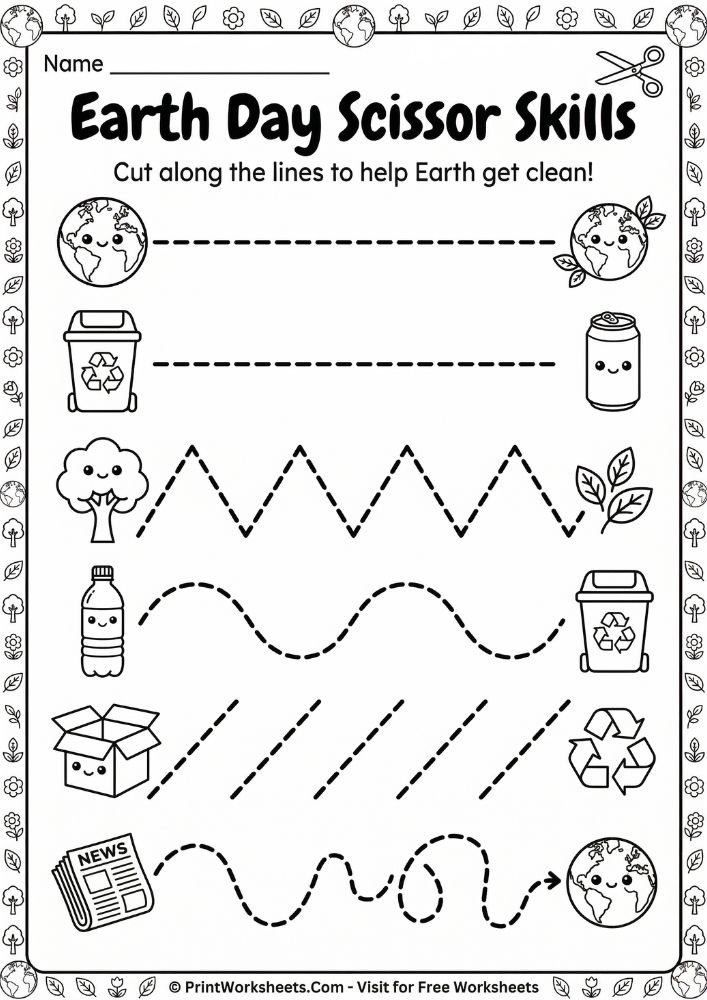
- Scissor Skills: Dedicated tracing and cutting practice pages to strengthen fine motor control.
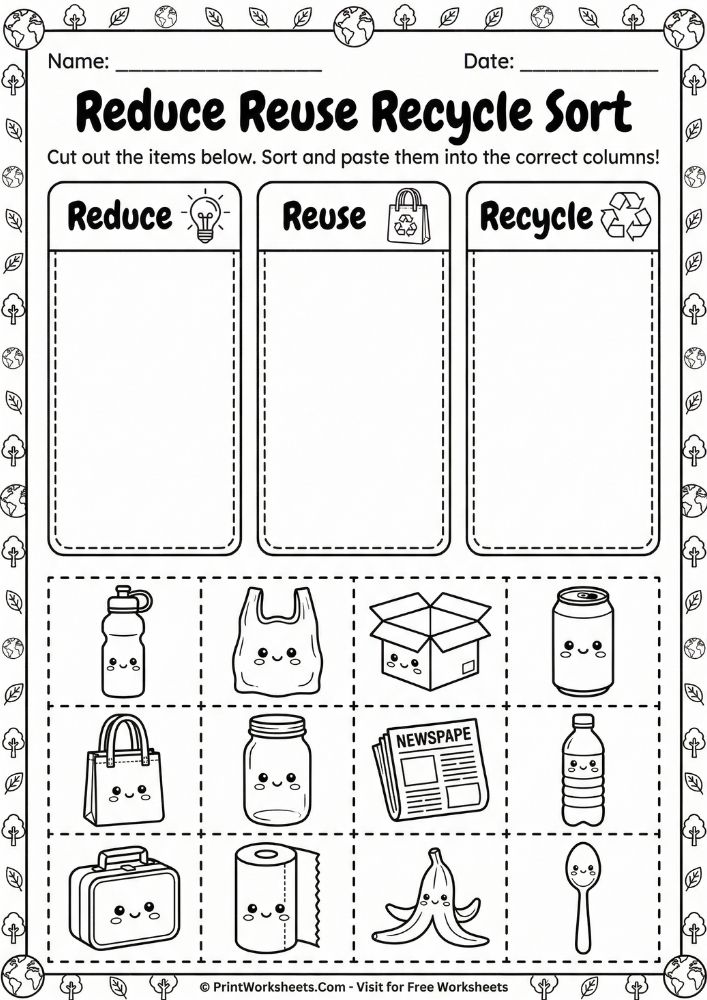
- Reduce, Reuse, Recycle Sort: An additional analytical activity where students evaluate items and paste them into the correct environmental columns.
Why This Works for Grades K-2
The instructional design of these pages introduces complex global concepts through developmentally appropriate, hands-on tasks. By connecting basic academic requirements—like math fluency and spatial awareness—with conservation topics, students build cognitive connections to the real world.
Once students understand local recycling, educators can easily expand the curriculum to global ecosystems using related materials, such as our animal habitat activity pack or our endangered animals worksheets. This progressive learning model helps children grasp how reducing waste directly protects natural habitats and supports broader wildlife conservation activities.
Classroom Differentiation
Scaffolding
For students who need additional support, the visual nature of the sorting bins and the clear, structured lines for cutting practice provide necessary guidance. Teachers can pre-cut the sorting items to isolate the categorization skill for students still developing fine motor control.
Extension
Advanced students can be challenged to write complete sentences analyzing the data from their graphing worksheet. Alternatively, they can flip the addition pages over to create their own math equations based on classroom recycling bin inventory.
Small Group Strategy
The counting and graphing activities work exceptionally well in small, teacher-led instructional centers. This allows educators to facilitate guided discussions about data representation, ecosystems, and environmental responsibility.
FAQ
Is this suitable for struggling readers?
Yes, the worksheets utilize clear visual icons alongside minimal text. The sorting activity features distinct visual bins for paper, plastic, metal, and compost with corresponding illustrative cues to support word recognition and reading comprehension skills.
What standards does this align with?
The packet integrates cross-curricular foundational standards, specifically focusing on early math skills like counting, representing data on a graph, and basic addition, alongside early science concepts related to human impact on the environment.
Can this be used for homework?
Absolutely. Because the packet is an entirely no-prep, print-and-go resource with intuitive instructions, it is highly effective for both guided in-class instruction and independent homework practice.
How many pages are included?
The printable set includes six individual worksheets. Each page features a distinct educational activity tailored for kindergarten, first-grade, and second-grade cognitive and motor skill levels.