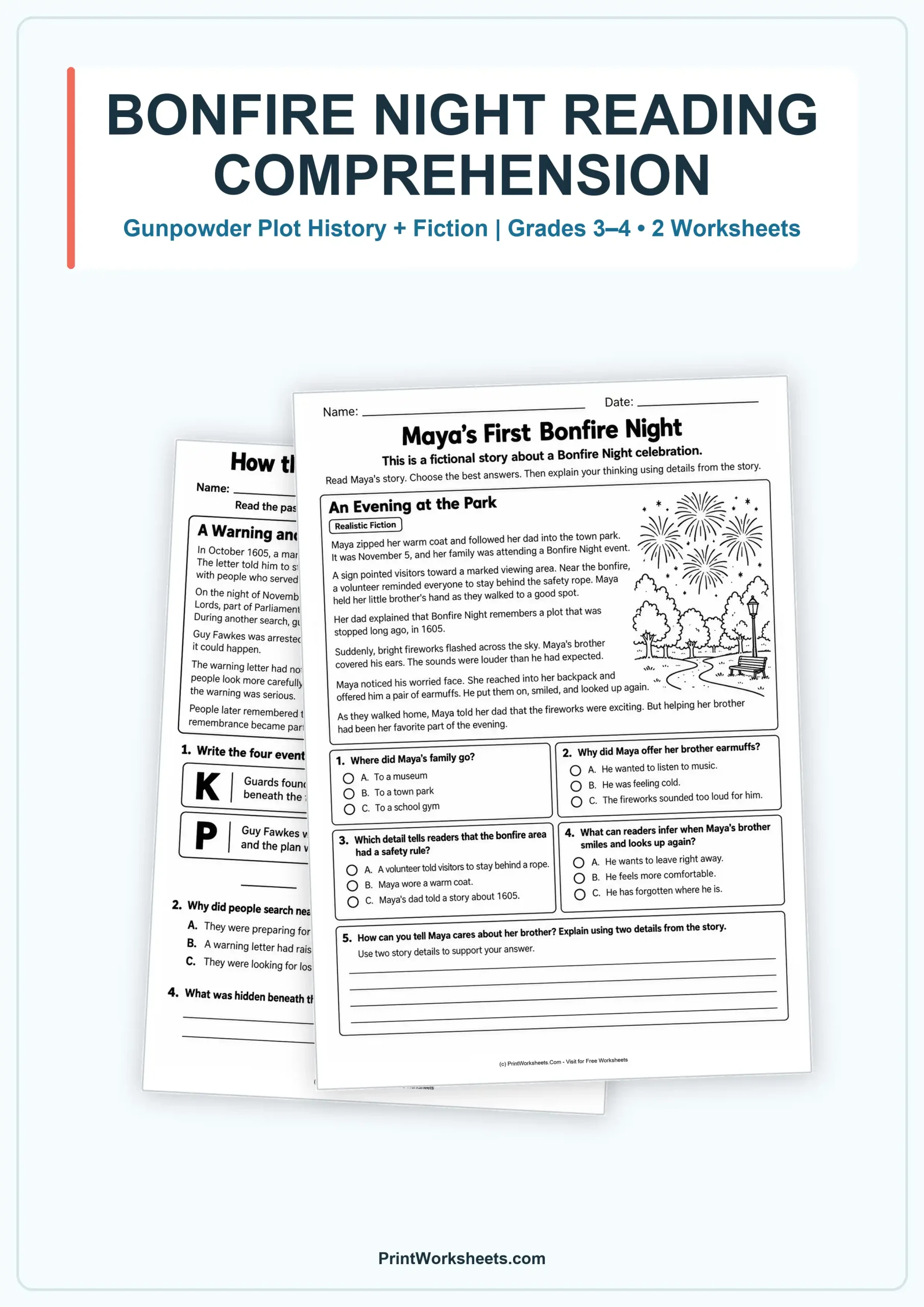
Students meet November 5 through two contrasting texts in this Bonfire Night reading comprehension set. One explains how a warning letter and a search uncovered the Gunpowder Plot in 1605; the other follows Maya at her first Bonfire Night celebration in a town park. Together, the printable pages help third- and fourth-grade readers move from identifying facts and ordering events to making a character inference and supporting an explanation with story details.
Inside the Bonfire Night Reading Comprehension Worksheets
A Warning, a Search, and a Sequence of Events
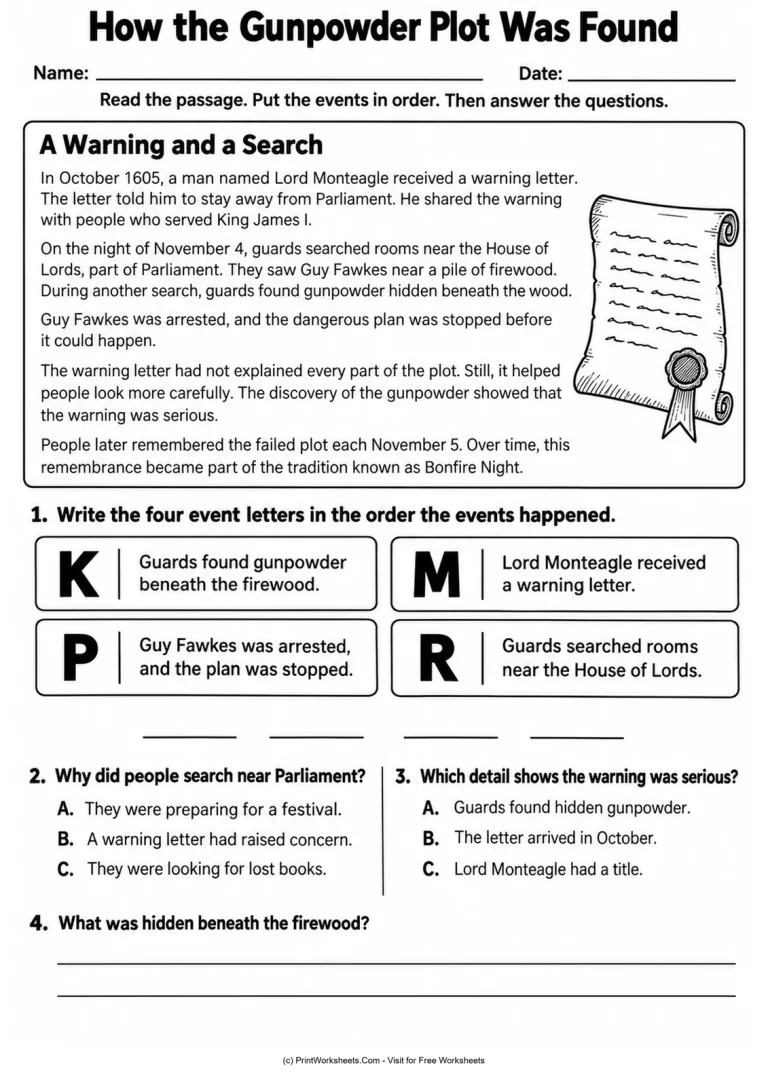
How the Gunpowder Plot Was Found begins with a short informational passage called A Warning and a Search. It introduces Lord Monteagle’s warning letter in October 1605, explains how the warning reached people serving King James I, and describes guards searching near the House of Lords on November 4. Readers learn that the guards saw Guy Fawkes by a pile of firewood, later discovered gunpowder underneath, and stopped the plan. The passage closes by connecting the failed plot to remembrance on November 5 and Bonfire Night.
The first task gives children four lettered event cards to arrange in the order they occurred. Because the cards are displayed out of order, students must return to the passage rather than copy its layout. They then choose why people searched near Parliament and which detail demonstrates that the warning was serious. A final short-answer prompt asks what was hidden beneath the firewood. This mix checks chronology, cause and effect, and the ability to locate a precise fact.
Maya’s First Celebration: Reading Feelings Through Actions
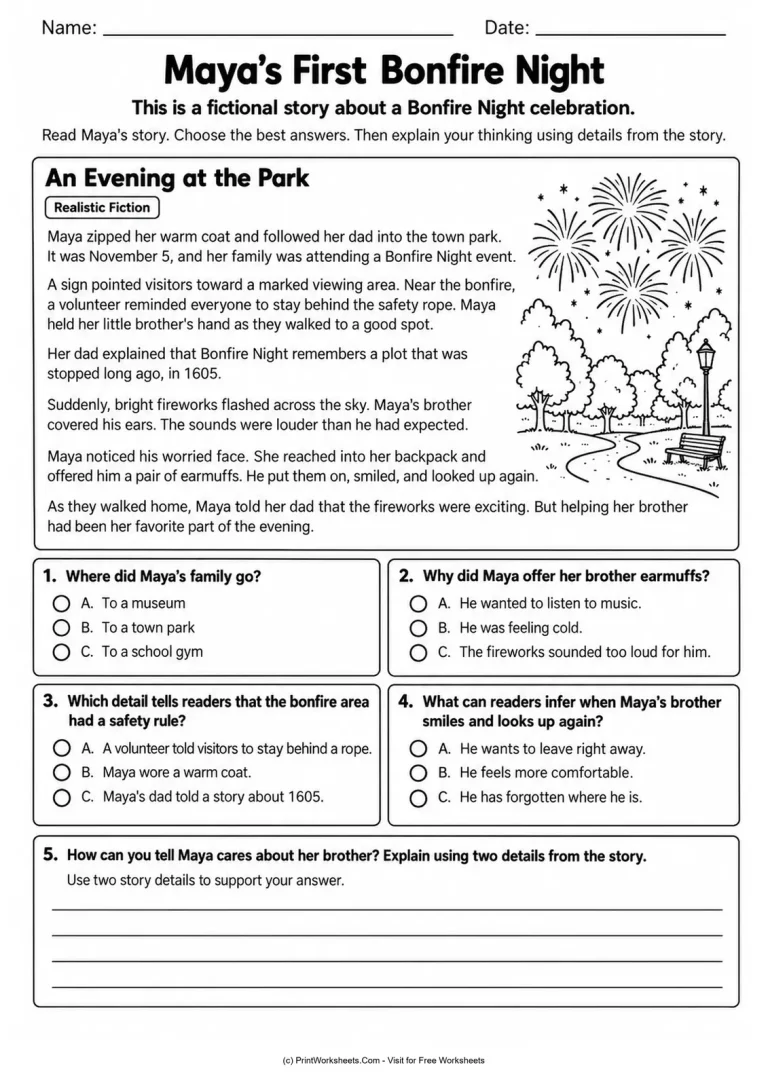
Maya’s First Bonfire Night is explicitly labeled as a fictional story. Maya goes to a town park with her dad and younger brother on November 5. The family follows a sign to a viewing area, and a volunteer reminds visitors to stay behind a safety rope near the bonfire. When the fireworks start, the noise frightens Maya’s brother. She notices his worried expression, offers him earmuffs, and sees him relax enough to look up again.
Four multiple-choice questions ask readers to identify the setting, explain Maya’s helpful action, find evidence of the event’s safety rule, and infer why her brother smiles. The fifth question goes further: students explain how they know Maya cares about her brother using two details from the story. Her holding his hand and offering earmuffs provide concrete evidence, making this a useful bridge from choosing an answer to composing a supported response.
A Practical Two-Text Lesson
Begin by asking students to label each passage as informational text or realistic fiction and point to a clue that supports the distinction. The historical page reports named people, dates, searches, and an outcome. Maya’s page invents a family experience to explore the way a later celebration might feel. This contrast is important: children should not treat the fictional characters as participants in the events of 1605.
Build the Timeline Before Answering Why
On the history page, invite students to underline the October warning, mark the November 4 search, and trace what guards found before discussing the arrest. Have them explain why the warning belongs before the search and why the discovery belongs before the plan was stopped. Once they can justify the order, the questions about concern and evidence become easier to answer without guessing.
Use Actions as Evidence of Character
For Maya’s story, ask what the brother does when the fireworks sound loud, what Maya notices, and what changes after he wears the earmuffs. Encourage students to distinguish a feeling inferred from the text from an action stated directly. For the written response, a simple structure works well: make a claim that Maya cares, give one detail about guiding her brother, and add a second detail about helping him feel comfortable.
Where These Pages Fit
Use the historical reading in a November history-and-literacy lesson, then save the fictional passage for a follow-up session on inference and text evidence. The pages also work independently as reading stations, take-home practice, or short comprehension checks. The sequence offers variety without changing topics: students first establish why November 5 is remembered, then consider how the celebration is experienced by one fictional family.
If your class is comparing seasonal reading texts, try our Halloween reading comprehension passages. For another opportunity to connect historical remembrance with reading skills, explore our Memorial Day reading comprehension worksheets.
Print the two Bonfire Night passages together for a paired-text activity or use them separately to target sequencing, literal comprehension, inference, and written evidence. Readers finish with more than a date to remember: they practice showing exactly where an answer comes from and why it makes sense.