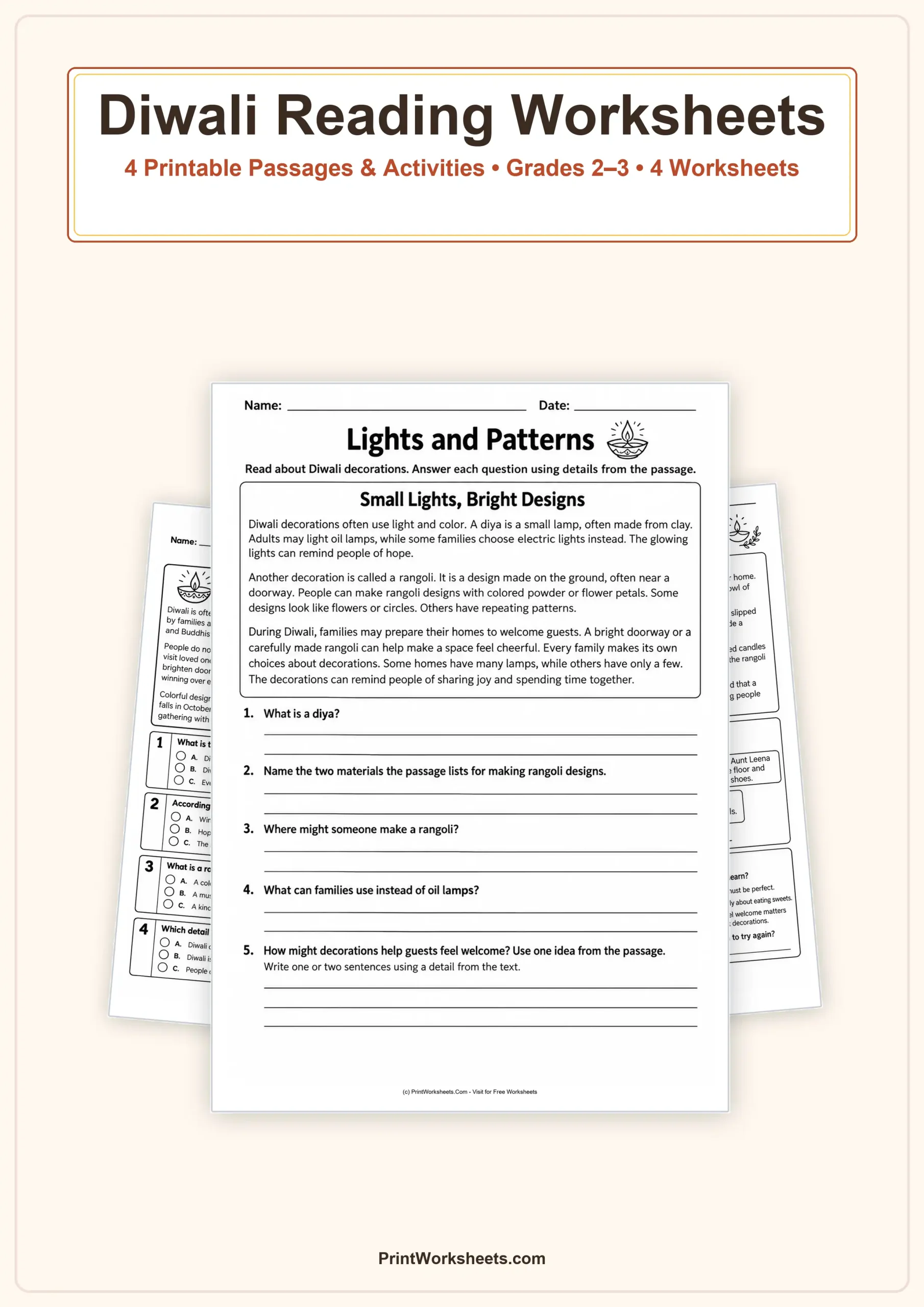
What can a small lamp, a colorful flower pattern, and a family gathering teach children about reading? These Diwali reading comprehension worksheets invite students to discover the Festival of Lights while practicing essential literacy skills. The four free printable pages combine informational passages, a family-centered story, and two related texts about different celebrations. Students answer multiple-choice questions, write short responses, sequence events, and support comparisons with details from their reading. Designed primarily for third graders, the black-and-white worksheets can also support confident second-grade readers with teacher guidance.
Four Diwali Reading Comprehension Activities
Rather than asking students to answer the same kind of question repeatedly, this collection changes the reading task from page to page. Children begin by learning about Diwali traditions, examine how decorations are used, follow a character through a family preparation activity, and finally compare celebrations in two settings. The passages introduce cultural details while keeping the central classroom purpose focused on comprehension.
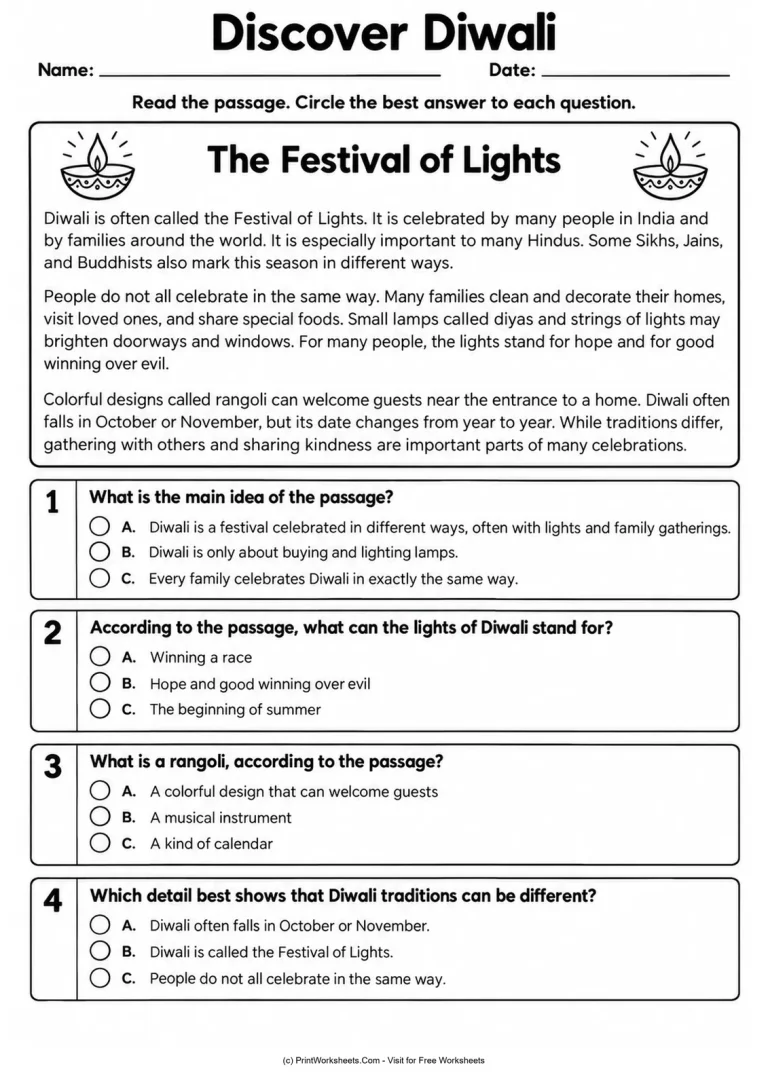
Page 1: Discover Diwali
The opening worksheet features an informational passage called The Festival of Lights. It explains that Diwali is celebrated by different communities and introduces diyas, rangoli decorations, family gatherings, and the symbolic importance of light. Four multiple-choice questions check whether students can identify the main idea, remember details, interpret vocabulary, and recognize that celebration traditions may vary. This page works well as a first reading because it supplies background knowledge needed for the activities that follow.
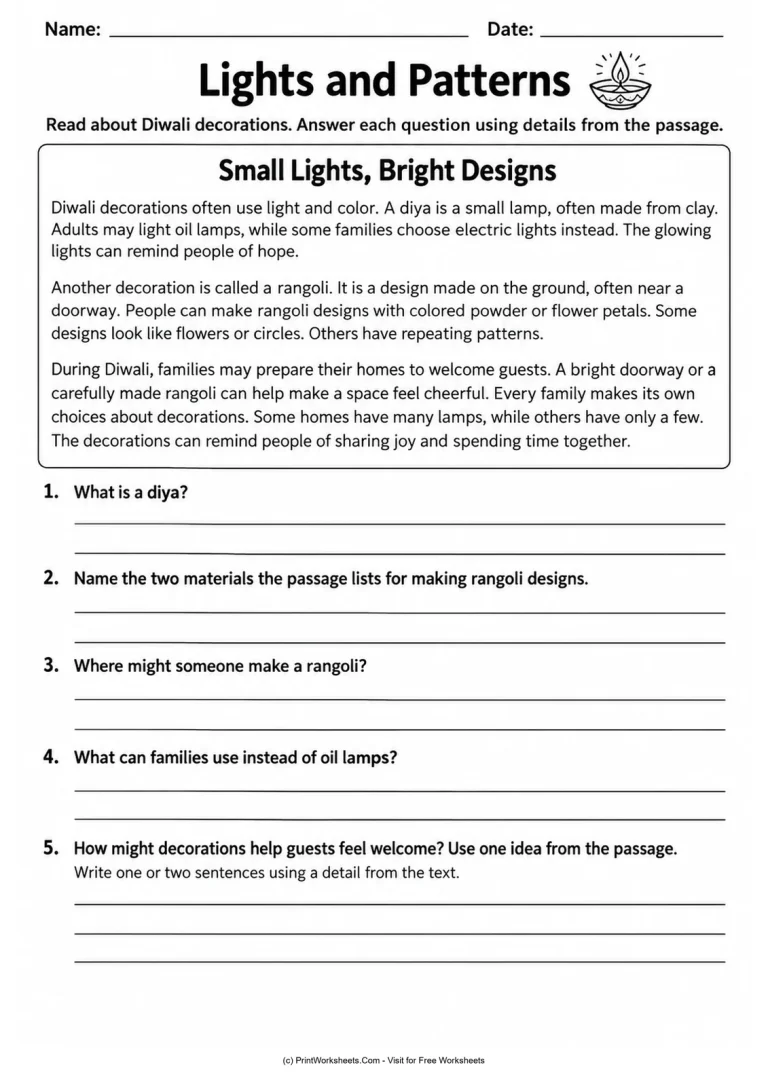
Page 2: Lights and Patterns
The second worksheet, Lights and Patterns, uses the passage Small Lights, Bright Designs to investigate decorative traditions more closely. Students read about diya lamps, electric lights, and rangoli patterns created with materials such as colored powder or flower petals. Five short-answer questions ask readers to retrieve information about the decorations, including their materials, placement, and uses. Students must explain their thinking in writing instead of selecting an answer. Encourage children to return to the passage and underline the details that support each response.
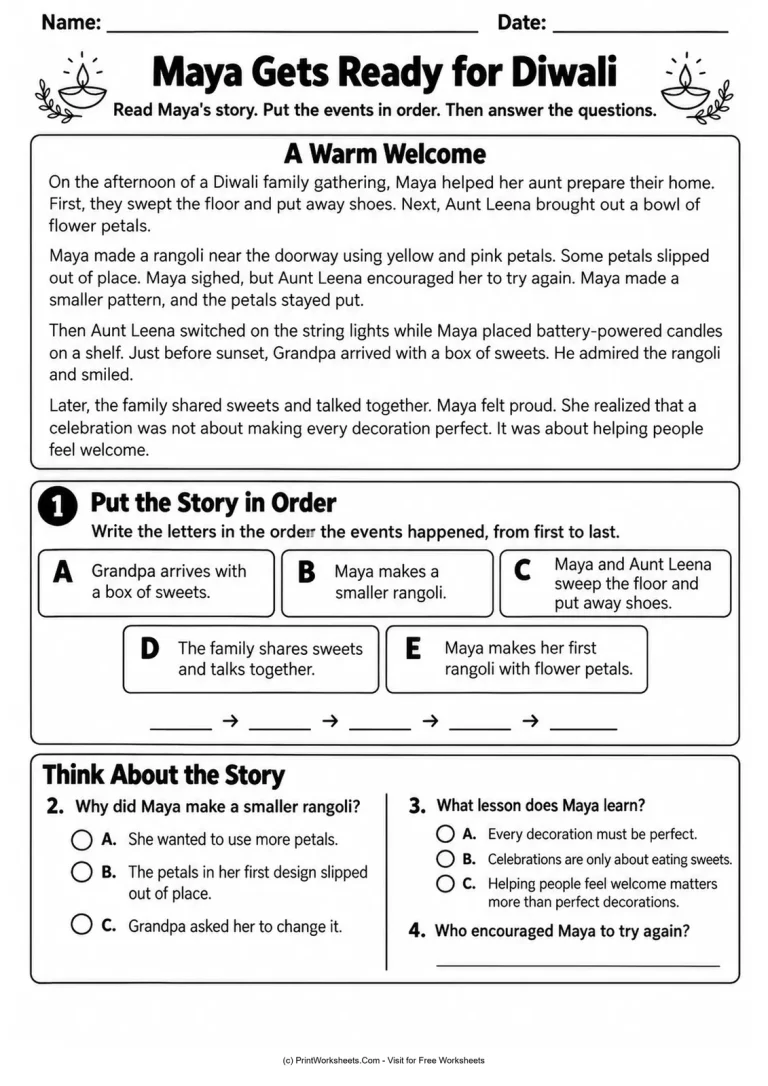
Page 3: Maya Gets Ready for Diwali
In A Warm Welcome, Maya helps Aunt Leena prepare for a family gathering. Maya tries making a rangoli design with flower petals, struggles with her first attempt, and decides to create a smaller pattern. As preparations continue, the lights are arranged and relatives come together to share sweets. Students place five story events in chronological order and answer questions about Maya’s choices and what she learns. The narrative gives children an opportunity to move beyond recalling facts and consider character behavior, persistence, and the meaning of an event in a story.
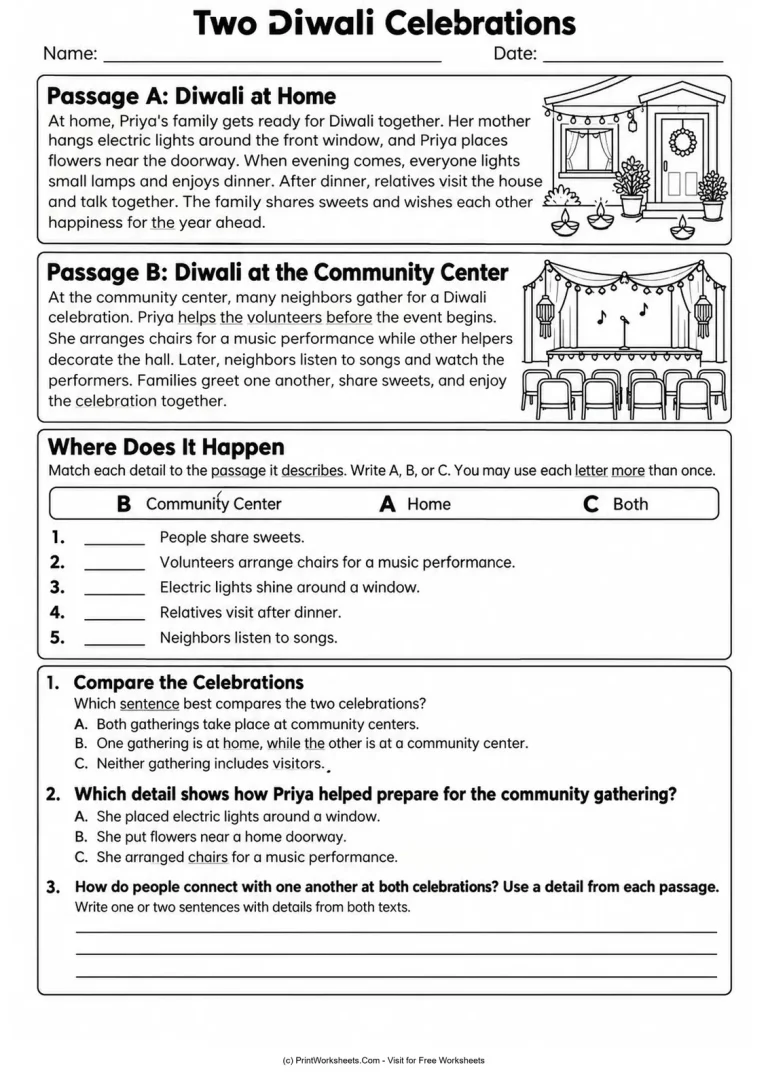
Page 4: Two Diwali Celebrations
The final worksheet pairs Diwali at Home with Diwali at the Community Center. One passage describes Priya’s family celebrating with lights, flowers, small lamps, and visiting relatives. The other follows Priya as she helps volunteers arrange chairs at a community center, where neighbors gather and enjoy a music performance. Readers classify five details as belonging to Home, Community Center, or Both. They also answer two multiple-choice questions and write a comparison supported by evidence from both passages. This activity develops careful reading because students must distinguish shared experiences from details that appear in only one text.
A Practical Reading Sequence for Grade 3
These printable Diwali passages can be used across several literacy lessons or as a connected reading packet. Begin with the first informational passage to establish key vocabulary. Invite students to explain the differences between diyas and rangoli before introducing the more detailed second passage. On the next reading day, use Maya’s story to review beginning, middle, and end, asking children to justify the order of the events. Finish with the paired passages, where students apply earlier comprehension skills to a more demanding comparison task.
For students who need additional support, read the first passage aloud, model how to locate an answer, and gradually move toward independent work. Stronger readers can complete the written questions individually and explain why a particular sentence provides useful evidence. The progression makes it possible to observe several different reading behaviors without relying on a single question format.
Discuss Traditions With Care and Curiosity
Diwali is observed in different ways by families and communities, and the passages provide an opportunity to talk about that variety. Ask students which activities appear in the reading and how the settings influence each celebration. They can also discuss how lights, decorations, and welcoming guests contribute to the passages. Remind students that the examples describe particular traditions and experiences rather than one required way for everyone to celebrate.
After the fourth worksheet, invite children to explain one similarity and one difference between Priya’s two celebrations, citing a detail from each passage. This brief discussion reinforces comparison skills while encouraging respectful attention to cultural context.
Print and Use in Your Literacy Lessons
The four black-and-white student worksheets are suitable for classroom reading practice, independent assignments, small-group instruction, homework, and cultural learning activities. Teachers can use the multiple-choice items for quick comprehension checks and the written answers to see how well students find and explain evidence. Parents can work through one passage at a time and invite children to retell what they learned in their own words.
For another seasonal reading option with short passages and comprehension practice, explore our Halloween reading comprehension passages for Grades 2–3. Use the free Diwali printable PDF to bring together reading accuracy, thoughtful discussion, and evidence-based responses in one four-page collection.