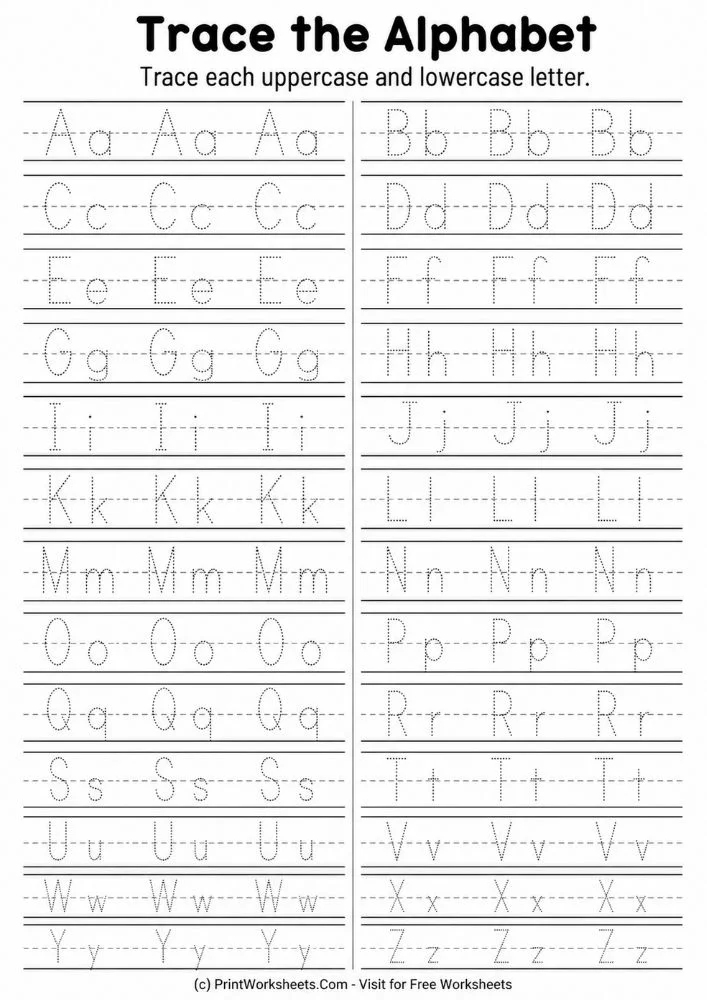
Print uppercase and lowercase tracing worksheets to establish essential handwriting foundations for preschool and kindergarten students. Developing proper fine motor control requires extensive physical repetition before a child can write independently. This printable literacy PDF delivers rigorous, no-prep learning centers focusing strictly on physical letter formation, visual discrimination, and matching capital to lowercase forms. By utilizing directional arrows, dotted tracing lines, and matching exercises, educators guarantee comprehensive alphabet mastery. Printing these handwriting activities prevents early bad habits, ensuring young learners internalize the correct starting points and physical pathways for every letter of the alphabet.
Educators and homeschool parents utilize uppercase and lowercase tracing worksheets during morning work, independent literacy rotations, and early fine motor interventions. Consistent exposure to dotted letter guides builds the specific muscle memory required for fluent writing. To construct a continuous, logical literacy progression, pair this foundational packet directly with our alphabet tracing A-L M-Z worksheets for deeper, isolated letter practice.
Inside the Letter Tracing PDF
Clear formatting and structured writing lines make these printables mandatory for early childhood handwriting instruction. The clean layouts prevent visual distraction, forcing students to focus entirely on fine motor execution and letter recognition. Each printable activity page targets specific early literacy standards.
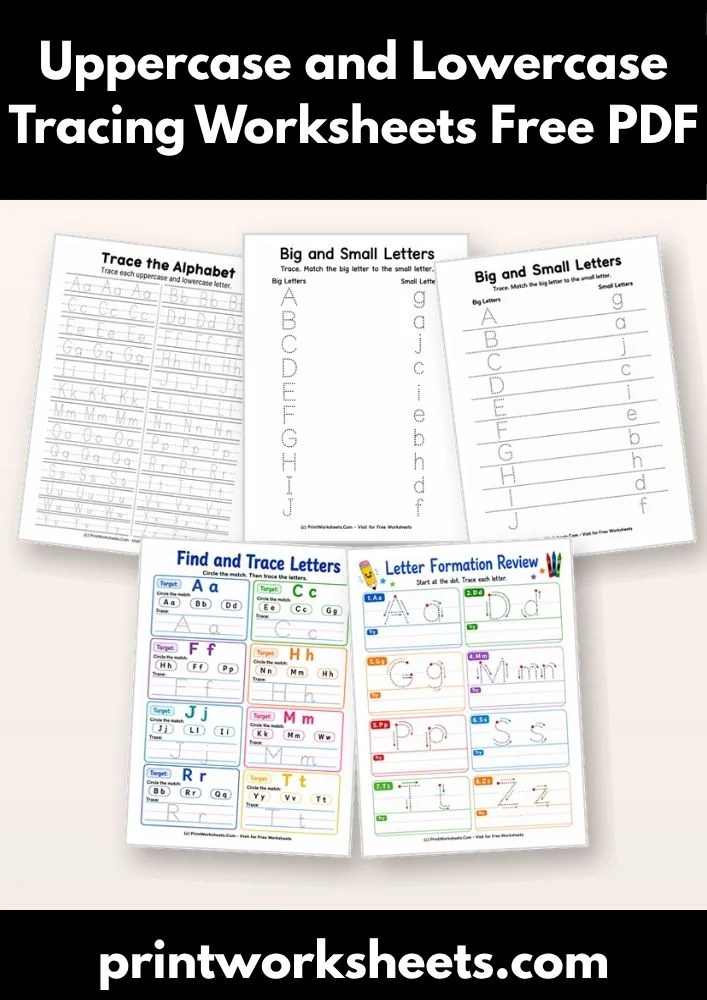
- Trace the Alphabet (A-Z): A comprehensive handwriting reference worksheet. Students trace the entire English alphabet from A to Z. Each letter block features both the capital and lowercase version side-by-side on standard primary dashed lines, reinforcing the visual pairing of the two distinct forms.
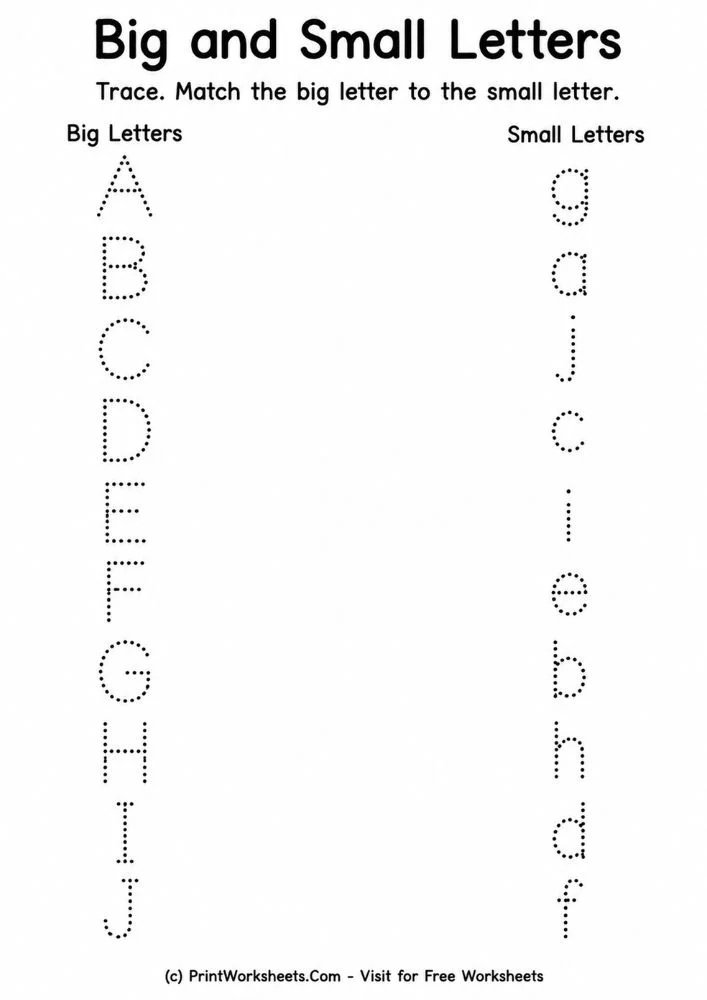
- Big and Small Letters Matching (Pages 2 & 3): Dual visual tracking and fine motor worksheets. Students view a vertical column of dotted uppercase letters on the left and a scrambled column of dotted lowercase letters on the right. Students must trace every letter, locate the corresponding pair, and draw a connecting line to physically match the uppercase to its lowercase equivalent.
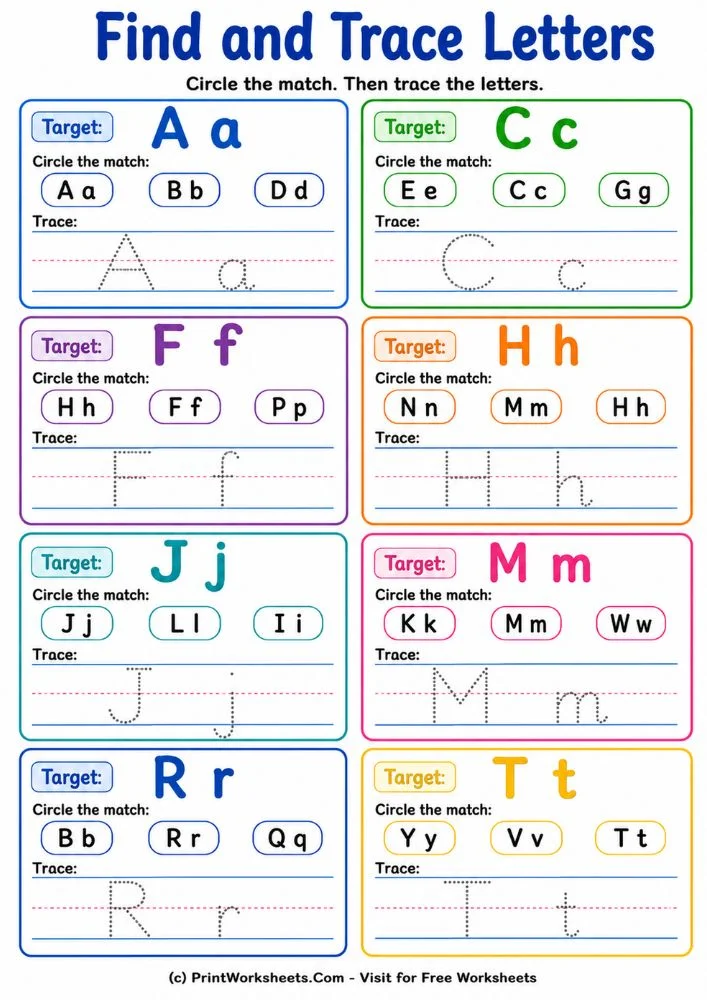
- Find and Trace Letters: A visual discrimination and formatting activity. Students view a target letter block (e.g., “A a”) and must scan a grouping of mixed letters below it. They circle only the letters that match the target, ignoring the distractors. Finally, they trace the target letters on the provided dashed lines to secure the physical shape.
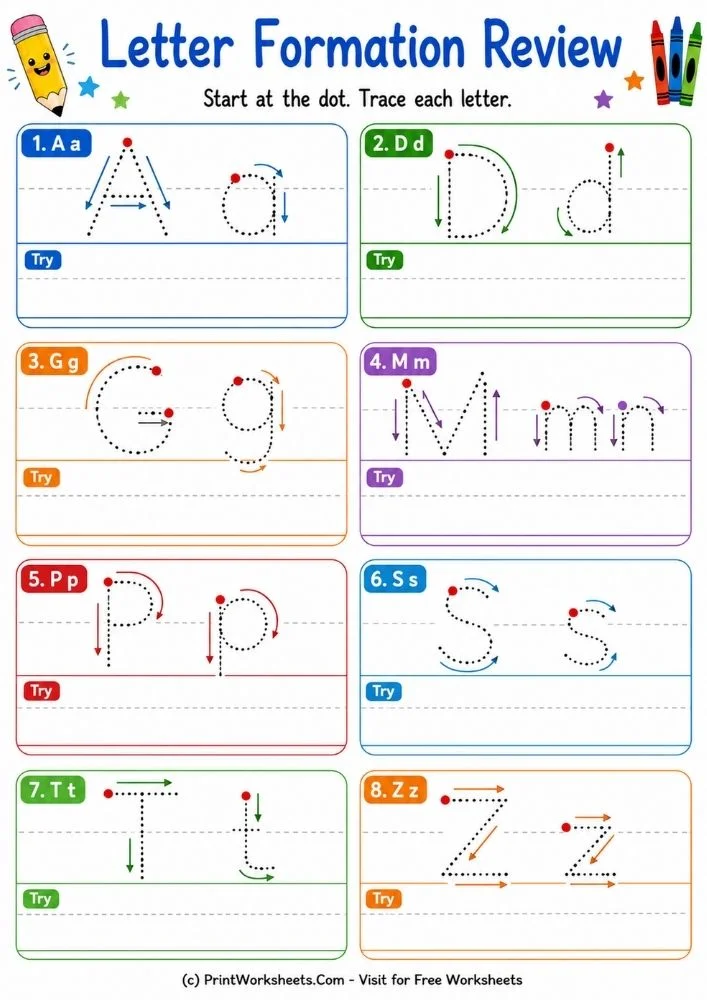
- Letter Formation Review: A directional handwriting worksheet. This page explicitly teaches the mechanics of writing. Each letter features numbered red starting dots and colored directional arrows. Students must trace the letters following the exact sequence of the arrows, ensuring they do not start letters from the bottom or draw lines backward.
Effective Literacy Center Implementation
Print these high-resolution alphabet pages directly on standard 8.5″ x 11″ copy paper. Integrating physical sensory strategies alongside the uppercase and lowercase tracing worksheets guarantees maximum letter retention. Before students use a pencil on the “Letter Formation Review” page, instruct them to “finger trace” the letters. Have the student place their index finger on the red starting dot and physically trace the arrows on the paper. This tactile rehearsal isolates the directional rule physically before introducing the complexity of gripping a pencil.
To maximize literacy center efficiency, place the tracing and matching pages inside heavy-duty dry-erase sleeves. Provide students with fine-tip washable markers. This straightforward preparation allows multiple classroom groups to practice handwriting repeatedly throughout the instructional week without consuming excess printer ink or copy paper.
Frequently Asked Questions
Why is teaching uppercase and lowercase together important?
Teaching uppercase and lowercase letters simultaneously prevents severe reading delays. If a child only learns uppercase letters, they will struggle to read standard text, which is predominantly printed in lowercase format. Visual matching activities force the brain to recognize that a capital “A” and a lowercase “a”, despite looking completely different, represent the exact same phonic sound and linguistic value.
Why are directional arrows necessary for tracing?
Directional arrows are critical for preventing handwriting fatigue and illegibility. Without explicit instruction on where to start (the red dot) and which way to move (the arrows), children will naturally invent inefficient ways to draw letters—like starting an “O” from the bottom up. Dotted tracing paths combined with directional arrows establish efficient, permanent muscle memory.
What grade levels use these tracing printables?
These handwriting activities align directly with Preschool, Pre-K, and Kindergarten core literacy expectations. Preschool educators utilize the matching and primary A-Z tracing pages to introduce the physical alphabet. Kindergarten educators frequently print the directional formation pages for daily handwriting centers to correct improper letter formations before they become permanent habits.