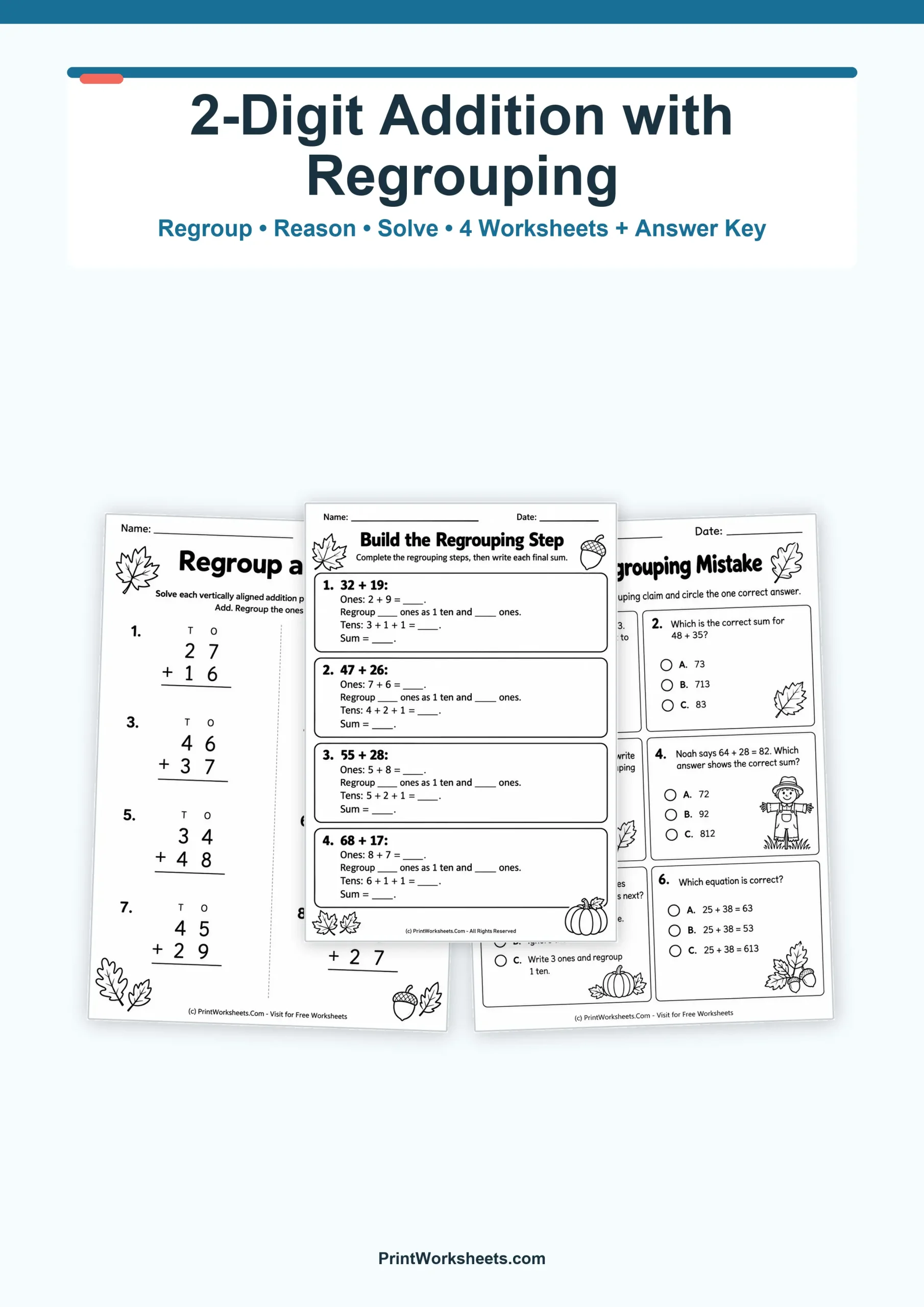
These fall 2-digit addition with regrouping worksheets give second graders four different ways to practice the same essential skill: adding two-digit numbers when the ones place makes 10 or more. Instead of repeating one page format, the set moves from straightforward vertical computation to guided regrouping steps, error analysis, and fall-themed word problems. That variety makes it useful for whole-group instruction, independent practice, math centers, homework, or a short review sequence.
2-Digit Addition with Regrouping Practice
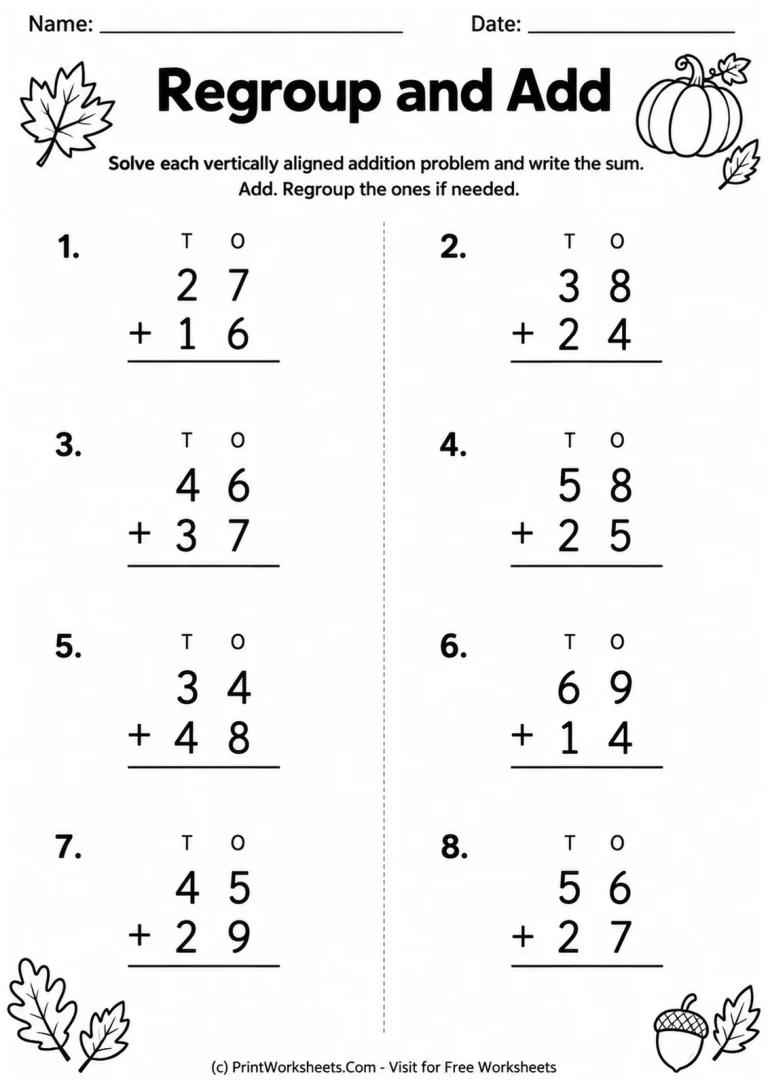
The first worksheet, Regroup and Add, focuses on clean vertical computation. Students solve eight problems with tens and ones labels above the columns, including 27 + 16, 46 + 37, 34 + 48, and 56 + 27. Every problem requires regrouping from the ones place, so students get concentrated practice with carrying one ten into the tens column. The layout keeps the place-value structure visible without adding extra steps that could distract from the arithmetic.
Teachers who want students to compare the skill with an easier prerequisite can also use our vertical double digit addition without regrouping practice.
Build the Regrouping Step
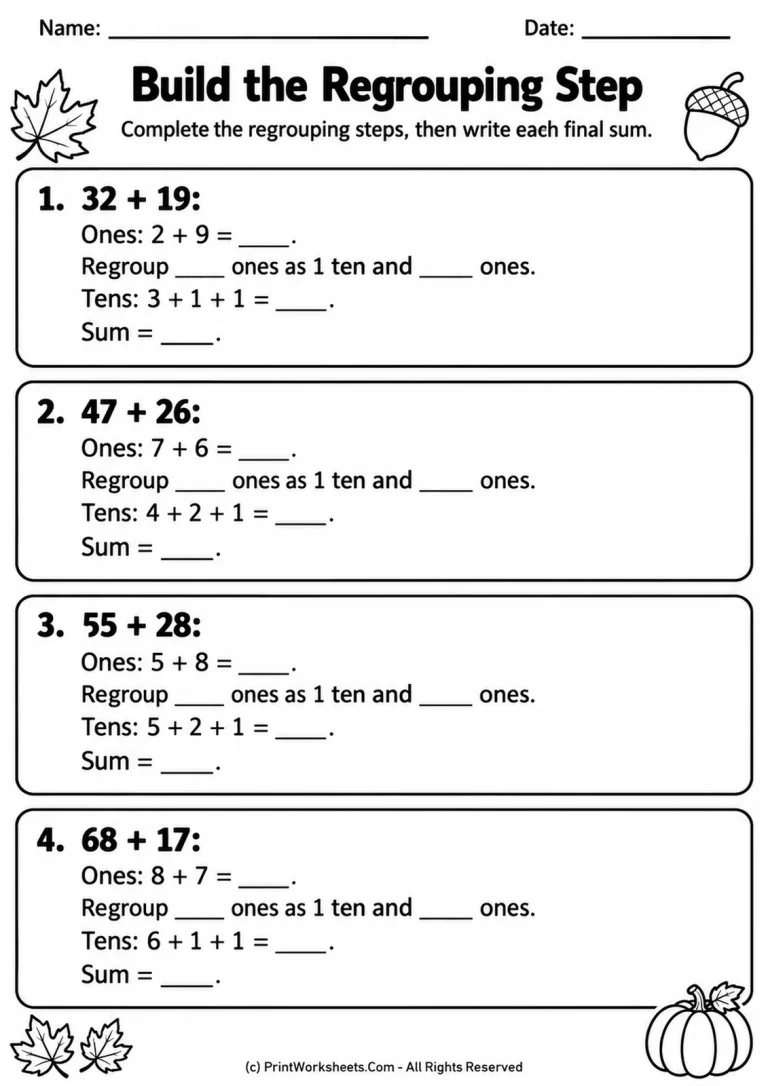
The second page slows the process down and makes each regrouping decision explicit. For problems such as 32 + 19 and 68 + 17, students first add the ones, identify 10 of those ones as 1 ten, record the leftover ones, add the tens plus the regrouped ten, and then write the final sum. This page is especially useful when a child can sometimes get the right answer but still needs help understanding why the carried 1 belongs in the tens place.
Because the blanks separate the stages, teachers can quickly see where an error begins. A student who writes 13 for the ones total but then records the wrong leftover digit needs a different kind of support from a student who forgets to include the regrouped ten in the tens calculation.
Spot the Regrouping Mistake
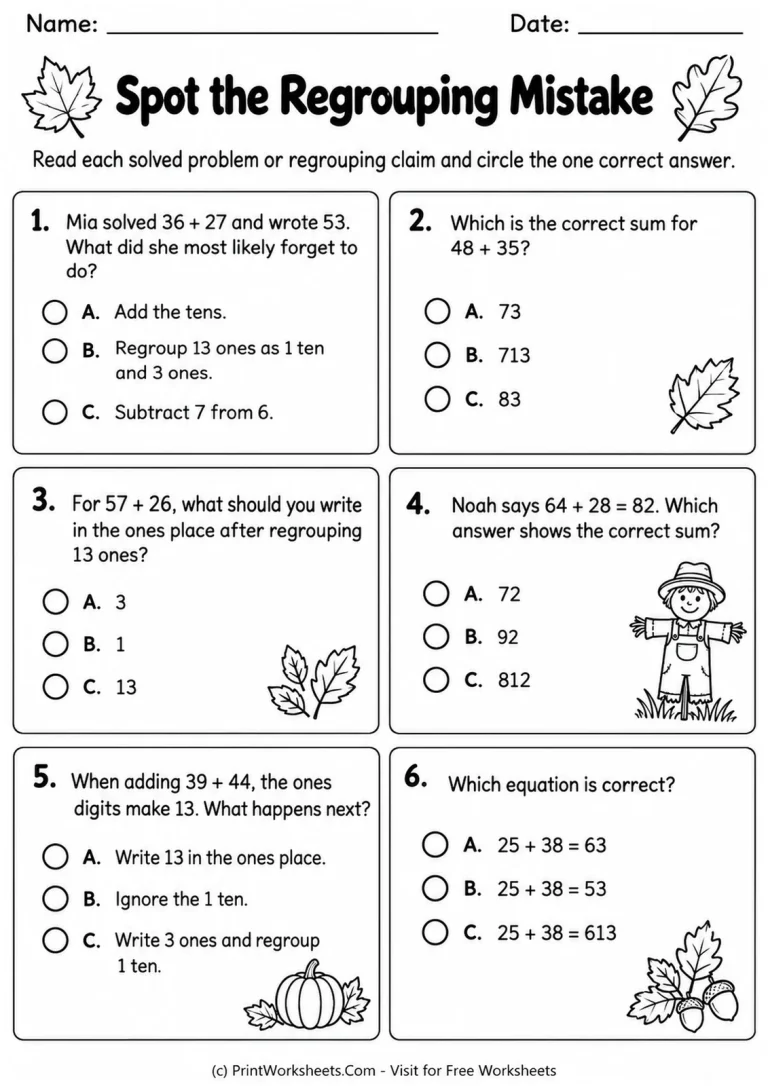
The third worksheet changes the task from solving to reasoning. Six multiple-choice questions ask students to identify what went wrong, choose a correct sum, or decide what should happen after the ones digits make more than 9. One item explains that Mia solved 36 + 27 and wrote 53, then asks what she most likely forgot to do. Another asks what belongs in the ones place after regrouping 13 ones in 57 + 26.
This error-analysis format is valuable because it checks whether students understand the structure of regrouping, not just whether they can imitate a procedure. Correct responses require students to recognize that 13 ones becomes 1 ten and 3 ones, and that the new ten must be included in the tens column.
Fall Addition Stories
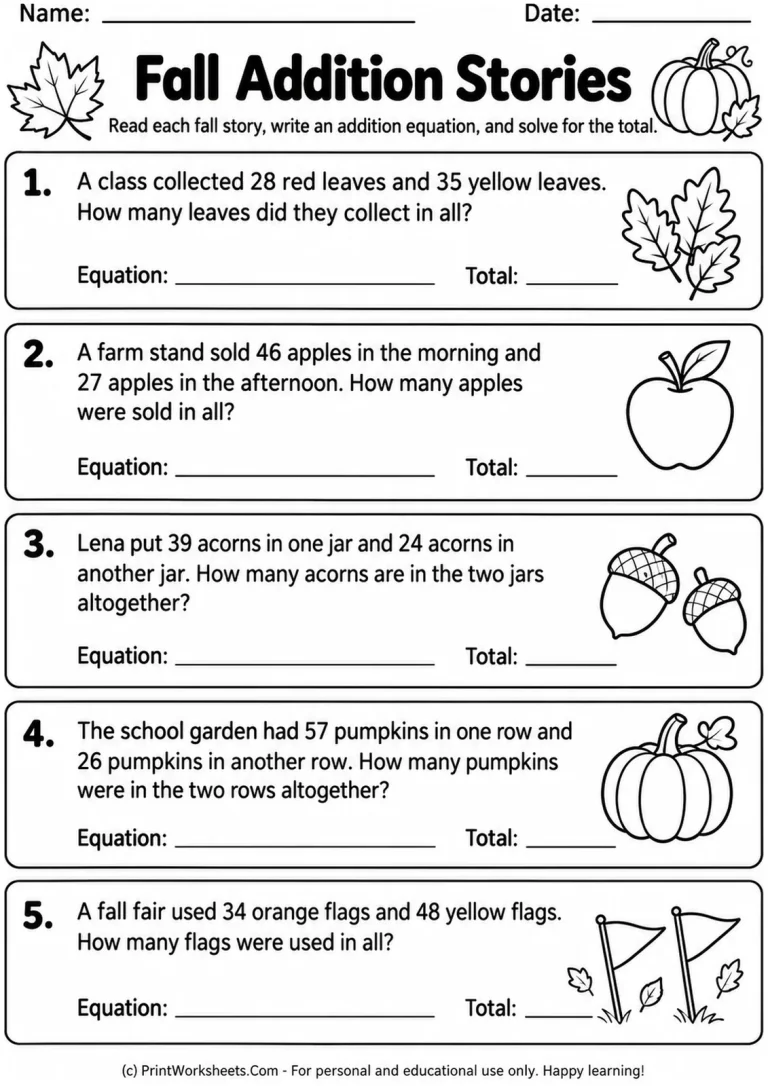
The fourth worksheet applies the same skill in five short fall contexts. Students read each story, write an addition equation, and solve for the total. The problems use concrete seasonal situations with leaves, apples, acorns, pumpkins, and fair flags. For example, one class collects 28 red leaves and 35 yellow leaves, while another problem combines 57 pumpkins with 26 more.
Writing both the equation and the total helps connect computation to problem interpretation. Students must recognize that each story describes joining two quantities, select addition, and then use regrouping accurately. For students ready for broader problem-solving practice, see these double digit addition and subtraction word problems with regrouping.
A Focused Four-Worksheet Sequence
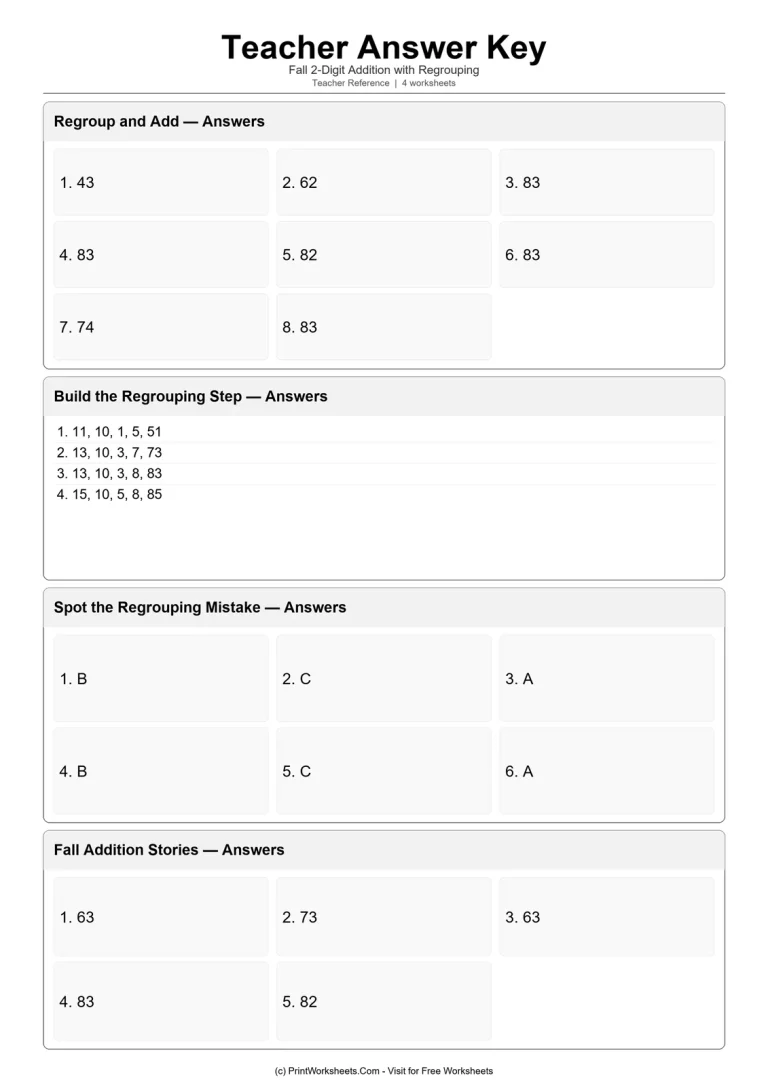
Used in order, the set creates a clear progression. Page one builds fluency with vertically aligned problems. Page two reveals the regrouping process step by step. Page three checks conceptual understanding through mistake analysis. Page four transfers the skill to word problems. The teacher answer key includes answers for all four student worksheets, including the intermediate regrouping values on the guided page.
The black-and-white fall artwork keeps the pages seasonal while remaining printer friendly. Leaves, pumpkins, acorns, and a scarecrow add visual interest without interfering with the math. Because the student pages approach the same skill from different angles, the set works well across several days rather than as four copies of the same exercise.
When to Use These Fall Addition Worksheets
Use these worksheets when students are ready to move beyond two-digit addition without regrouping and need repeated, varied practice with composing a new ten. They are especially well suited to second-grade review, intervention, small groups, independent work, and take-home practice during the fall season.