What is a double digit addition game? A double digit addition game is an interactive, play-based math activity designed to replace static worksheets with dynamic problem-solving. Moving away from rigid rows of pre-written equations, this specific “Spin and Add” printable requires second-grade students to physically generate their own math problems using a simple pencil and paperclip spinner. By introducing an element of chance, educators instantly lower math anxiety and increase student engagement. Printing this interactive math center ensures young learners actively practice crucial place value and regrouping skills while genuinely enjoying the mathematical process.
Teachers and homeschool parents heavily rely on our double digit addition game to breathe life into daily math rotations, independent study blocks, and early finisher bins. The unpredictable nature of the spinners means a single worksheet can be used multiple times without the student ever solving the exact same sequence of problems. To ensure your students have the foundational arithmetic speed necessary before tackling larger numbers, pair this interactive activity with our single digit addition fluency drills at PrintWorksheets.Com. Securing rapid single-digit recall guarantees that students will not get cognitively stuck when attempting to add the ones column during this two-digit game.
Inside the Spin and Add PDF
Rather than presenting a wall of intimidating numbers, this packet uses interactive visuals to break down the calculation process. The layout isolates the equation-building phase from the calculation phase. Each printable page targets specific second-grade numeracy mechanics:
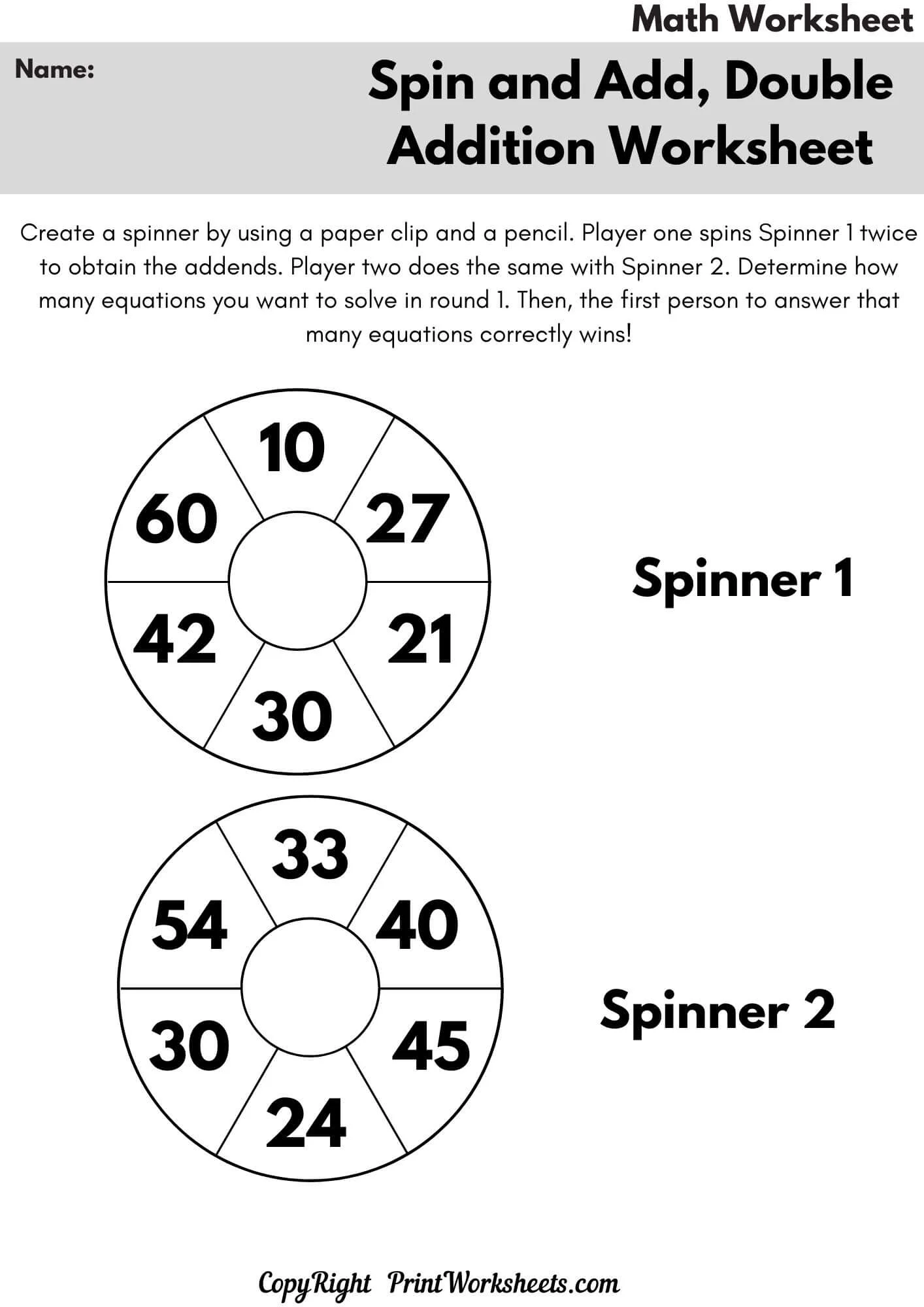
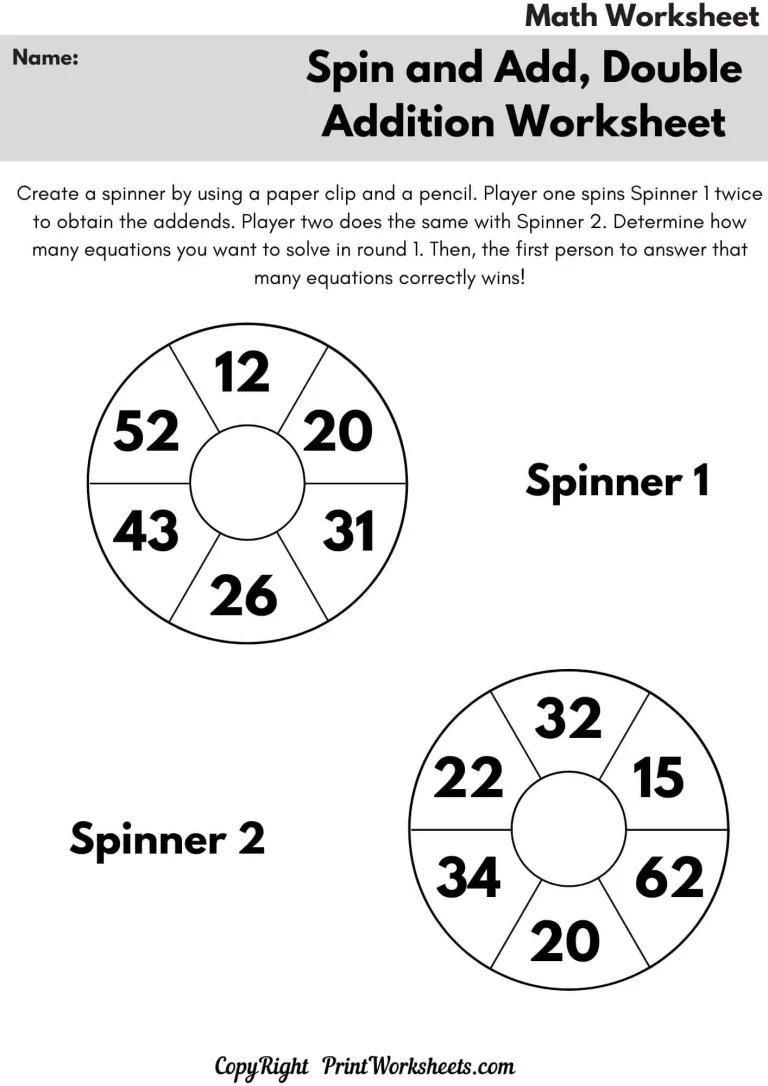
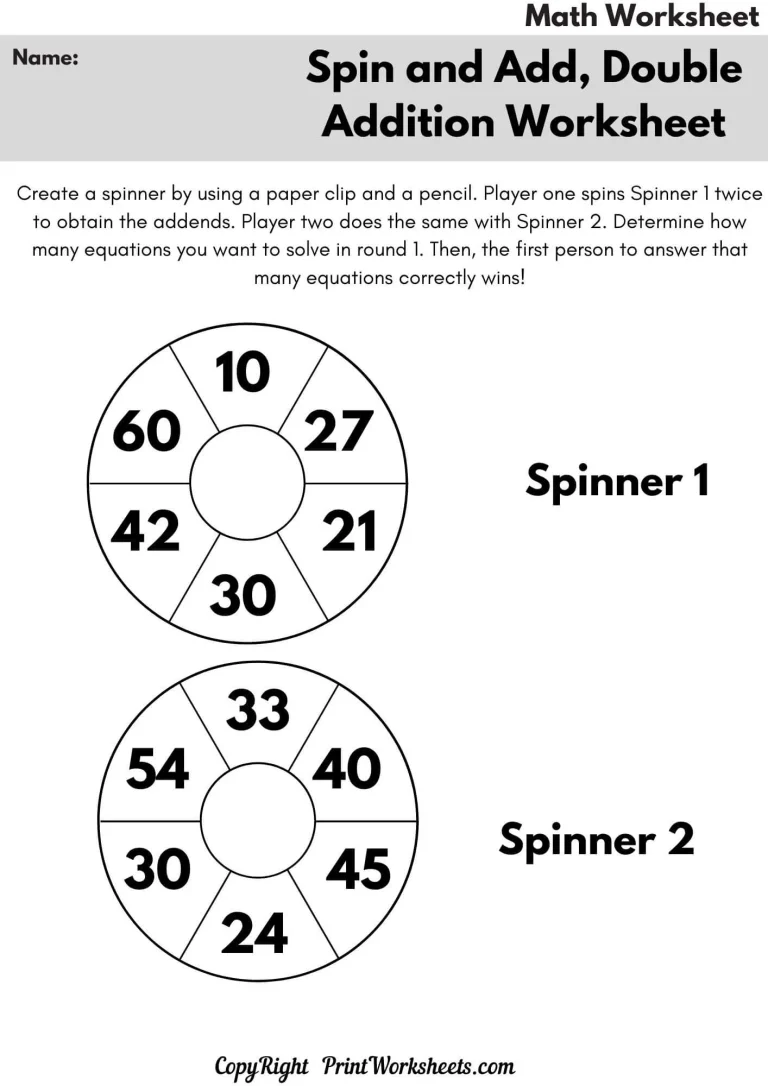
- The No-Regrouping Spinners: A foundational confidence-building page. The top half of the worksheet features two circular spinners divided into quadrants containing specific two-digit numbers (e.g., 12, 24, 31). The numbers are mathematically curated so that when combined, the sums of the ones column will never exceed 9. This allows early second graders to practice column alignment without the cognitive load of carrying the ten.
- The Regrouping Challenge Spinners: An advanced computation page. These spinners feature larger two-digit values ending in 6, 7, 8, and 9. Students spin twice and must actively carry the ten into the next column when solving, testing their deeper understanding of base-ten operations.
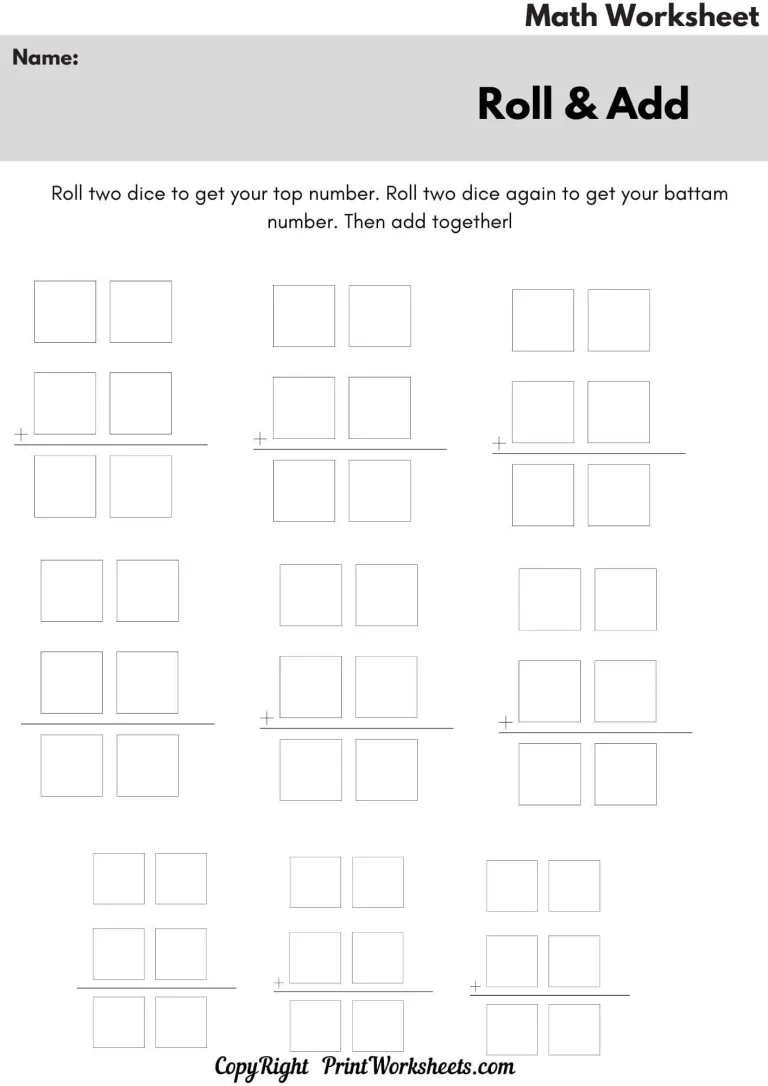
- The Blank Recording Matrix: A structured workspace grid located at the bottom of the pages. After spinning, students must accurately transfer the generated numbers into the blank vertical boxes. This forces students to practice proper digit alignment, ensuring tens are stacked strictly on top of tens, and ones on top of ones, before drawing their addition line.
Differentiation Options for Teachers
To assist tactile learners who become overwhelmed by abstract written numbers, mandate the use of physical base-ten blocks alongside the game. When the student spins “34” and “28”, they must first physically build the numbers with three ten-rods and four unit-cubes, then combine the physical blocks to discover the regrouping process before writing the answer. To stretch your gifted mathematicians, bypass the standard instructions. Ask them to spin three times instead of two, requiring them to stack and add three separate double-digit numbers, vastly increasing the working memory required.
Targeted Academic Skills
This hands-on resource is rigorously aligned with Common Core State Standards (specifically CCSS.MATH.CONTENT.2.NBT.B.5), which dictates that students must fluently add and subtract within 100 using strategies based on place value, properties of operations, and the relationship between addition and subtraction. By forcing students to write the equations themselves in the recording matrix, it directly assesses their spatial understanding of place value.
Frequently Asked Questions
How do you make a spinner with a paperclip?
Creating the spinner requires zero special equipment. The student simply places a standard metal paperclip flat in the center of the printed circle. They then place the tip of their pencil vertically inside the loop of the paperclip, acting as an anchor. With their other hand, they flick the paperclip, allowing it to spin rapidly around the pencil tip until it lands on a number.
Why is vertical alignment important in addition games?
Proper digit alignment prevents fundamental calculation failures. If a student sloppily writes a 5 from the ones column under a 2 from the tens column, their entire sum will be incorrect despite knowing basic arithmetic. The structured recording boxes in this game force students to respect spatial boundaries, building a critical habit for future multi-digit math.
Can this activity be played collaboratively?
Yes, it serves as an excellent partner activity. Student A can control the first spinner, while Student B controls the second spinner. Both students write down the generated equation on their individual recording sheets, solve it independently in silence, and then compare answers. This builds both computational independence and peer-review skills.