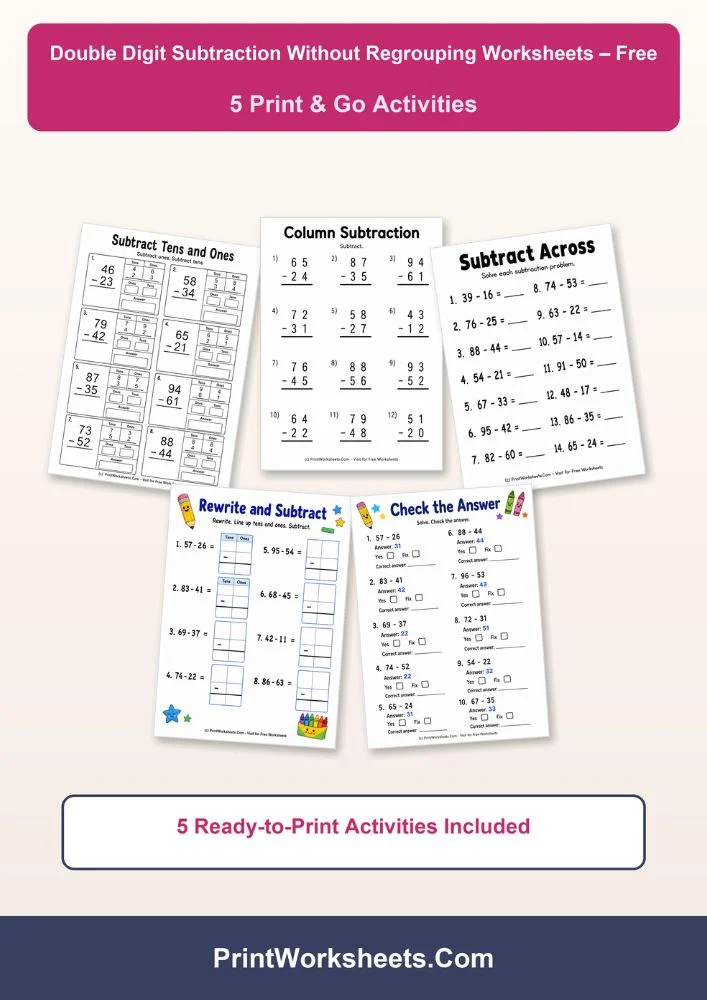
Download printable double digit subtraction without regrouping worksheets to provide targeted arithmetic practice for first and second-grade students. Transitioning from single-digit math facts to two-digit operations requires a strict understanding of place value. This specific printable PDF pack delivers rigorous math center activities focusing strictly on base-ten subtraction without the complication of borrowing. By utilizing structured tens and ones boxes, vertical column alignments, horizontal equations, and error analysis pages, educators can guarantee comprehensive foundational arithmetic development. Printing these no-prep math activities ensures young learners transition smoothly into advanced two-digit operations.
Educators and homeschool parents utilize double digit subtraction without regrouping worksheets during morning work, independent math centers, and direct instructional periods. Consistent exposure to strict place value alignment prevents calculation errors. Once students demonstrate absolute fluency with these foundational equations, they are academically prepared to advance. To build a continuous mathematical progression, immediately transition students from this specific packet to our challenging double digit subtraction regrouping worksheets. Continuous practice isolating the tens and ones columns secures the core logic required for future three-digit mathematics.
Inside the Subtraction Without Regrouping PDF
Clear formatting and structured alignment grids make this PDF pack necessary for early learners. The black-and-white layouts prevent visual distraction, forcing students to focus entirely on mathematical execution and place value. Each printable activity page targets specific primary grade core math standards:
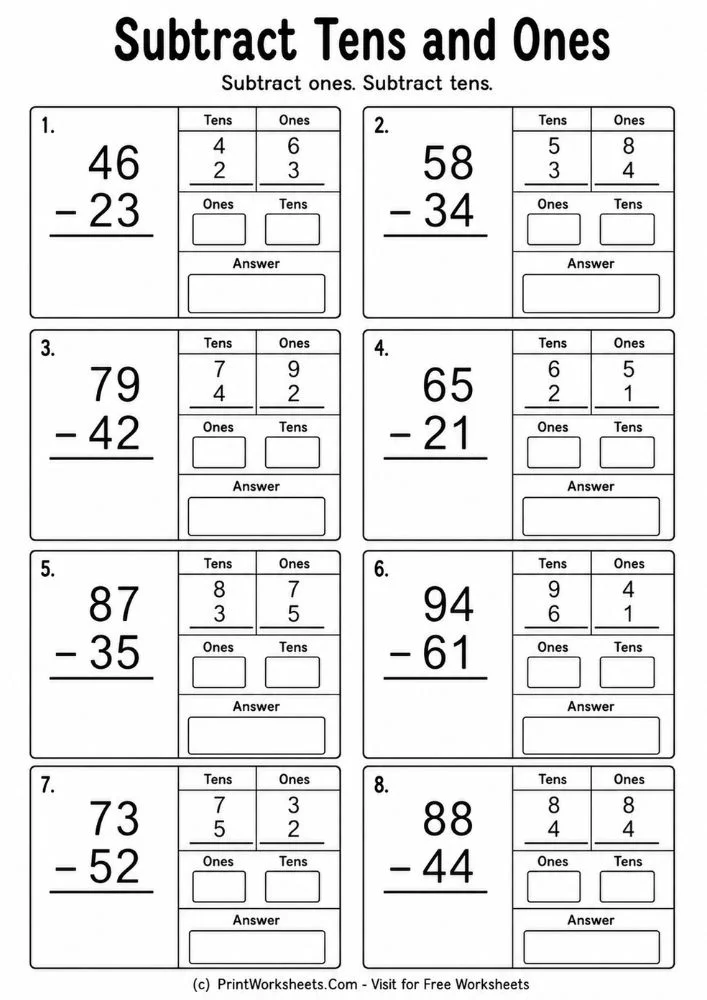
- Subtract Tens and Ones: A foundational place value worksheet. Students evaluate vertical subtraction problems housed inside distinct “Tens” and “Ones” graphic organizers. The worksheet requires students to physically write the separated answers into isolated “Ones” and “Tens” boxes before writing the combined final answer at the bottom. This visually proves that double-digit subtraction is simply executing two single-digit problems side-by-side.
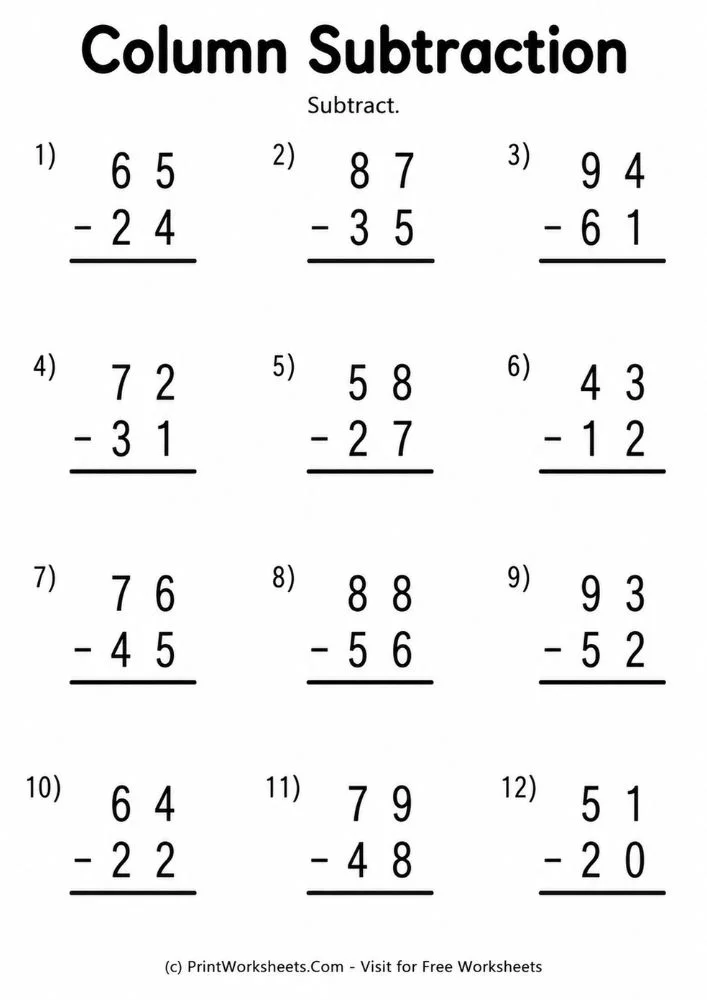
- Column Subtraction: A traditional vertical arithmetic worksheet. Students solve 12 standard double-digit subtraction equations. The numbers are precisely stacked to reinforce proper numerical alignment. This page builds calculation speed and visual recognition of standard mathematical formatting.
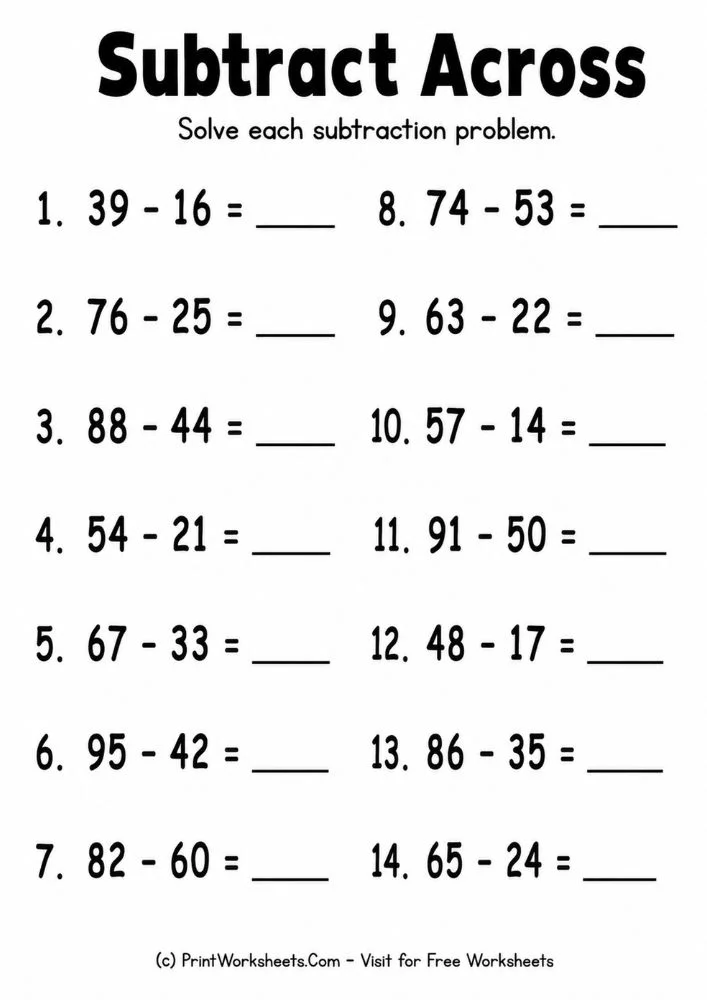
- Subtract Across: A horizontal mental math worksheet. Students evaluate 14 horizontal equations (e.g., 39 – 16 = ___). Because the numbers do not require regrouping, students are forced to apply mental math strategies, subtracting the ones digits in their head followed by the tens digits, writing the final difference on the provided line.
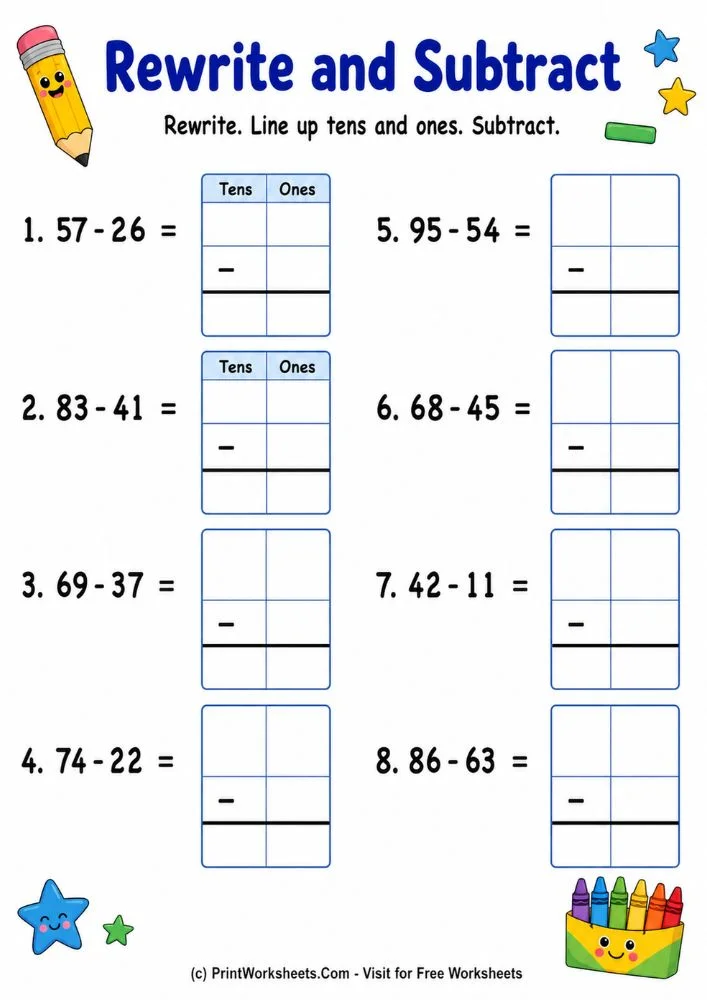
- Rewrite and Subtract: An advanced spatial formatting worksheet. Students read horizontal equations alongside blank vertical tens and ones grid boxes. The activity requires the student to independently rewrite the horizontal numbers into the correct vertical alignment before calculating the answer. This prevents the common student error of misaligning digits during independent work.
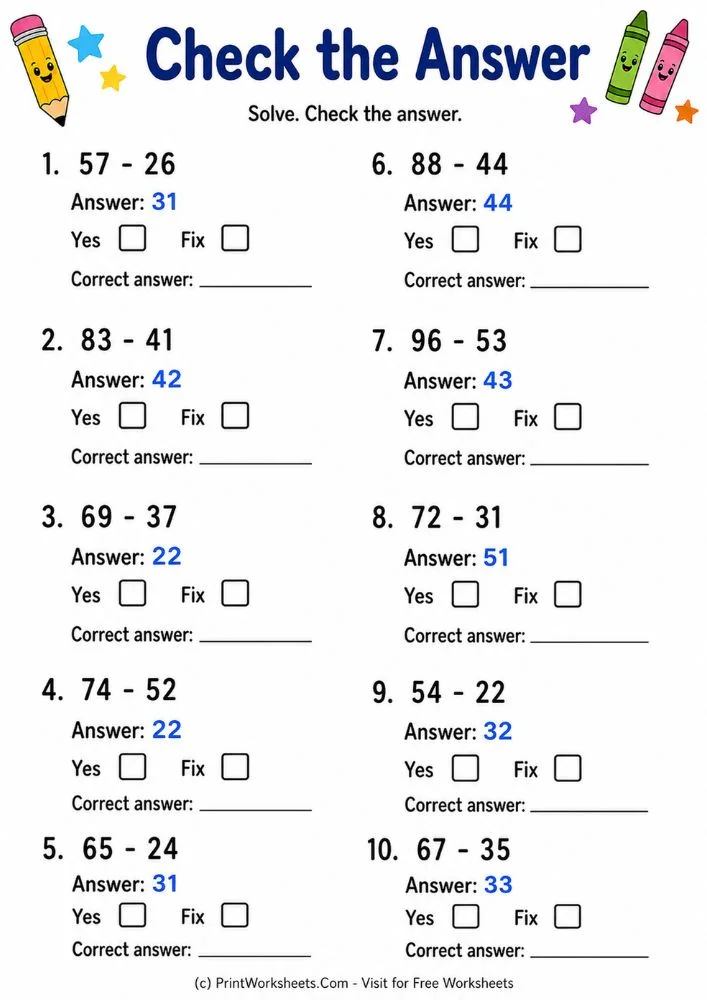
- Check the Answer: A critical thinking and error analysis worksheet. Students view ten pre-solved equations. They must calculate the problem mentally or on scratch paper to verify the printed answer. If correct, they check the “Yes” box. If incorrect, they check the “Fix” box and must write the actual correct answer on the provided line. Error analysis forces the highest level of mathematical comprehension.
How to Use Place Value Math Printables
Print this high-resolution PDF directly on standard 8.5″ x 11″ copy paper. Integrating physical math manipulatives directly alongside the double digit subtraction without regrouping worksheets guarantees maximum skill retention. During the “Subtract Tens and Ones” activity, provide students with physical base-ten blocks. Instruct students to build the top number using ten-rods and unit-cubes, then physically remove the designated amounts to find the difference before writing the numbers on the paper.
To maximize math center efficiency, place the “Rewrite and Subtract” and “Check the Answer” pages inside heavy-duty dry-erase sleeves. Provide students with fine-tip washable markers. This simple preparation allows multiple classroom groups to practice spatial alignment and error analysis repeatedly throughout the instructional week without wasting printer ink or copy paper.
Frequently Asked Questions
Why teach double digit subtraction without regrouping first?
Teaching subtraction without regrouping isolates place value alignment as the sole learning objective. If a teacher introduces two-digit subtraction and borrowing simultaneously, students frequently become overwhelmed and misalign their columns. By practicing equations where the top digit is always larger than the bottom digit, students develop strict muscle memory for stacking ones over ones and tens over tens before navigating complex borrowing steps.
Why do students need to rewrite horizontal math problems?
Rewriting horizontal problems vertically forces students to actively apply place value rules rather than just answering a pre-formatted question. Many students can solve a stacked equation but will mistakenly align the tens digit of a smaller number under the ones digit of a larger number if asked to stack it themselves. The rewriting worksheet proves they understand spatial numerical structures.
What grade levels use these double digit worksheets?
These subtraction worksheets directly align with late first-grade and standard second-grade core math expectations. First-grade educators utilize the “Tens and Ones” graphic organizers to introduce the concept of base-ten separation. Second-grade educators frequently print this exact PDF pack at the beginning of the academic year for back-to-school math review, ensuring foundational alignment fluency before introducing standard regrouping algorithms.