Back to school classroom rules worksheets are printable behavior and routine pages that help kindergarten, grade 1, and grade 2 students understand what safe, kind, and helpful classroom choices look like. This worksheet set focuses on visual classroom expectations, school rule matching, and simple real-life situations students may meet during the first weeks of school.
The strongest part of these back to school classroom rules worksheets is that students do not only hear a rule; they see the rule in action. Young learners compare picture choices, connect classroom objects to rule statements, and write or draw what a student should do next. That makes the PDF useful for morning work, first week routines, classroom management lessons, small group review, substitute plans, and social behavior practice.
For teachers building a wider first-week routine pack, this page naturally connects with free printable classroom rules worksheets already available on PrintWorksheets.Com. That related post can support extra practice after students finish these K-2 classroom rule pages.
Inside the back to school classroom rules worksheets PDF
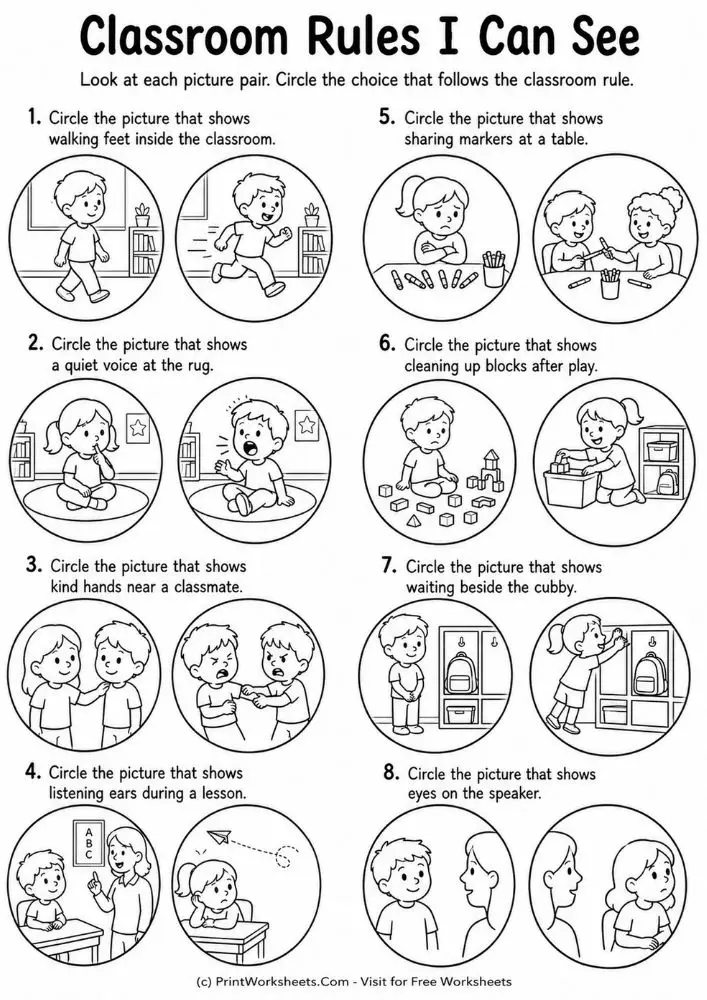
- Page 1 Classroom Rules I Can See is a black-and-white picture-choice worksheet with eight classroom behavior prompts. Students circle the picture that shows walking feet inside the classroom instead of running. They choose a quiet voice at the rug instead of shouting. They identify kind hands near a classmate, listening ears during a lesson, and sharing markers at a table. The page also asks students to recognize cleaning up blocks after play, waiting beside the cubby, and keeping eyes on the speaker. This page is especially helpful for kindergarten and first grade because the visual pairs show the difference between expected and unexpected classroom behavior.
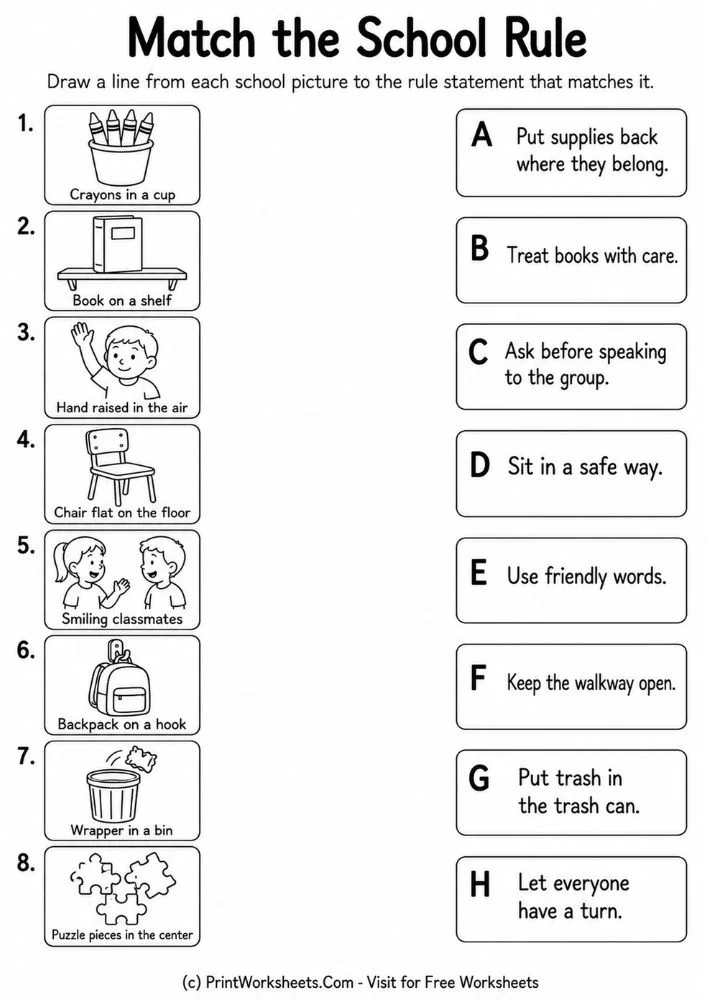
- Page 2 Match the School Rule gives students a rule-matching activity with eight school pictures on the left and eight rule statements on the right. The pictures include crayons in a cup, a book on a shelf, a hand raised in the air, a chair flat on the floor, smiling classmates, a backpack on a hook, a wrapper in a bin, and puzzle pieces in the center. Students draw lines to match each picture with rules such as put supplies back where they belong, treat books with care, ask before speaking to the group, sit in a safe way, use friendly words, keep the walkway open, put trash in the trash can, and let everyone have a turn.
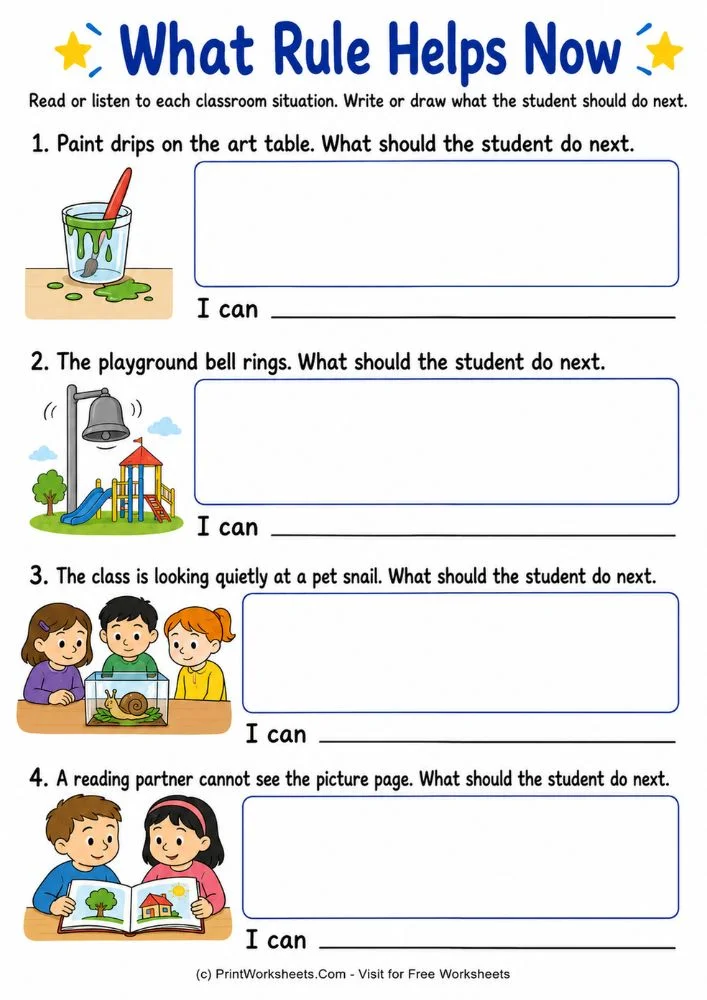
- Page 4 What Rule Helps Now uses four real classroom situations with large response boxes. Students read or listen to each situation, then write or draw what the student should do next. The first situation shows paint dripping on the art table, so students may draw or write a cleanup response. The second situation shows the playground bell ringing, which encourages students to stop playing, line up, or walk back safely. The third situation shows the class quietly looking at a pet snail, guiding students toward gentle and quiet behavior. The fourth situation shows a reading partner who cannot see the picture page, so students can suggest moving the book, sharing the page, or asking kindly.
Differentiation Options for Teachers
For students who need extra support, use a “point and act” routine before students write or circle. The teacher can say “walking feet,” “quiet voice,” “kind hands,” or “eyes on speaker,” and students point to the matching picture before answering. This quick physical response helps young learners connect the words to the classroom action. For students who are not ready to write full sentences on Page 4, allow them to draw the next step first and copy a short sentence such as “I can clean it up” or “I can share the page.”
For students who are ready for a challenge, ask them to add a reason after each rule. Instead of only matching “Put trash in the trash can,” they can explain, “This keeps the room clean.” After Page 4, stronger writers can turn one situation into a two-sentence classroom promise using the frame “When ___ happens, I can ___. This helps because ___.” This keeps the task age-appropriate while adding reasoning and social language.
Targeted Academic Skills
These classroom rules worksheets support early elementary skills in listening comprehension, visual discrimination, social decision-making, oral language, and short written response. Students practice interpreting pictures, comparing two behavior choices, matching visual clues to written rule statements, and explaining what action should happen next in a classroom situation.
The pages also connect to speaking and listening expectations because students can discuss classroom routines, respond to teacher-read prompts, and explain their choices. Page 4 adds early writing practice by asking students to complete “I can” responses or draw a clear solution. For kindergarten through grade 2, this combination of visuals, matching, and simple written reflection makes classroom expectations easier to teach before problems happen.
Frequently Asked Questions
What grade levels are these back to school classroom rules worksheets for?
These worksheets are best for kindergarten, 1st grade, and 2nd grade. The picture choices support younger students, while the matching and situation prompts give older students more language practice.
Can I use these worksheets during the first week of school?
Yes, these pages are designed for the first week of school. They work well when introducing walking feet, quiet voice, kind hands, listening ears, cleanup routines, sharing, safe sitting, and classroom materials.
Should students complete the worksheets independently?
Some students can work independently, but teacher read-aloud is recommended for younger learners. Kindergarten students may need the prompts read aloud, while first and second graders can often complete the matching page with less support.
Why was the answer key not included in this post content?
The uploaded answer key should not be used in its current form. It includes Page 3 answers for an activity that does not match the uploaded Page 3 worksheet, so it should be corrected before publishing.
How can teachers use these pages for classroom management?
Teachers can use the worksheets before problems happen. The pages let students practice expected behaviors visually, talk about safe choices, and create simple “I can” responses for common classroom situations.