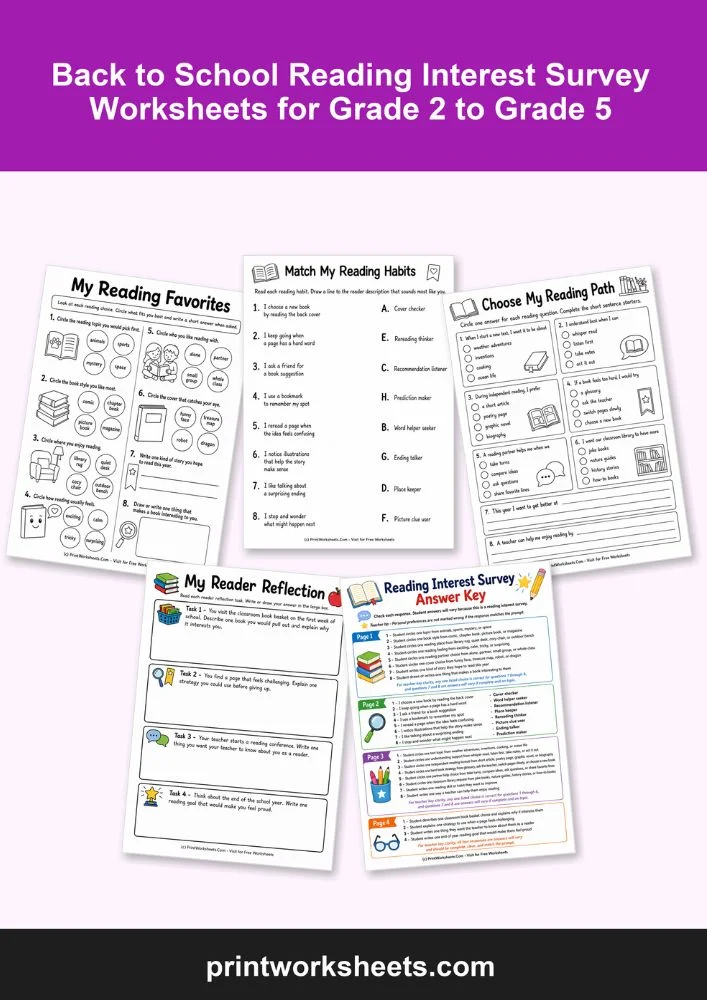
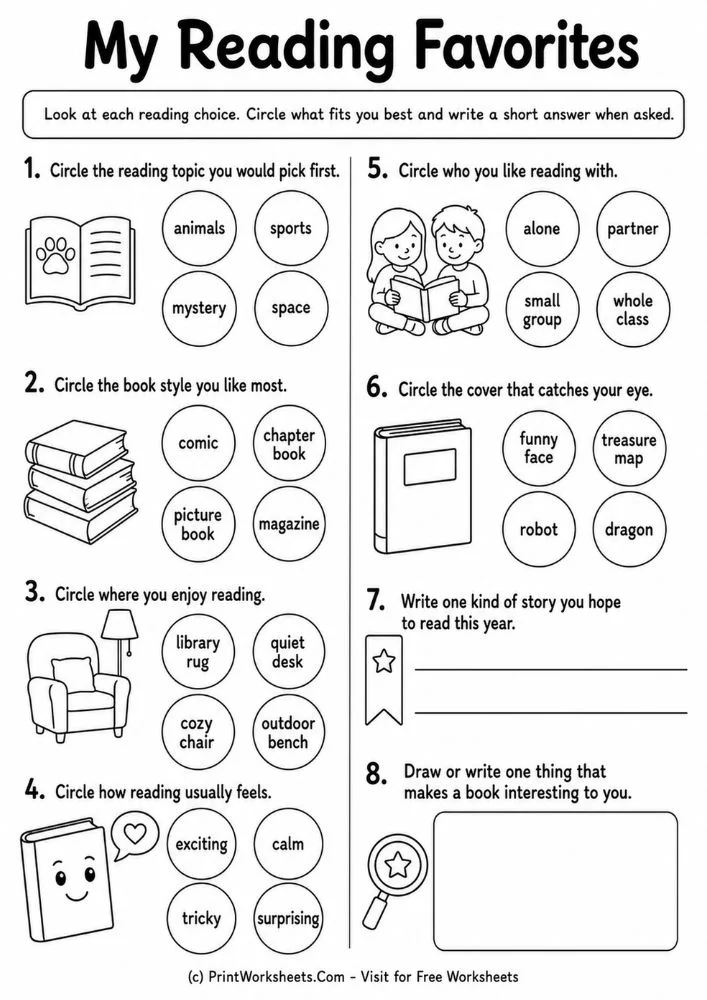
Back to school reading interest survey worksheets are printable literacy pages that help teachers learn what students enjoy reading, how they choose books, where they like to read, what support they need, and which reading goals matter to them at the start of the school year. This PDF is designed for grades 2 to 5 and works well during the first week of school, independent reading launch, classroom library setup, reading workshop routines, and early teacher-student reading conferences.
These back to school reading interest survey worksheets are not a right-or-wrong reading test. They are student voice pages. Children circle reading topics, choose book styles, select reading places, describe what feels challenging, and write short reflections about themselves as readers. A student who chooses mystery books, a cozy chair, partner reading, and a funny cover is giving the teacher a different reading profile than a student who chooses space, a quiet desk, reading alone, and a robot cover. Those answers can guide book recommendations, partner choices, small group planning, and classroom library displays.
For a broader first-week student profile activity, teachers can pair this PDF with back to school all about me worksheets. That related worksheet helps students introduce personal interests, while this reading survey focuses specifically on book preferences, reading confidence, support needs, and literacy goals.
Inside the back to school reading interest survey worksheets PDF
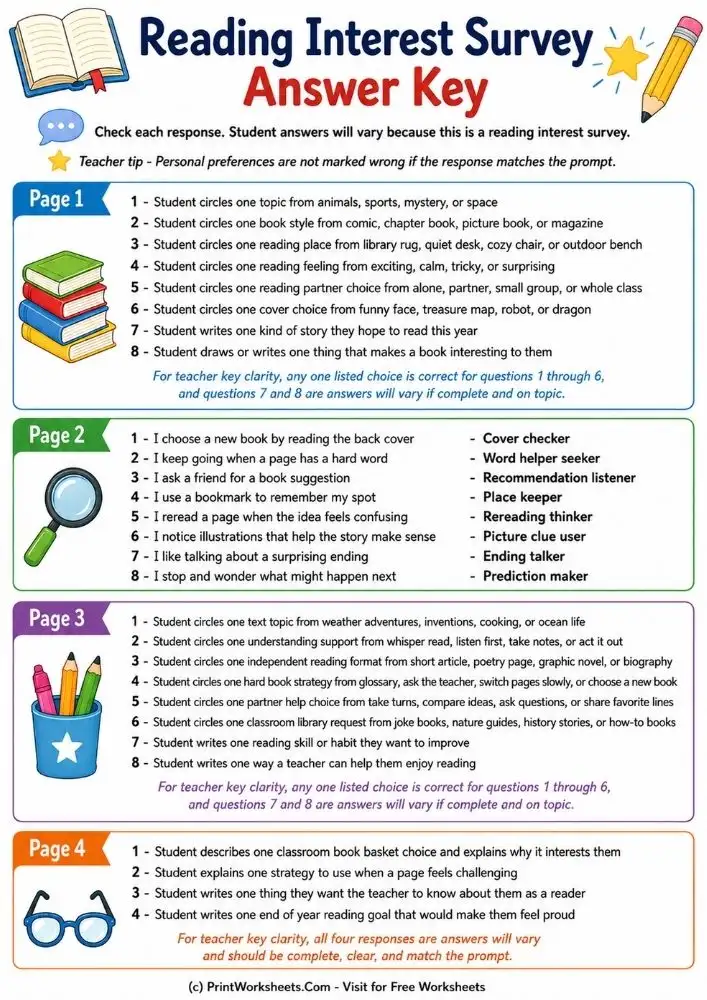
- Page 1 My Reading Favorites gives students eight clear reading preference questions in a black-and-white printable layout. Students circle the reading topic they would pick first from animals, sports, mystery, or space. They choose the book style they like most from comic, chapter book, picture book, or magazine. They also circle where they enjoy reading, with choices such as library rug, quiet desk, cozy chair, and outdoor bench. Another question asks how reading usually feels, using the words exciting, calm, tricky, and surprising. Students then choose who they like reading with from alone, partner, small group, or whole class. A cover question asks which design catches their eye, including funny face, treasure map, robot, and dragon. The page ends with two open responses: one kind of story they hope to read this year and one thing that makes a book interesting to them.
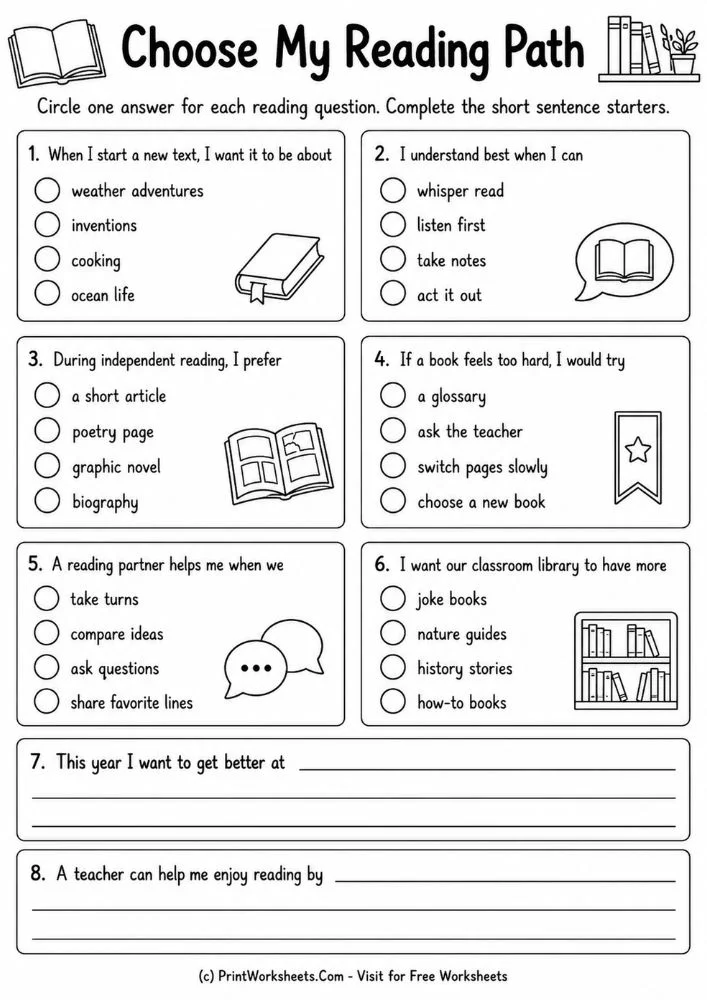
- Page 3 Choose My Reading Path asks students to think more carefully about how they learn as readers. The first card asks what they want a new text to be about, with options including weather adventures, inventions, cooking, and ocean life. The second card asks how they understand best, using choices such as whisper read, listen first, take notes, and act it out. Students then choose an independent reading format from a short article, poetry page, graphic novel, or biography. A support question asks what they would try if a book feels too hard, including a glossary, asking the teacher, switching pages slowly, or choosing a new book. The page also asks how a reading partner helps, with choices like take turns, compare ideas, ask questions, and share favorite lines. Another card asks what the classroom library should have more of, including joke books, nature guides, history stories, and how-to books. The final two sentence starters ask what the student wants to get better at and how a teacher can help them enjoy reading.
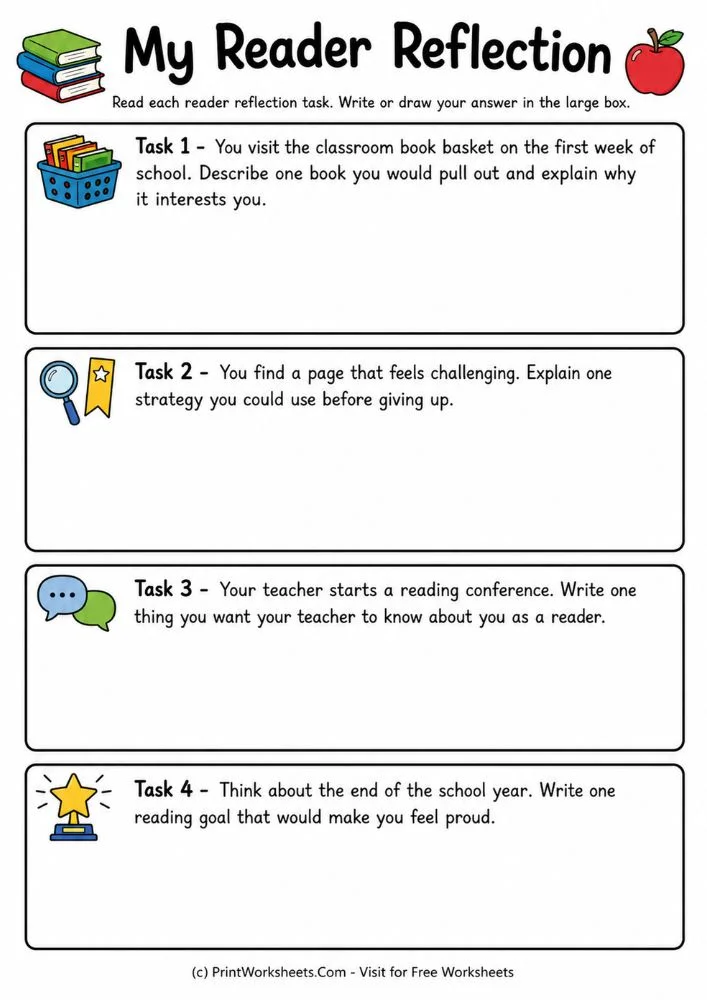
- Page 4 My Reader Reflection moves from quick choices to deeper written thinking. Task 1 asks students to imagine visiting the classroom book basket during the first week of school and describe one book they would pull out, including why it interests them. Task 2 asks students to explain one strategy they could use before giving up when a page feels challenging. Task 3 connects directly to reading conferences by asking students to write one thing they want the teacher to know about them as a reader. Task 4 asks students to think about the end of the school year and write one reading goal that would make them feel proud. Each task has a large response box, making the page useful for writing, drawing, or a combination of both.
Differentiation Options for Teachers
For students who need support, start with a picture-based preview before they begin writing. Point to the open book, book stack, chair, partner reading picture, bookshelf, speech bubbles, and goal reflection box. Ask students to name what each picture might mean before reading the prompt. This gives struggling readers and multilingual learners a visual entry point without turning the survey into a test. Teachers can also read one question at a time and let students circle answers first before asking them to complete the written responses.
For students who need an extra challenge, turn the survey into a reader identity paragraph. Ask them to choose four answers from the worksheets and explain how those choices describe them as readers. A strong response might connect a favorite topic, preferred reading place, hard-book strategy, and end-of-year goal. Students can also use their survey answers to recommend one new classroom library bin and explain which classmates might enjoy that type of book.
Targeted Academic Skills
These back to school reading interest survey worksheets support student reflection, written response development, speaking and listening preparation, and independent reading routines. Students practice answering questions with relevant information, explaining personal preferences, naming reading strategies, and setting a literacy goal. The pages also help teachers gather information for reading conferences, book recommendations, classroom library organization, and partner reading decisions.
The worksheet set supports Common Core-aligned literacy behaviors connected to writing, speaking, listening, and reading habits. Students produce short written responses that stay on topic, use details to explain a choice, and reflect on how they learn. They also prepare for classroom conversations about reading identity, book selection, and comprehension support. While this PDF is not a formal comprehension assessment, it gives teachers practical information that can improve reading instruction during the first weeks of school.
Frequently Asked Questions
What grade levels are these back to school reading interest survey worksheets for?
These worksheets are best for grades 2 to 5. Younger students can circle picture-supported choices, while older students can give fuller written explanations on the reflection and goal-setting page.
Should teachers grade this reading interest survey?
No, this survey should not be graded like a test. The purpose is to learn about student reading preferences, habits, challenges, and goals. A response is useful when it matches the prompt and gives the teacher clear information about the student as a reader.
When should I use these worksheets?
The best time is during the first week of school or before launching independent reading. Teachers can also use the pages before reading conferences, classroom library shopping, partner assignments, book talks, or reading goal lessons.
How can the survey help with classroom library planning?
The student answers show which book topics and formats are most appealing to the class. If many students choose mystery, ocean life, graphic novels, joke books, or how-to books, teachers can use that information to organize bins, highlight books, and plan read-aloud recommendations.