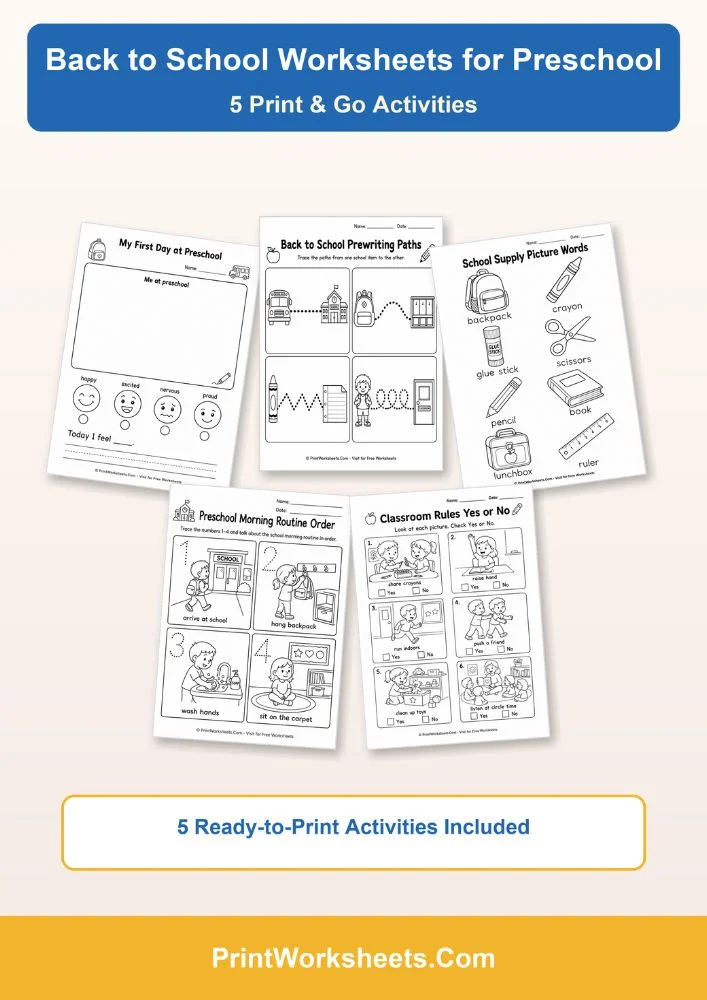
Childcare directors, teachers, and parents can instantly set up their morning learning centers with our free printable back to school worksheets for preschool. Designed specifically for early learners who are just developing pencil control, this 5-page PDF bundle tackles essential first-week milestones. By focusing on prewriting paths, identifying everyday school supplies, and understanding basic classroom rules, these highly visual pages keep toddlers actively engaged without requiring reading skills.
The transition into a structured preschool environment requires a heavy focus on daily routines and social-emotional boundaries. Providing these low-stress printables helps young children adjust safely to their new schedules. To build a comprehensive orientation folder, you can seamlessly pair this foundational set with our free back to school coloring pages pack to maintain a calm desk environment, or transition older toddlers into our early quantitative tracking using our free printable back to school math worksheets.
Inside the Preschool First Week Bundle
This printable packet removes confusing instructions and focuses entirely on the core developmental needs of 3 and 4-year-olds. Each page serves a specific fine motor or behavioral purpose:
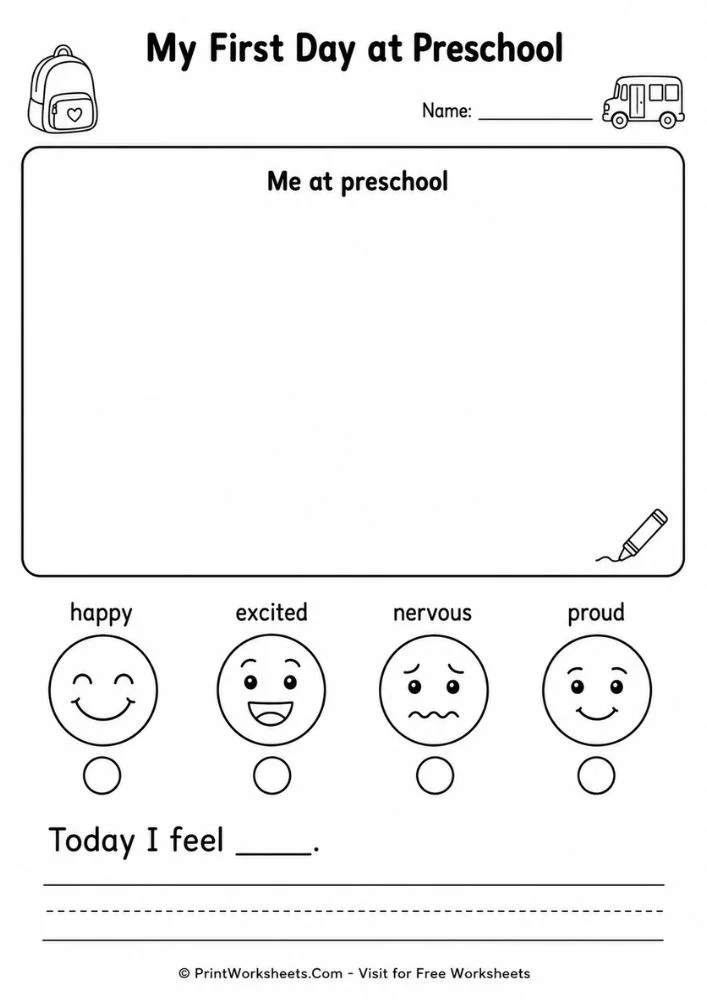
- My First Day at Preschool: An emotional check-in layout where toddlers color the face that matches their feelings (happy, excited, nervous, proud) and draw a picture of themselves in their new classroom.
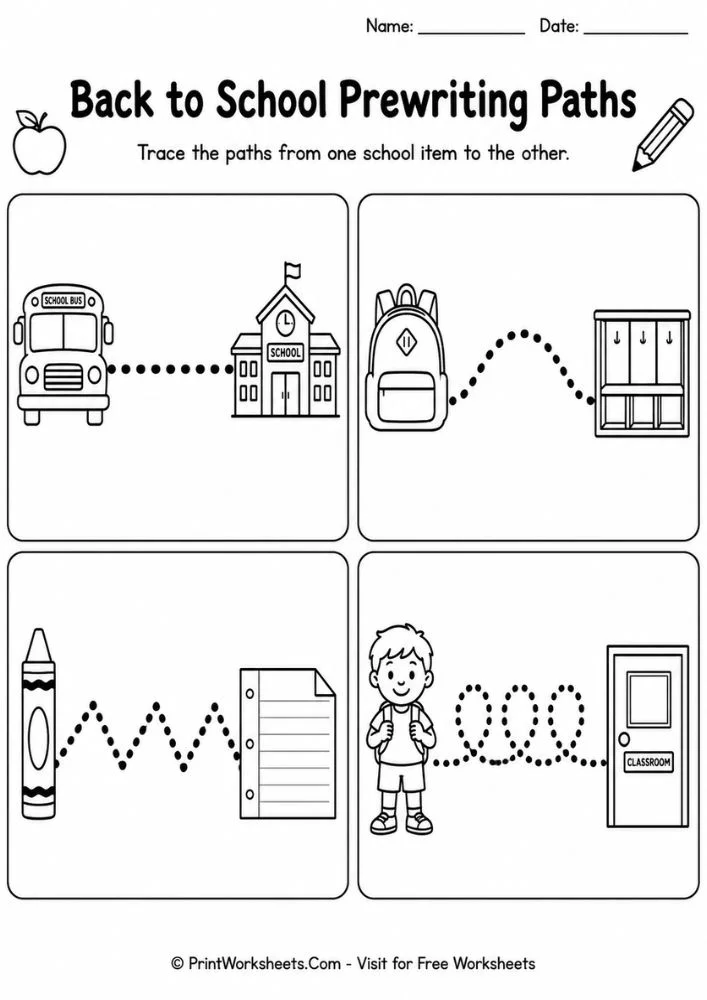
- Back to School Prewriting Paths: A critical fine motor skill builder. Children trace large dotted lines—including straight, wavy, and looped paths—to connect a school bus to a building or a backpack to a cubby.
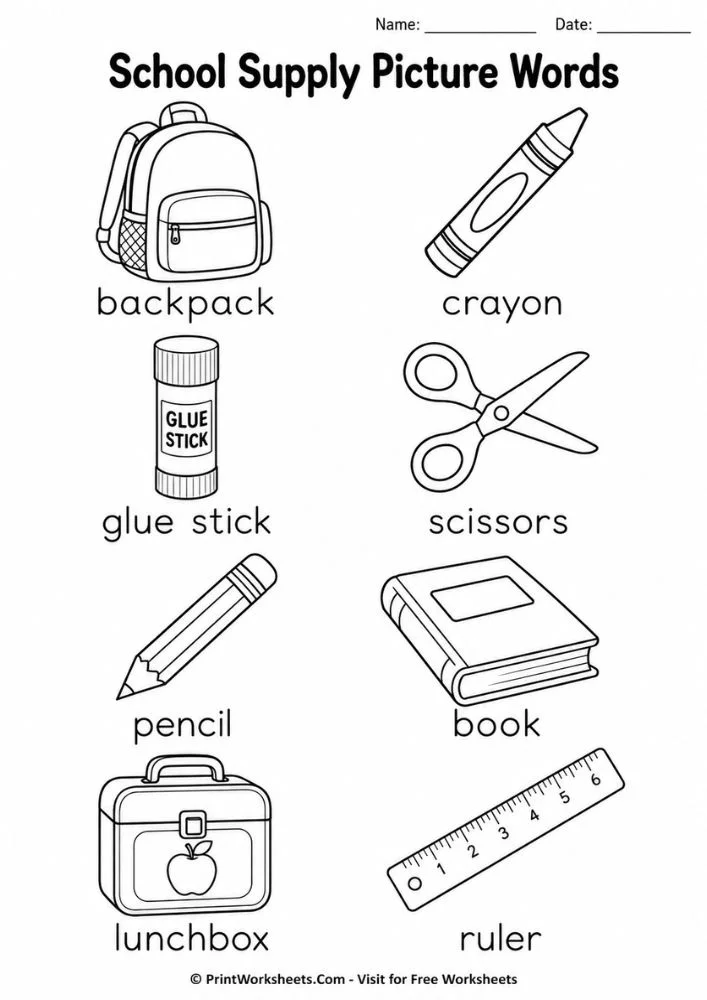
- School Supply Picture Words: A visual vocabulary sheet featuring clear, colorable outlines of everyday items they will use, such as scissors, glue sticks, and lunchboxes.
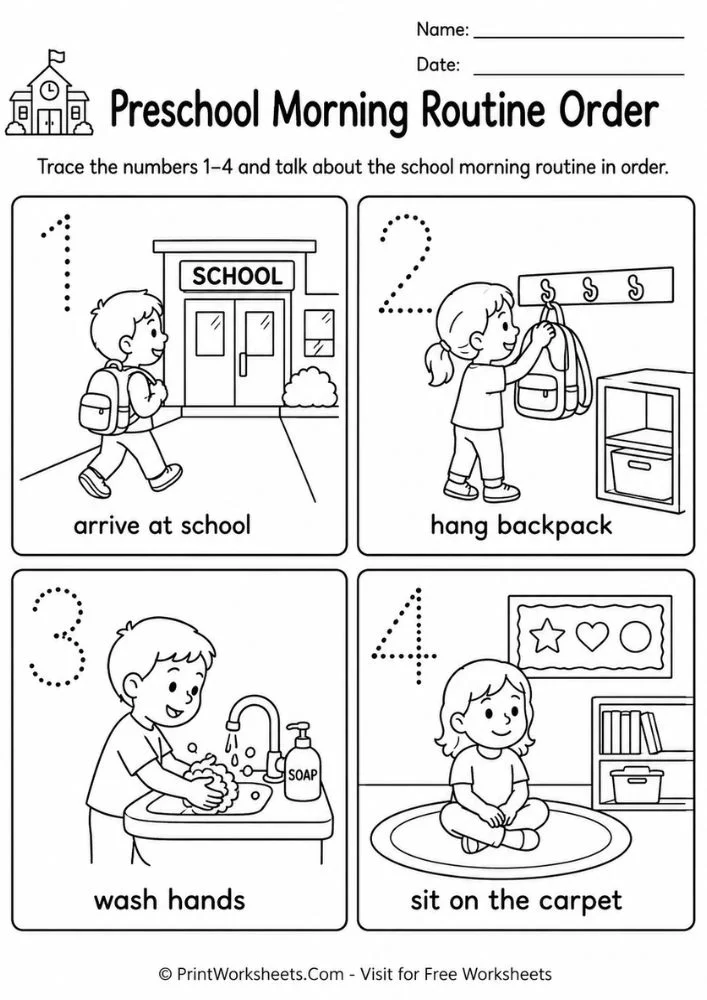
- Preschool Morning Routine Order: A sequencing activity where kids trace the numbers 1 through 4 to learn the daily classroom flow: arriving, hanging backpacks, washing hands, and sitting on the carpet.
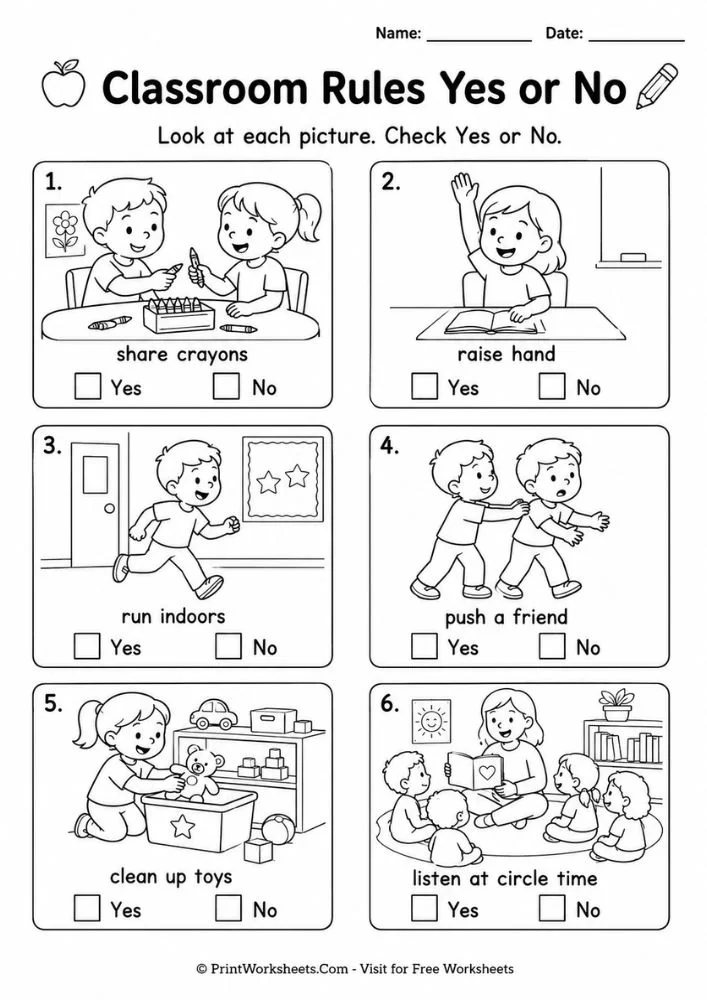
- Classroom Rules Yes or No: A behavioral sorting page highlighting good choices (sharing crayons, raising hands) versus bad choices (running indoors, pushing), allowing kids to check the correct box visually.
These exercises double as excellent diagnostic tools, instantly showing teachers which toddlers have developed a pincer grasp and can follow simple visual directions.
Practical Classroom Implementation
To get the best results, do not hand toddlers the entire packet at once. Place the “Prewriting Paths” inside heavy-duty dry-erase pockets at your morning table. This allows kids to practice their lines multiple times with thick, washable markers while you greet parents at the door. Reserve the “Classroom Rules Yes or No” sheet for your afternoon circle time, using the worksheet to reinforce the physical boundaries you just discussed as a group.
Print the high-resolution PDF on standard 8.5″ x 11″ copy paper. Always ensure “fit to printable area” is selected in your printer settings so the lower tracing lines and checkboxes remain perfectly intact.
Actionable Advice for Preschool Teachers & Parents
What if my preschooler gets frustrated tracing the prewriting paths?
Teacher Tip: Ditch the standard pencils. Give them a thick, triangular crayon or a chunky marker. If they still struggle, use a “hand-over-hand” technique for the first few loops, or let them trace the dotted lines with their index finger and a dab of washable paint before introducing a writing tool.
How should I introduce the Yes or No classroom rules page?
Teacher Tip: Do not just pass the paper out. Act out the scenarios physically. Have your teacher’s aide pretend to “run indoors” and ask the class, “Is this a yes or a no?” Once they yell “No!”, have them check the box on their paper. This connects physical behavior to the visual worksheet.
How can I make the morning routine worksheet more effective?
Teacher Tip: After the students complete the tracing and coloring on the “Morning Routine Order” page, laminate the sheets and tape them inside their individual cubbies. It serves as a permanent, student-created visual checklist they can look at every single morning when they arrive.