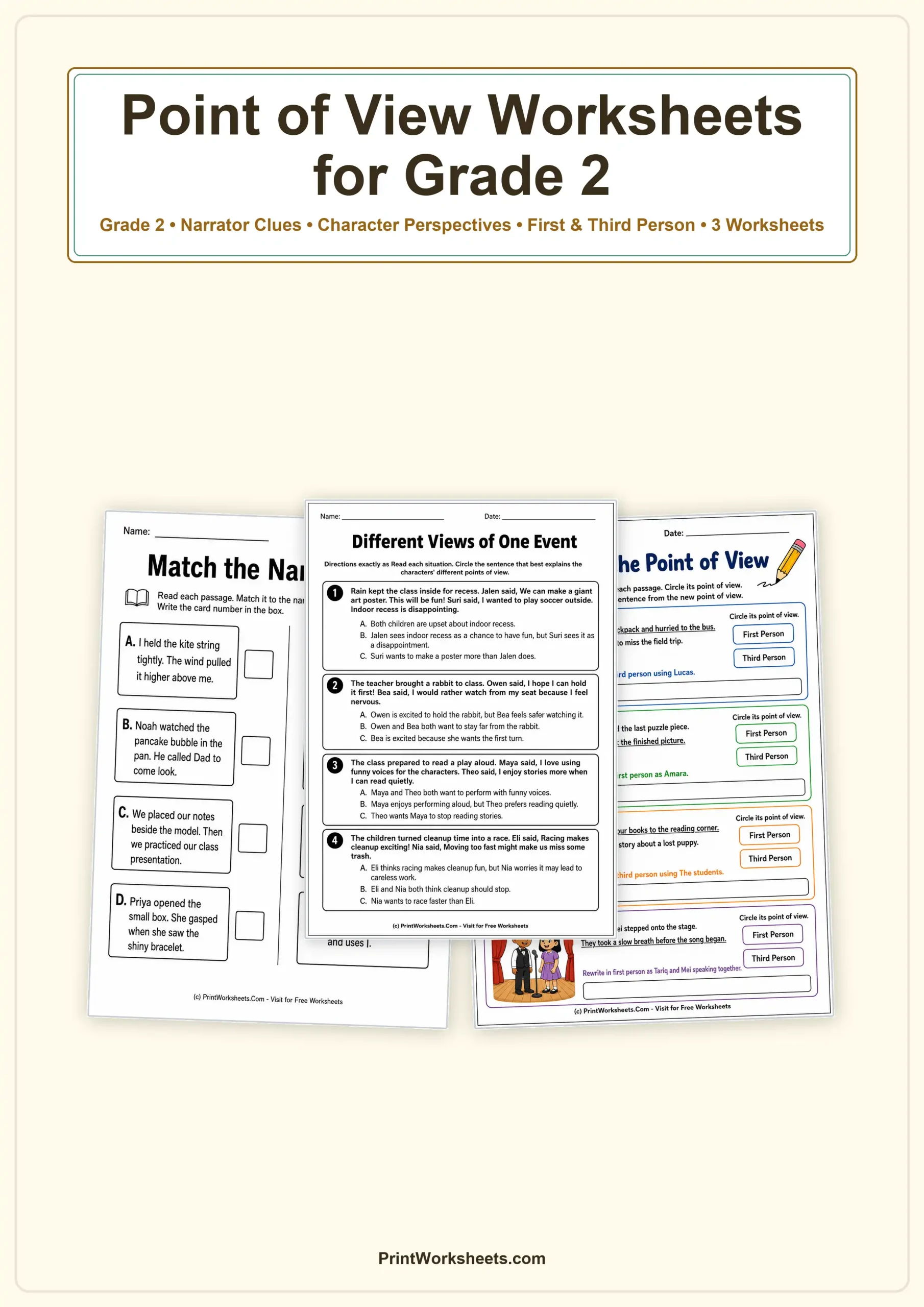
These Grade 2 point of view passages help children notice who is telling a story, compare how different characters see the same event, and change a sentence from one point of view to another. Rather than practicing the skill in only one format, the set moves from clear pronoun clues such as I, he, she, we, and our to short comprehension situations and finally to sentence rewriting. That progression gives young readers several ways to show that they understand perspective.
Point of View Passages with Clear Narrator Clues
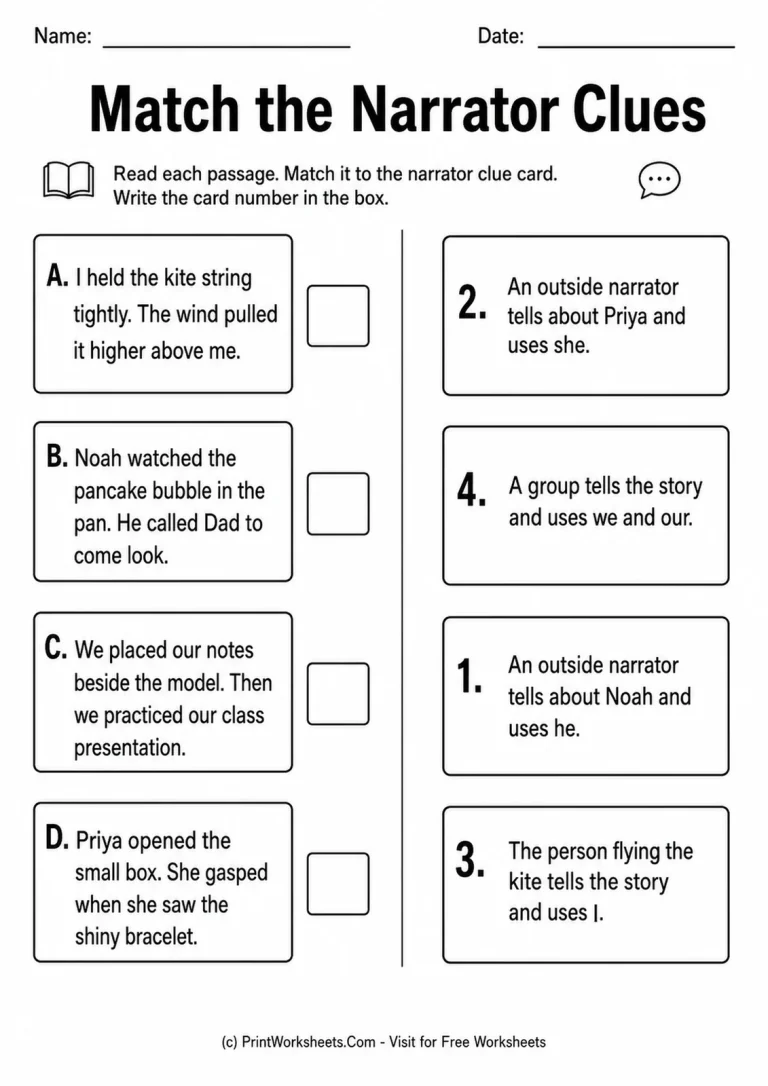
The narrator-clue matching activity begins with four short passages. One speaker holds a kite string and describes what happens using I. Another passage tells about Noah and uses he, while a passage about Priya uses she. A group passage uses we and our while students prepare for a class presentation. Children read each passage, identify the narrator clue, and write the matching card number in the box.
This format is useful because students can connect point of view to visible language evidence. Instead of guessing who is telling the story, they can point to the pronouns and names that reveal whether the narrator is speaking from inside the event or describing someone from outside it. Teachers can ask students to underline the clue word before they choose a card, adding a simple evidence-marking step without changing the worksheet.
Compare Different Views of the Same Event
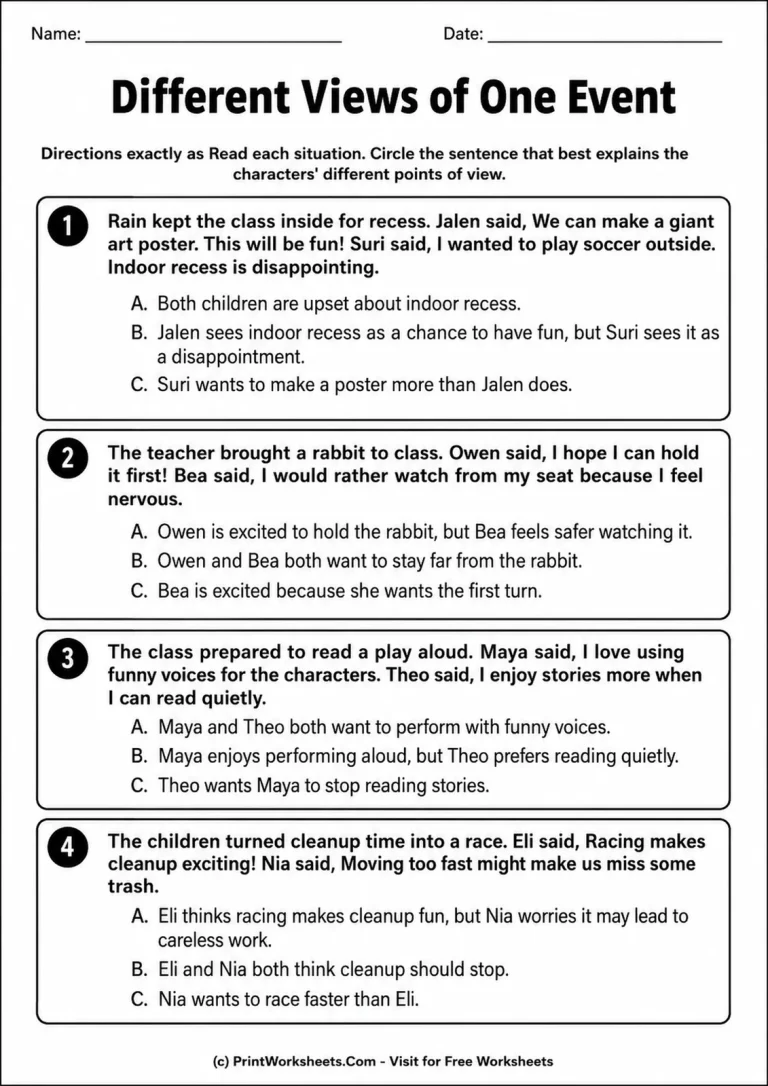
The next worksheet shifts from narrator identification to character perspective. Each short situation presents two children reacting differently to one shared event. During indoor recess, Jalen sees a chance to make a giant art poster, while Suri is disappointed because she wanted to play soccer outside. In another situation, Owen hopes to hold a classroom rabbit first, but Bea prefers to watch from her seat because she feels nervous.
Students also compare Maya and Theo during a read-aloud activity. Maya enjoys using funny voices for characters, while Theo enjoys stories more when he can read quietly. A cleanup scene contrasts Eli’s excitement about turning the job into a race with Nia’s concern that moving too fast could cause the group to miss trash. Each item asks students to circle the sentence that best explains the difference between the two viewpoints.
These examples make perspective concrete for second graders because the characters are responding to familiar school experiences. The correct choices depend on understanding what each character says and feels, not on isolated vocabulary. For additional reading practice with short grade-level texts, teachers can also use summer reading comprehension passages for Grade 2.
Switch from First Person to Third Person
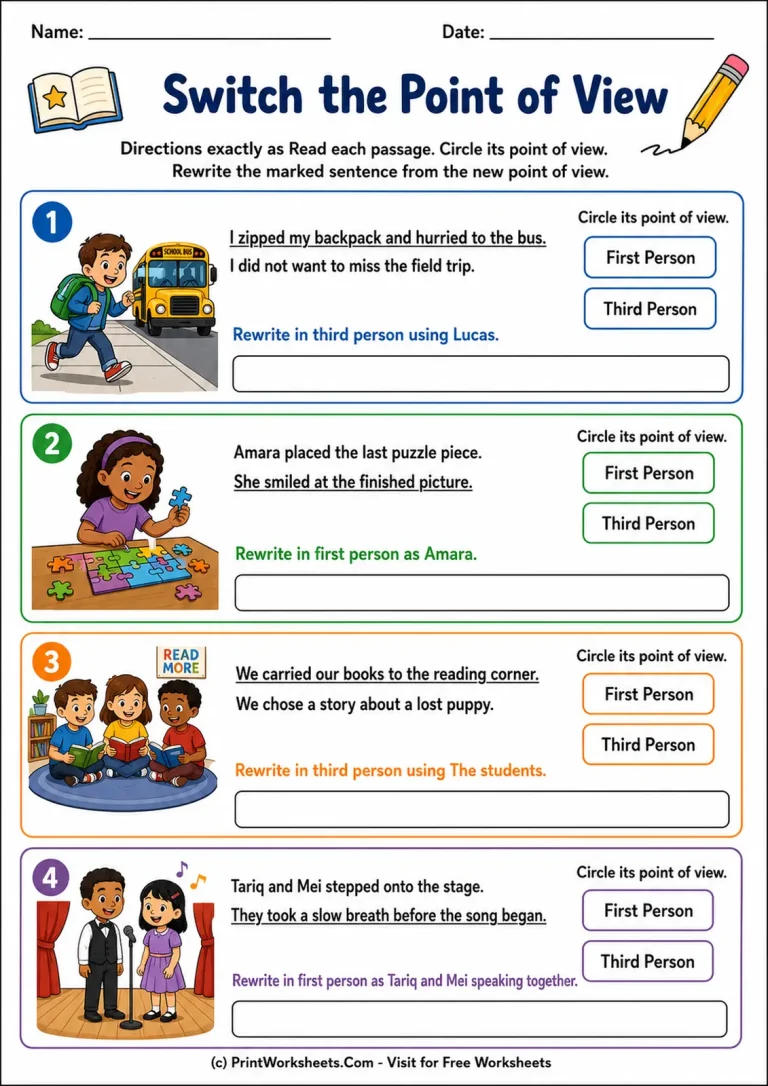
The final worksheet adds a writing component. Students first decide whether each passage is written in first person or third person. They then rewrite the marked sentence from a new point of view. A first-person sentence about zipping a backpack becomes a third-person sentence using Lucas. A sentence about Amara smiling at a finished puzzle is changed from she to I.
The plural examples extend the same idea. A passage beginning with We carried our books is rewritten using The students, while a sentence about Tariq and Mei taking a breath before a song is rewritten as the two characters speaking together with we. These transformations reinforce the connection between narrator perspective and pronoun choice. They also give students a manageable introduction to revising language without requiring a long writing response.
Ways to Use These Grade 2 Point of View Worksheets
The three activities can be used as a short skill sequence across several lessons. Start with the narrator matching page for direct practice with pronoun clues. Follow with the multiple-choice perspective page to check whether students can explain how two characters interpret the same event differently. Use the rewriting activity last so students must apply their understanding while changing the wording themselves.
For students who need extra support, read each short passage aloud and ask, “Who is speaking?” or “What does each character think about the event?” before they answer. More confident readers can explain which exact words prove their choice or create another version of a sentence in the opposite point of view. The set also pairs naturally with seasonal comprehension practice such as fall reading comprehension passages for Grades 1–2.
Because the worksheets move from identifying narrator clues to comparing perspectives and rewriting sentences, they can serve as guided practice, independent work, literacy-center material, or a quick review before a reading comprehension assessment. The short passages keep the reading load manageable while still requiring students to use evidence from the text.