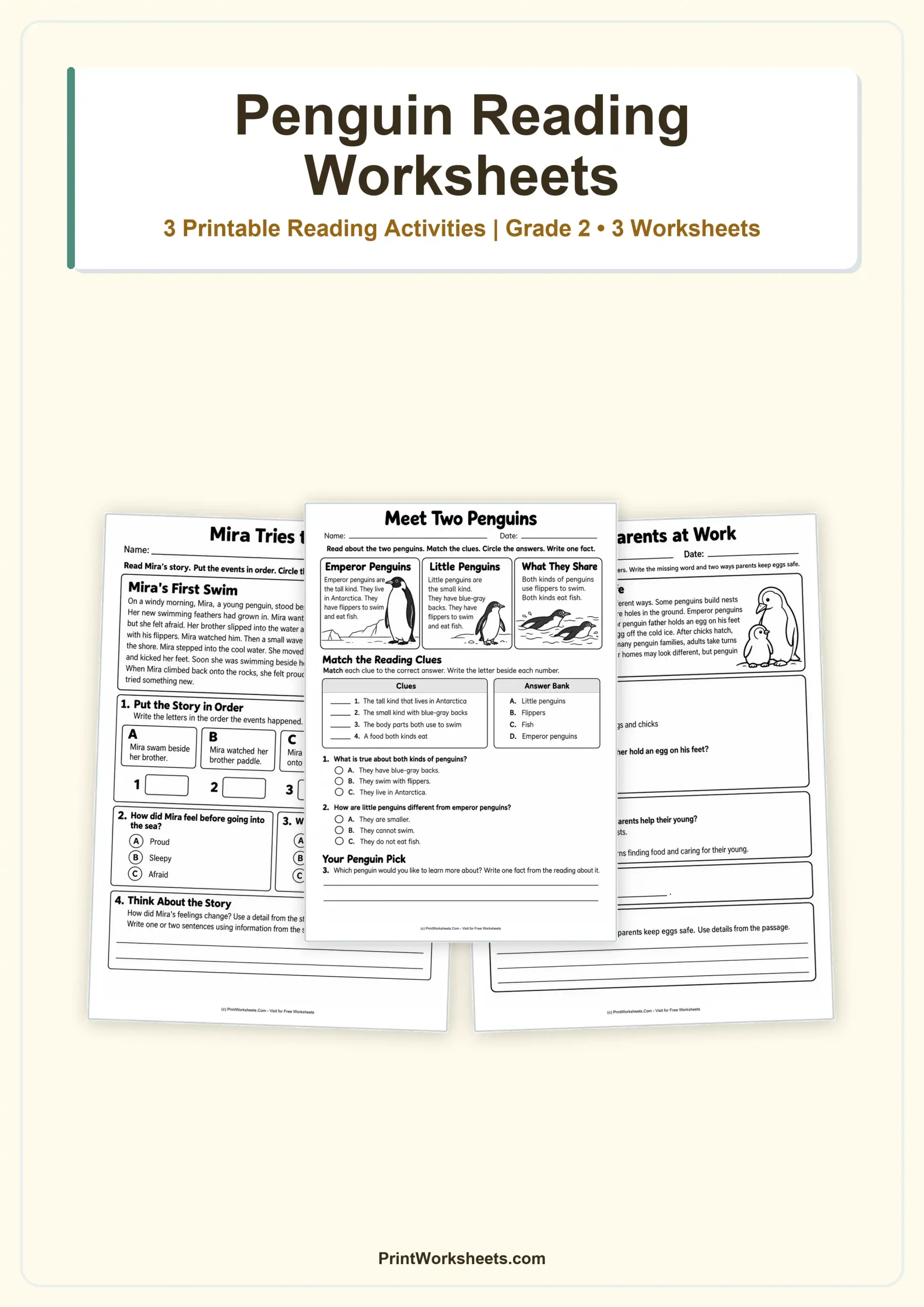
What does a young penguin do when the ocean feels scary? How are emperor penguins different from little penguins? And how do penguin parents protect their eggs? These penguin reading comprehension worksheets turn those questions into three printable reading activities for second graders. Children read a short fictional story and two informational texts, then demonstrate their understanding through sequencing, matching, multiple-choice questions, vocabulary, and short written responses. Each worksheet focuses on a different reading skill while keeping penguins at the center of the lesson.
Three Penguin Reading Comprehension Worksheets
The collection includes three distinct student worksheets. The first explores story events and character feelings, the second compares penguin types, and the third examines the main idea and supporting details of an informational passage. Teachers can use the pages together as a short reading unit or individually to target specific comprehension skills.
Mira Tries the Sea: Story Sequencing and Feelings
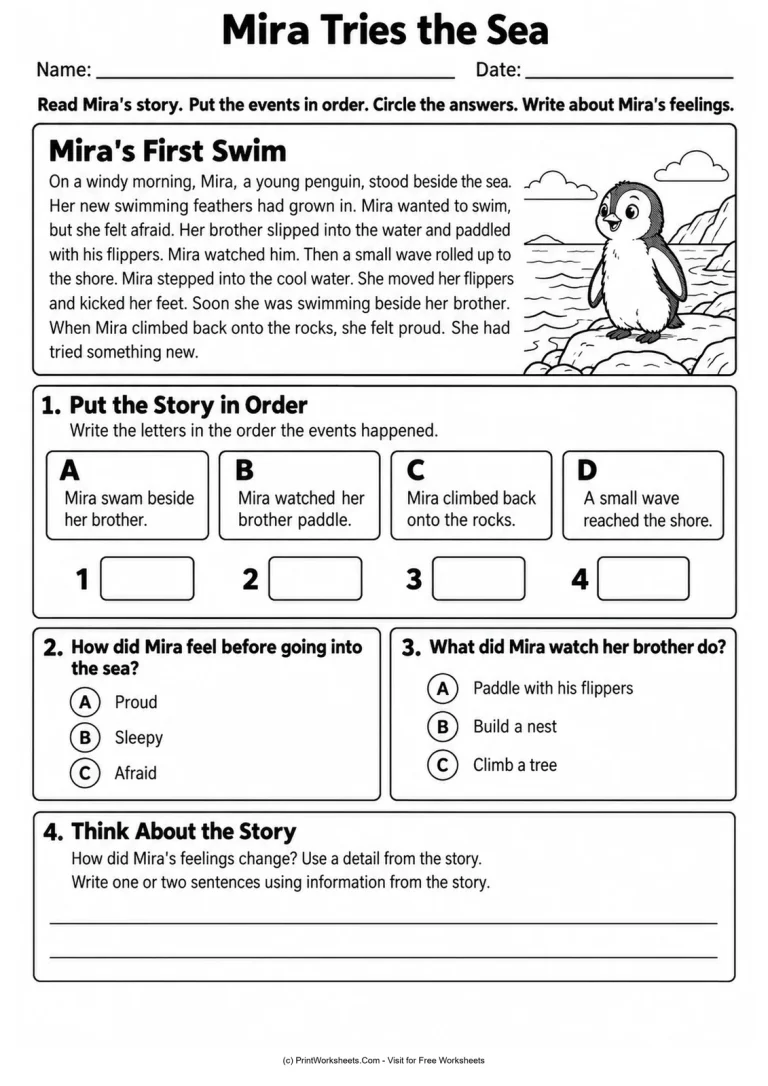
In Mira’s First Swim, a young penguin stands beside the sea, wanting to swim but feeling afraid. She watches her brother paddle with his flippers before a small wave reaches the shore. Mira steps into the water, begins moving her flippers and feet, and eventually swims beside her brother. When she returns to the rocks, she feels proud of trying something new.
Students arrange four story events in the correct order using lettered cards. They then answer questions about how Mira felt before swimming and what she watched her brother do. The final task asks children to explain how Mira’s feelings changed, using a detail from the passage. This combination encourages readers to move beyond recalling events and think about how a character develops throughout a story.
Meet Two Penguins: Compare and Contrast
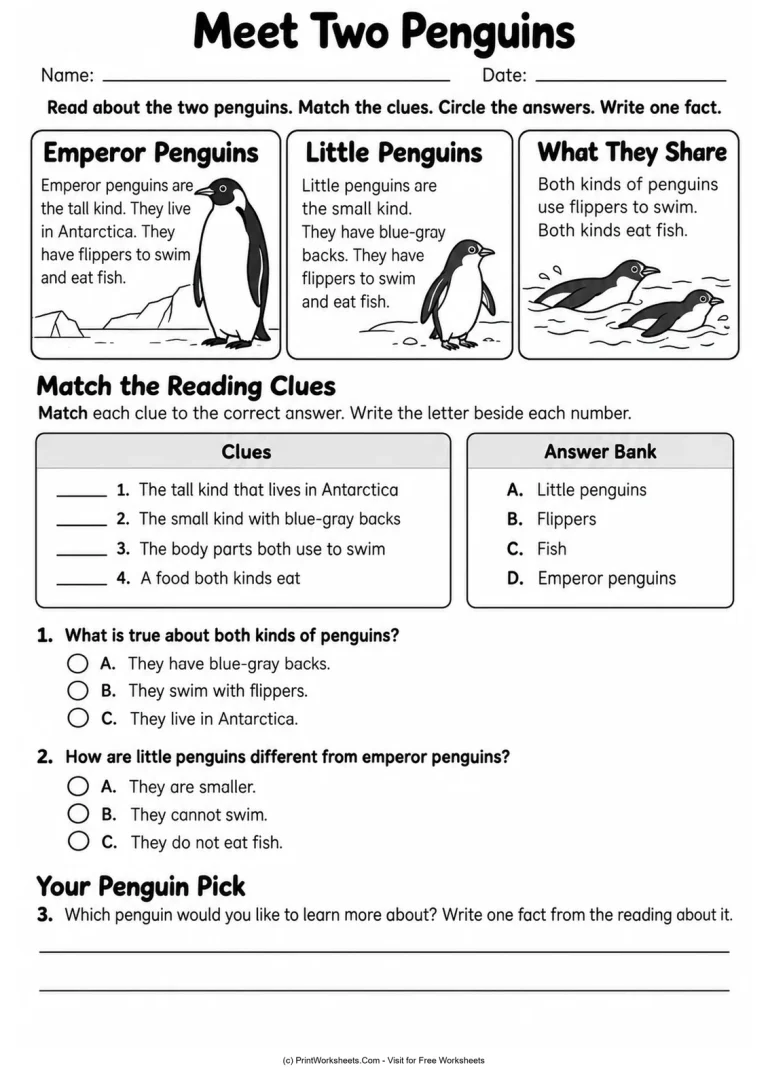
The second worksheet introduces emperor penguins and little penguins through three illustrated reading panels. Students discover that emperor penguins are tall and live in Antarctica, while little penguins are smaller and have blue-gray backs. A third panel identifies characteristics the two kinds share: both use flippers to swim and both eat fish.
After reading, children complete a four-clue matching activity with a separate answer bank. They identify which penguin is tall, which is small, what both use for swimming, and what both eat. Two multiple-choice questions reinforce similarities and differences. Finally, students choose one type of penguin they would like to learn more about and write a fact from the reading. This activity introduces evidence-based comparison without requiring a long research assignment.
Penguin Parents at Work: Main Idea and Text Evidence
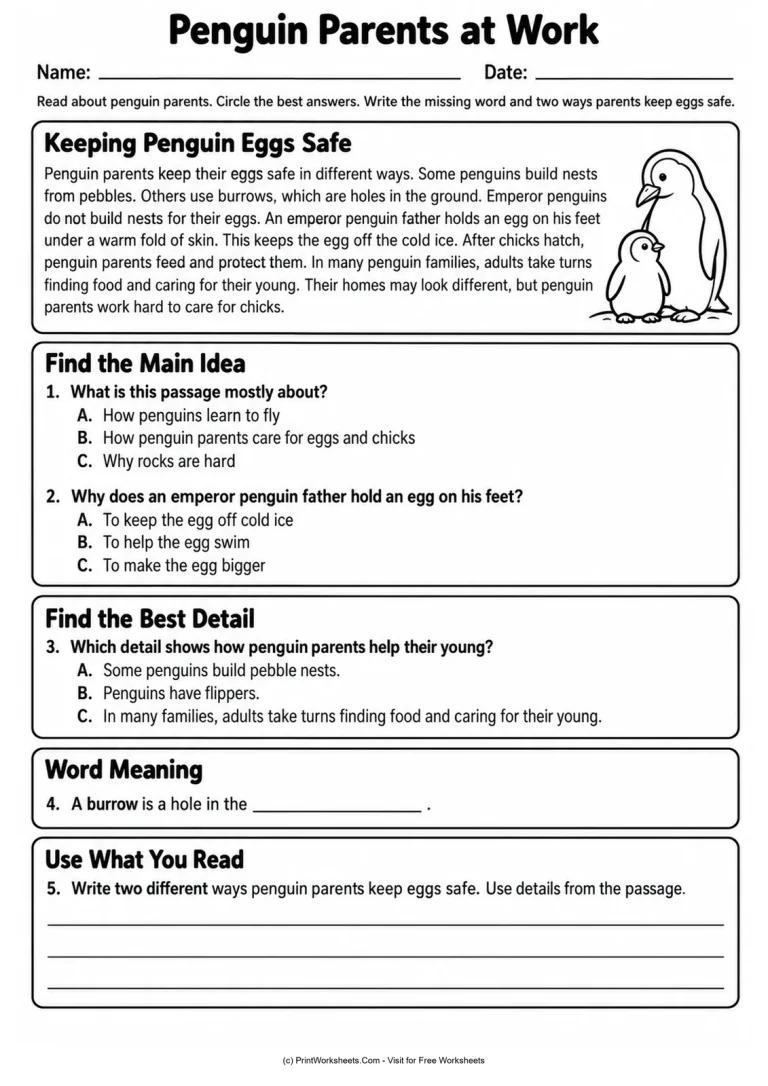
The third worksheet, Penguin Parents at Work, explains several ways penguins protect their eggs and care for their chicks. The passage describes pebble nests, burrows in the ground, and the special way an emperor penguin father holds an egg on his feet beneath a warm fold of skin. It also explains how penguin parents feed and protect their young after hatching.
Readers identify the passage’s main idea, recognize why an emperor penguin father keeps his egg off the cold ice, and select a supporting detail about parental care. A vocabulary question asks students to complete the meaning of burrow. The final writing activity challenges them to name two different ways penguin parents keep their eggs safe, using details from the passage.
Reading Skills Children Build
These penguin reading comprehension activities provide practice with both literary and informational reading. The story asks students to follow a beginning-to-end sequence and recognize a character’s changing emotions. The comparison passage focuses on organizing factual information into similarities and differences. The final passage develops the ability to distinguish a central idea from a specific supporting detail.
Written responses are especially important because they ask children to return to what they read. Rather than choosing an answer at random, students must find a relevant detail, decide what it means, and express their thinking in their own words. The combination of selected-response and short-answer questions also gives teachers several ways to observe comprehension.
How to Teach with These Penguin Reading Passages
Begin with Mira’s story as a shared reading activity. Ask students to identify when Mira feels afraid and when she begins to feel proud. After reading, have them underline the events that appear in the sequencing cards before filling in the four numbered boxes. For the written response, encourage a sentence that names both feelings and explains what caused the change.
Use the two-penguin comparison page during a nonfiction lesson. Have children read each information panel separately and identify one fact that describes only one penguin type. Next, discuss the shared characteristics before students complete the matching and multiple-choice activities. This helps prevent confusion between facts that describe one group and facts that describe both.
Save the penguin parenting passage for a lesson on main ideas and evidence. Read the opening and closing sentences together, then look for details that explain how different penguin parents care for their eggs. When students reach the final question, ask them to locate two different protection methods in the text before writing their answers.
Adapt the Activities for Different Readers
The passages and response formats are particularly suitable for second-grade reading comprehension practice. For developing readers, read the passages aloud first, review unfamiliar words such as flippers and burrow, and allow partners to discuss answers before writing. Students who are comfortable reading independently can complete each passage and its questions on their own.
For an additional challenge, ask children to explain which facts came from the informational passages and which events belonged to Mira’s fictional story. They can also compare how the three pages use illustrations, facts, and story details to communicate information about penguins.
More Winter Reading Practice
If your class is exploring cold-weather topics, these penguin pages pair naturally with our winter reading comprehension passages for Grades 1–2. The additional passages offer an opportunity to practice familiar reading strategies with other winter-themed texts.
Print and Explore the Penguin Worksheets
Use the three black-and-white worksheets for a reading center, independent practice, homework, or a short animal-themed literacy unit. Each page includes its own passage and student questions, so there is no need to complete all three in one sitting. Start with the story, continue with penguin comparisons, and finish with the informational passage about parenting. Together, the activities help young readers practice understanding events, comparing facts, and explaining their answers with evidence from the text.