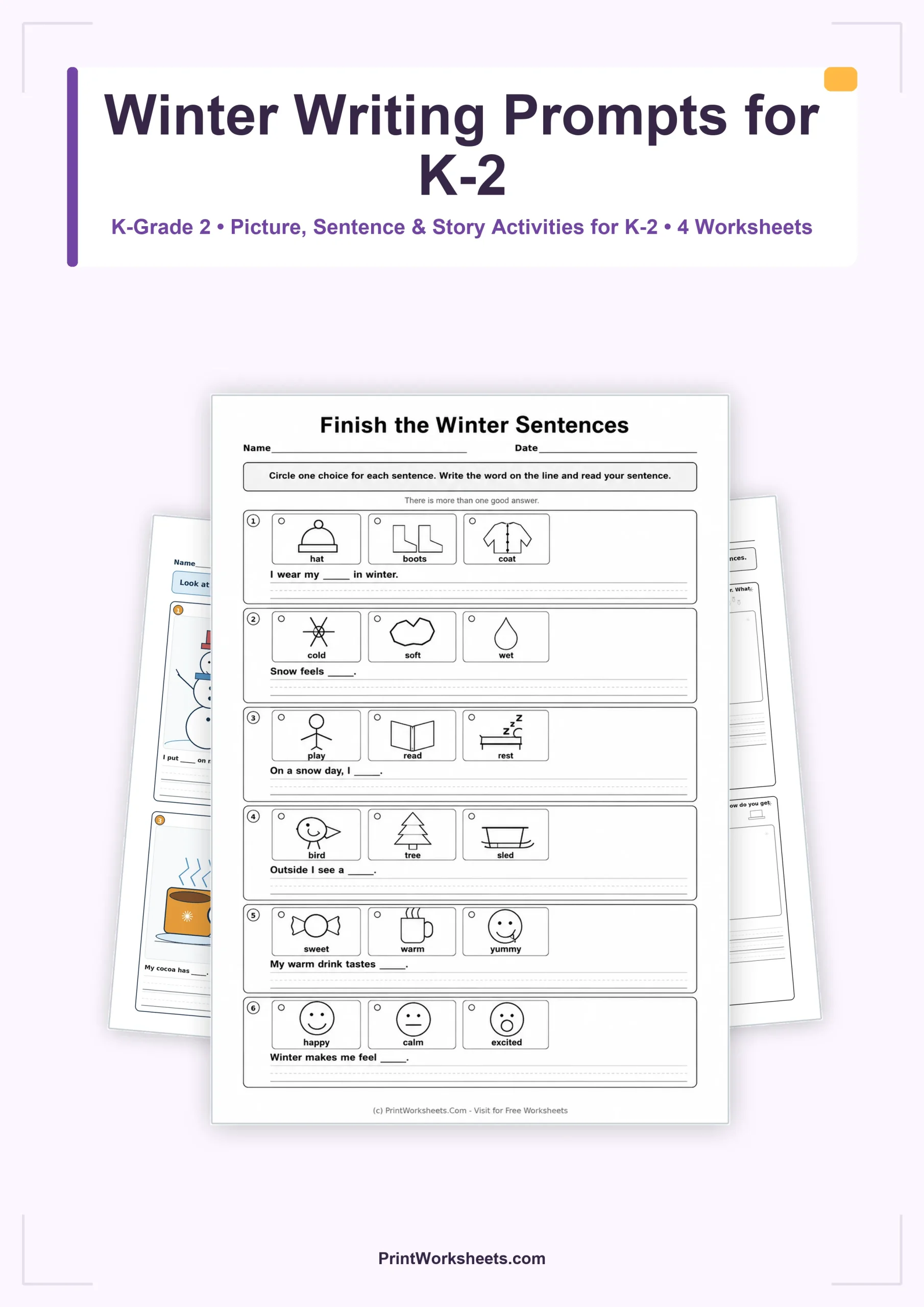
These winter writing prompts give beginning writers several ways to turn familiar cold-weather ideas into words, pictures, and short stories. The printable set is designed for Kindergarten through Grade 2 and moves between highly supported sentence work and more independent storytelling. Students work with snowpeople, sledding, cocoa, snowy homes, winter clothing, animal tracks, outdoor adventures, and simple story sequencing, making the pages useful for seasonal writing centers, morning work, literacy practice, or short writing sessions at home.
Winter writing prompts that build confidence step by step
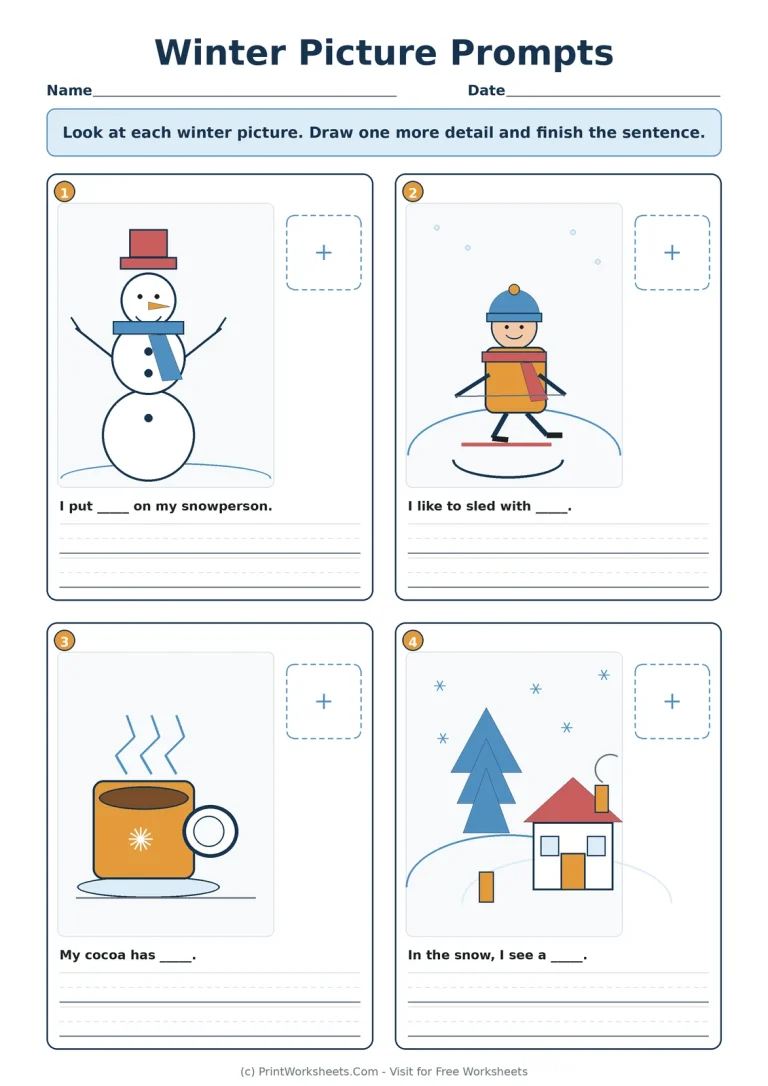
The activities do not ask young writers to begin with a blank page. One worksheet uses four winter scenes featuring a snowperson, a child sledding, a cup of cocoa, and a snowy house. Students first add one detail to each picture and then finish a short sentence stem. Drawing before writing gives children an immediate idea to describe, while the sentence starter keeps the language task manageable for writers who are still developing spelling, handwriting, and sentence fluency.
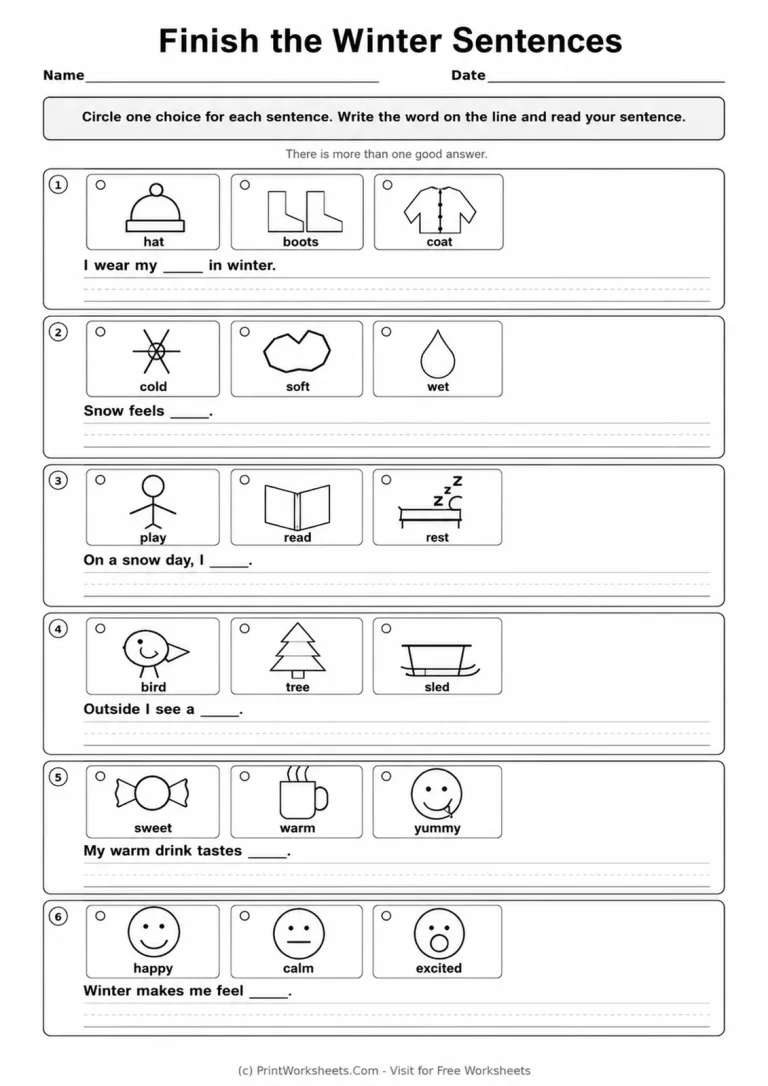
A second page provides six winter sentence stems with three illustrated word choices for each item. Students circle a word, copy it onto the line, and read the finished sentence. The choices connect to recognizable winter topics such as hats, boots, coats, snow texture, snow-day activities, outdoor sights, warm drinks, and feelings. Because more than one choice can make sense, students can make a personal selection while still working inside a clear sentence structure.
From short sentences to open-ended winter writing
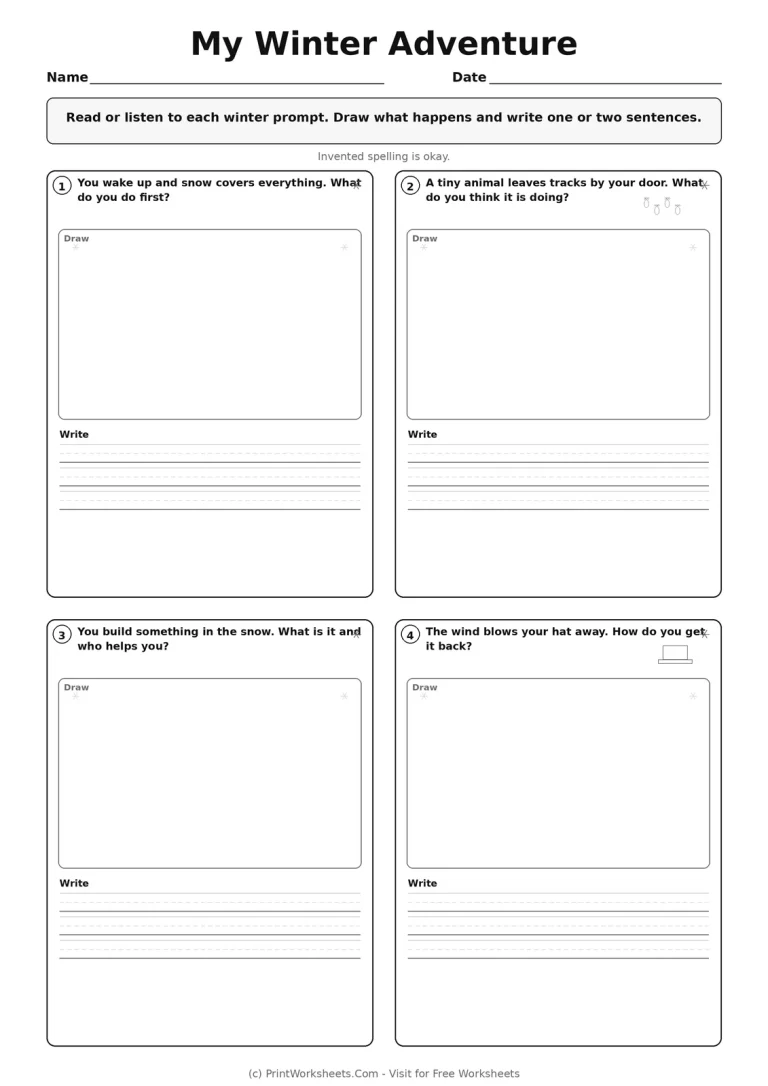
Once students are comfortable completing supported sentences, the set opens into draw-and-write responses. The “My Winter Adventure” page includes four imaginative situations. Children picture waking up to snow, discovering mysterious animal tracks near a door, deciding what they would build in the snow, and thinking through how they might retrieve a hat that has blown away in the wind. Each prompt includes a large drawing area plus handwriting lines for one or two sentences.
These scenarios work well for oral rehearsal before writing. A teacher or parent can ask, “What happened first?” or “What would you do next?” and allow the child to explain the idea aloud. Students can then draw the important action and write one clear sentence. More confident writers can add a second sentence with a reason, detail, feeling, or result. This keeps the same worksheet accessible across different early-elementary writing levels.
Plan a complete winter story with beginning, next, then, and end
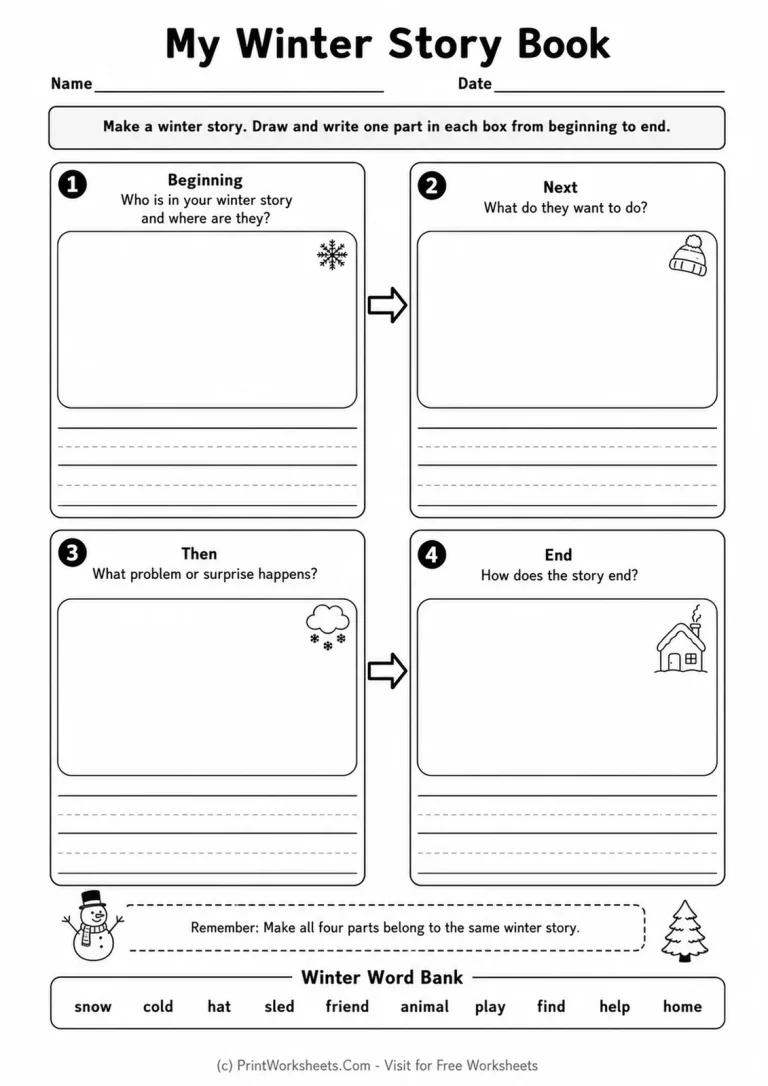
The final story-planning worksheet helps students connect several ideas instead of treating every response as an isolated sentence. Children create one winter story across four sections labeled Beginning, Next, Then, and End. Each stage includes space for a picture and written text. A winter word bank provides useful words such as snow, cold, hat, sled, friend, animal, play, find, help, and home, so students can spend more attention on story ideas and sequence.
This page is especially useful for teaching narrative order. Before students write, have them point to the four sections and tell the story aloud from start to finish. Encourage them to keep the same characters or situation across the organizer. After writing, they can reread all four parts and check whether the events make sense in order. Grade 2 students can expand each stage with extra description, while Kindergarten writers may rely more heavily on pictures, labels, copied words, and one short sentence.
Ways to use the printable set in Kindergarten, Grade 1, and Grade 2
For Kindergarten, begin with the picture prompts and illustrated sentence choices. Read each stem aloud, name the pictures together, and let students say the complete sentence before they write. In Grade 1, use the drawing prompts to practice adding a meaningful detail and writing a complete thought. Teachers looking for an additional first-grade-only collection can also use the winter writing prompts for 1st grade alongside this broader K–2 set.
For Grade 2, challenge students to explain choices, add descriptive vocabulary, and connect events with time-order words such as first, next, then, and finally. The adventure page can also become a partner activity: students share their drawing, read their sentences aloud, and compare how two writers responded differently to the same winter situation.
Simple differentiation, extensions, and exit tickets
Writers who need additional support can dictate a sentence first, use the visible winter pictures as vocabulary cues, or copy one word from the story word bank before completing the rest independently. Students ready for more can add an adjective, explain a character’s feeling, or write an extra sentence below the provided response.
For a quick exit ticket, ask students to choose one winter word they used and write a new sentence with it on the back of the page. Another option is to have them draw one new event that could happen after the end of their winter story and explain it in one sentence. These short extensions reinforce the central goal of the set: helping young writers move from concrete pictures and sentence support toward connected ideas they can express with increasing independence.