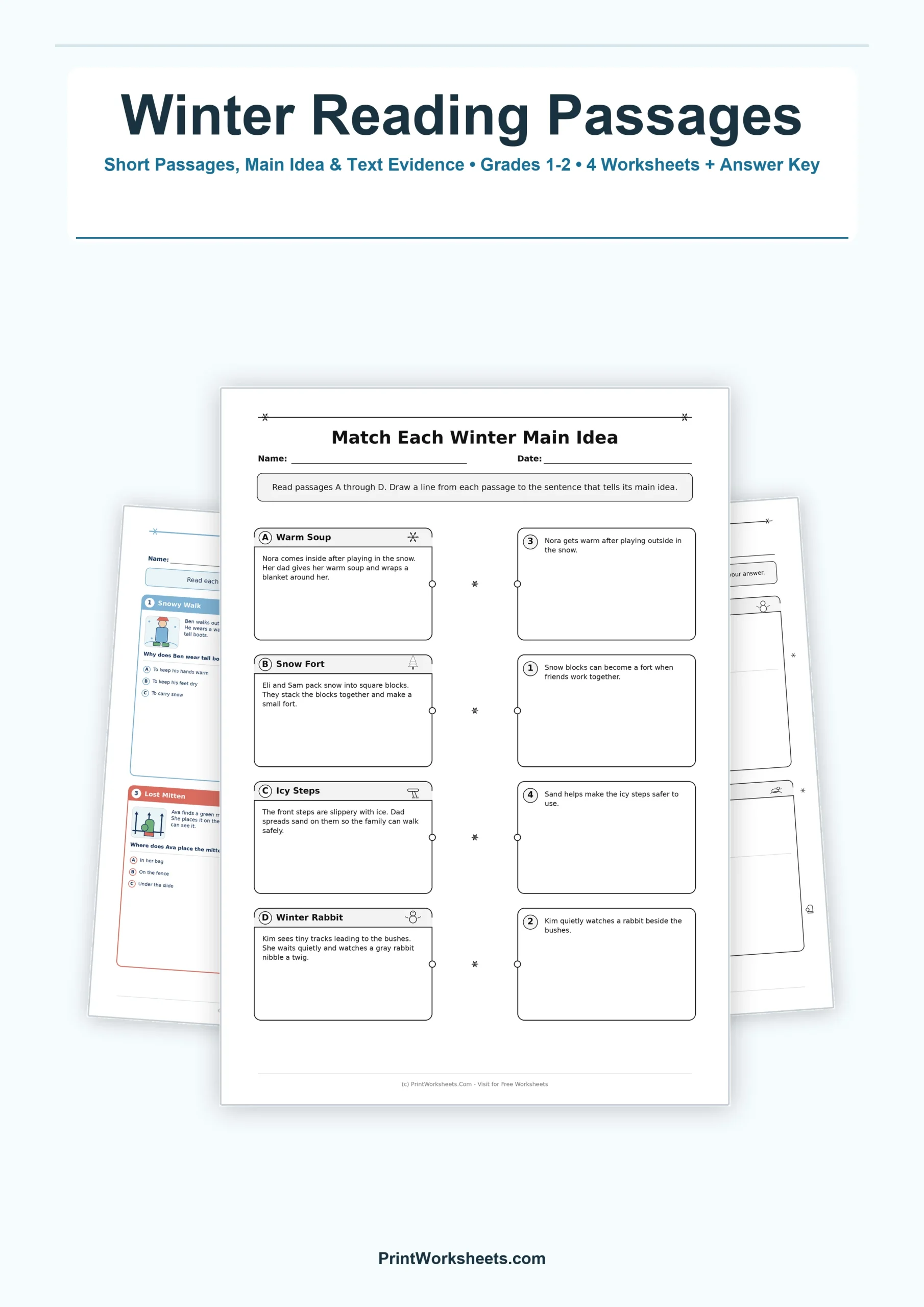
These winter reading comprehension worksheets give first- and second-grade readers a gradual path from very short, concrete passages to a longer story with several kinds of comprehension questions. Across four student pages, children read about snowy walks, bird feeders, lost mittens, sledding, warm soup, snow forts, icy steps, rabbits, a first snowfall, a pond visit, and a winter picnic. The familiar seasonal situations keep the reading accessible while the tasks move beyond simple recall into main idea, text evidence, vocabulary in context, and cause-and-effect thinking.
Winter reading comprehension that grows with the reader
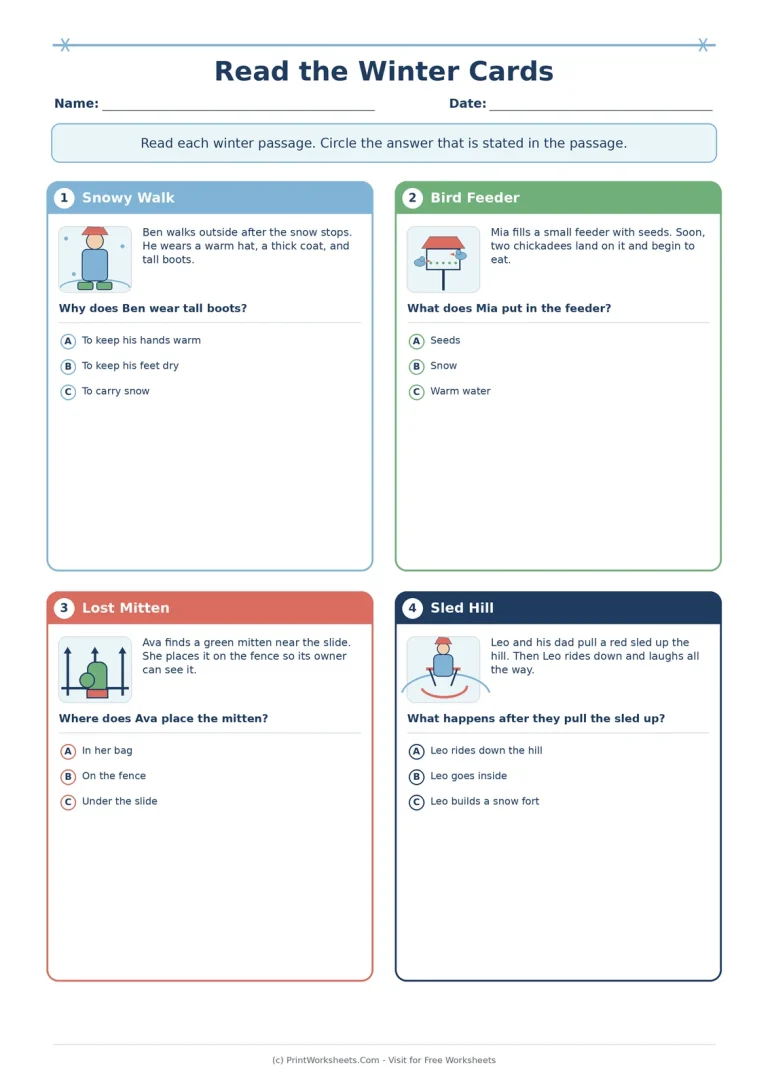
The first worksheet, Read the Winter Cards, is designed for quick success with four compact passages. Students read a short card and circle the answer that is stated or directly supported by the text. One card asks why Ben wears tall boots on a snowy walk. Another explains that Mia fills a bird feeder with seeds. Ava finds a green mitten and places it on a fence, while Leo pulls his sled uphill before riding down. Because each passage is brief and the choices stay focused, this page works well as an independent warm-up, literacy center, or supported reading activity for students who are still learning to return to the text for an answer.
Practice main idea with four distinct winter scenes
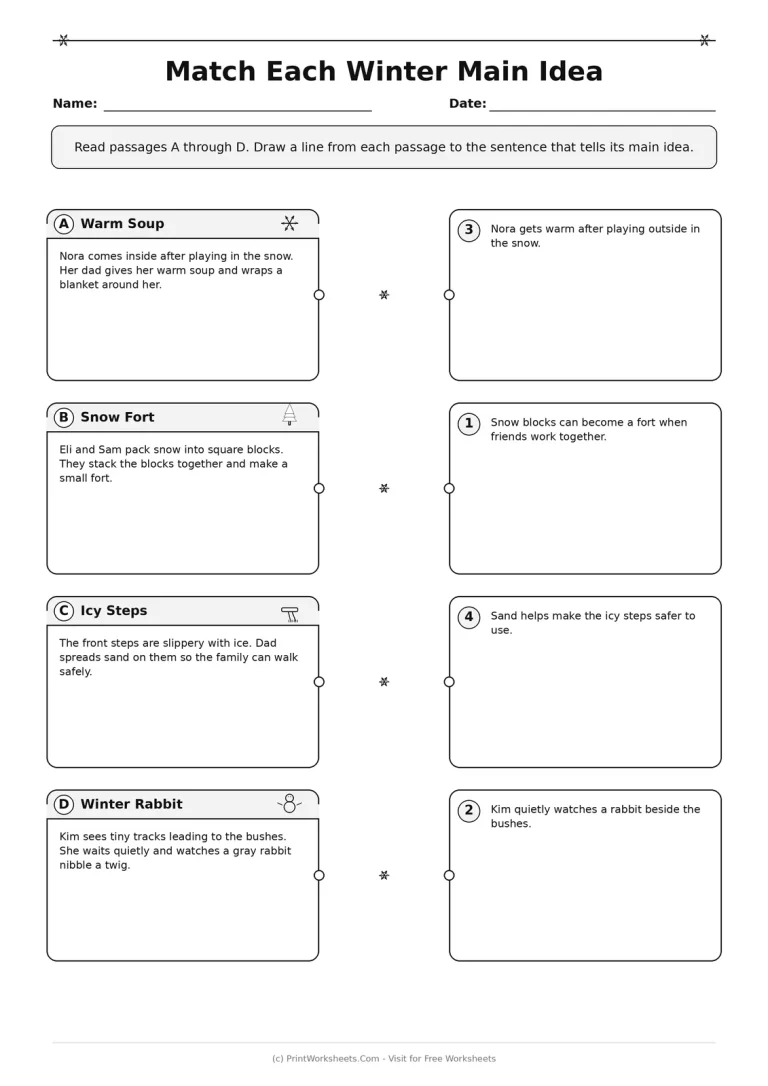
The second page shifts from finding a detail to identifying what a whole passage is mostly about. Students read Warm Soup, Snow Fort, Icy Steps, and Winter Rabbit, then draw lines to sentences that summarize each selection. The topics are easy to distinguish, so readers can concentrate on recognizing the central idea instead of being distracted by overly similar choices. Teachers can extend the task by asking students to point to one detail that helped them choose each main-idea sentence.
Make text evidence visible
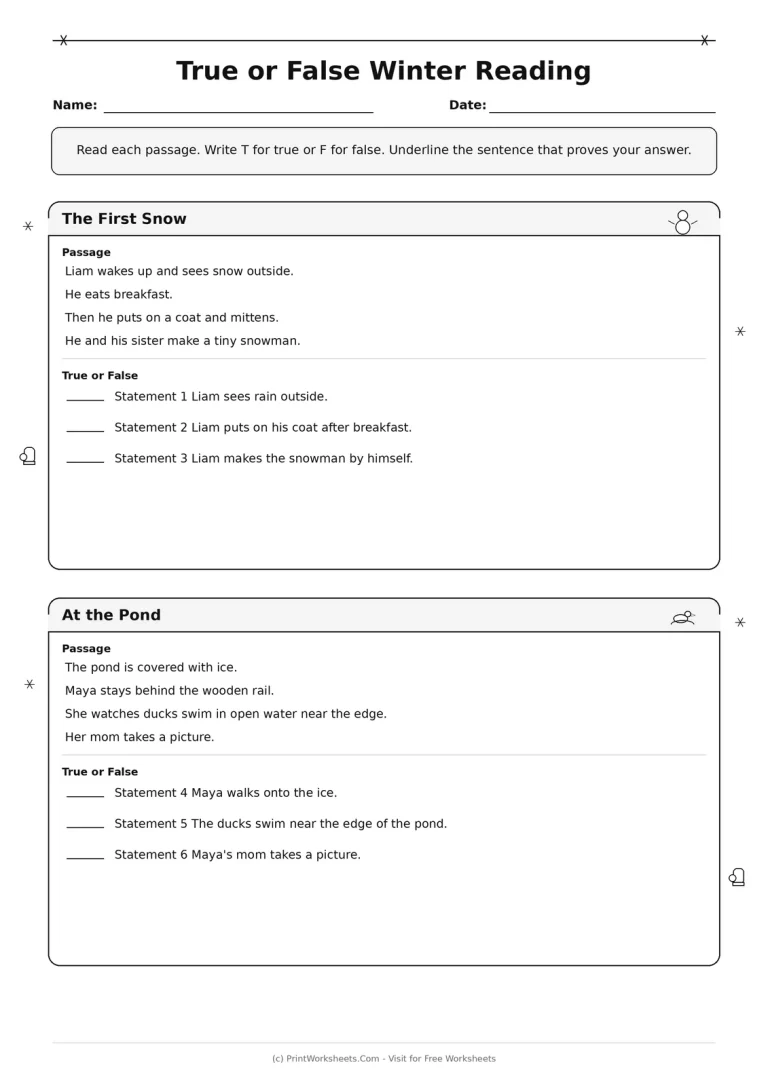
True or False Winter Reading adds an important evidence habit. Students decide whether statements about two short passages are true or false and then underline the sentence that proves the answer. In The First Snow, Liam sees the snow and later makes a snowman with his sister. In At the Pond, Maya stays behind a rail while ducks swim near the pond edge and her mother takes a picture. Requiring students to mark the proof turns the activity into more than a guessing exercise. It gives young readers a concrete way to connect an answer to information in the passage.
Finish with a longer winter passage and mixed questions
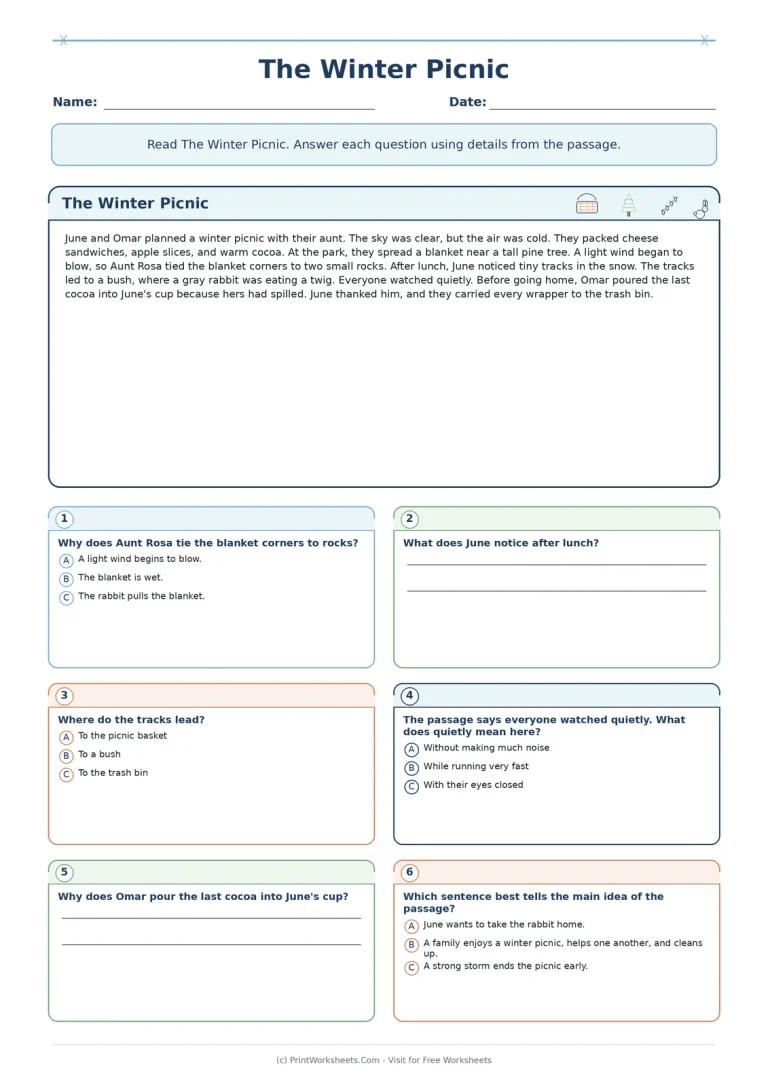
The final student page, The Winter Picnic, provides the set’s strongest step toward Grade 2 reading work. June and Omar go on a winter picnic with their aunt, secure their blanket when the wind begins, notice rabbit tracks, share cocoa, and clean up afterward. Six questions combine multiple choice and short response. Students identify story details, interpret a word from context, explain cause and effect, and think about the passage’s main idea. This makes the page useful after students have practiced the shorter formats because it asks them to hold more information in mind and choose the appropriate comprehension strategy for each question.
Ways to use the four-page progression
For a short sequence, use one worksheet per day and move from Page 1 through Page 4. In a small group, read the first passage together and model how to locate words that support an answer before students continue independently. For differentiation, beginning readers can complete the shorter cards or main-idea matching with oral support, while stronger readers can explain why an incorrect choice does not fit the text. The longer picnic passage can also be saved for an end-of-week check because it combines several skills on one page.
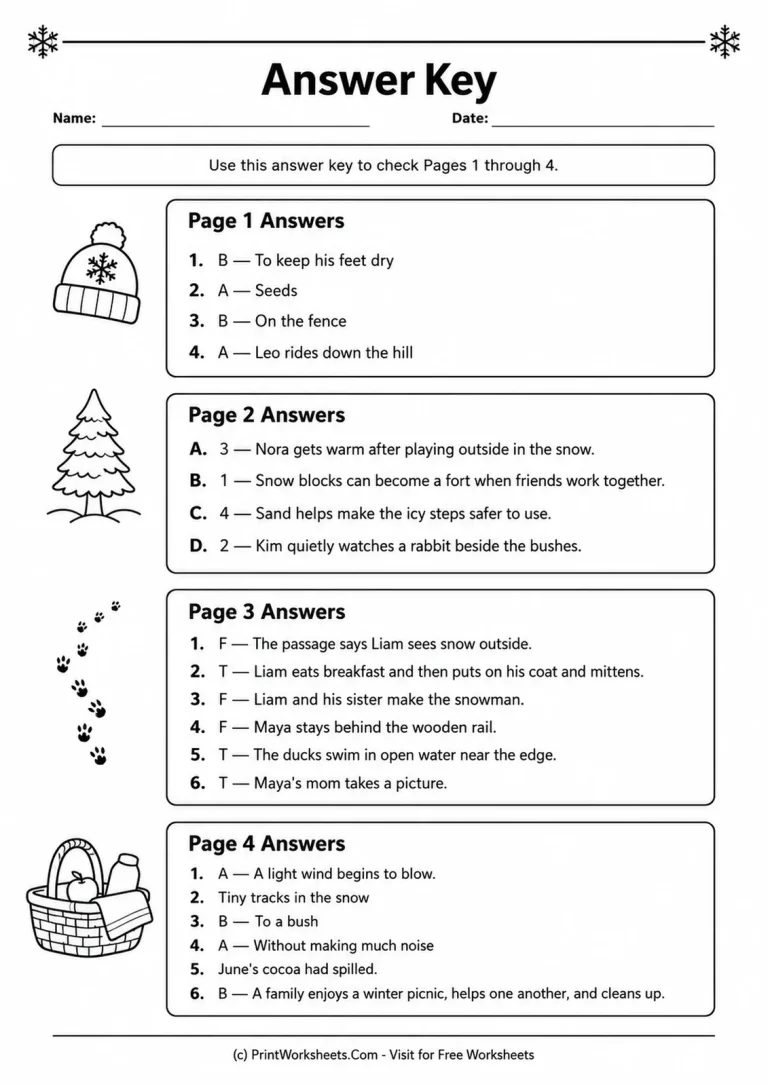
The included answer key supports quick checking of the multiple-choice, matching, true-or-false, and short-response work. For an exit ticket, ask students to write one sentence explaining how they proved an answer from the text. An extension activity can invite them to write a two- or three-sentence winter passage and create one detail question plus one main-idea question for a partner.
Connect seasonal reading practice across the year
Teachers building a broader holiday reading rotation can pair this winter set with Halloween reading comprehension passages for Grades 2-3 when students are ready for a later seasonal theme and slightly older grade range. Another option is Labor Day reading comprehension passages for Grades 2-3 for additional themed passage practice. Used on its own, this winter collection provides a focused Grade 1-2 progression that begins with manageable reading cards and ends with a richer passage requiring several kinds of comprehension thinking.