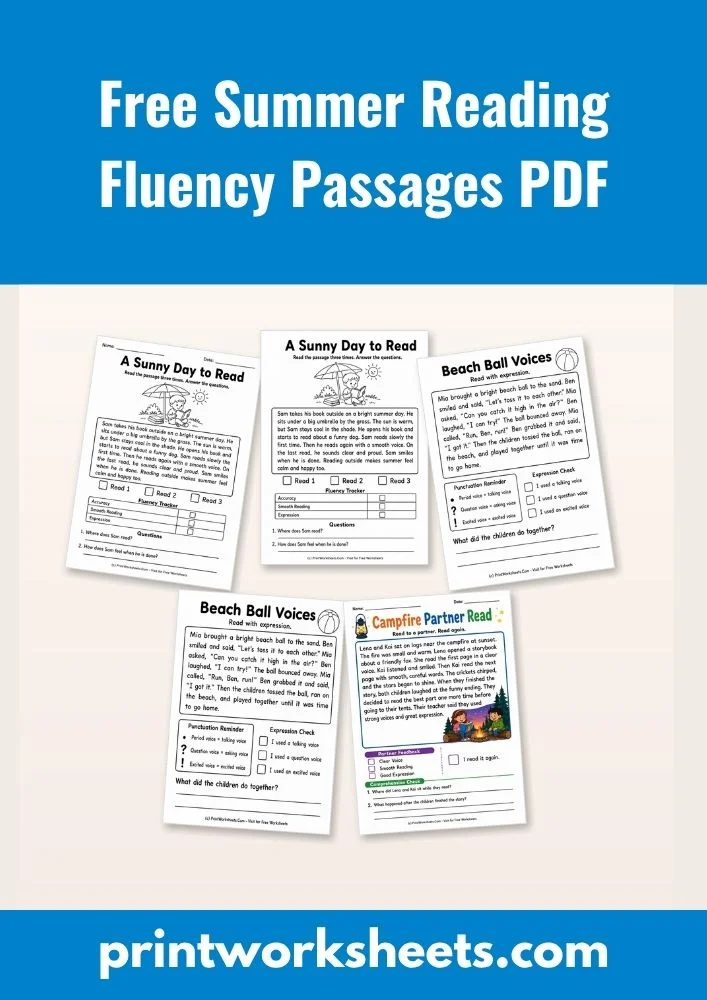
Using summer reading fluency passages is one of the most effective ways to provide essential literacy practice and prevent the dreaded reading regression during the school break. Developing strong reading fluency requires transitioning from slow, robotic decoding to smooth, expressive reading. This printable literacy PDF delivers rigorous, no-prep learning centers focusing strictly on reading accuracy, pacing, vocal expression, and basic comprehension. By utilizing repeated reading trackers, punctuation voice reminders, and partner feedback forms, educators and parents can guarantee foundational English Language Arts development. Printing these seasonal reading activities ensures young learners maintain their reading confidence year-round.
Educators and homeschool parents consistently utilize our summer reading fluency passages during morning work, independent reading centers, and summer school interventions. Consistent exposure to short, decodable text builds the muscle memory required for fluent reading. To construct a complete literacy progression, pair this fluency packet directly with our free summer reading comprehension grade 2 resources at PrintWorksheets.Com. Securing the ability to read smoothly is a mandatory prerequisite before a student can deeply analyze and understand any text.
Inside the Summer Reading Fluency PDF
Clear formatting, large standard fonts, and structured visual trackers make these printables highly effective for early readers. The layout isolates specific fluency concepts to prevent visual overwhelm. Each printable activity page targets specific primary grade core reading standards.
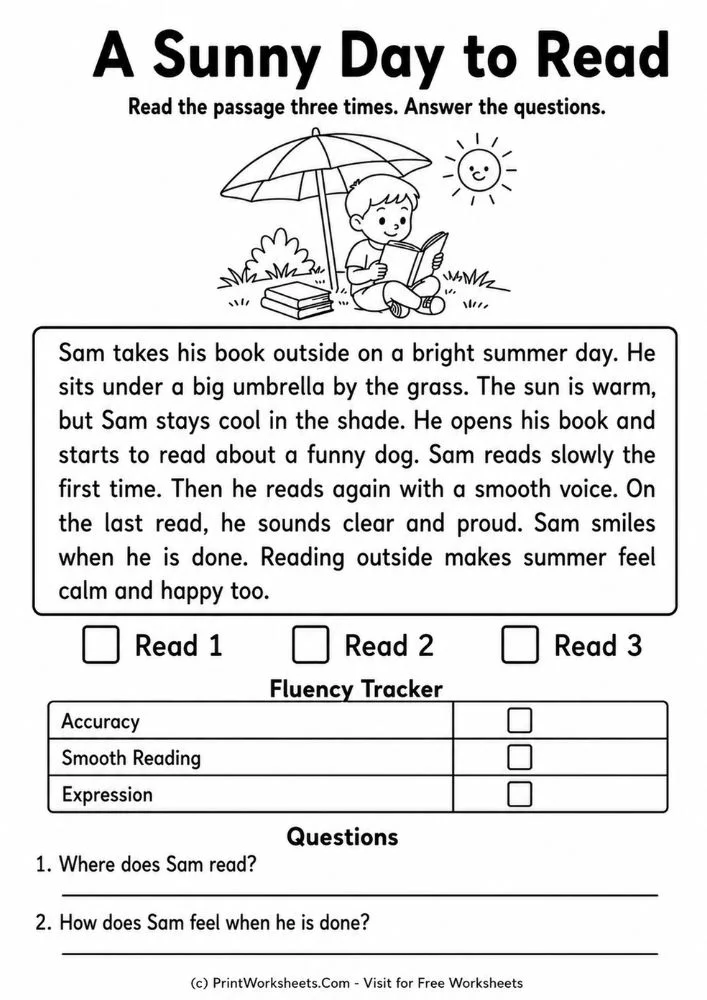
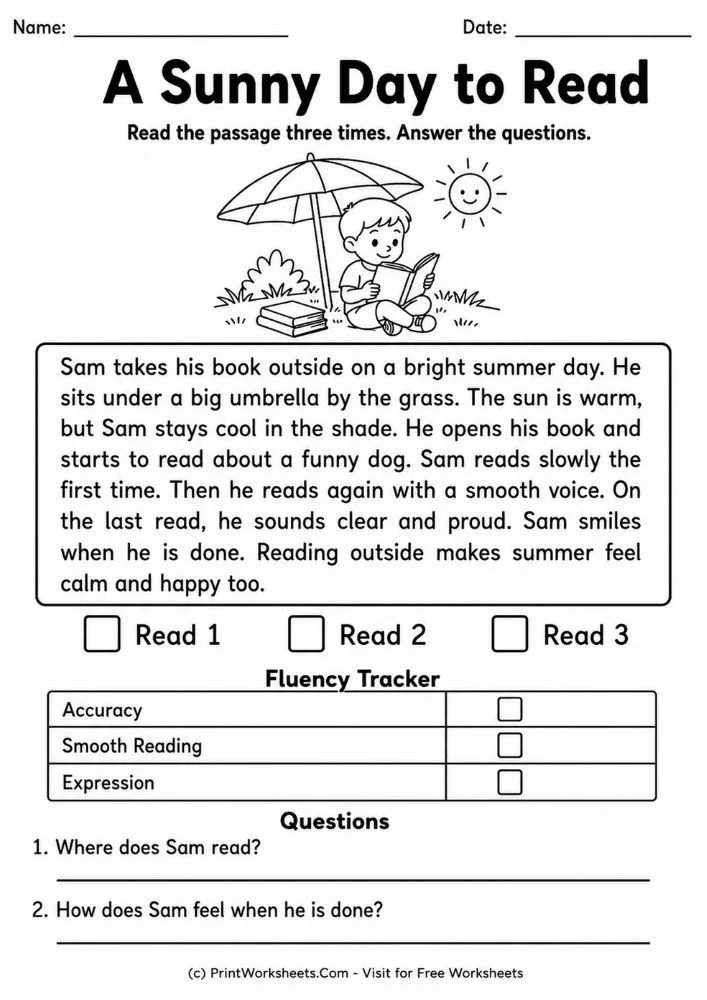
- A Sunny Day to Read A repeated reading and tracking worksheet. Students read a short summer-themed paragraph. The page requires students to read the text three separate times, checking off a box for each read. A structured fluency tracker at the bottom prompts students to self-evaluate their accuracy, smooth reading, and expression before answering two explicit comprehension questions.
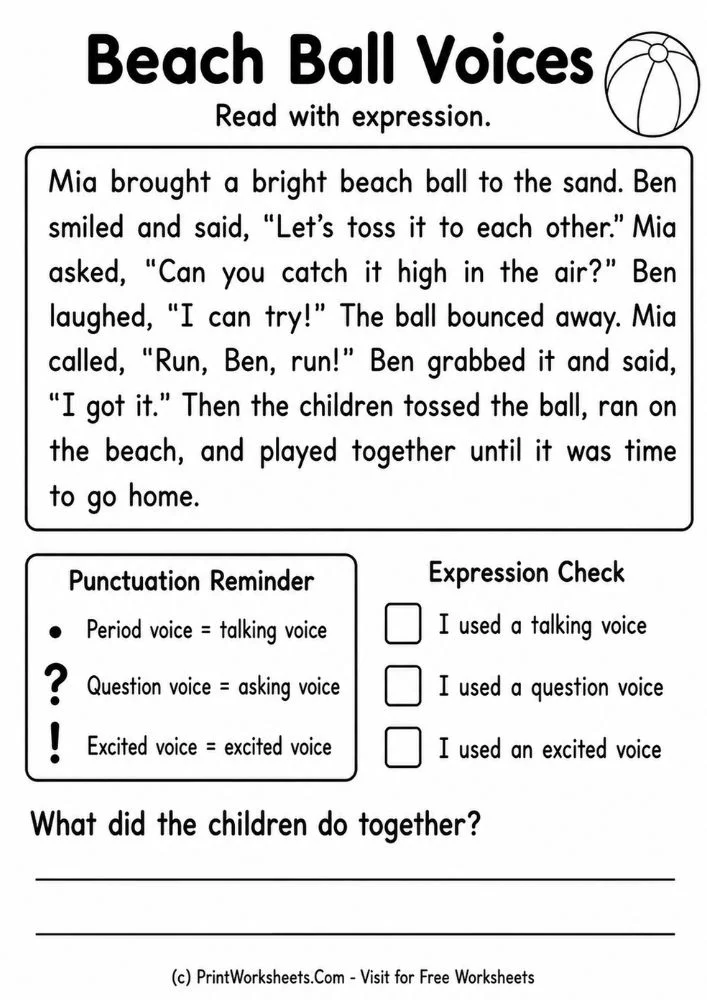
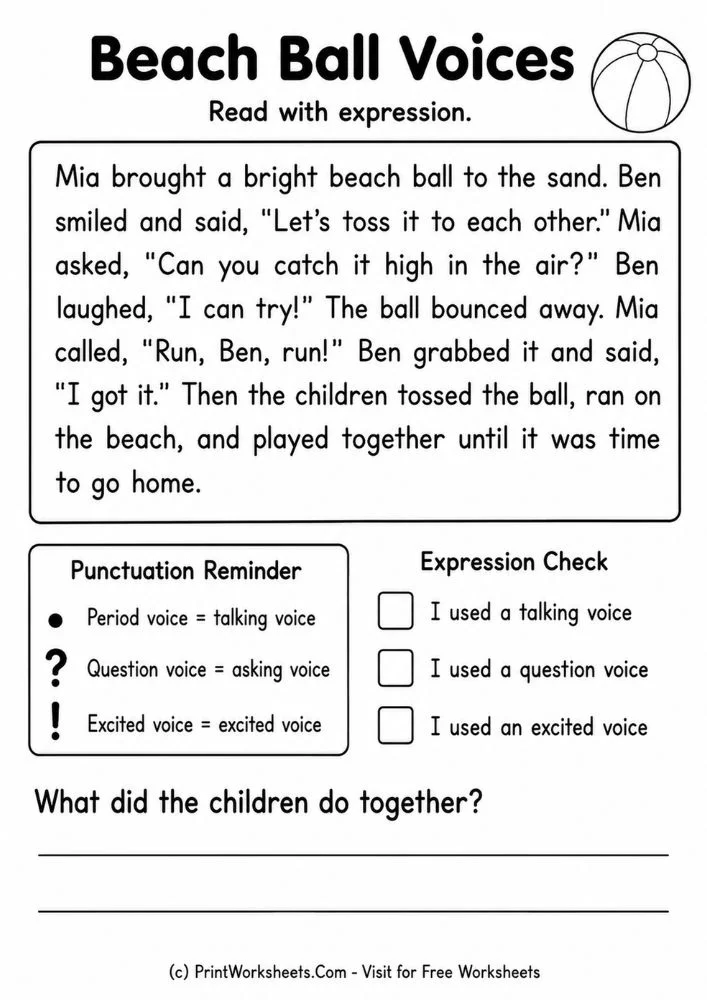
- Beach Ball Voices An explicit vocal expression worksheet. This page focuses entirely on how punctuation changes a reader’s voice. A punctuation reminder box explicitly teaches that a period means a talking voice, a question mark means an asking voice, and an exclamation point means an excited voice. Students read a dialogue-heavy passage and use the expression check boxes to verify they changed their tone correctly.
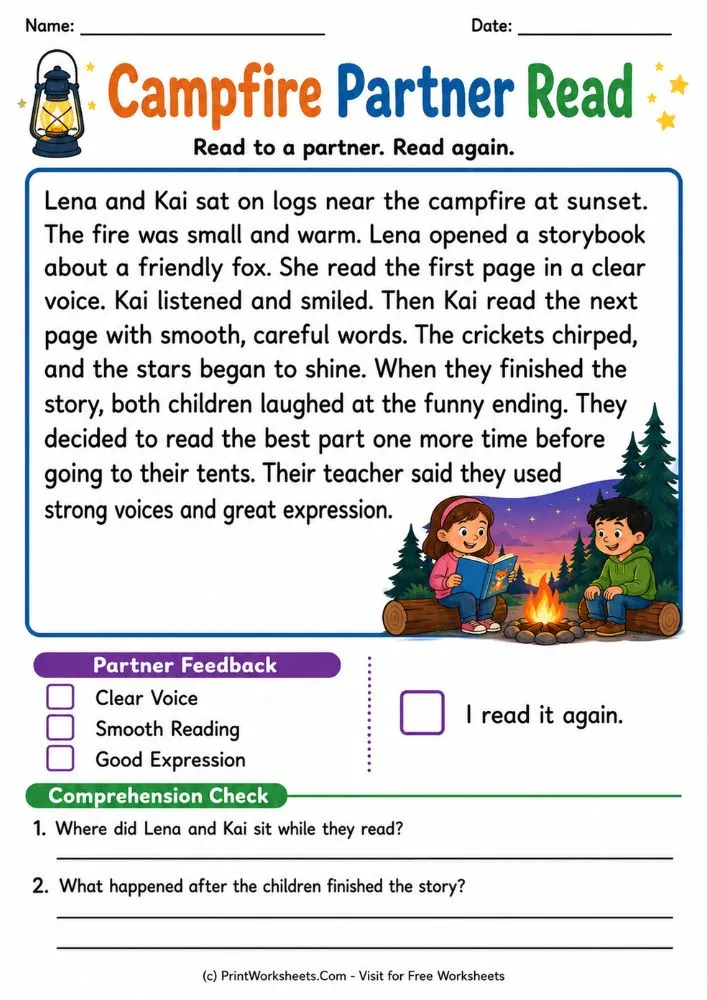
- Campfire Partner Read An interactive peer-evaluation reading worksheet. Students sit with a partner or parent. The first student reads the text aloud while the partner listens. The listener then uses the partner feedback checklist to evaluate if the reader used a clear voice, smooth reading, and good expression. This activity builds active listening skills and encourages constructive peer feedback.
Effective Literacy Center Implementation
Print these high-resolution reading pages directly on standard 8.5″ x 11″ copy paper. Integrating physical tracking strategies alongside the summer reading fluency passages guarantees maximum skill retention. During the “A Sunny Day to Read” activity, provide students with a physical tracking tool, such as a colored reading strip or a reading pointer. Instruct students to physically track the words during their first slow read to ensure accuracy. On the second and third reads, have them remove the tracker to practice natural eye-sweeping and smooth pacing.
To maximize literacy center efficiency, place the reading pages inside heavy-duty dry-erase sleeves. Provide students with fine-tip washable markers. This straightforward preparation allows multiple classroom groups to practice expressive reading and peer evaluations repeatedly throughout the instructional week without consuming excess printer ink.
Frequently Asked Questions
Why do students need to read the same passage three times?
Repeated reading is a scientifically proven method to build reading fluency. The first read is heavily focused on decoding unknown words, which makes the reading sound slow and choppy. By the second and third read, the student has mapped the words, allowing their brain to focus on reading speed, pacing, and vocal expression rather than just surviving the phonics translation.
What is reading expression and why does it matter?
Reading expression (prosody) is the ability to read text with natural phrasing, tone, and emotion, sounding like regular speaking. If a student reads in a flat, robotic monotone voice, they are likely not comprehending the text. Teaching students to adjust their voices for questions, dialogue, and exclamation points directly bridges the gap between word recognition and reading comprehension.
What grade levels use these fluency printables?
These reading activities align directly with standard 1st and 2nd-grade core English Language Arts expectations. Late-year kindergarten educators can utilize the repeated reading pages with advanced readers. First and second-grade educators frequently print these exact pages for continuous fluency review, ensuring students can consistently decode and comprehend grade-level text.