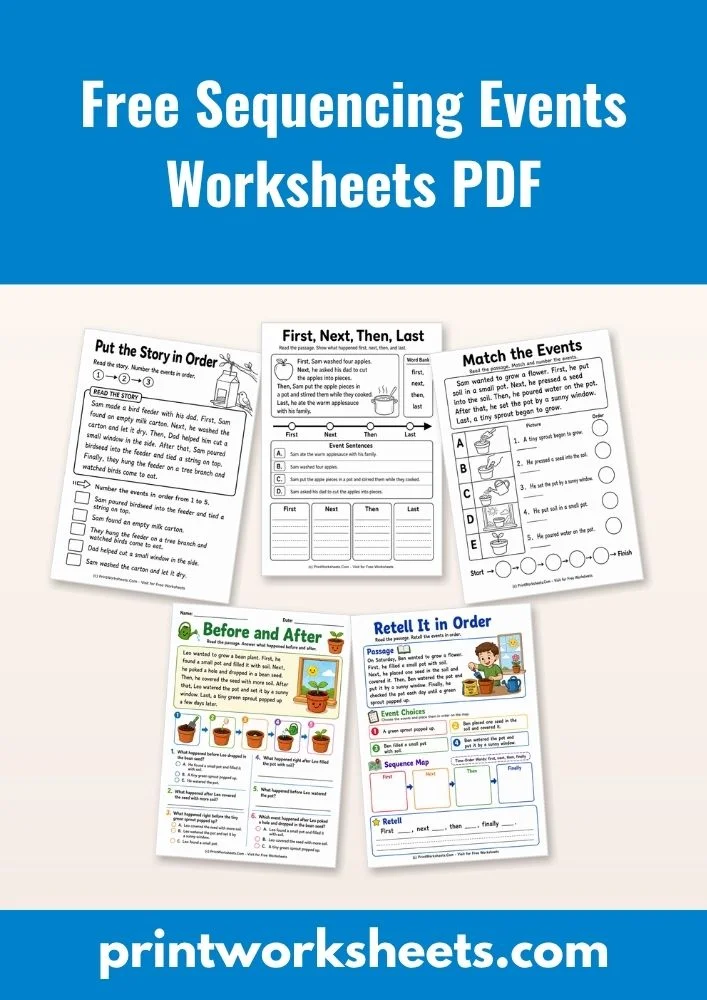
Print sequencing events worksheets to provide essential chronological reading practice for first and second-grade students. Developing strong reading comprehension requires young learners to understand that text follows a logical, step-by-step timeline. This printable literacy PDF delivers rigorous, no-prep learning centers focusing strictly on identifying time-order words and structural tracking. By utilizing numbering drills, graphic organizer sequence maps, matching pictures, and complex before-and-after analysis, educators guarantee comprehensive English Language Arts development. Printing these chronological sequencing activities ensures young readers track plot progression before moving into advanced text analysis.
Educators and homeschool parents utilize sequencing events worksheets during morning work, independent reading rotations, and informational text assessments. Consistent exposure to text timelines prevents structural confusion when students write original narratives. To build a complete baseline for early childhood literacy development, pair this reading comprehension pack directly with our uppercase and lowercase tracing worksheets. Securing physical writing mechanics alongside logical story mapping establishes the ideal core literacy framework required for primary grade students.
Inside the Sequencing Comprehension PDF
Clear formatting, child-friendly illustrations, and structured sequence mapping blocks make these printables highly effective for early elementary classrooms. The layouts isolate text formatting to maximize focus on chronological organization. Each printable activity page targets specific primary grade core reading standards.
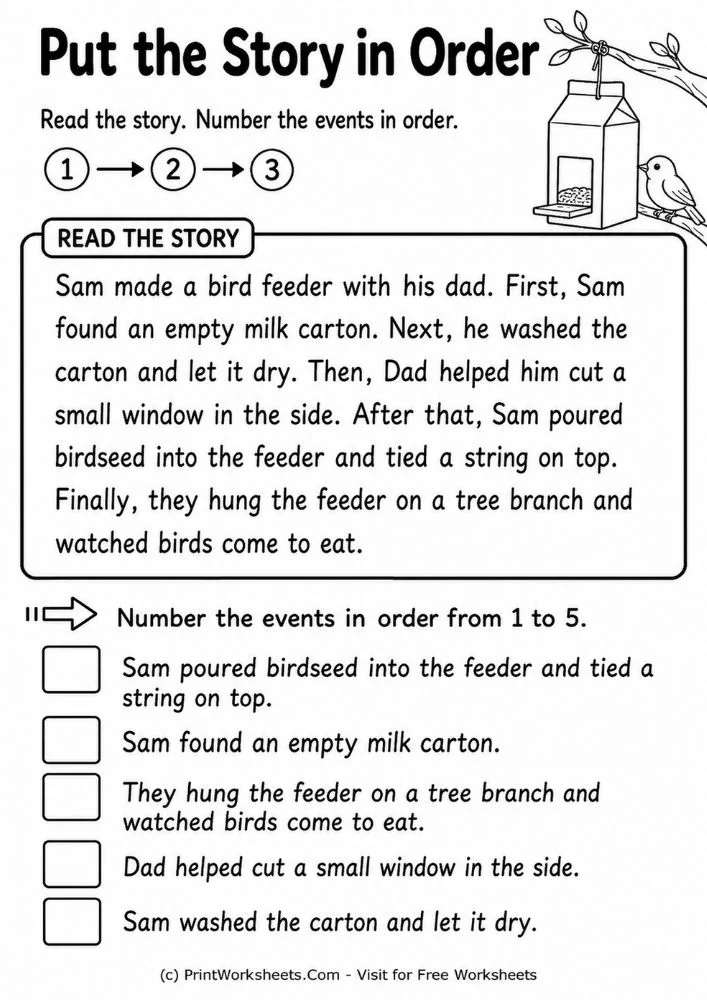
- Put the Story in Order A foundational chronological tracking worksheet. Students read a short paragraph detailing how a boy named Sam builds a bird feeder with his dad. The text explicitly embeds transition signals. Students must analyze 5 distinct summary sentences below the passage and number them from 1 to 5 to accurately reflect the true order of the project steps.
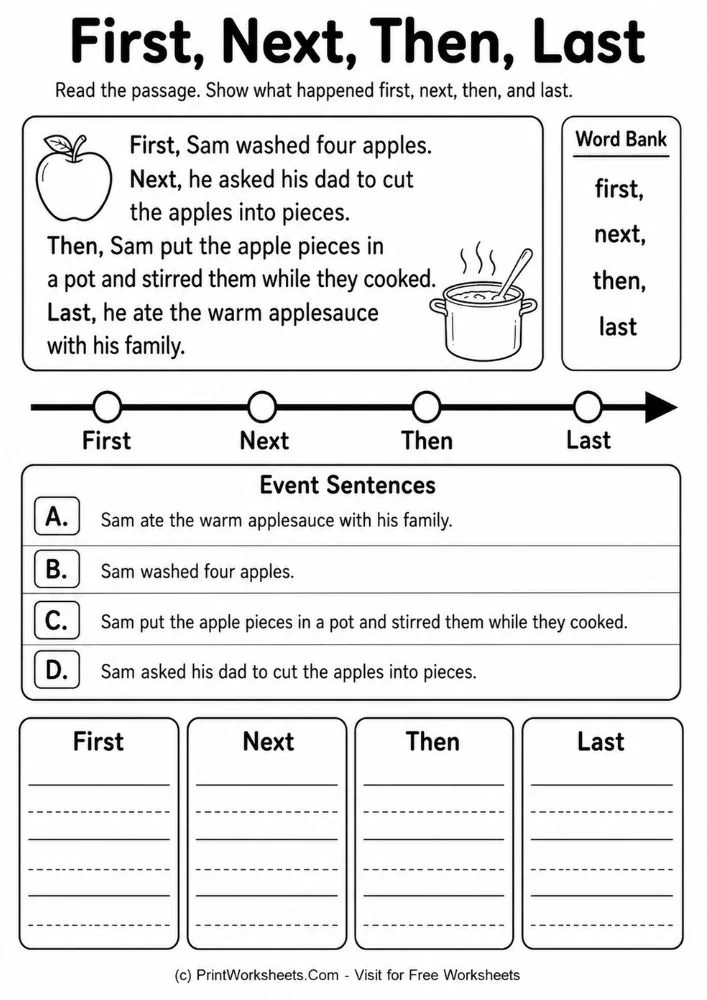
- First, Next, Then, Last A handwriting and timeline integration page. Students read a short story explaining how to make applesauce. Below the text, a horizontal timeline arrow visually links the transition words. Students must trace the primary time-order words and write the corresponding event sentences onto dedicated primary dashed lines under the correct column.
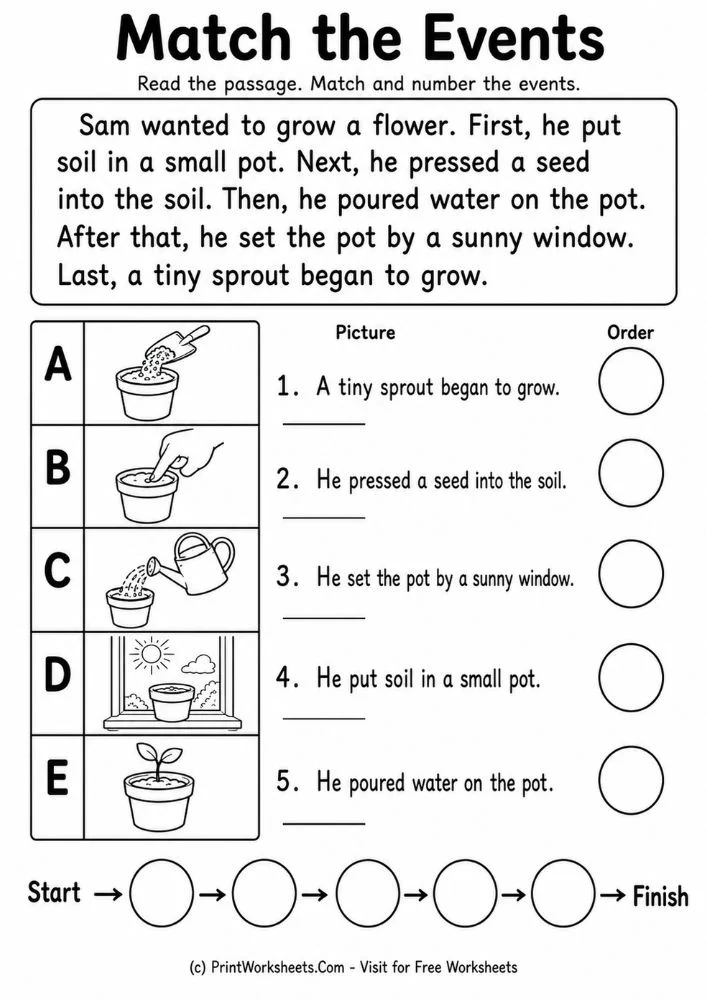
- Match the Events A visual tracking and picture matching worksheet. Students read a story about planting flowers. Below the text, they view 5 scrambled black-and-white illustrations alongside 5 descriptive actions. Students must match the letters to the numbers, write the correct sequence digit in the tracking circles, and fill in the bottom flowchart.
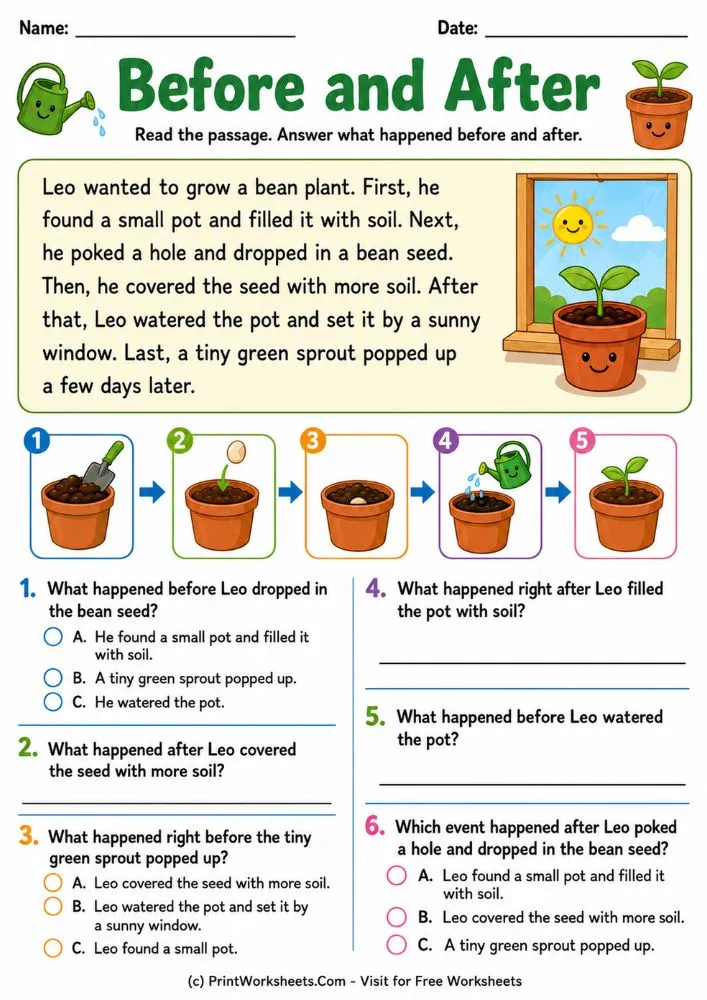
- Before and After Plant Progress A high-level colorful reading comprehension page. Students read a paragraph about Leo growing a bean plant, following a numbered 5-step visual flowchart. The worksheet challenges students with 6 deep-thinking questions asking explicitly what happened right before or right after specific botanical actions.
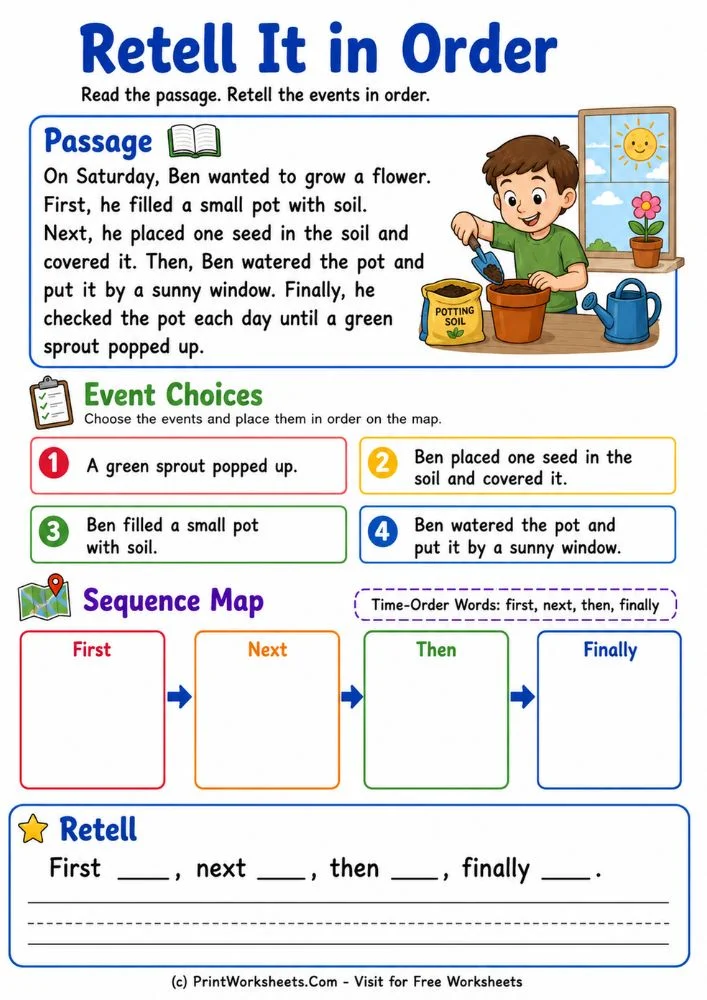
- Retell It in Order Map A comprehensive story retraining worksheet. Students read an informational passage about Ben growing a flower. They must analyze four color-coded event choices and place them into the correct spatial grid on the sequence map. Finally, they use those choices to write a complete summarized retelling paragraph at the bottom of the page.
Effective Literacy Center Implementation
Print these high-resolution reading pages directly on standard 8.5″ x 11″ copy paper. Integrating physical color-coding routines alongside the sequencing events worksheets guarantees maximum text structure retention. During the “Put the Story in Order” activity, provide students with a set of colored highlighters. Instruct them to highlight specific transition keywords in the text (such as “First”, “Next”, “Then”, “After that”, “Finally”) with a specific color, and then find the matching sentence below. This tactile color-matching bridges visual reading directly to chronological processing.
To maximize literacy center efficiency, place the Match the Events and Sequence Map pages inside heavy-duty dry-erase sleeves. Provide students with fine-tip washable markers. This straightforward preparation allows multiple classroom groups to practice chronological sorting and story retelling repeatedly throughout the instructional week without consuming excess printer ink or copy paper.
Frequently Asked Questions
Why is teaching story sequencing critical for early readers?
Sequencing is the cognitive backbone of reading comprehension. A student might be able to decode every single word in a paragraph perfectly, but if they cannot recall the correct order of events, they have zero actual comprehension. Chronological worksheets force the brain to organize information logically, which directly impacts a child’s ability to summarize text and predict outcomes.
What are time-order words and how do they help?
Time-order words (such as first, next, then, after that, finally) are structural roadmaps inside a text. They alert the reader’s brain that a transition in time or action is occurring. Teaching students to actively hunt for these transition signal words makes it significantly easier for them to break down long informational passages and track multi-step instructions accurately.
What grade levels use these sequencing printables?
These reading activities align directly with standard 1st and 2nd grade core English Language Arts expectations. Advanced kindergarten classrooms can utilize the picture-matching and 3-step sequencing pages during small group interventions. First and second-grade educators print these exact sheets for independent reading centers to assess and secure baseline paragraph tracking skills.