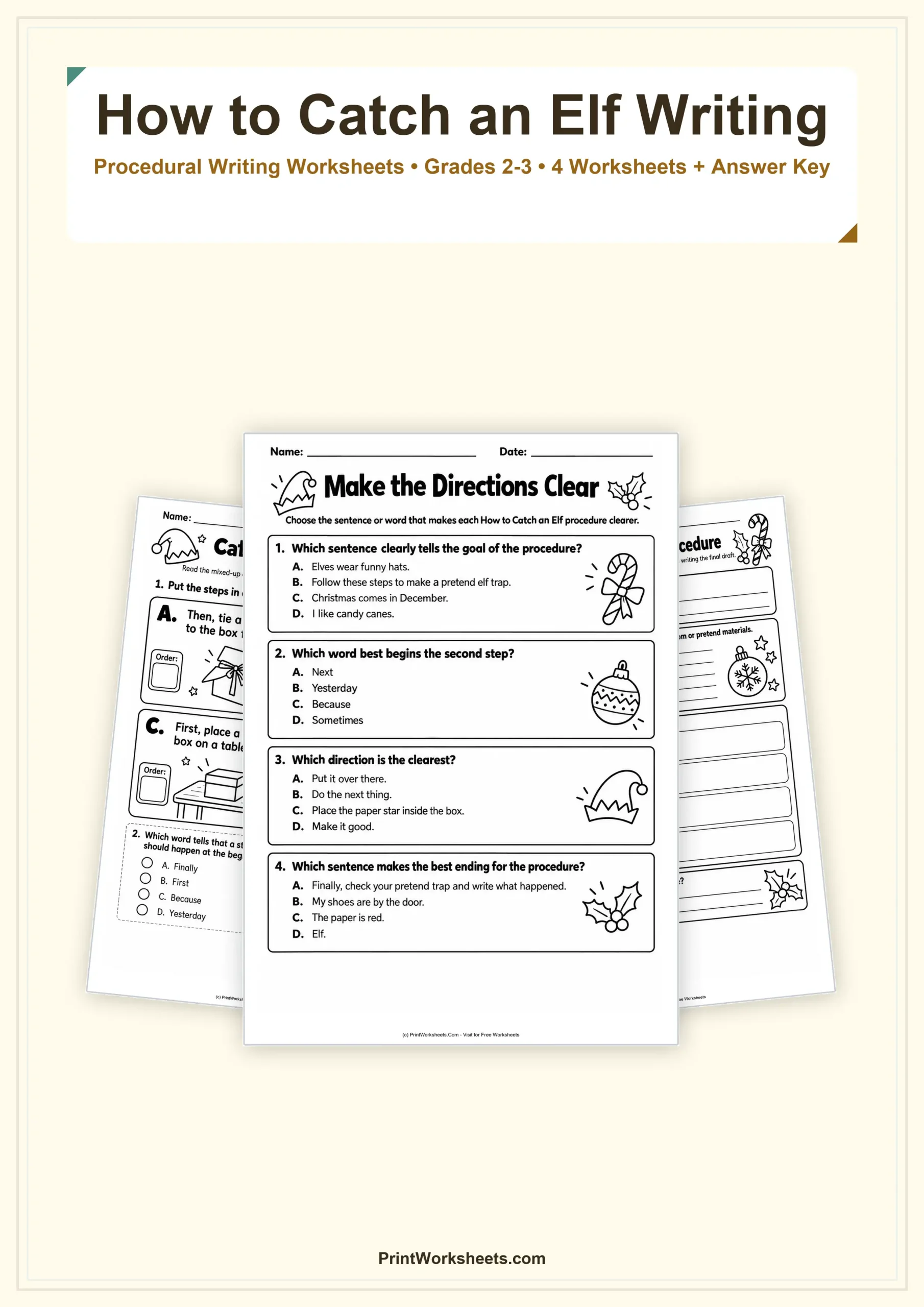
Turn a playful Christmas idea into a focused writing lesson with these elf procedural writing worksheets for grades 2-3. Instead of asking students to jump straight into a full composition, this set builds the skill in stages: children first put an elf-catching procedure in order, then study what makes directions clear, plan their own make-believe procedure, and finally write and check a complete set of instructions. The theme stays light and imaginative while the literacy work remains centered on sequence, clarity, action words, and organization.
Elf Procedural Writing Practice in Four Steps
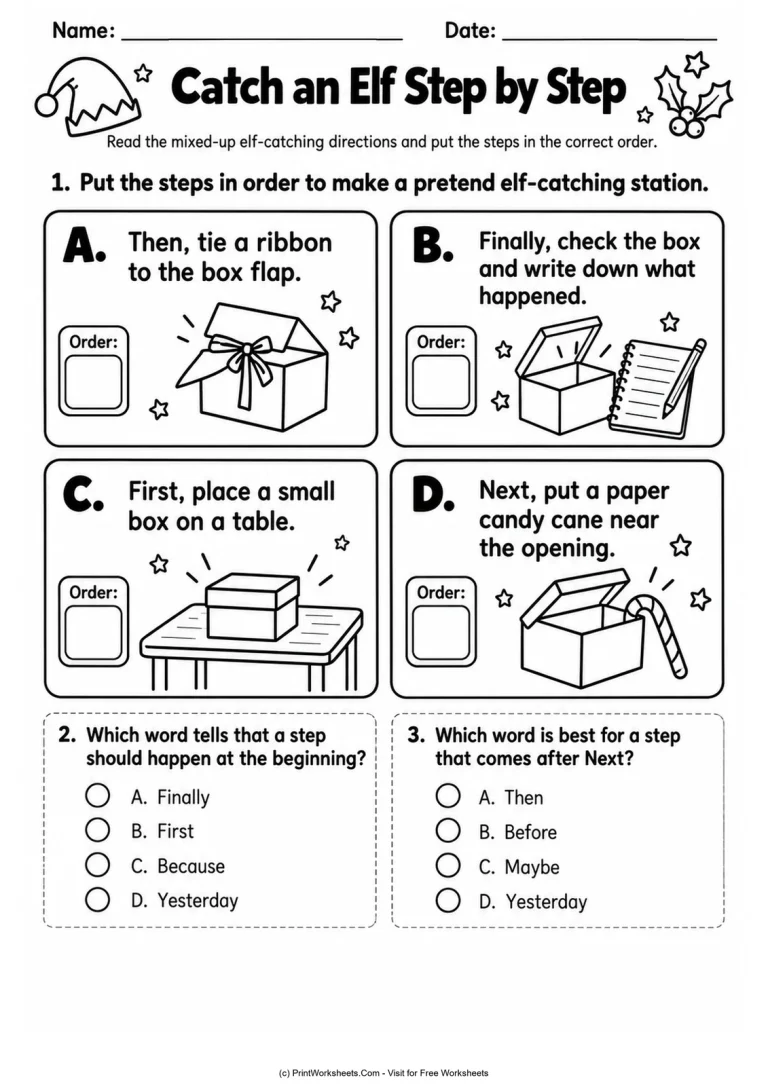
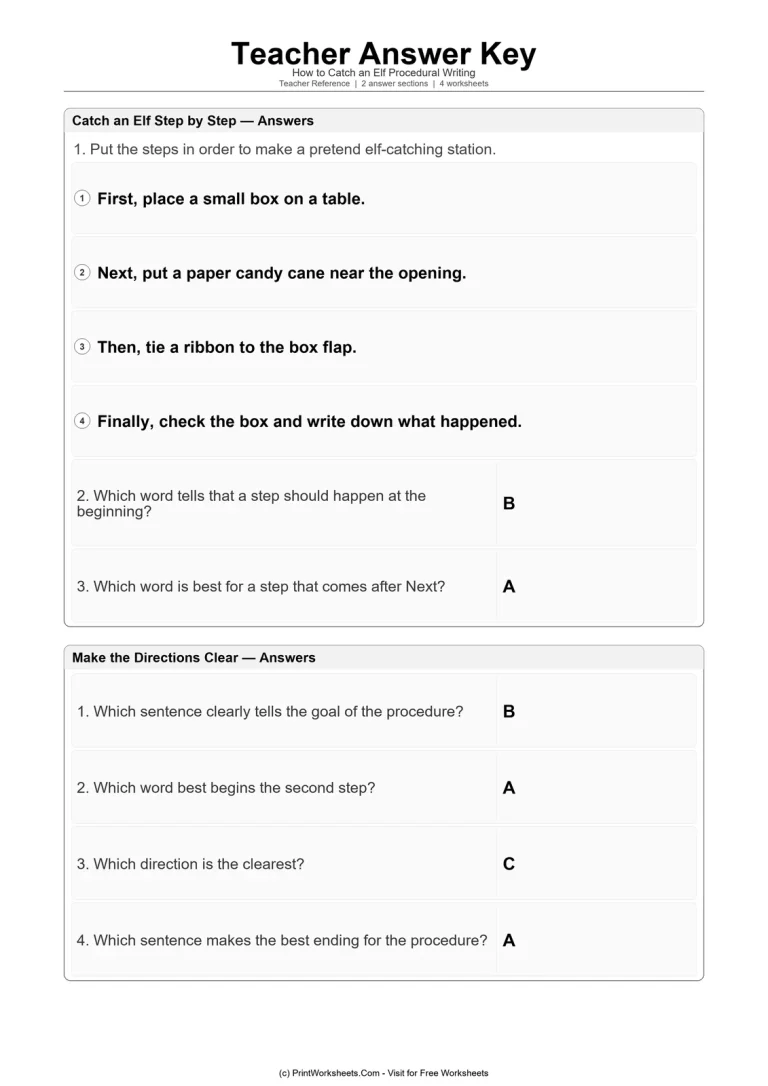
The first worksheet, Catch an Elf Step by Step, gives students four mixed-up directions for making a pretend elf-catching station. They decide where each direction belongs by using the sequence words and the meaning of the actions. The correct progression begins by placing a small box on a table, continues with adding a paper candy cane and tying a ribbon to the box flap, and ends with checking the box and recording what happened.
Two additional questions on the same page ask students to identify words that signal sequence. They determine that First marks the beginning of a procedure and that Then can follow Next. This makes the worksheet useful for students who need practice understanding that transition words do more than decorate writing: they tell the reader when each action should happen.
Learning What Makes Directions Easy to Follow
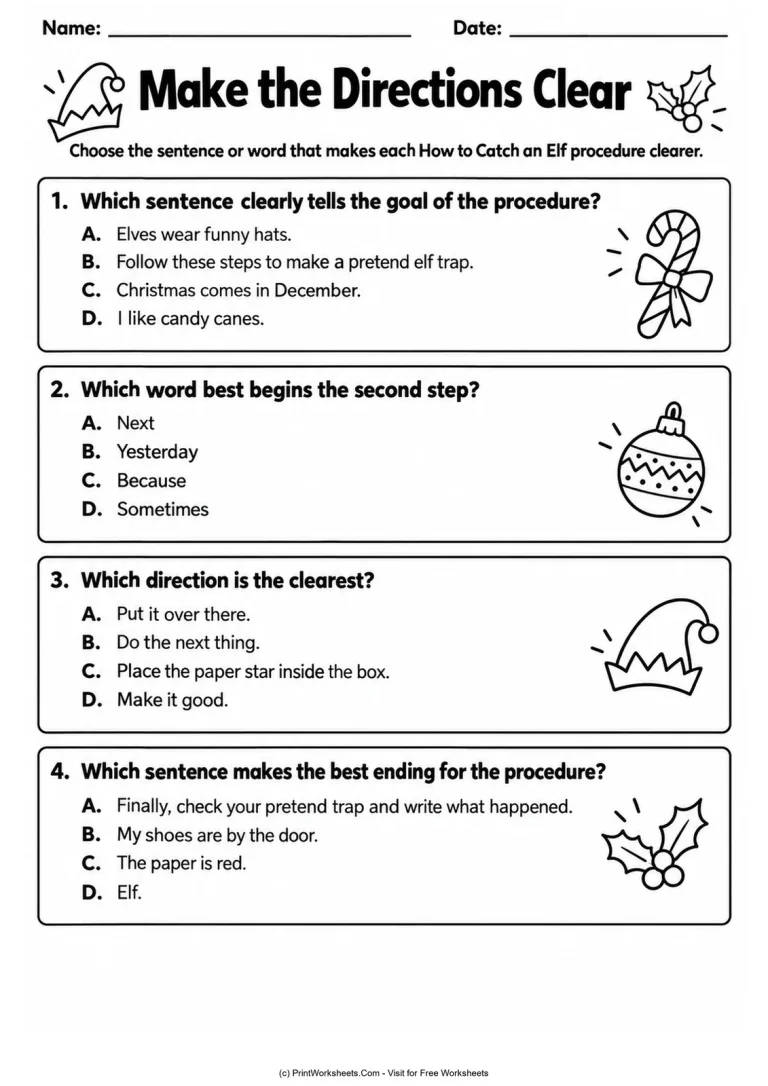
The second worksheet, Make the Directions Clear, shifts attention from order to quality. Students answer four multiple-choice questions about the parts of an effective procedure. They identify a sentence that clearly states the goal, choose an appropriate word to begin the second step, select the most precise direction, and recognize a useful ending sentence.
One especially helpful contrast asks students to compare vague directions such as putting something “over there” with the specific instruction to place a paper star inside the box. That difference gives teachers a concrete way to discuss why good procedural writing uses exact nouns and action verbs instead of unclear language.
Plan a Make-Believe How to Catch an Elf Procedure
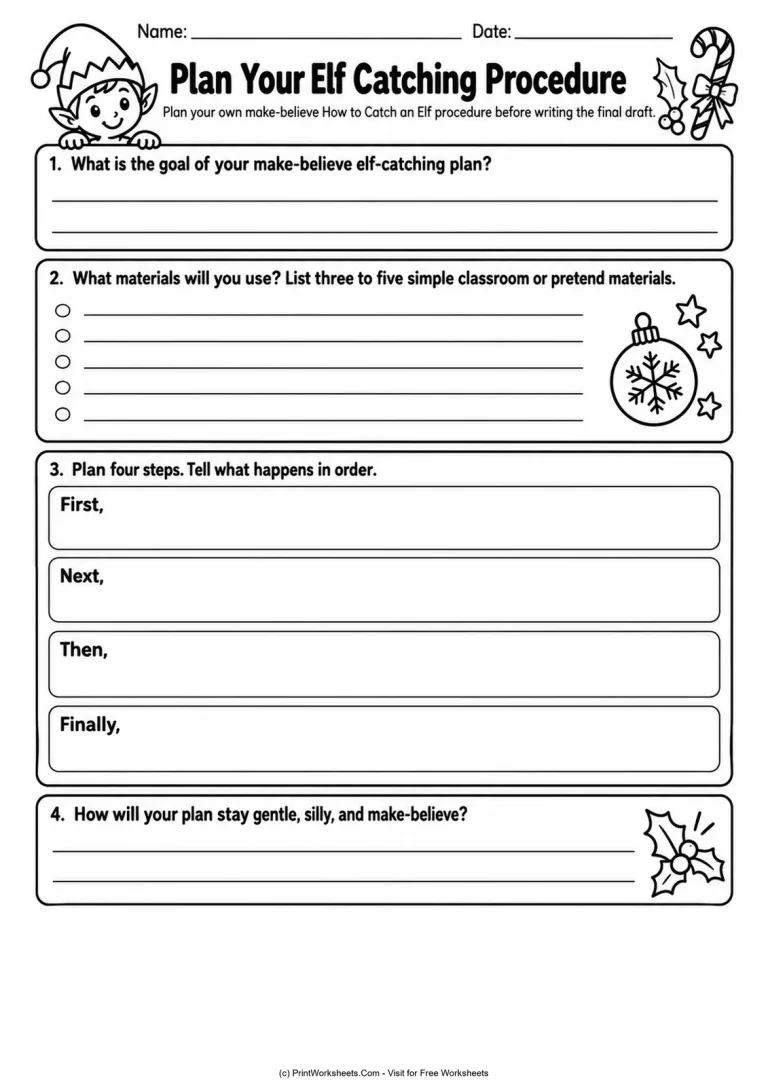
The third page turns the lesson into guided planning. Students begin by explaining the goal of their elf-catching idea and listing three to five simple classroom or pretend materials. The organizer then provides four large planning spaces labeled First, Next, Then, and Finally. These prompts help students build a complete sequence before they have to manage full sentences, handwriting, spelling, and organization at the same time.
A final planning question asks how the idea will stay gentle, silly, and make-believe. That prompt keeps the activity firmly in the realm of imaginative classroom writing and encourages children to think about tone as well as sequence.
From Planning to a Complete Procedural Paragraph
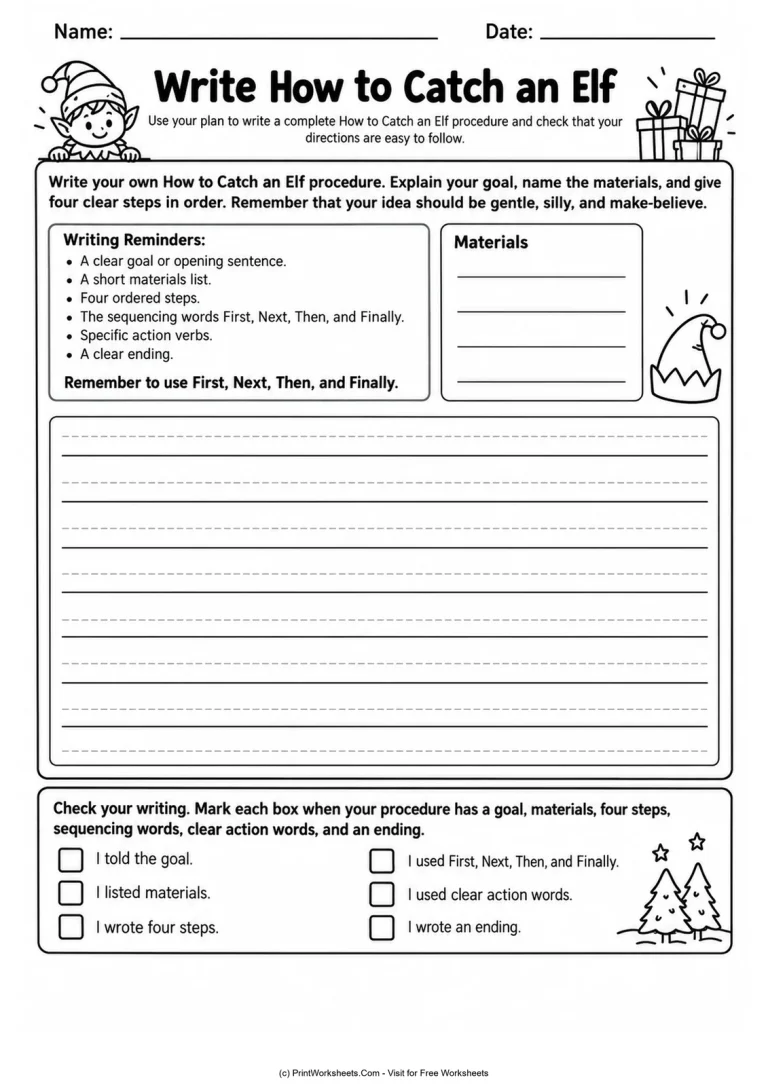
The final student worksheet, Write How to Catch an Elf, gives children space to turn their plan into a finished piece. A reminder box asks for a clear goal or opening sentence, a short materials list, four ordered steps, the sequencing words First, Next, Then, and Finally, specific action verbs, and a clear ending. A separate materials box lets students organize supplies before writing.
The large lined section provides room for the full procedure, while a six-item checklist at the bottom supports self-editing. Students confirm that they stated the goal, listed materials, wrote four steps, used the four sequence words, chose clear action words, and included an ending. This makes the page useful for independent work, writing centers, holiday literacy stations, or a short December writing project.
Teacher Support and Classroom Use
The included teacher answer key covers the objective questions from the first two worksheets, including the step order and all six multiple-choice responses. The planning and final writing pages remain open-ended, so students can create different imaginative solutions while still following the same procedural structure.
Because each page focuses on a different part of the writing process, the set can be used across several lessons rather than as a single one-time activity. Start with sequencing, move into clear-direction practice, complete the organizer together or independently, and finish with the full writing page. The result is a Christmas writing sequence that gives second- and third-grade students both structure and room for creativity.