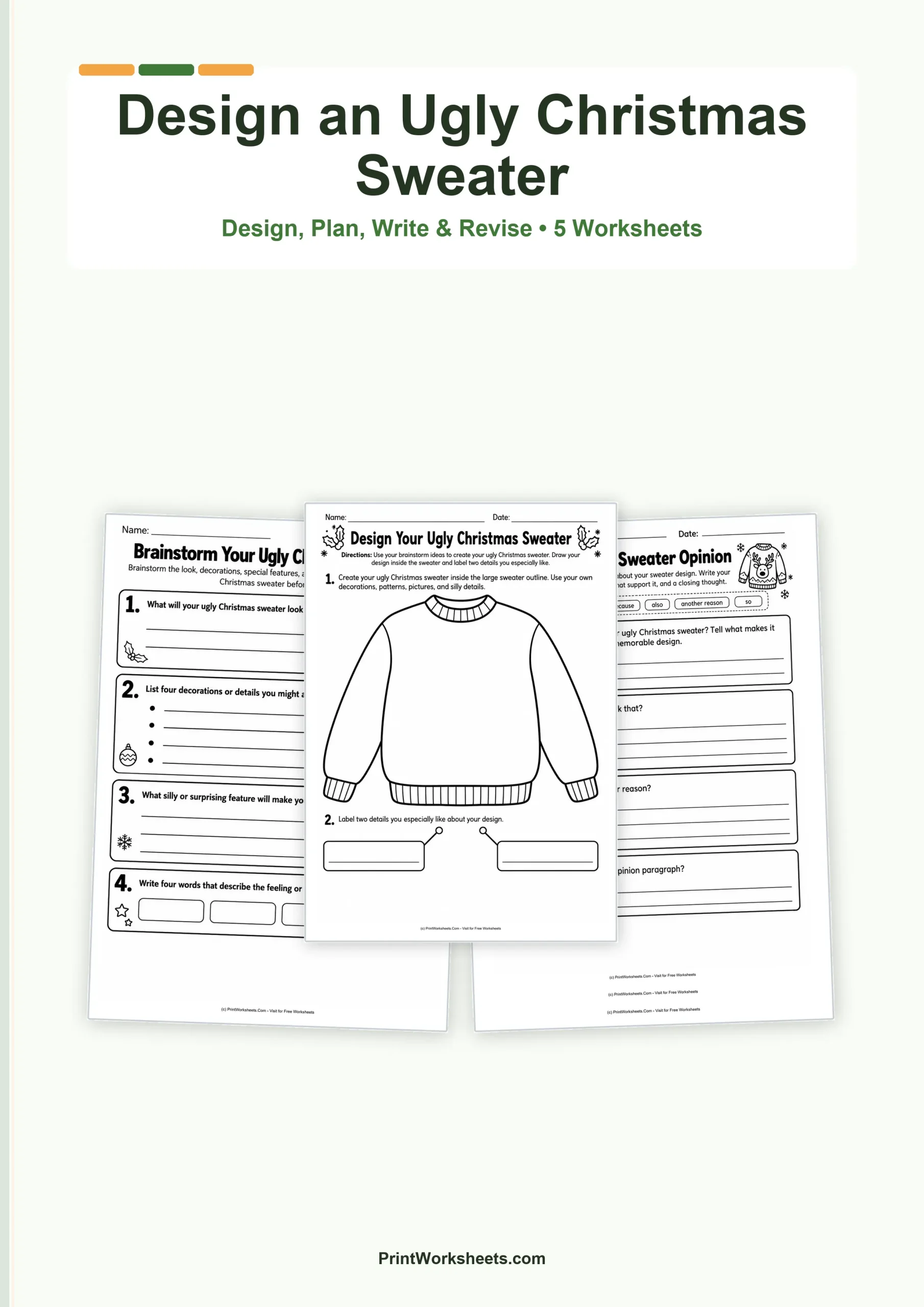
This ugly Christmas sweater writing set turns a playful holiday design challenge into a complete opinion-writing project. Across five printable student pages, children first imagine what their sweater should look like, draw the design, explain what they think about it, support that opinion with reasons, and then revise their writing into a neat final paragraph. The activities work especially well for elementary students who benefit from seeing one writing assignment broken into clear, manageable stages.
Ugly Christmas Sweater Writing from Idea to Final Copy
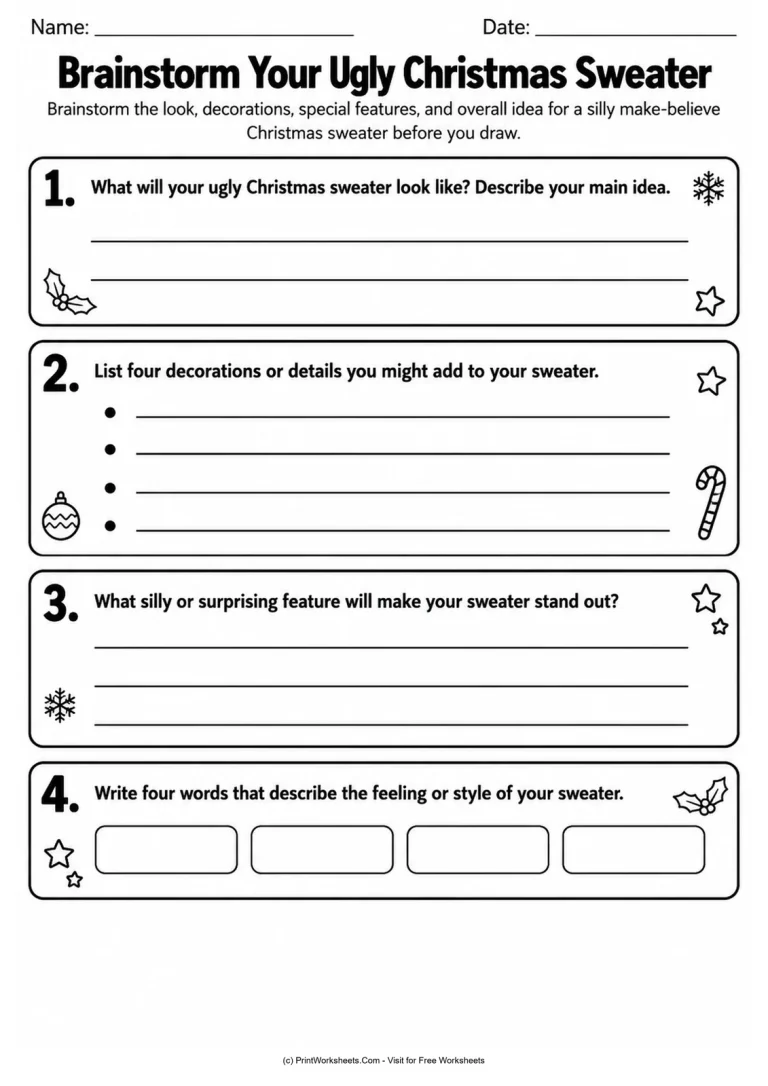
The first worksheet gives students space to build the idea before they are asked to write a paragraph. They describe the main look of their make-believe Christmas sweater, list four decorations or details they may include, think of one silly or surprising feature, and choose four words that describe the feeling or style of the design. This creates a useful bank of ideas that students can refer to on the later pages instead of having to invent everything while writing.
Brainstorm the Sweater Details
The brainstorming page encourages specific thinking. A child might plan patterns, pictures, decorations, unusual features, or descriptive words that make the sweater memorable. Because the prompts separate the main idea, small details, special feature, and style words, students can gather several kinds of information before they begin drawing or composing sentences.
Draw and Label the Design
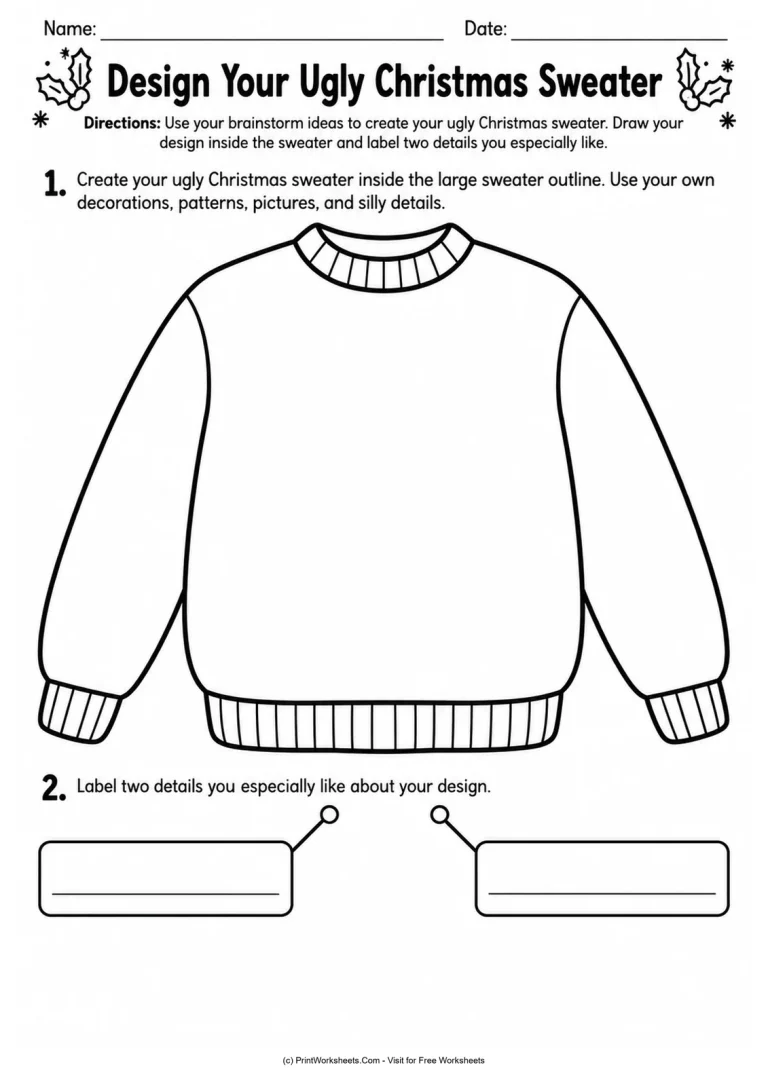
On the second page, students transfer their ideas into a large blank sweater outline. They can add their own patterns, pictures, decorations, and silly details inside the sweater. Two label boxes ask them to identify details they especially like. This step makes the writing project more concrete because students now have a visual design they can describe and evaluate in the pages that follow.
Build an Opinion with Two Supporting Reasons
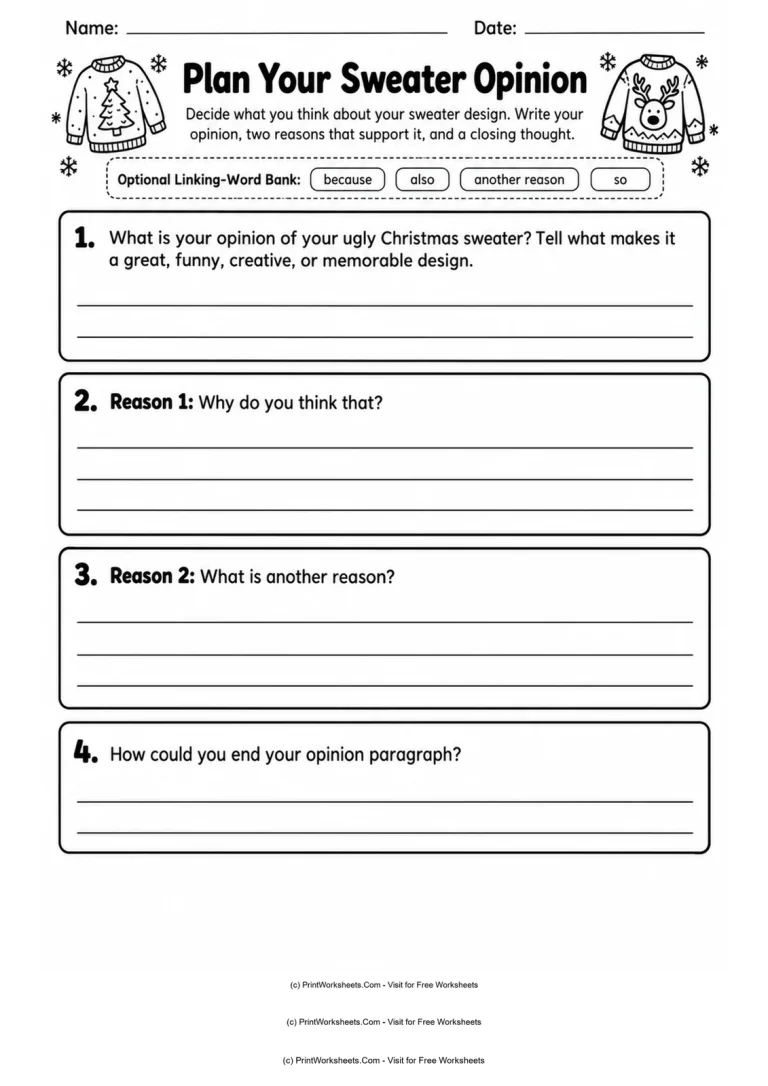
The third worksheet shifts the project from art and brainstorming to structured opinion writing. Students state what they think about their ugly Christmas sweater and consider what makes the design great, funny, creative, or memorable. Separate sections prompt them for Reason 1, Reason 2, and a closing thought. An optional linking-word bank includes because, also, another reason, and so, giving developing writers simple ways to connect their ideas.
Plan Before Drafting
This organizer can help prevent short, unsupported responses. Instead of writing only that they like their sweater, students are asked to explain why. The two-reason structure also gives teachers and parents an easy way to reinforce a basic opinion-writing pattern: state an opinion, support it with reasons, connect ideas, and finish with a closing sentence.
Write the First Opinion Paragraph
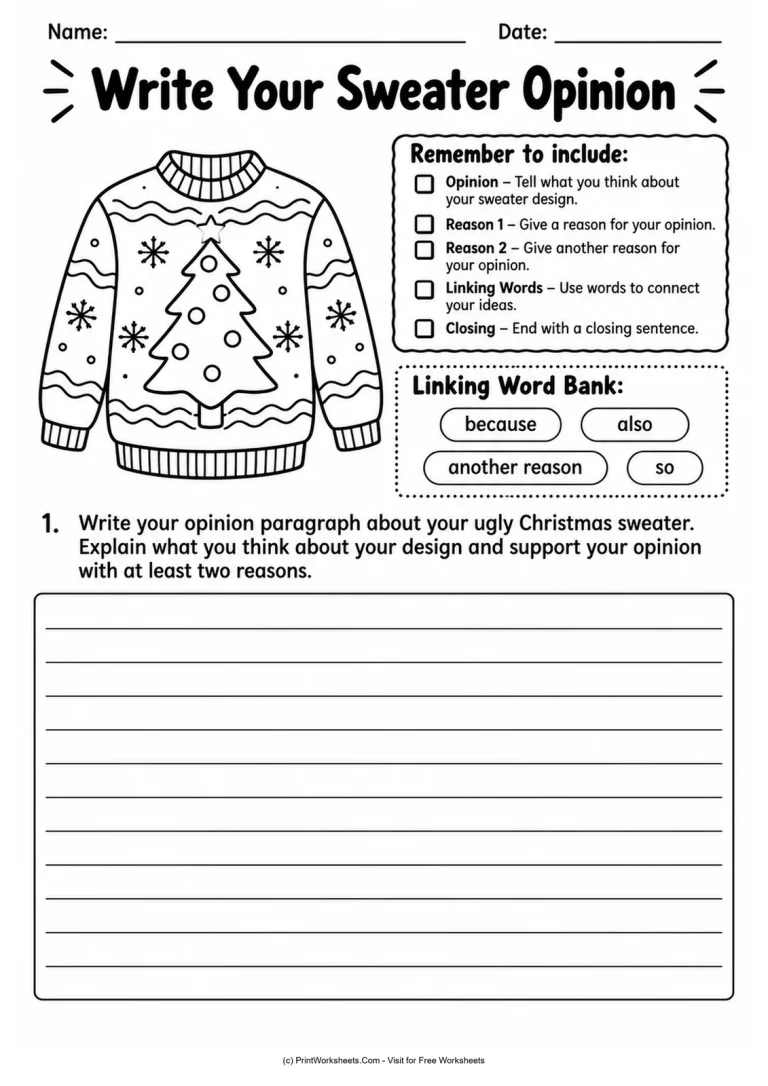
The fourth page provides a larger writing area for the first complete paragraph. A visible reminder checklist asks students to include their opinion, Reason 1, Reason 2, linking words, and a closing sentence. The same linking words from the planning page appear again, so students can move from organizer to draft without learning a new structure midway through the activity.
Revise and Produce a Neat Final Copy
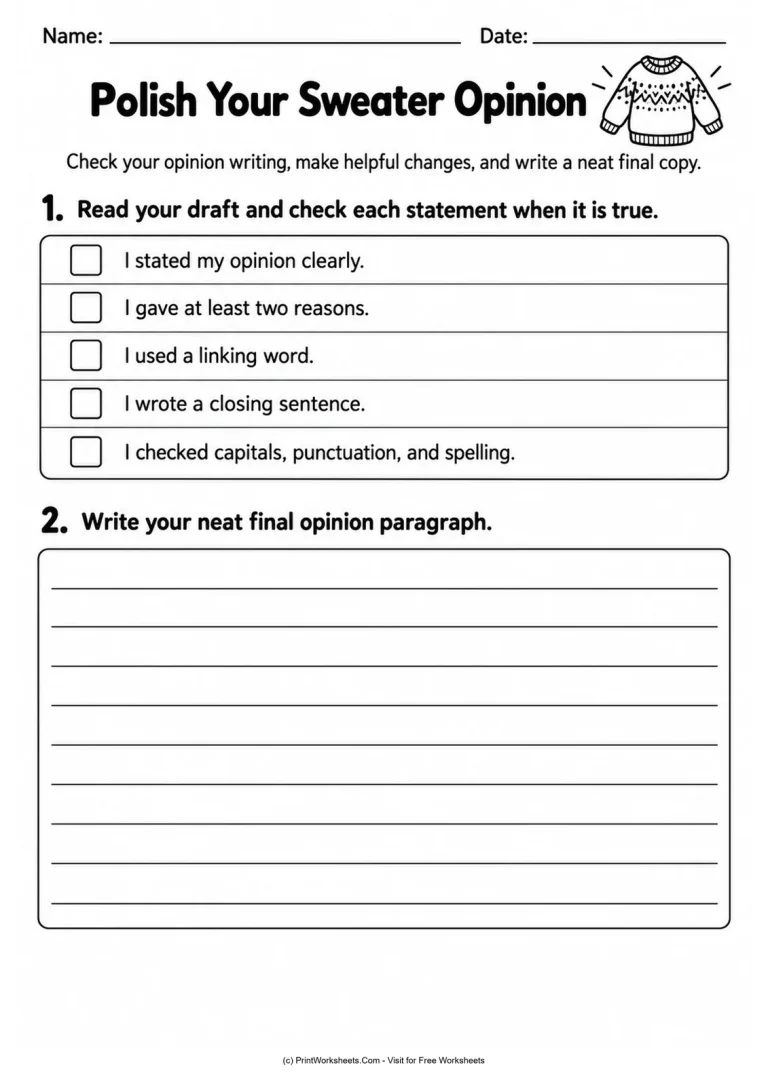
The final worksheet introduces a simple editing routine before students rewrite their paragraph. The checklist asks them to confirm that the opinion is clear, at least two reasons are included, a linking word is used, a closing sentence is present, and capitals, punctuation, and spelling have been checked. After reviewing the draft, students have lined space to write a clean final version.
This final step gives the project a real beginning, middle, and end. Students do not stop after drawing a sweater or completing a single holiday prompt; they practice the full sequence of planning, drafting, checking, and publishing a finished piece. That makes the set useful for a December writing center, independent literacy work, a holiday-themed writing lesson, or a multi-day classroom project.
Ideas for Using the Worksheets
The pages can be completed in one extended lesson or divided across several days. One session can focus on brainstorming and drawing, another on planning and drafting, and a final session on editing and rewriting. Students can also share their finished sweater designs before reading their opinion paragraphs aloud, giving them an authentic reason to explain the choices they made.
For additional seasonal writing practice, pair this activity with our Christmas writing prompts for Grades 1-3. The prompt collection works well for short independent responses, while this sweater project provides a more focused design-to-final-copy writing sequence.
With its combination of drawing, descriptive thinking, opinion structure, linking words, revision, and final-copy practice, this printable set gives students a festive reason to develop a piece of writing step by step while still leaving plenty of room for individual creativity.