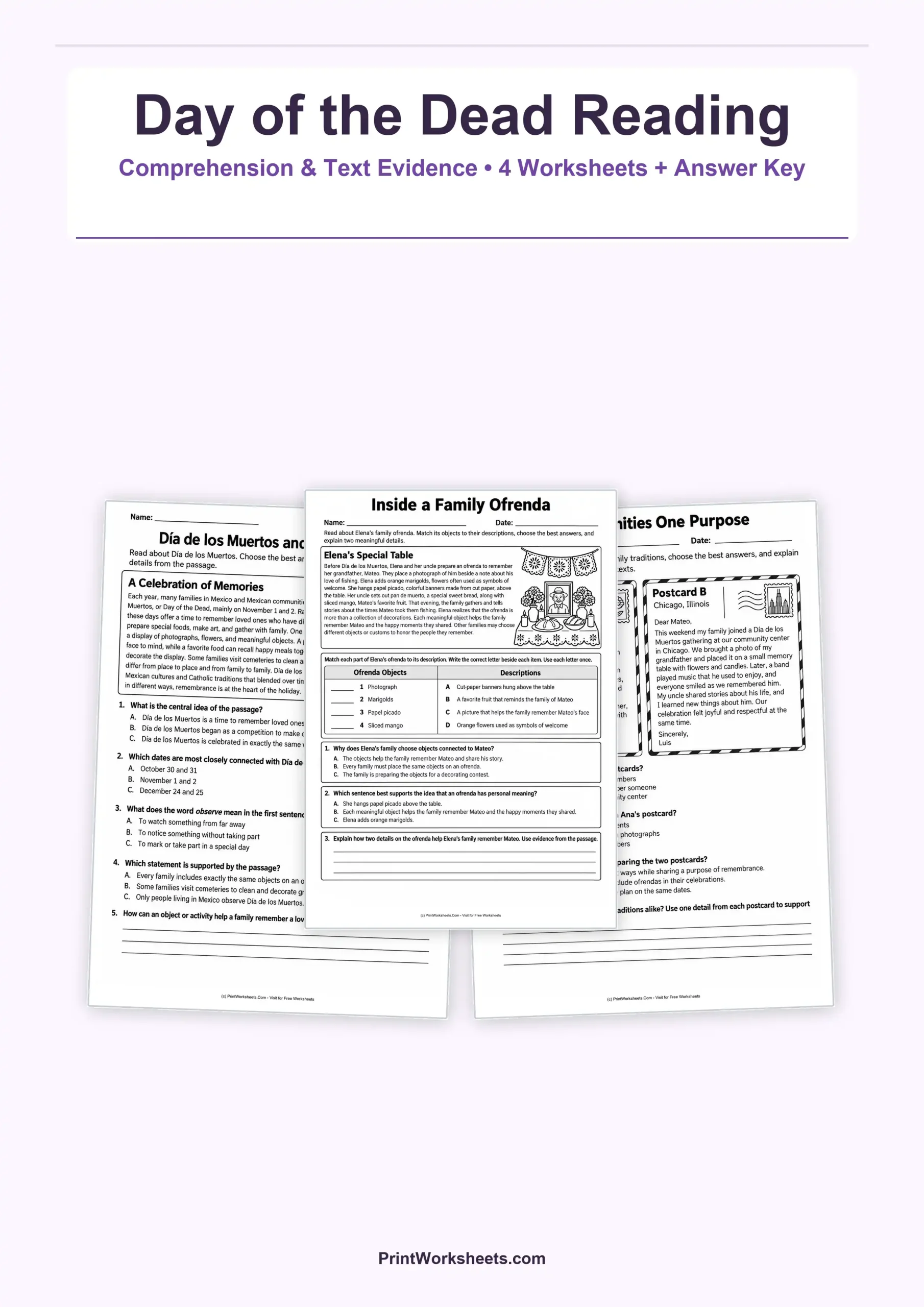
Day of the Dead reading comprehension gives students a focused way to practice close reading while learning how families remember loved ones through photographs, favorite foods, flowers, stories, music, and family gatherings. This printable set uses several connected readings rather than repeating one question format. Students identify central ideas, determine vocabulary meaning from context, find supporting evidence, compare two texts, place events in order, separate fact from opinion, and explain their thinking in written responses.
Day of the Dead Reading Comprehension Skills
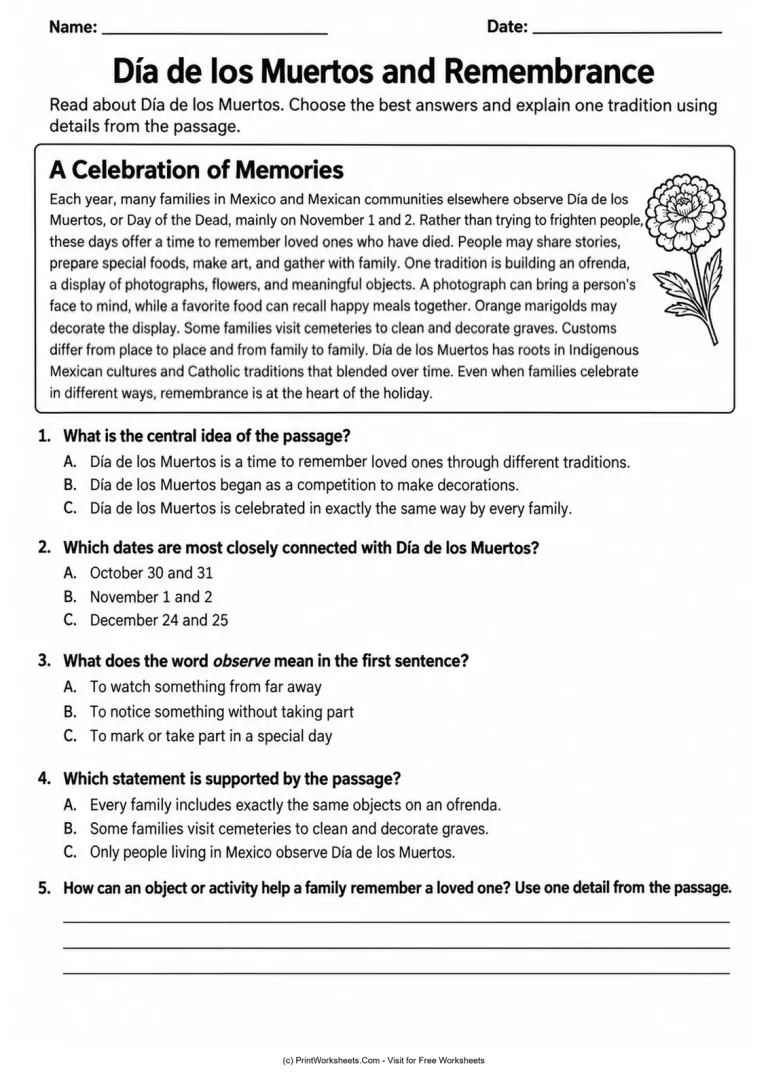
The first worksheet, Día de los Muertos and Remembrance, introduces the holiday through an informational passage. Students read that the celebration takes place mainly on November 1 and 2 and centers on remembering people who have died. The passage describes family stories, special foods, photographs, flowers, meaningful objects, cemetery visits, and the way traditions can differ from one family to another.
The questions move from basic understanding to deeper reading skills. Students identify the central idea, select the dates connected with the holiday, determine the meaning of the word observe from context, and choose a statement directly supported by the passage. The final response asks students to explain how an object or activity can help a family remember a loved one and to use a detail from the text as evidence.
Read About a Family Remembrance Table
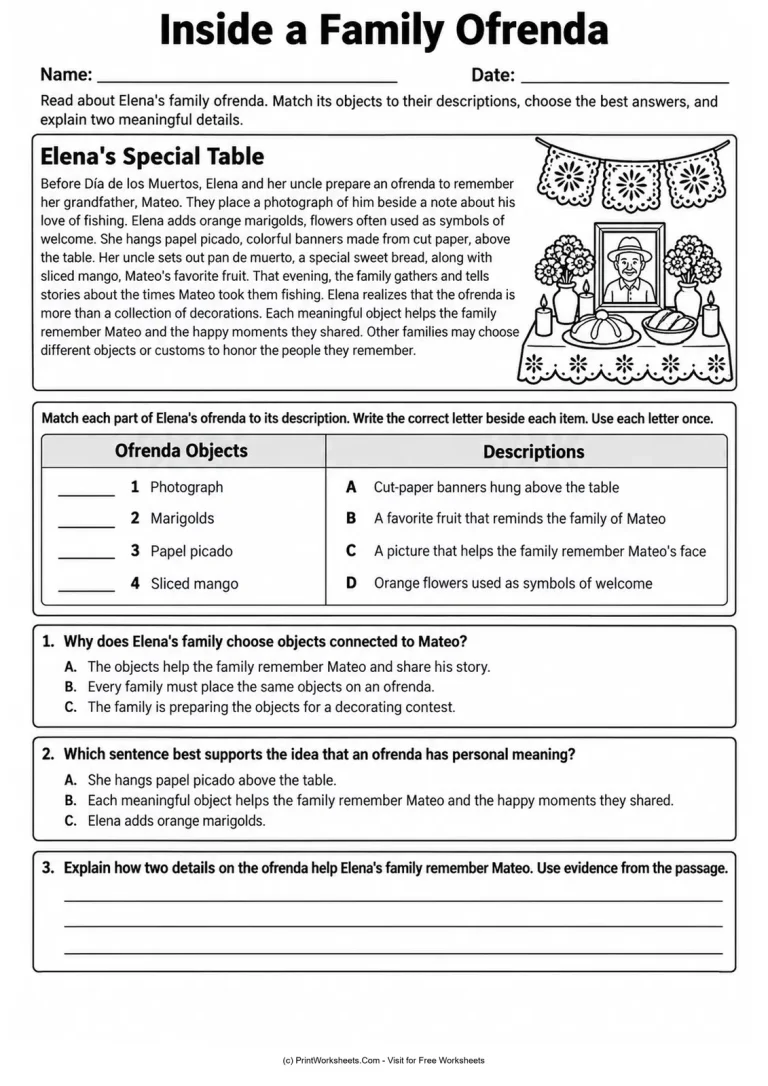
The second worksheet, Inside a Family Ofrenda, focuses on Elena’s family as they prepare a special table for her grandfather, Mateo. The passage includes a photograph of Mateo, a note about his love of fishing, orange marigolds, cut-paper decorations, sweet bread, sliced mango, and stories about family fishing trips. These details help students see how individual objects can connect a family tradition to a specific person’s life.
Students match four objects to their descriptions before answering comprehension questions. They explain why Elena’s family chooses items connected with Mateo and identify the sentence that best shows the personal meaning of the display. A written-response task then asks students to explain how two details help the family remember him. This requires students to combine information from the passage instead of relying on one isolated sentence.
Compare Traditions in Two Communities
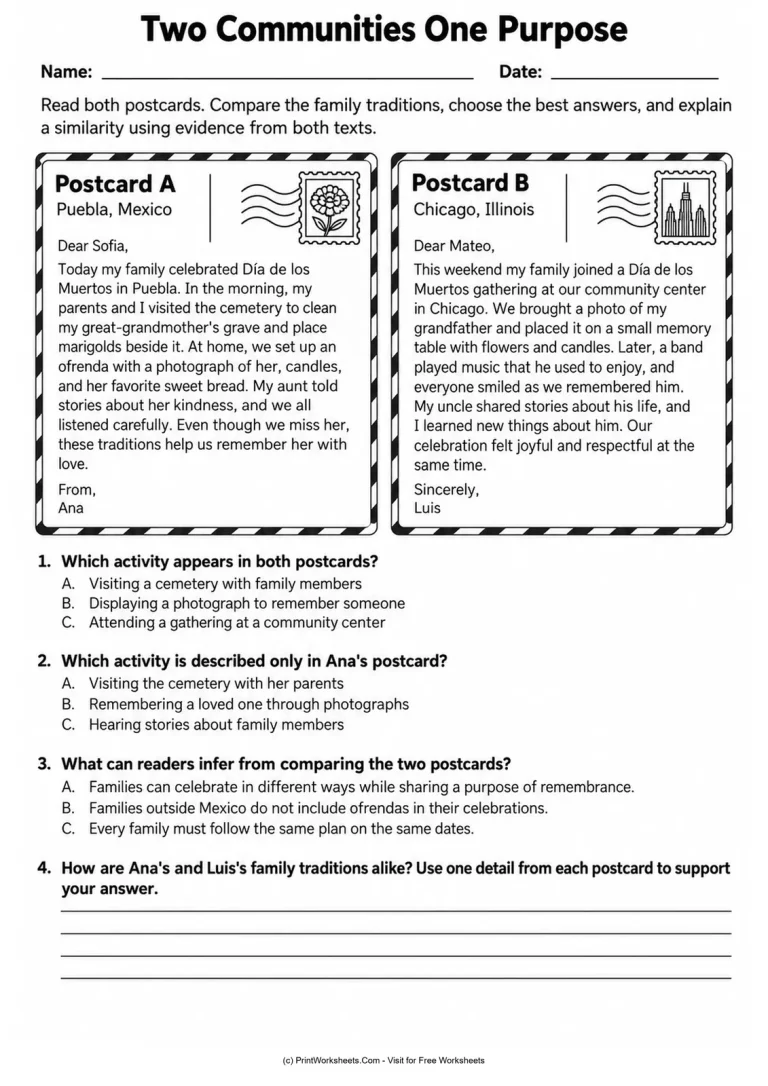
The third worksheet, Two Communities One Purpose, uses two postcard-style texts. One postcard describes a family celebration in Puebla, Mexico. The other describes a family gathering in Chicago, Illinois. Both families display a photograph and share memories, but their activities are not exactly the same. Students identify an activity that appears in both texts, find an activity that appears only in one postcard, and infer that families can follow different traditions while sharing the same purpose of remembrance.
The final question asks students to explain how the two family traditions are alike and support the answer with one detail from each postcard. This makes the page useful for compare-and-contrast practice because students must collect evidence from two separate sources and connect those details in one response.
Sequence Events and Find the Main Message
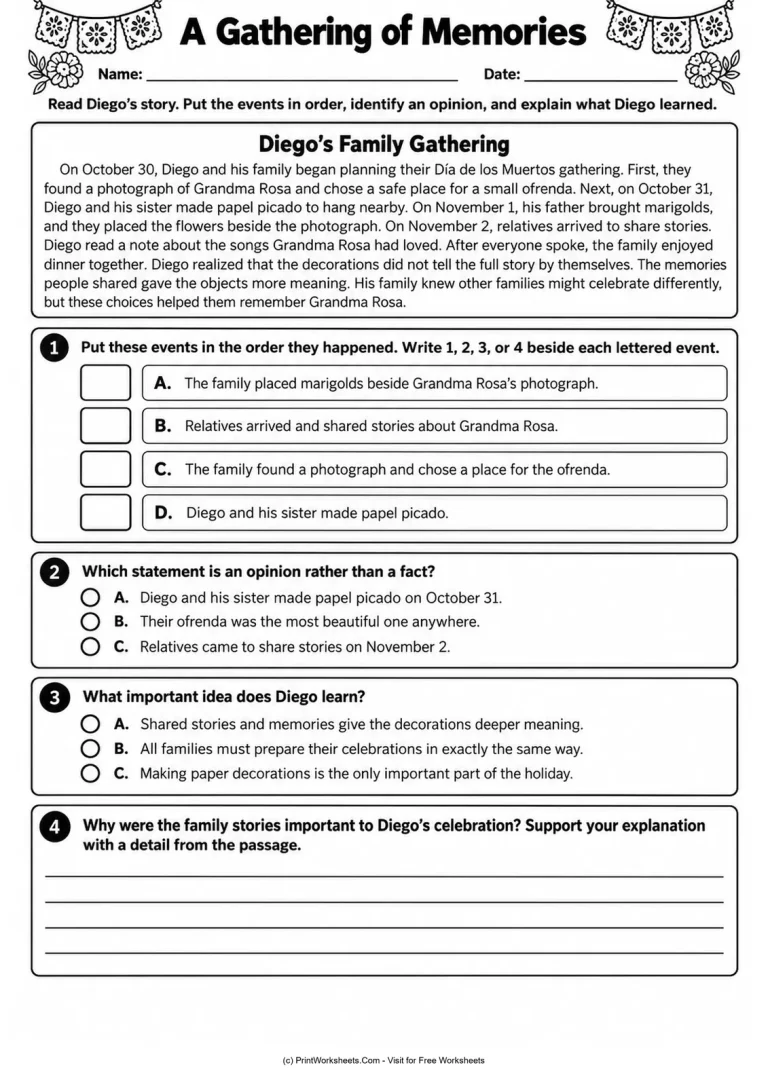
The fourth worksheet, A Gathering of Memories, follows Diego and his family over several days as they prepare for their gathering. They choose a photograph and a place for the remembrance display, make cut-paper decorations, add marigolds, welcome relatives, share stories, and eat dinner together. Students use the dates and sequence words in the passage to place four events in the correct order.
The same worksheet also asks students to distinguish an opinion from factual statements and identify what Diego learns from the experience. The passage makes clear that decorations alone do not tell the complete story; shared memories give the objects deeper meaning. Students finish by explaining why the family stories were important and supporting their explanation with a detail from the passage.
Flexible Reading Practice for Grades 3 to 5
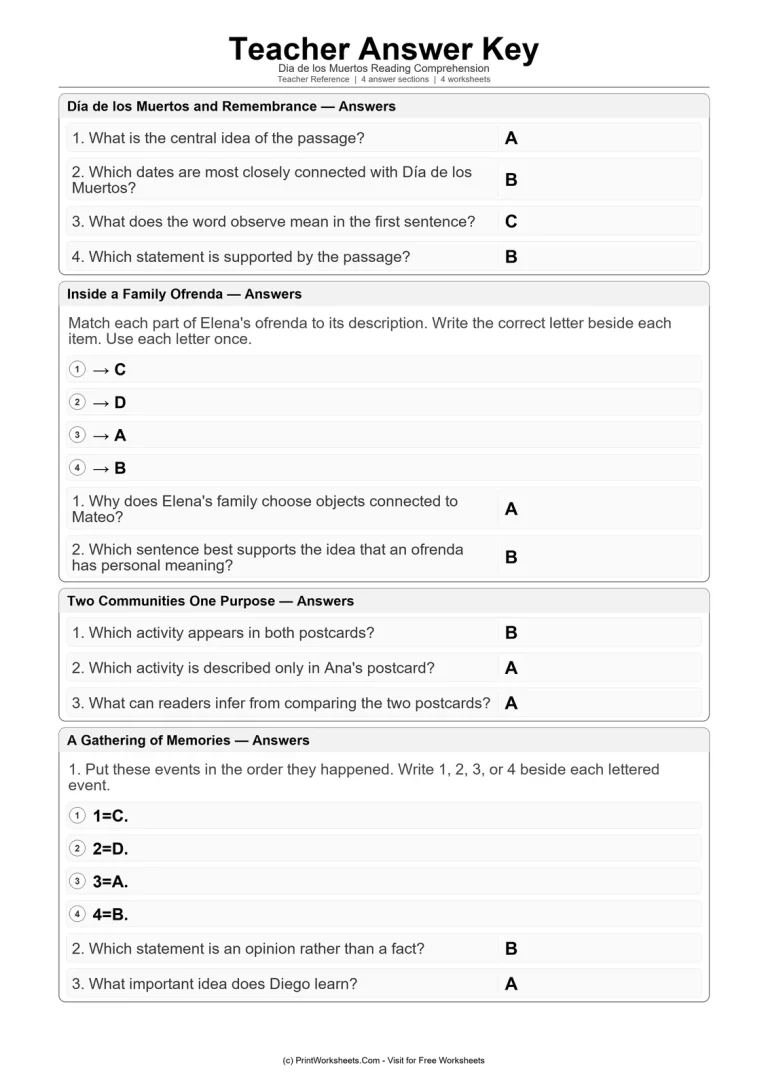
Teachers and parents can use these pages as a short seasonal reading unit, independent practice, homework, small-group instruction, or a literacy-center activity. The mix of multiple-choice, matching, sequencing, paired-text analysis, and constructed response provides several ways for students to demonstrate understanding. The included teacher answer key covers the objective questions, matching task, and sequencing activity.
For another culturally focused literacy activity, explore Diwali reading comprehension worksheets. Students working on themes of memory and reflection can also use the Remembrance Day reading comprehension worksheets. This Day of the Dead set is especially useful when you want students to practice evidence-based reading through texts about family traditions, remembrance, and personal meaning.