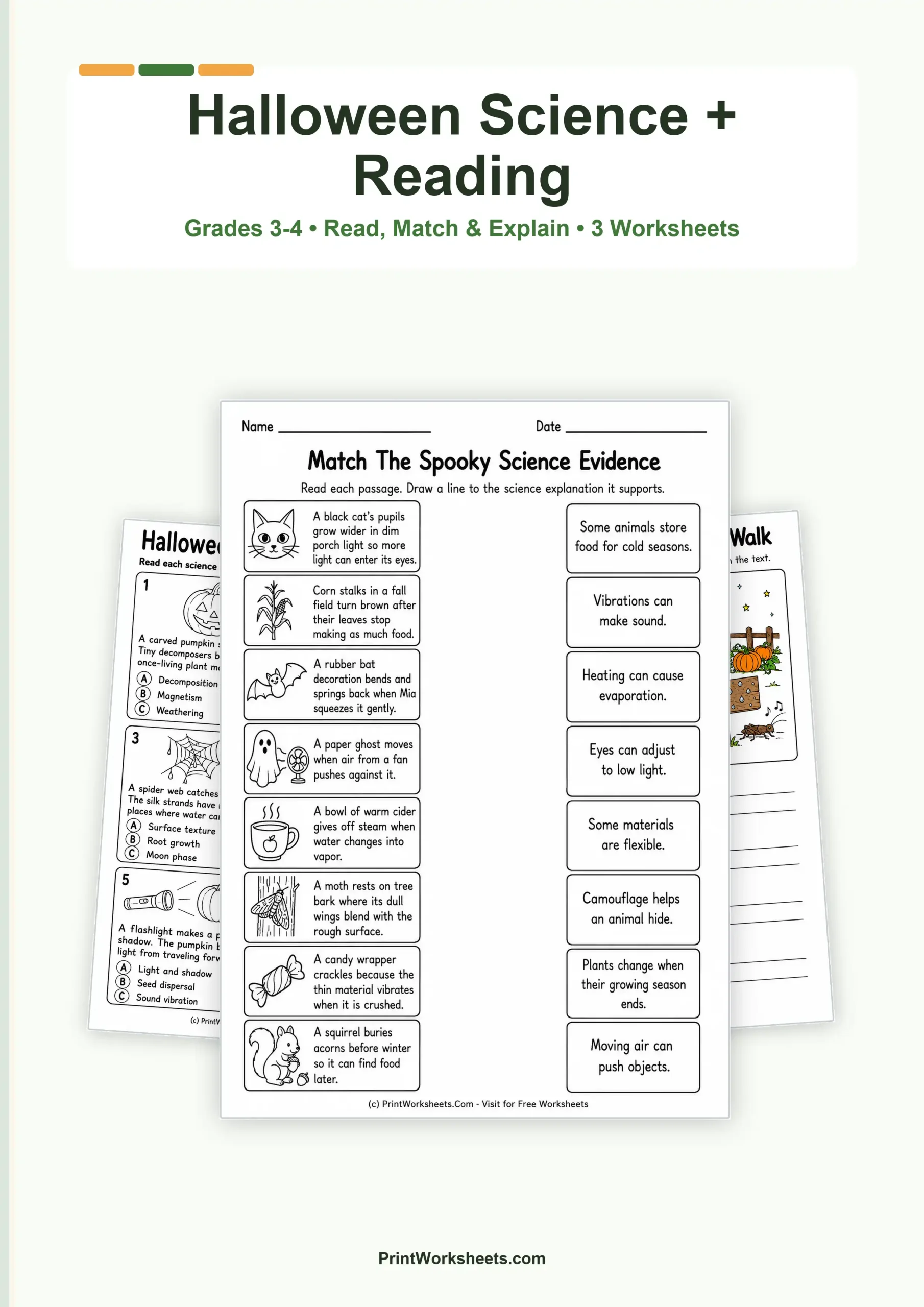
Halloween science reading passages can turn seasonal excitement into focused practice with both informational reading and elementary science. This printable set for Grades 3-4 uses familiar fall and Halloween scenes such as pumpkins, bats, spider webs, frost, cats, moths, warm cider, and a nighttime pumpkin patch. Instead of treating those pictures as decoration alone, each worksheet asks students to read closely and connect what they read to a scientific idea, explanation, or text-based response.
Halloween Science Reading Passages with Real Science Concepts
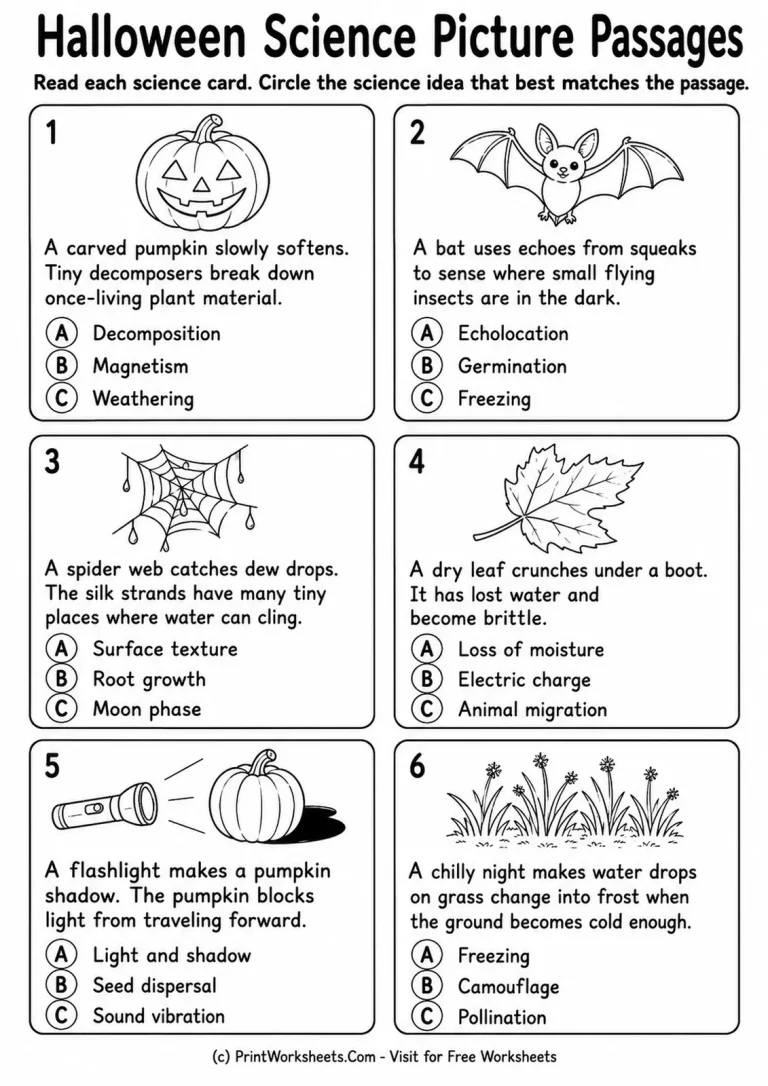
The first worksheet uses six illustrated science cards. Each card gives students a short passage and three possible science ideas to consider. A carved pumpkin that slowly softens introduces decomposition and the work of decomposers. A bat locating flying insects in darkness connects to echolocation. Dew clinging to spider silk highlights surface texture, while a dry leaf becoming brittle focuses on loss of moisture.
The same page also includes a flashlight shining toward a pumpkin so students can identify light and shadow, plus a chilly-night example in which water on grass becomes frost when conditions are cold enough. Because the distractors come from unrelated science topics, students need to understand the short passage rather than simply choose a Halloween-related word.
Match Evidence to a Scientific Explanation
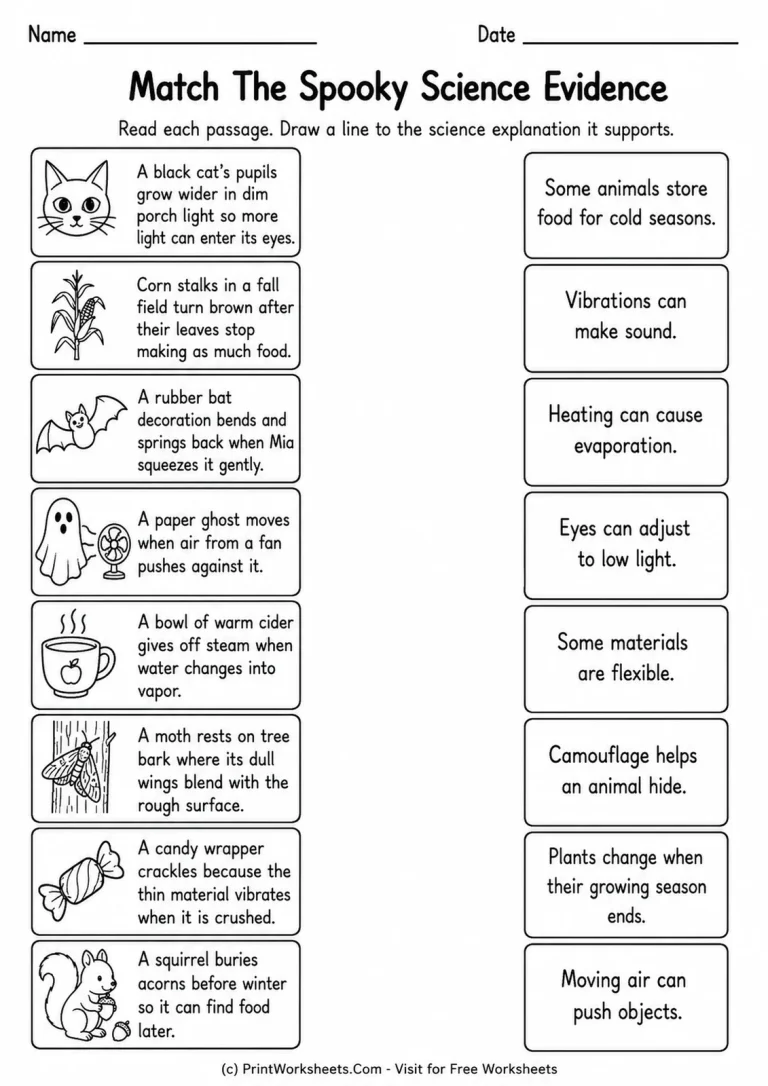
The second worksheet changes the task from multiple choice to evidence matching. Students read eight short situations and draw a line to the explanation each one supports. A black cat’s pupils widening in dim light connects to the idea that eyes can adjust to low light. Corn stalks turning brown after their leaves stop producing as much food illustrate seasonal plant change.
Other examples broaden the science vocabulary without losing the seasonal setting. Students connect a flexible rubber bat decoration with material properties, a paper ghost moved by a fan with moving air, and steam from warm cider with evaporation. A moth blending into tree bark supports camouflage, a crackling candy wrapper demonstrates that vibrations can make sound, and a squirrel burying acorns connects to animals storing food for cold seasons.
A Longer Pumpkin Patch Reading Comprehension Activity
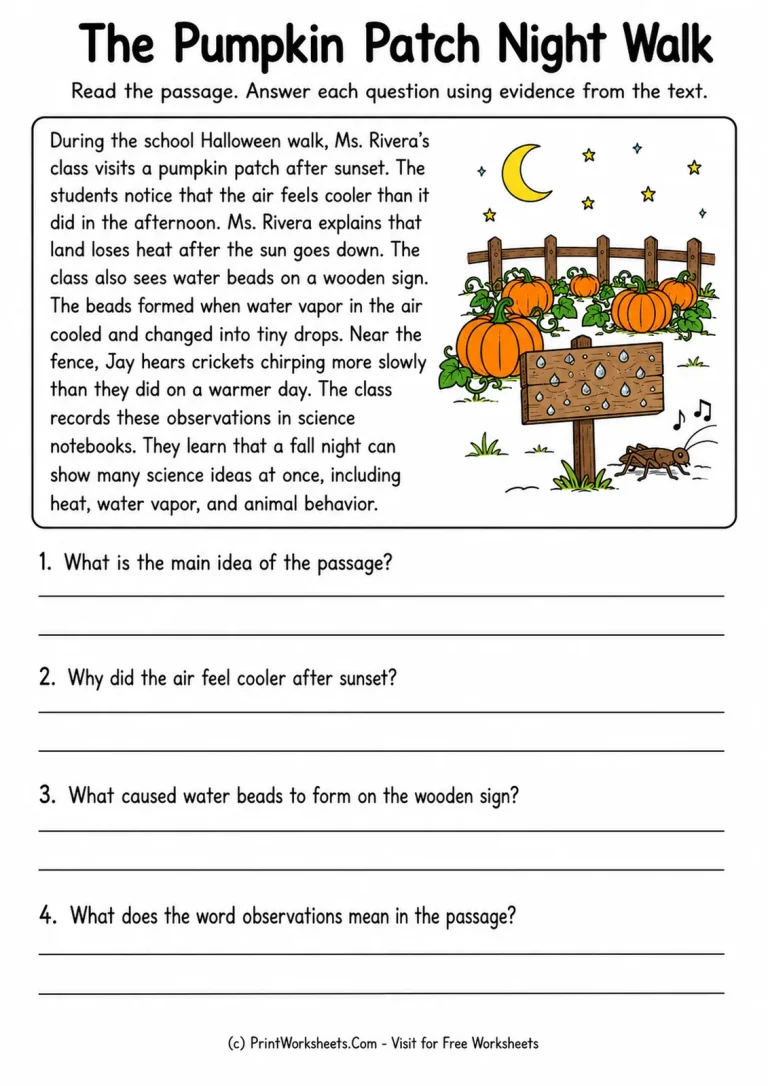
The final worksheet shifts from short cards to a longer passage titled The Pumpkin Patch Night Walk. During an evening school visit, students in the story notice cooler air after sunset, water beads forming on a wooden sign, and crickets chirping differently from what they hear on a warmer day. The passage brings several ideas together, including heat loss, water vapor changing into droplets, and animal behavior.
Four written-response questions ask students to identify the main idea, explain why the air felt cooler after sunset, describe what caused the water beads to form, and determine the meaning of observations from context. This page gives students a useful bridge from recognizing individual science concepts to explaining ideas in their own words using evidence from a complete passage.
Reading and Science Skills Practiced Together
Across the three worksheets, students practice more than recalling science vocabulary. They identify the concept supported by a short text, distinguish relevant evidence from unrelated choices, connect an observation to a scientific explanation, determine a word’s meaning from context, and answer open-ended questions about cause and effect. The progression makes the set suitable for independent work, literacy centers, science review, seasonal morning work, or a short cross-curricular lesson.
The content also gives teachers and parents several natural discussion opportunities. Students can explain why a shadow forms when an object blocks light, compare evaporation with water vapor cooling into droplets, discuss how camouflage helps an animal, or describe why some animals store food before winter. These conversations reinforce understanding without requiring a separate experiment or lengthy science lesson.
Useful Halloween Practice for Third and Fourth Grade
These worksheets fit students who are ready to move beyond simple Halloween vocabulary pages and work with short informational texts. Third graders can use the picture-supported cards and matching activity to strengthen comprehension of key details and cause-and-effect relationships. Fourth graders can extend the same ideas by explaining their reasoning and citing details from the pumpkin patch passage.
For another seasonal language activity, the Halloween grammar worksheets for Grades 2-3 provide a separate way to practice language skills with a Halloween theme. Younger learners can also explore the free printable Halloween worksheets for kindergarten or the Halloween worksheets for preschool.
Use this set when you want Halloween practice that still keeps academic content at the center. The mix of short science passages, evidence matching, and a longer comprehension text gives Grades 3-4 students several ways to read, think, and explain what the science in each seasonal situation means.