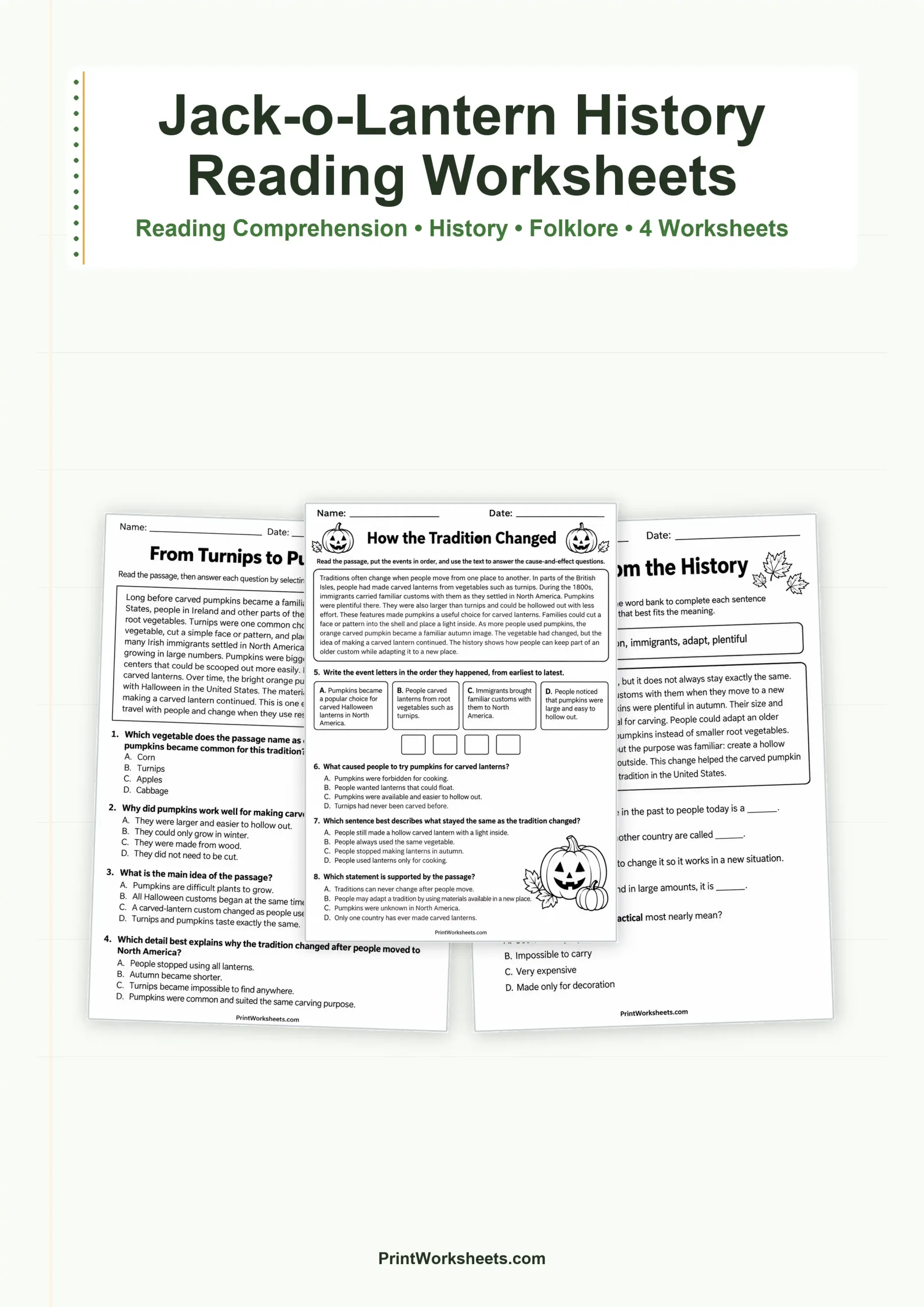
This jack-o-lantern reading comprehension set gives students a focused way to explore how a familiar Halloween tradition changed over time. Across four printable worksheets, readers learn about carved root-vegetable lanterns in Ireland and other parts of the British Isles, the move toward pumpkins in North America, and the difference between traditional folklore and information supported by historical evidence. The activities combine factual reading with sequencing, cause and effect, vocabulary, main idea, and evidence-based written response.
Jack-o-Lantern Reading Comprehension Through History
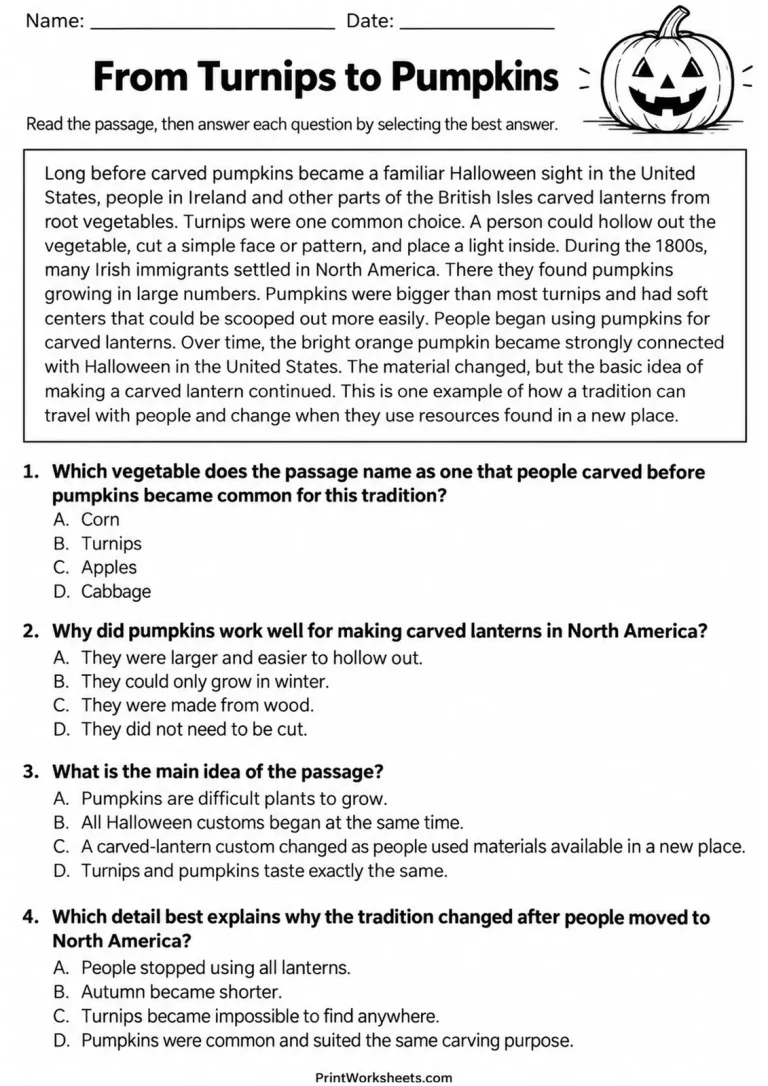
The first worksheet, From Turnips to Pumpkins, introduces the historical change at the center of the set. Students read that people carved lanterns from root vegetables such as turnips before pumpkins became the familiar choice in North America. The passage explains that pumpkins were plentiful, larger than most turnips, and easier to hollow out. Four multiple-choice questions ask students to identify a named vegetable, explain why pumpkins worked well for carving, determine the main idea, and choose the detail that best explains why the tradition changed after people moved.
This page works well as an introduction because students must connect concrete details to a broader idea: traditions can travel with people and change when different resources are available. Teachers can use the passage for a short seasonal literacy lesson without relying only on fictional Halloween stories.
Sequencing How the Tradition Changed
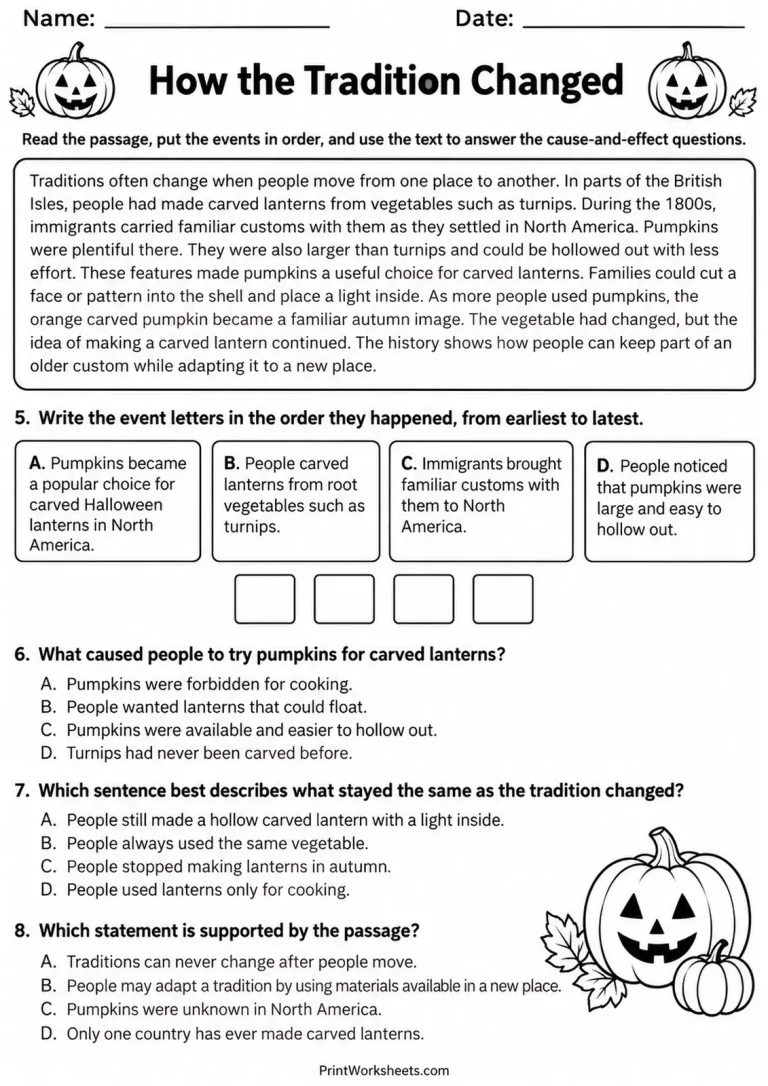
The second worksheet develops the same topic through chronology and cause and effect. Students read about immigrants carrying familiar customs to North America and then place four events in order, beginning with carved lanterns made from root vegetables and ending with pumpkins becoming a popular choice. Additional questions focus on why people tried pumpkins, what remained the same even after the material changed, and what larger conclusion the passage supports.
This sequencing task is especially useful for students who need practice separating what happened first from why it happened. The passage makes the chain of events visible: a custom existed, people moved, they encountered a useful local material, and the tradition adapted. For additional seasonal reading practice, students can also use these Halloween reading comprehension passages, which provide a broader Halloween reading focus.
Vocabulary From the History
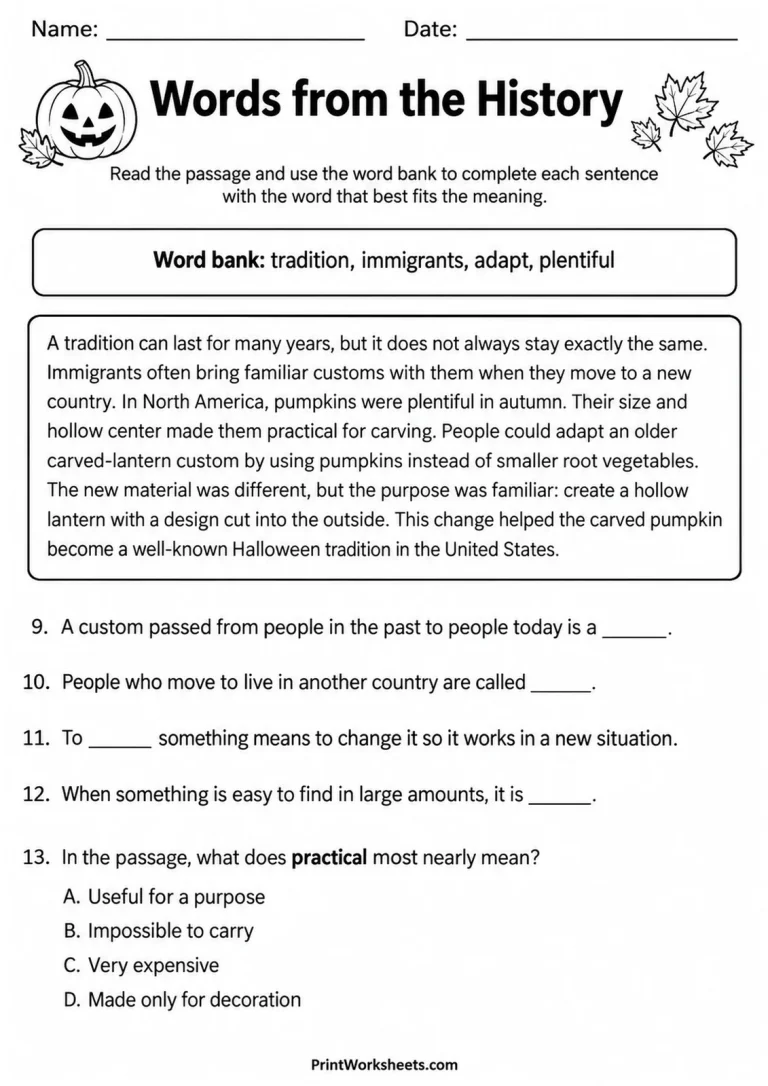
The third worksheet shifts attention to academic and context vocabulary. A short informational passage uses the words tradition, immigrants, adapt, and plentiful. Students select the correct word from a word bank to complete definitions such as a custom passed from the past to people today or something that is easy to find in large amounts. A final multiple-choice question asks for the meaning of practical in context.
Because the vocabulary comes directly from the historical topic, students practice meaning rather than isolated memorization. The words also support discussion about how customs change when people move from one place to another. This makes the worksheet useful before or after the reading passages, depending on whether a teacher wants to preteach key words or check understanding afterward.
History, Folklore, and Text Evidence
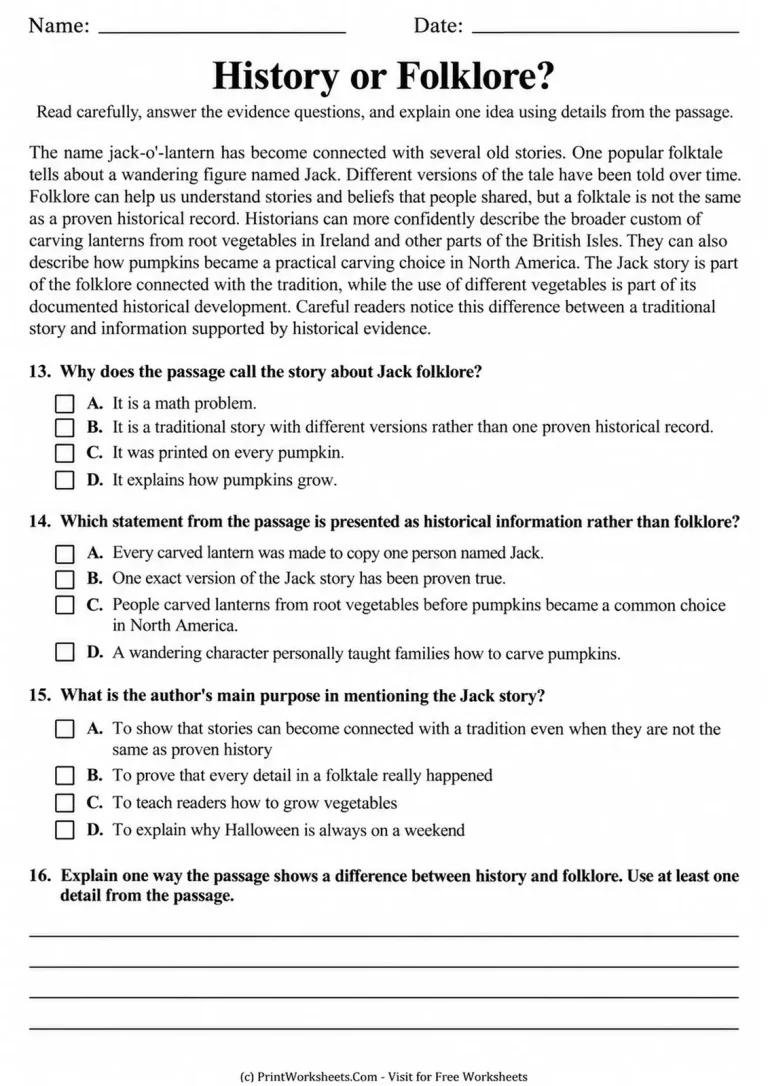
The final worksheet, History or Folklore?, introduces an important reading distinction. The passage explains that the name jack-o’-lantern is connected with old stories about a figure named Jack, while also noting that a folktale is not the same as a proven historical record. Students compare that traditional story with more confidently documented information about carving root vegetables in the British Isles and later using pumpkins in North America.
Three multiple-choice questions ask why the Jack story is described as folklore, which statement is presented as historical information, and why the author mentions the story at all. The final response asks students to explain one difference between history and folklore using at least one detail from the passage. That written component extends the set beyond answer selection and gives students practice supporting an explanation with evidence.
Ways to Use These Halloween History Worksheets
The four pages can be taught in sequence as a short Halloween literacy mini-unit or used separately for targeted practice. A teacher might begin with the turnip-to-pumpkin passage, use the sequencing page for cause-and-effect review, assign the vocabulary page during independent work, and finish with the history-versus-folklore response as a discussion or writing task. Families can also use the pages for seasonal reading practice that combines Halloween interest with informational text skills.
For students who need another grade-specific seasonal reading activity, the 3rd grade Halloween reading comprehension worksheet provides an additional option. Together, these activities help students look beyond the finished jack-o’-lantern and examine how a tradition can be carried, adapted, explained, and sometimes surrounded by stories that are different from documented history.