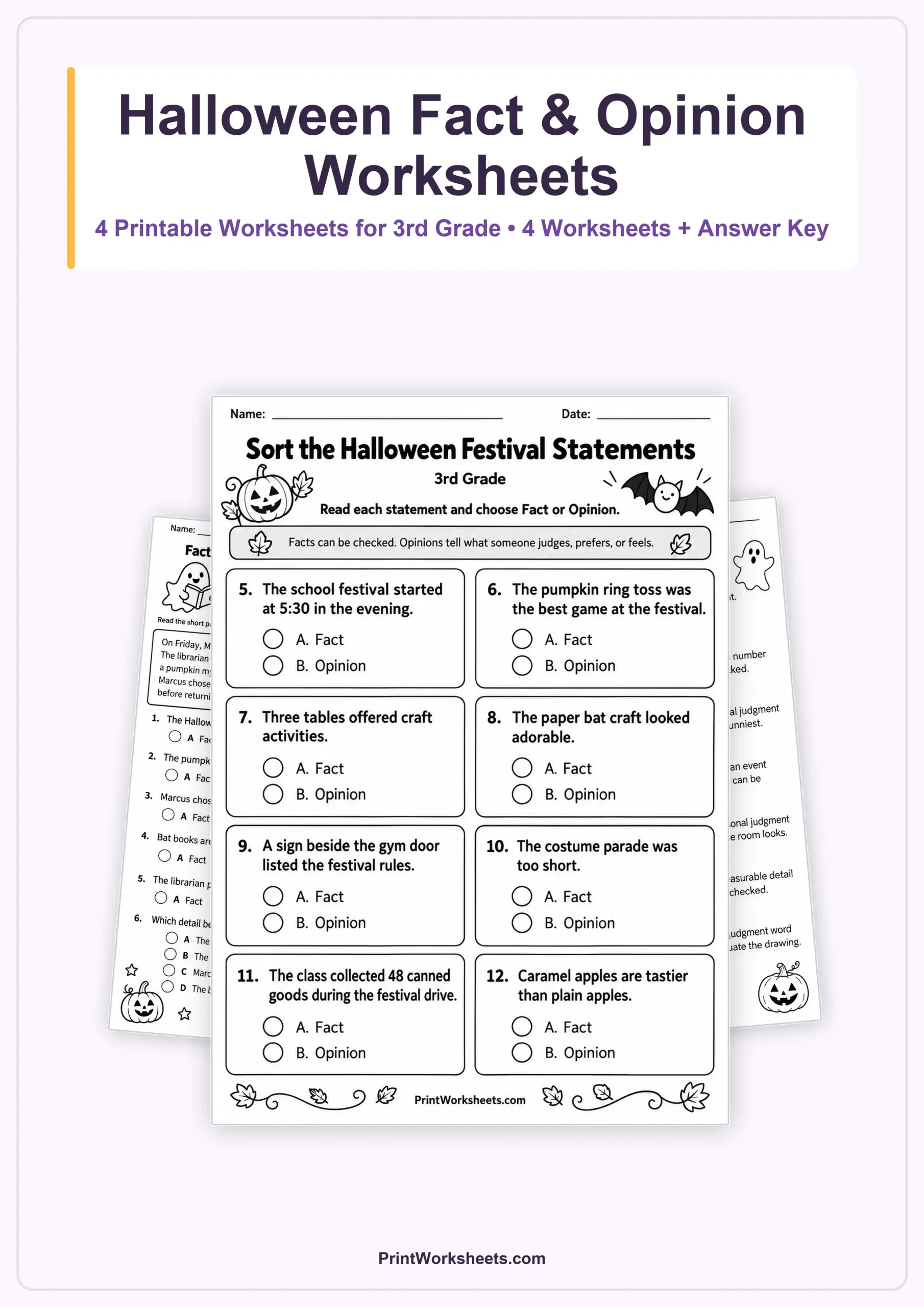
Halloween fact and opinion worksheets give 3rd grade students a seasonal way to practice an important reading and language skill: deciding whether a statement can be checked or whether it expresses a judgment, preference, or feeling. This printable set moves beyond simple labeling. Students read a short Halloween library passage, classify statements, explain why a statement is factual or opinion-based, match statements to the best reason, and choose revisions that turn opinions into facts.
Halloween Fact and Opinion Practice for 3rd Grade
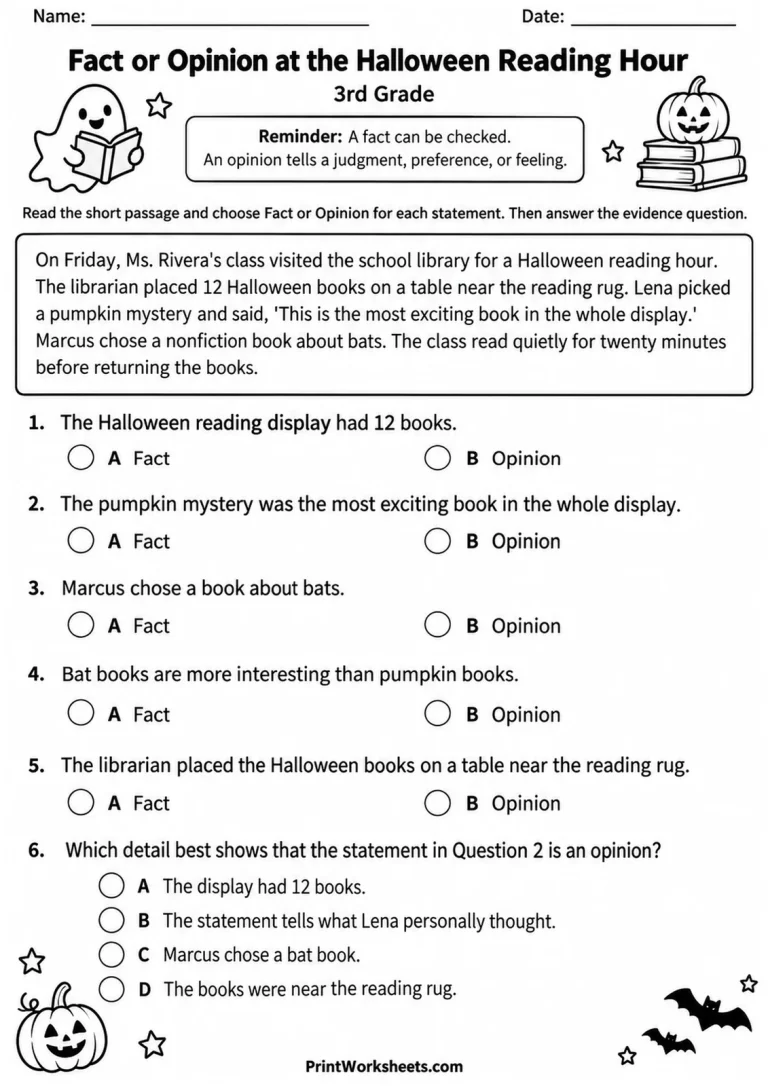
The first worksheet begins with a short classroom reading passage set during a Halloween reading hour. Students learn that the library display contains 12 Halloween books, that Marcus chooses a nonfiction book about bats, and that Lena describes a pumpkin mystery as the most exciting book in the display. Those details create a clear contrast between information that can be verified and language that expresses a personal judgment.
After reading, students classify five statements as Fact or Opinion. A sixth question asks them to identify the detail that best explains why Lena’s statement is an opinion. This extra evidence question is useful because students must do more than recognize a clue word; they have to connect the statement to the idea that it tells what someone personally thought.
Four Different Ways to Build the Same Skill
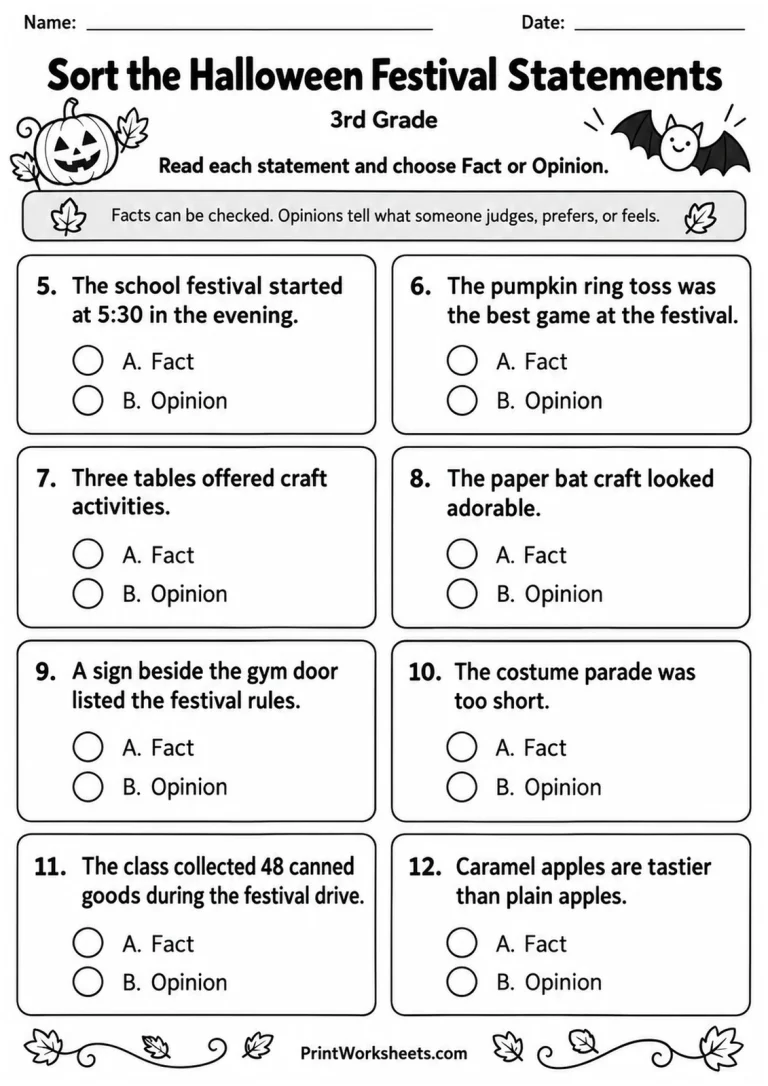
Sort Halloween festival statements
The second worksheet shifts from a reading passage to short statements about a school Halloween festival. Students work with checkable details such as a 5:30 start time, three craft tables, a posted set of festival rules, and a collection of 48 canned goods. These appear beside opinion statements using words and ideas such as best, adorable, too short, and tastier. The mix helps students notice that numbers and observable details often support facts, while comparisons and judgments usually signal opinions.
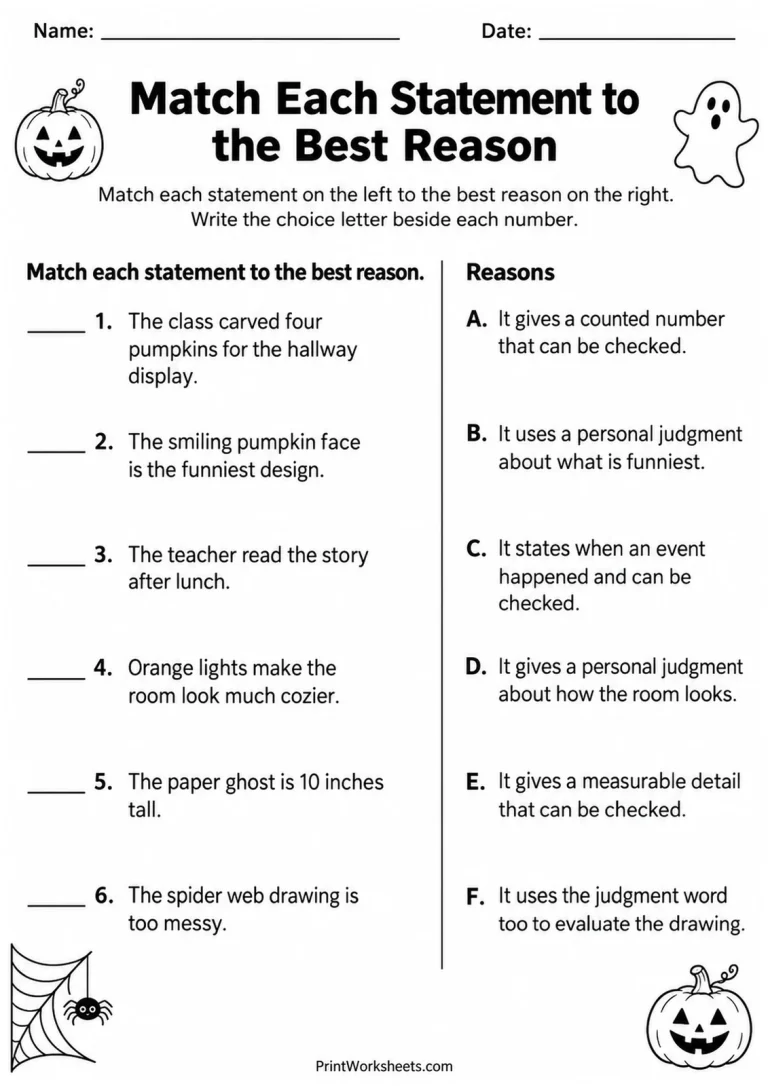
Match each statement to the best reason
The third activity asks students to explain the reasoning behind the classification. Six Halloween statements are matched with six reasons. For example, a statement about four carved pumpkins connects to the idea of a counted number that can be checked, while a paper ghost that is 10 inches tall connects to a measurable detail. Opinion examples include calling a smiling pumpkin the funniest design, describing orange lights as cozier, and saying a spider-web drawing is too messy.
This matching format is especially helpful for students who can usually choose Fact or Opinion but still need practice explaining why their answer makes sense.
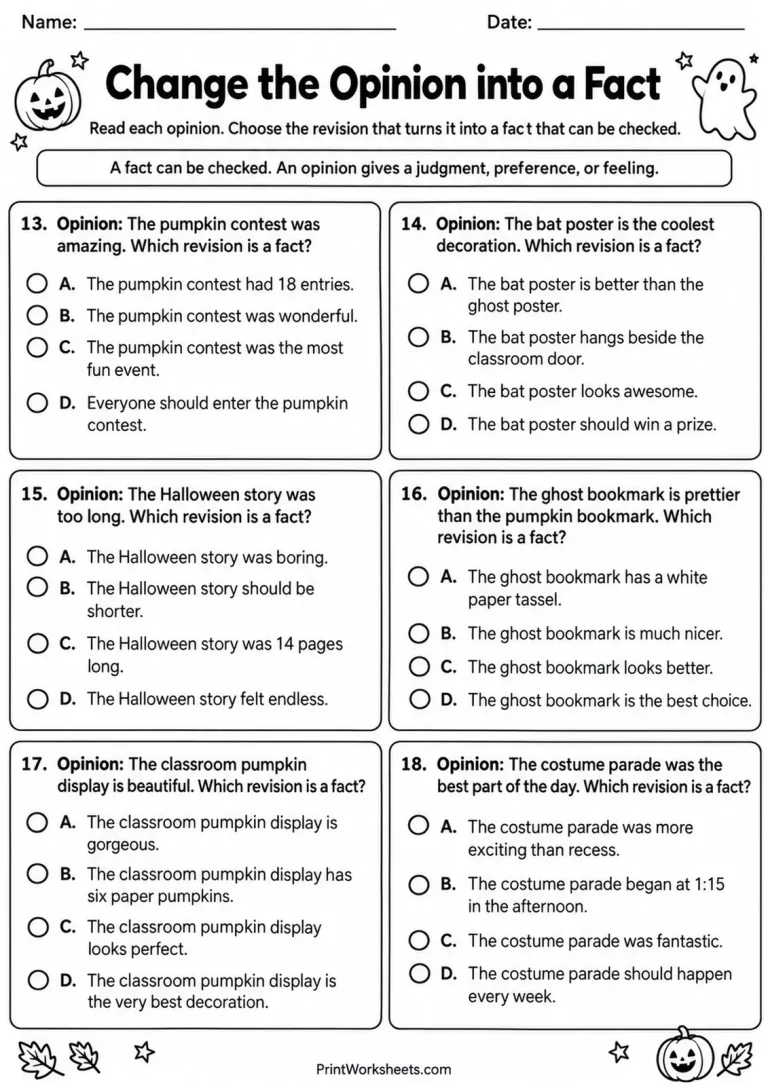
Change an opinion into a fact
The fourth worksheet reverses the task. Each question starts with an opinion and asks students to select a revision that becomes a checkable fact. Instead of accepting statements such as a pumpkin contest being amazing or a Halloween story being too long, students choose concrete alternatives such as the contest having 18 entries or the story being 14 pages long. Other questions use a bat poster beside the classroom door, a ghost bookmark with a white paper tassel, six paper pumpkins in a display, and a costume parade beginning at 1:15.
This final step strengthens the difference between subjective and objective language because students have to create the distinction through revision rather than simply identify it.
Ways to Use These Halloween Worksheets
The four pages can be used across several short lessons instead of all at once. Start with the reading-passage page for teacher-guided practice, then use the festival sorting page for independent work. The reason-matching worksheet works well for partner discussion because students can explain why each reason fits. Finish with the opinion-to-fact revision page as a check for deeper understanding.
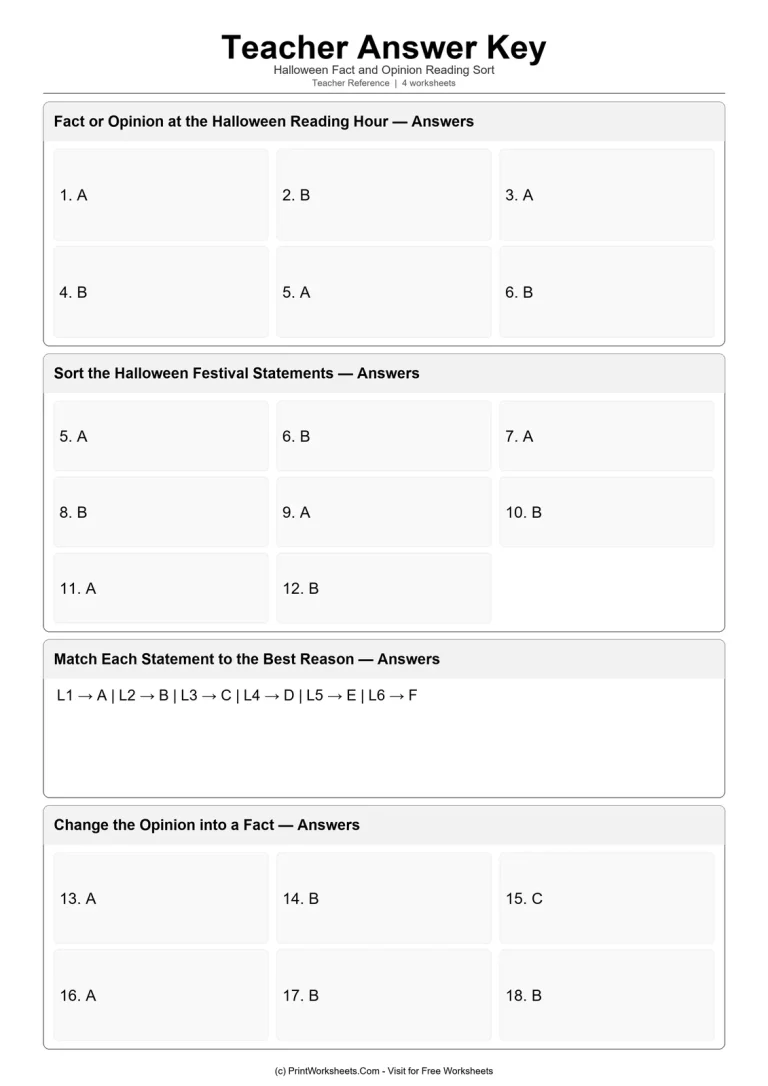
The set also fits literacy centers, Halloween week review, morning work, homework, or a quick ELA assessment. A teacher answer key is included for the objective items, making it easier to check work efficiently.
Teachers looking for a broader seasonal language resource can also explore our Halloween grammar worksheets for Grades 2-3. Used together, the two resources can provide additional Halloween-themed language practice while keeping this set focused specifically on fact and opinion.
What Students Practice
Across the set, students practice identifying checkable information, recognizing personal judgments, using text evidence, connecting statements to reasons, and revising subjective language into factual statements. The familiar Halloween settings keep the examples concrete, while the progression from recognition to explanation and revision gives 3rd graders several chances to show that they understand the difference between fact and opinion.
For a quick seasonal lesson, choose one page that matches the skill your students need most. For a fuller mini-unit, use the worksheets in order so students move from identifying the difference to explaining and applying it independently.