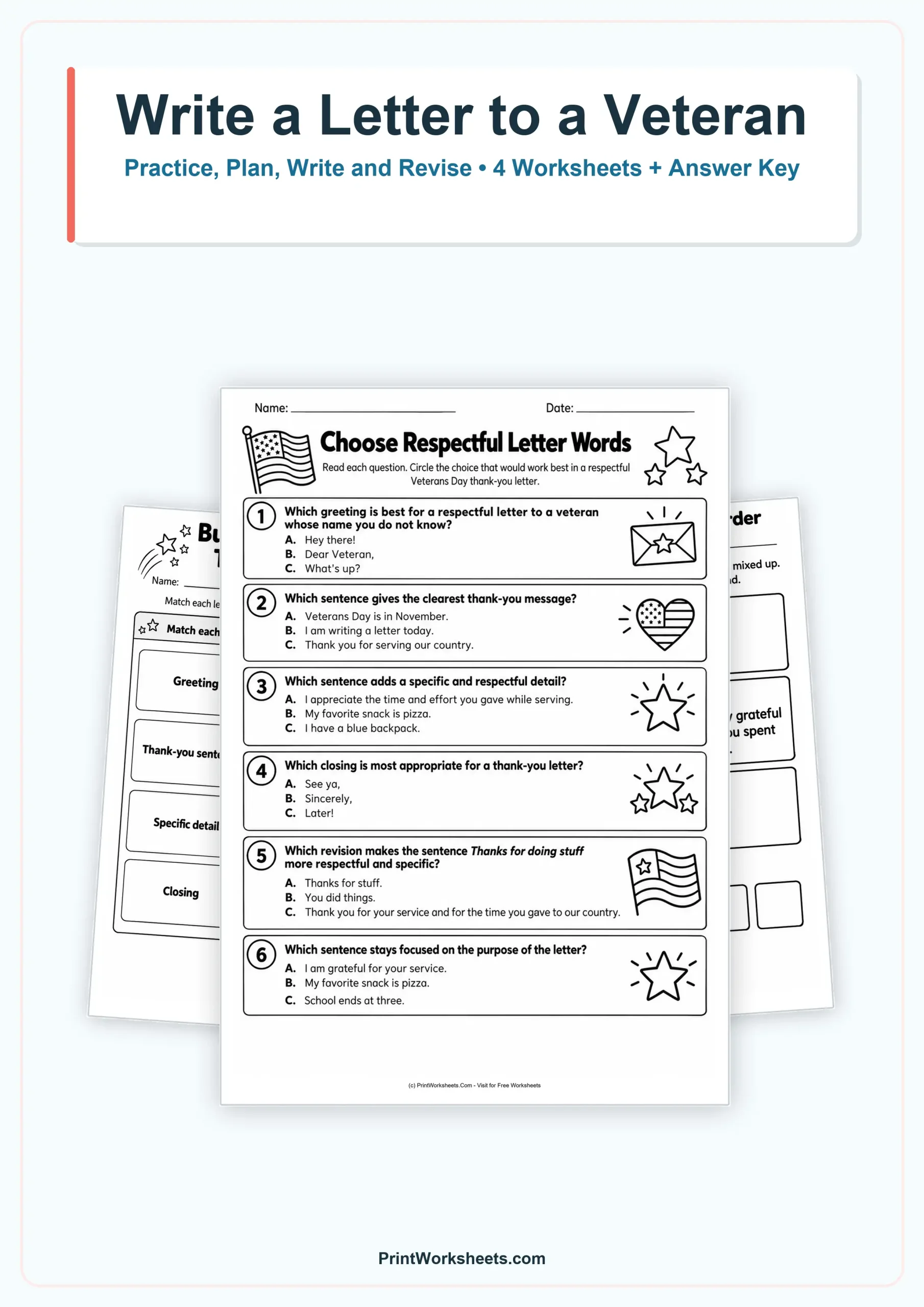
A student may know exactly why they want to thank a veteran but still struggle to find the right words. These Veterans Day letter writing worksheets turn that challenge into a manageable writing activity. Children learn how to open a letter respectfully, express gratitude clearly, add a meaningful detail, and close with care. The printable set includes four student worksheets and a teacher answer key, making it useful for classroom writing lessons, Veterans Day activities, and supported writing practice at home.
Designed primarily for second, third, and fourth grade students, the activities build from recognizing letter components to composing a complete thank-you message. Rather than asking children to fill an empty page immediately, the worksheets provide practice with organization, appropriate language, and revision before independent writing begins.
Veterans Day Letter Writing Worksheets: Four Activities
Each worksheet addresses a different step in writing a respectful letter. Teachers can use the complete sequence as a short writing unit or select an individual activity to reinforce a particular skill.
1. Build a Veterans Day Thank-You Letter
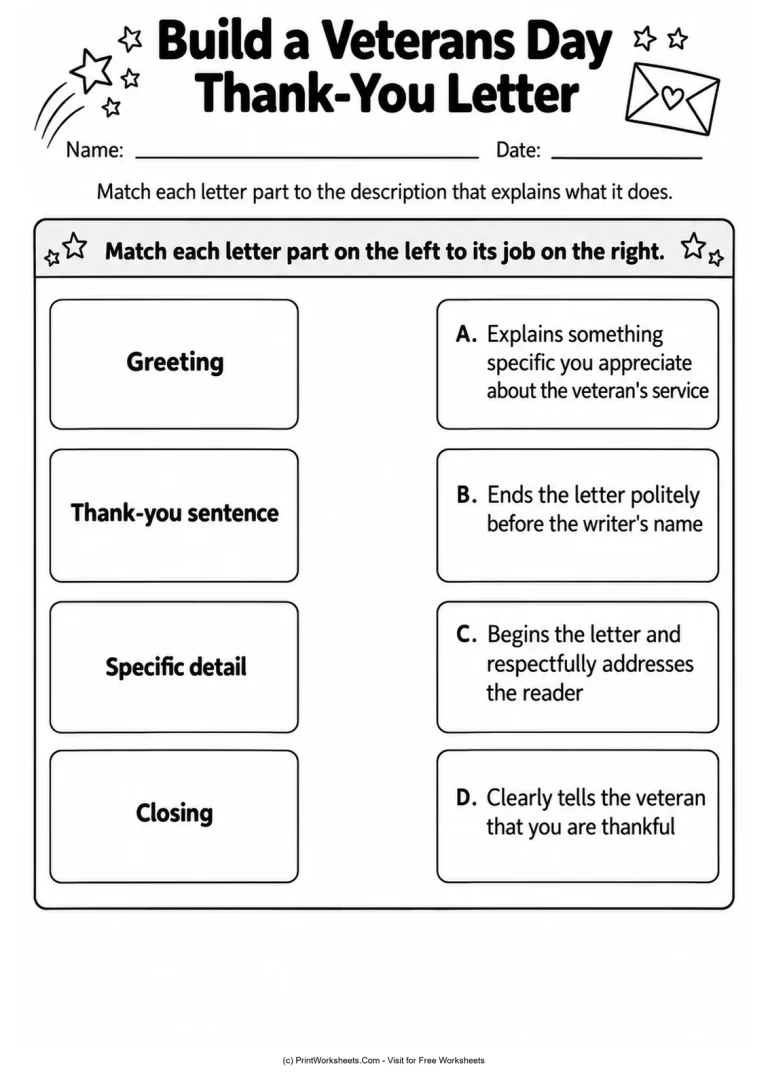
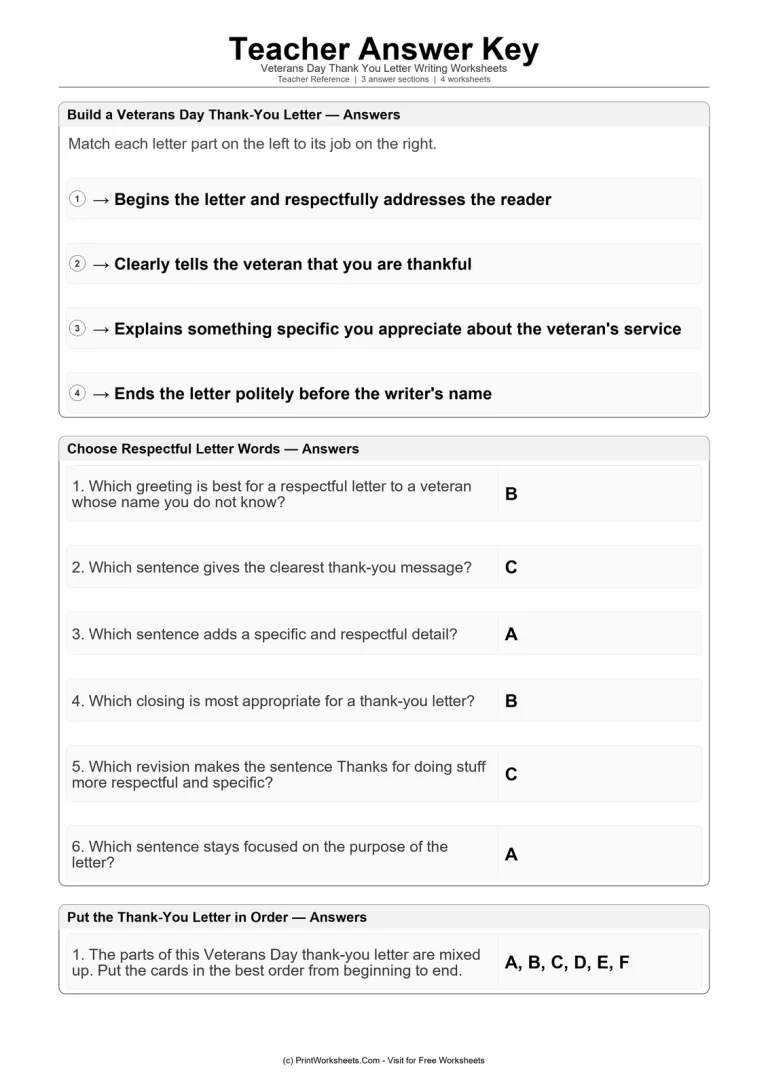
The first worksheet introduces four essential letter components: Greeting, Thank-you sentence, Specific detail, and Closing. Students match each part to a description of its purpose. For example, the greeting respectfully addresses the reader, while a specific detail explains something the writer appreciates about the veteran’s service.
This matching activity helps children understand that a thank-you letter has an organized structure. Before writing sentences of their own, students can identify what each part contributes to the message. Teachers can review the four components aloud and ask students to give a simple example of each one.
2. Choose Respectful Letter Words
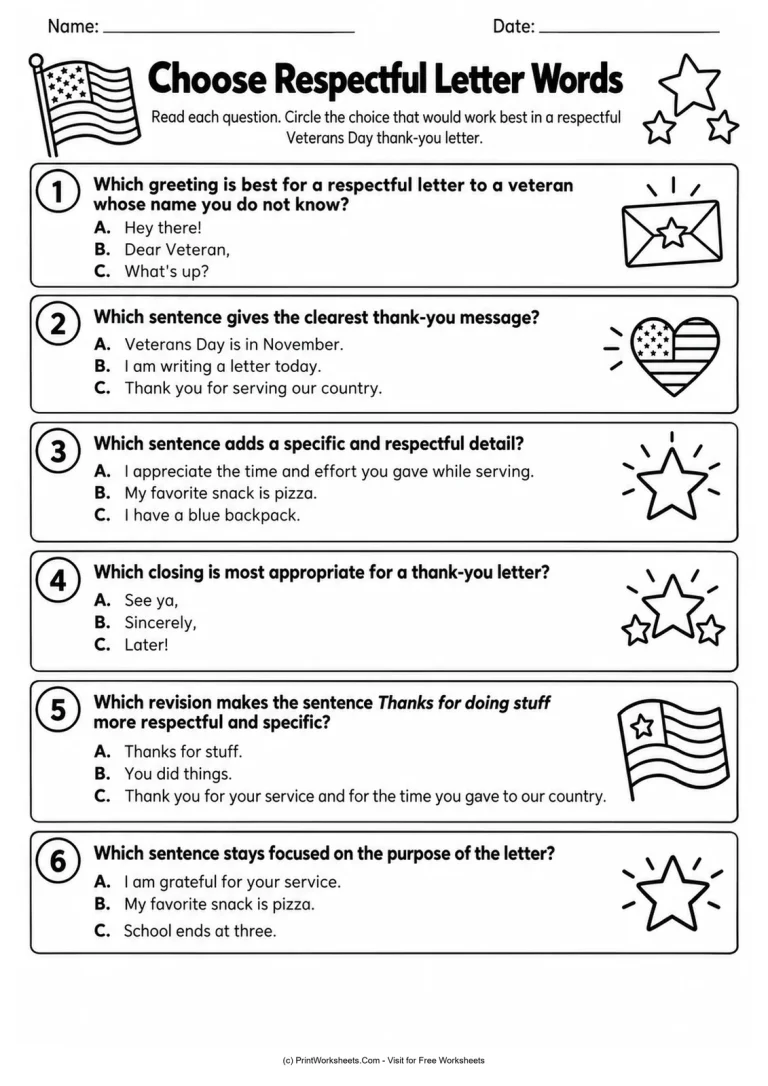
The second worksheet contains six multiple-choice questions about effective language. Students select an appropriate greeting for an unknown veteran, identify a clear thank-you sentence, choose a specific appreciative detail, and recognize a polite closing. Additional questions ask them to improve vague wording and keep a sentence focused on the letter’s purpose.
One question contrasts the informal phrase ‘Thanks for doing stuff’ with more thoughtful expressions of appreciation. This gives students a concrete opportunity to consider how word choice affects meaning and tone. The activity also distinguishes respectful messages from unrelated statements, helping children keep their writing purposeful.
3. Put the Thank-You Letter in Order
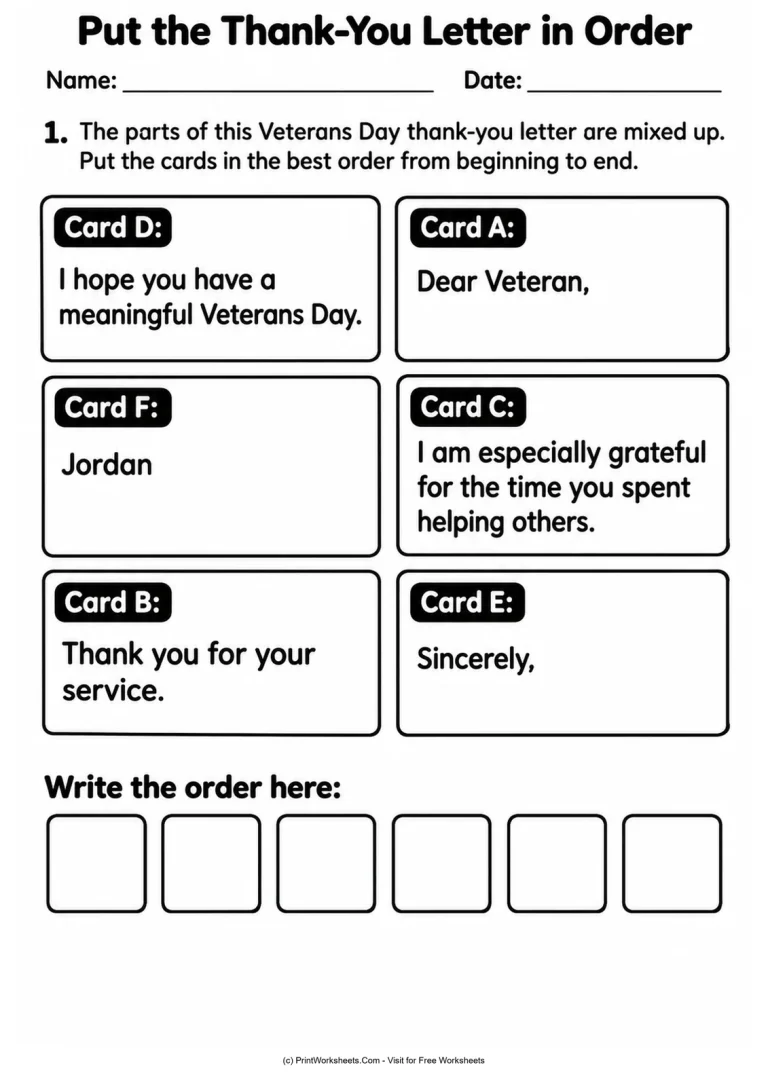
Next, students examine six mixed-up cards containing the parts of a sample Veterans Day letter. The cards include ‘Dear Veteran,’ a sentence thanking the recipient for their service, a detail about helping others, a thoughtful Veterans Day wish, ‘Sincerely,’ and the writer’s name, Jordan.
Students write the card letters in six boxes to show the best sequence from beginning to end. This exercise connects sentence-level understanding with overall organization. It also provides a complete model that students can study before drafting their own letters, without requiring them to copy the example.
4. Write a Thank-You Letter to a Veteran
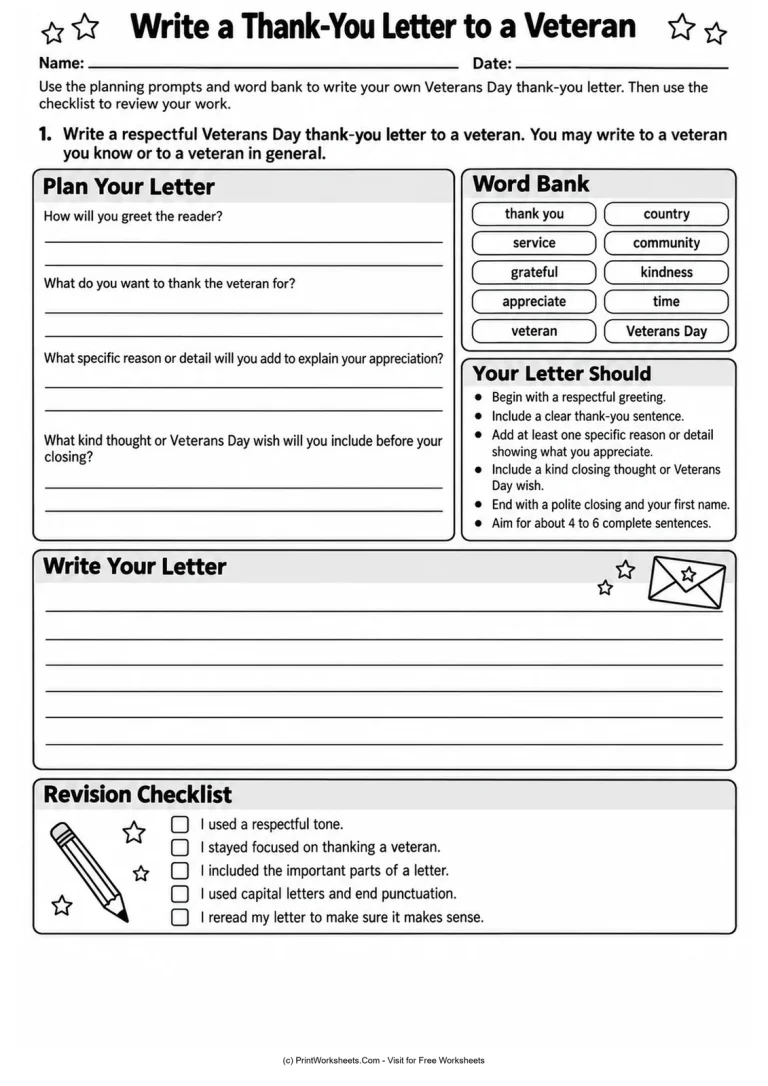
The final worksheet moves from practice to original writing. Four planning questions guide students to choose a greeting, explain what they want to thank a veteran for, add a specific reason for appreciation, and include a kind closing thought or Veterans Day wish.
A ten-term word bank offers useful language, including ‘service,’ ‘grateful,’ ‘appreciate,’ ‘community,’ and ‘kindness.’ Students then use a dedicated writing area to compose their letters. The worksheet recommends approximately four to six complete sentences and reminds writers to include a respectful greeting, a clear thank-you message, at least one meaningful detail, and a polite closing with their first name.
After drafting, children use a five-item revision checklist to review their tone, purpose, letter structure, capitalization, punctuation, and overall clarity. This makes revision a visible part of the writing process instead of an optional final step.
How to Teach a Veterans Day Thank-You Letter
Begin by explaining that Veterans Day honors people who have served in the United States Armed Forces. Discuss why a thank-you letter should use respectful language and sincere appreciation. Students do not need to know a veteran personally: the writing worksheet allows them to address a veteran they know or a veteran in general.
Use the matching activity to introduce letter structure, then complete the word-choice questions before moving to the sequencing exercise. Encourage students to explain why ‘Dear Veteran,’ is more appropriate than an informal greeting and why a detail about someone’s service strengthens a thank-you message. These short conversations prepare students for independent writing.
When students reach the planning page, encourage them to use thoughtful statements they can genuinely explain. A sentence appreciating someone’s time, effort, or service is more suitable than inventing personal experiences about a veteran they have never met. Students who need additional support can discuss their ideas orally before writing them down.
Adjusting the Writing Activity for Grades 2–4
Second grade: Work through the matching and sequencing activities together. Offer sentence starters such as ‘Thank you for…’ or ‘I appreciate…’ while students complete their letters.
Third grade: Ask students to complete more of the activities independently and include a clear reason for their gratitude. Use the revision checklist to encourage improvements in sentence completeness and punctuation.
Fourth grade: Challenge students to develop their specific detail further, maintain a respectful tone throughout, and revise vague language into more precise expressions of appreciation.
Teacher Answer Key and Classroom Uses
The included teacher answer key covers the three activities with objective answers: letter-part matching, respectful word choices, and letter sequencing. The independent writing page does not have one fixed answer, so teachers can assess it using the supplied letter requirements and revision checklist.
Use the worksheets during a Veterans Day writing lesson, in an elementary language arts center, or as preparation for a classroom thank-you letter project. Students’ completed letters can be shared with veterans through an appropriate school or community program, with teacher guidance and permission.
For a meaningful finished letter, look for a respectful greeting, a direct expression of thanks, one relevant supporting detail, a considerate closing thought, and the student’s signature. The completed writing should sound sincere and understandable rather than unnecessarily elaborate.
Use the printable PDF set to guide children from understanding the parts of a letter to writing and checking a thoughtful Veterans Day thank-you message of their own.