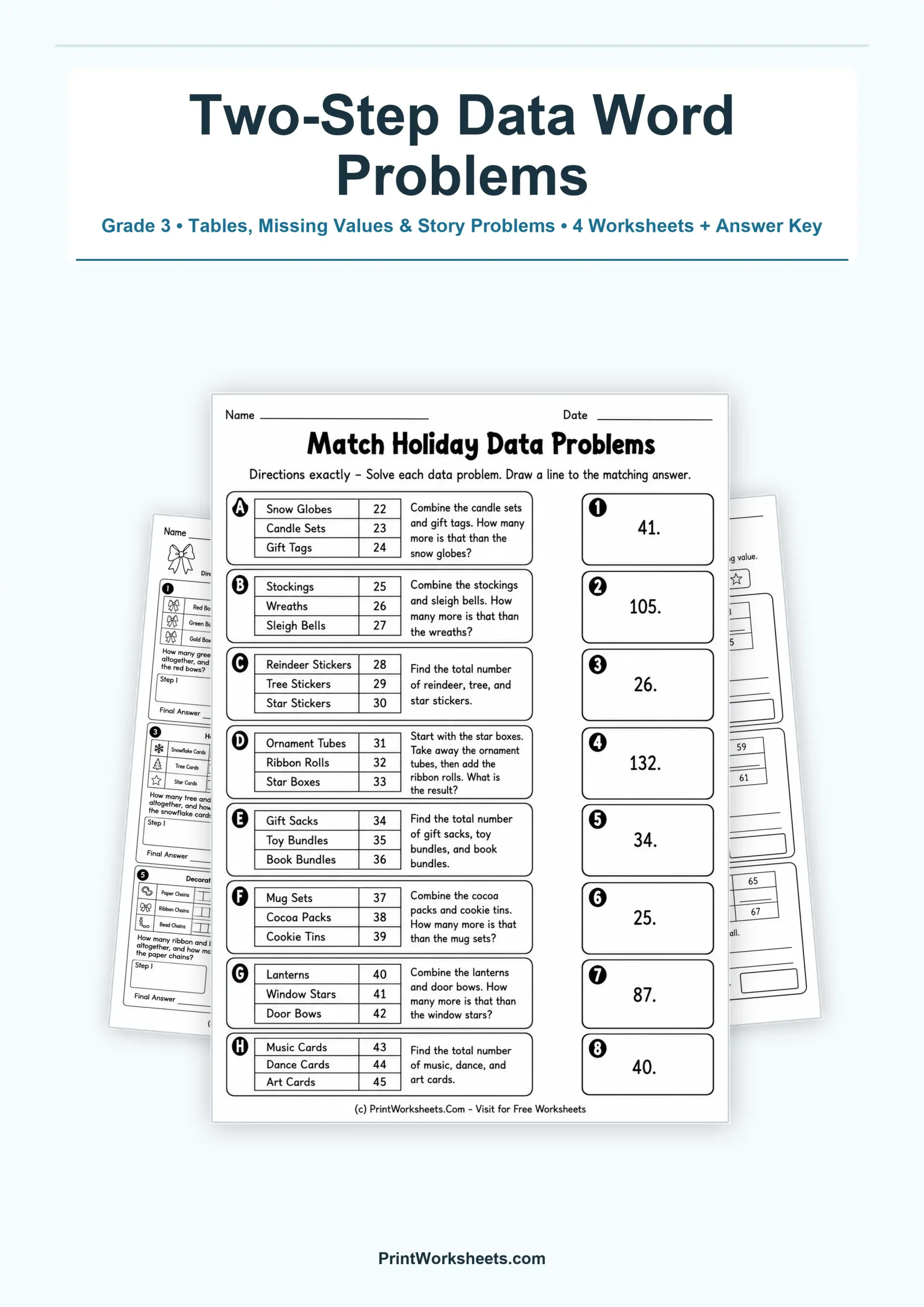
These two-step data word problems give Grade 3 students repeated practice deciding what to calculate first, using that result in a second operation, and checking whether the final answer fits the data shown. Across four student worksheets, children work with compact tables, matching tasks, missing values, and longer holiday-themed data stories. The progression moves from clearly labeled Step 1 and Step 2 boxes to problems that require students to plan the operations more independently, making the set useful for guided practice, math centers, homework, or review.
Two-Step Data Word Problems with Tables
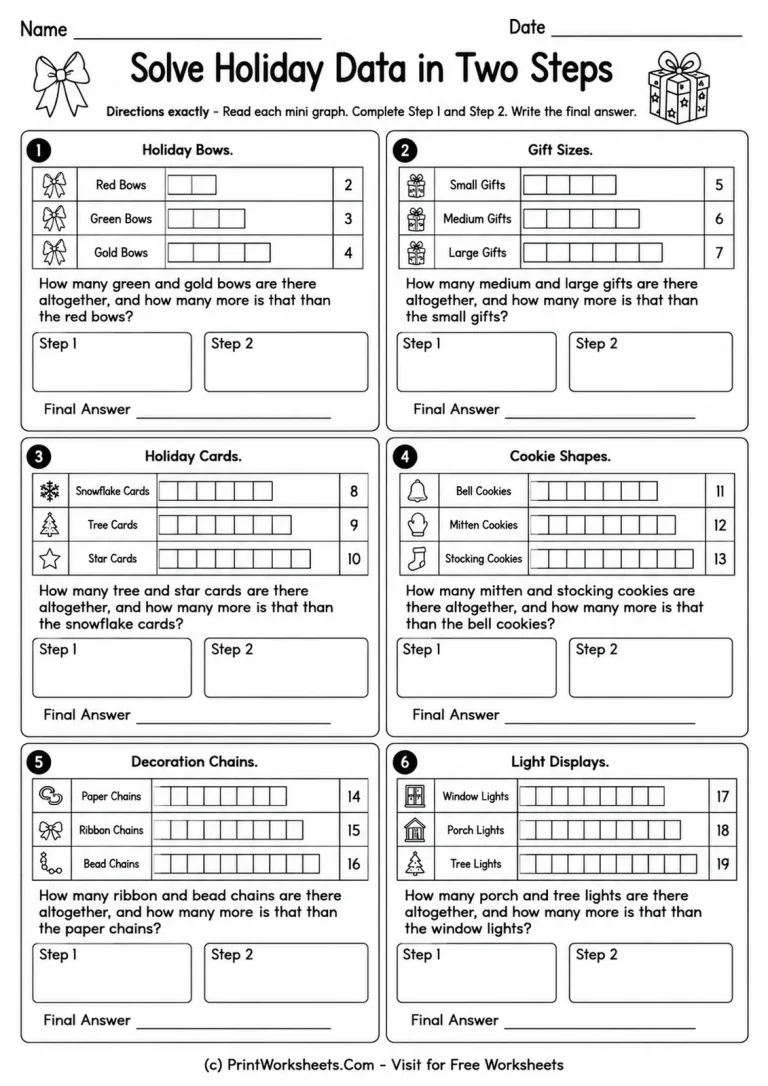
The first worksheet introduces six structured problems built around small three-category data tables. Values begin with small numbers from 2 through 19, so students can focus on the reasoning rather than difficult computation. Each item asks them to combine information from two categories and then compare or adjust that result with a third category. Separate Step 1, Step 2, and Final Answer spaces make the sequence visible and encourage students to record both operations instead of jumping directly to an answer.
This format is especially helpful when students are learning that a word problem may require more than one equation. They must identify which numbers belong together first, complete that calculation, and carry the result into the next step. Teachers can also use the written work areas to spot whether an incorrect final answer came from choosing the wrong operation or from a calculation mistake.
Different Ways to Practice the Same Reasoning Skill
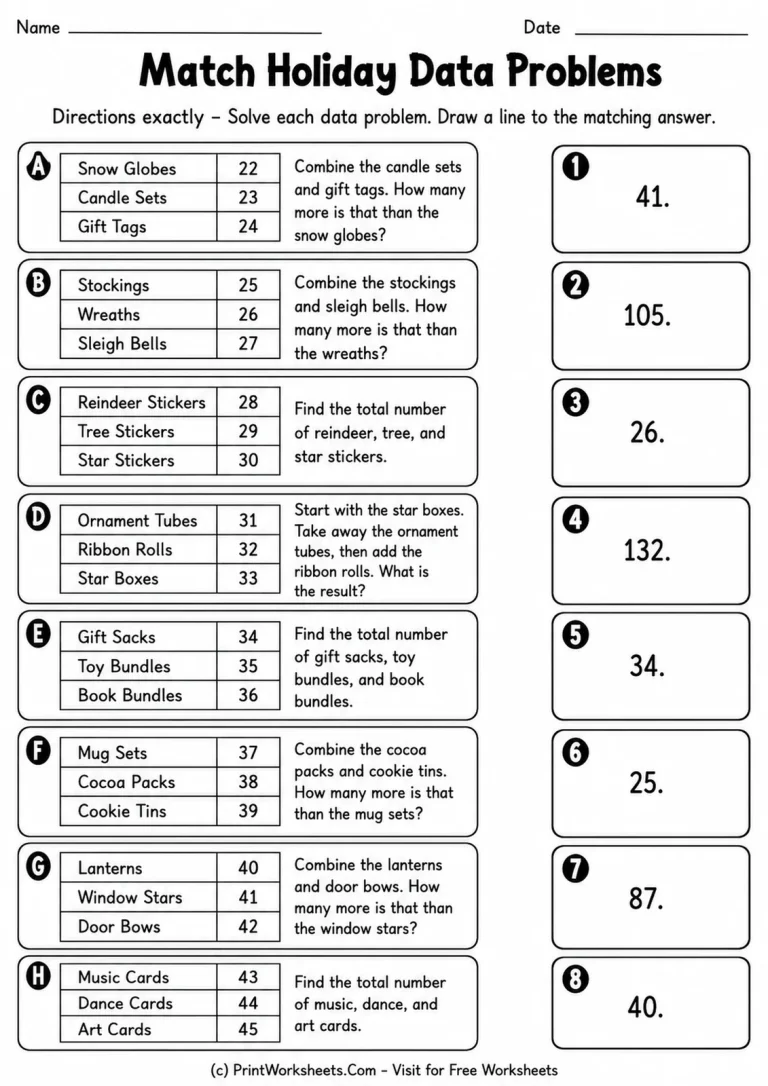
The second worksheet changes the format to eight A-H matching problems. Students read three-number data tables with values ranging from 22 to 45, solve each problem, and match the result to one of eight numbered answer choices. The questions mix combine-and-compare situations, totals, and subtract-then-add reasoning. Because every answer choice is used in a one-to-one match, students get a built-in reason to reconsider their work when a result does not fit the remaining choices.
For additional Grade 3 problem-solving practice, the area and perimeter word problems worksheets for Grade 3 provide another way to practice selecting operations from a written situation. Seasonal practice can also be extended with the fall math word problems worksheets for Grades 2-3.
Find Missing Data from a Given Total
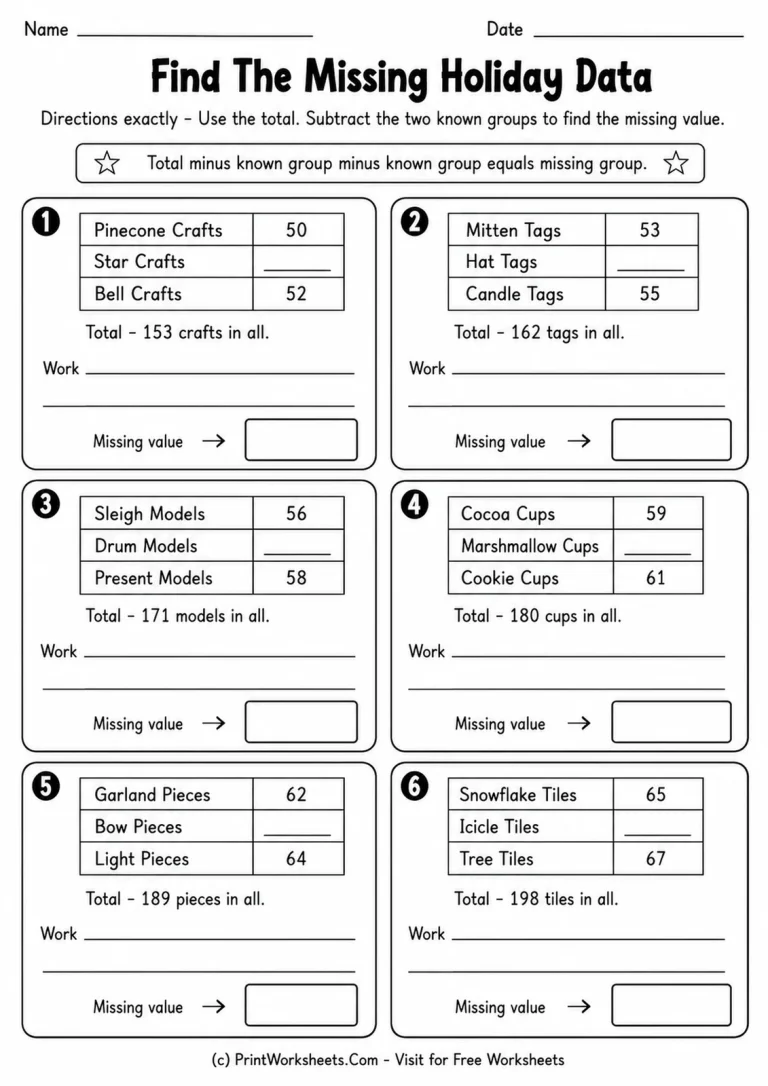
The third page develops a related but distinct skill: finding an unknown category value when the total and two known values are provided. Students solve six problems by subtracting the known groups from the total. The missing values form a clear sequence of 51, 54, 57, 60, 63, and 66, while the worksheet still requires students to reason through each table rather than simply copy a pattern. Dedicated work lines and a missing-value box give enough space to show the calculations.
This activity connects data interpretation with inverse thinking. Instead of asking only, “What is the total?” students must work backward from a total to determine what part is missing. That shift is useful preparation for later multi-step problems because it reinforces the relationship between addition and subtraction.
Move from Structured Steps to Data Stories
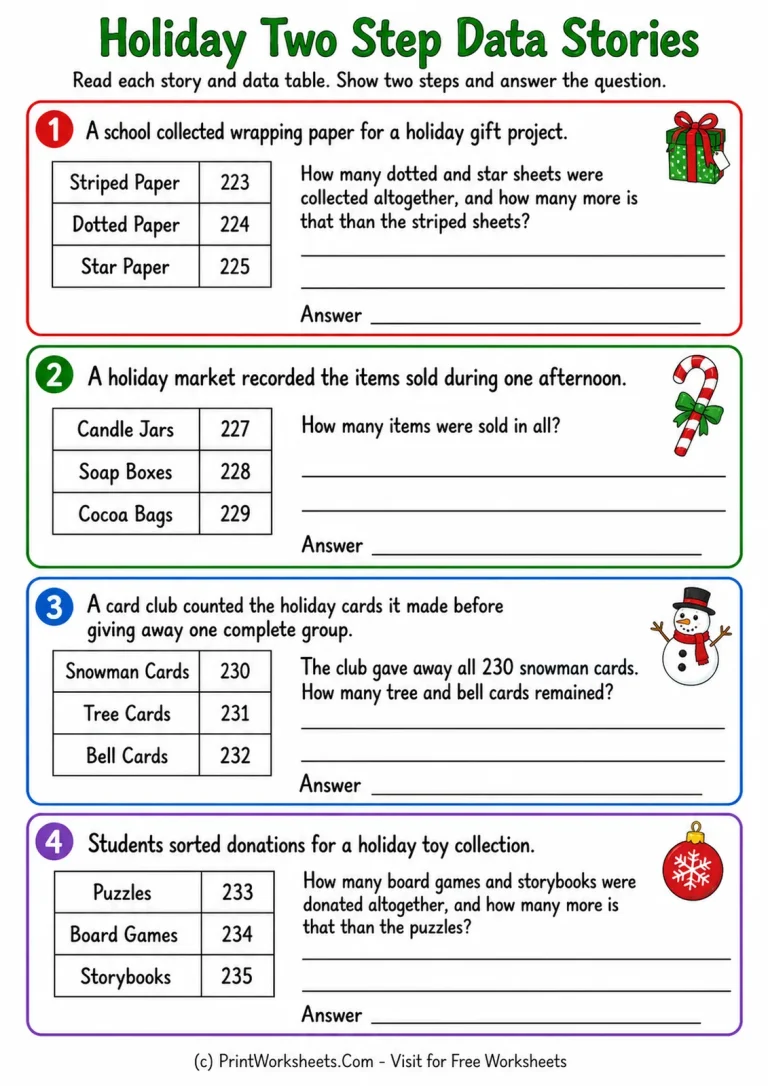
The fourth worksheet increases both the number size and the amount of reading. Four holiday data stories use three-category tables with values from 223 to 235. Contexts include wrapping paper, holiday market sales, holiday cards, and toy donations. Students must read the table, identify the quantities described in the story, and use addition and subtraction to reach the requested result. Some situations may allow a shorter alternate route, which makes the page a useful opportunity to discuss efficient strategies after students have found a correct answer.
Students who benefit from themed word-problem practice may also use the Labor Day math word problems worksheets for Grades 2-3 for another set of contextual addition and subtraction situations.
How Teachers and Parents Can Use the Set
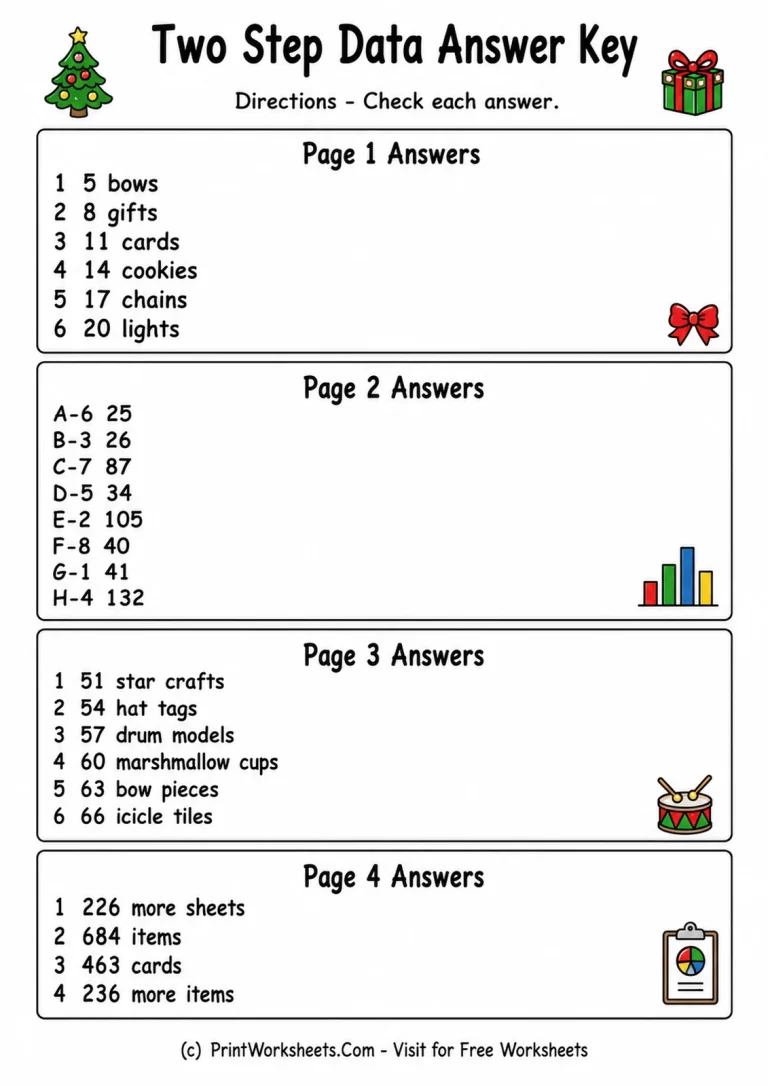
The four pages work well as a short sequence. Start with the labeled two-step format, continue with the matching page for faster mixed practice, use the missing-data worksheet to strengthen inverse operations, and finish with the larger-number story problems. Students can complete one page per lesson or use selected pages for intervention and review. A complete answer key covers all four student worksheets, including the six first-page final answers, eight matching results, six missing values, and four final story-problem answers, making independent checking straightforward.
By the end of the set, students have practiced reading three-category tables, choosing operation order, combining and comparing quantities, finding unknown values from totals, and explaining solutions with increasingly independent work. The variety keeps the mathematical goal consistent while changing how students encounter it, which makes these worksheets useful for building flexible two-step problem-solving habits in 3rd grade.