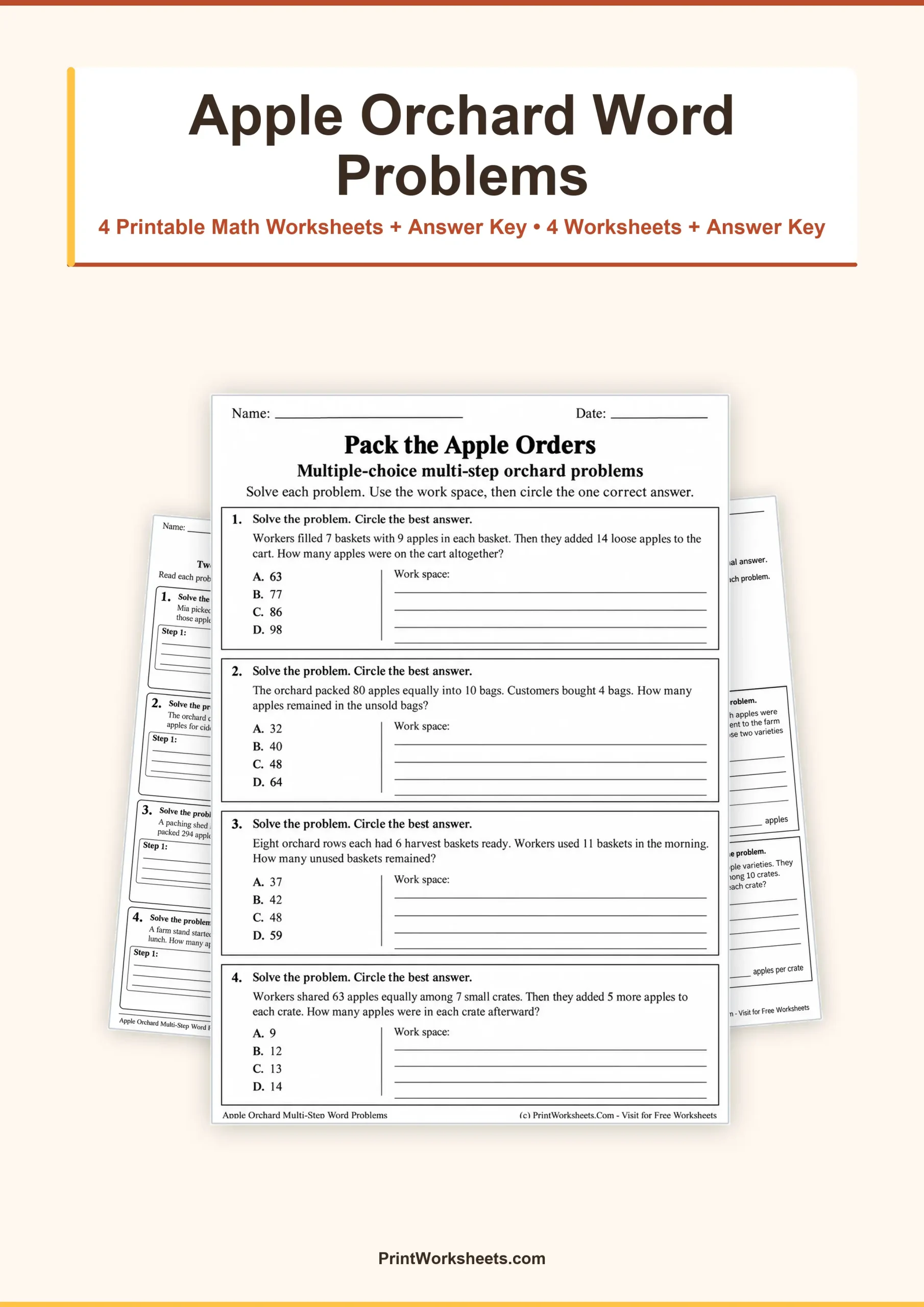
These apple orchard word problems give students four different ways to practice multi-step problem solving without leaving the same familiar harvest theme. Across the set, learners combine addition, subtraction, multiplication, and division, explain their work, use information from a table, and label final answers with the correct unit. The changing task formats make the collection useful for guided practice, independent work, math centers, homework, or a short review sequence.
Apple Orchard Word Problems Across Four Practice Formats
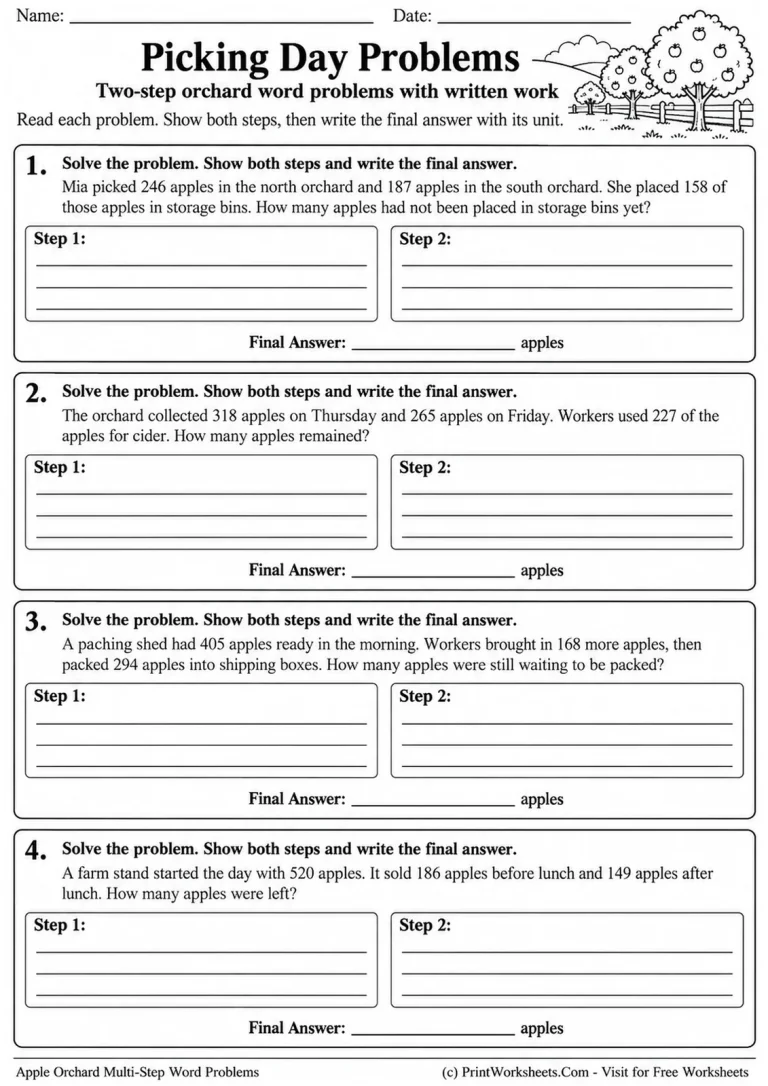
The first worksheet, Picking Day Problems, focuses on written two-step orchard situations. Students add quantities that belong together and then subtract apples that were stored, packed, used, or sold. For example, one problem combines 246 apples from one orchard section with 187 from another before removing 158 apples placed in storage. Separate Step 1 and Step 2 boxes encourage students to organize the computation instead of jumping directly to an answer.
The four problems on this page use larger whole numbers and practical actions such as collecting apples, packing shipping boxes, and selling fruit at a farm stand. Because every item includes a labeled final-answer line, students are also reminded that a complete word-problem response needs both a number and a unit.
Multiple-Choice Practice with Mixed Operations
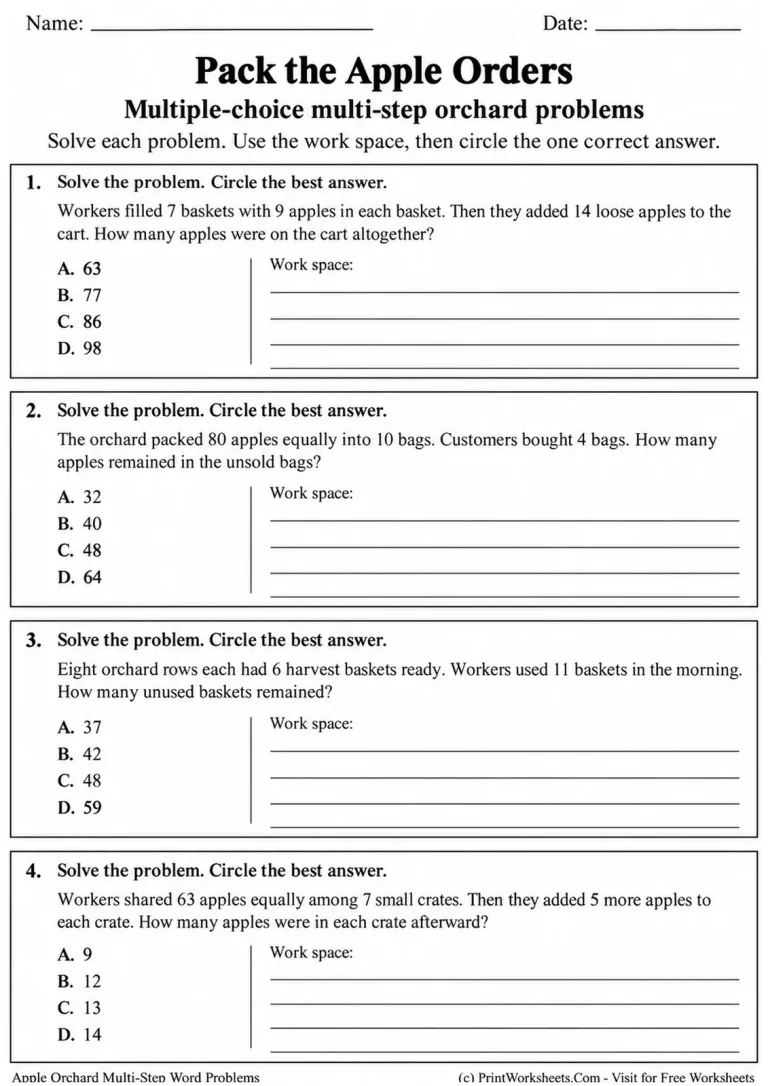
Pack the Apple Orders changes the response format while keeping the orchard setting. Each problem includes work space and four answer choices. Students may need to multiply first and then add or subtract, or divide first and then reason about the remaining groups. One question starts with 7 baskets containing 9 apples each and then adds 14 loose apples. Another asks students to divide 80 apples equally into 10 bags before deciding how many apples remain after 4 bags are sold.
This page is especially helpful when students need practice choosing operations from context. The distractors are different from the correct results, so students must complete the sequence of operations rather than rely on a visual clue from the choices.
Read a Harvest Table and Use the Data
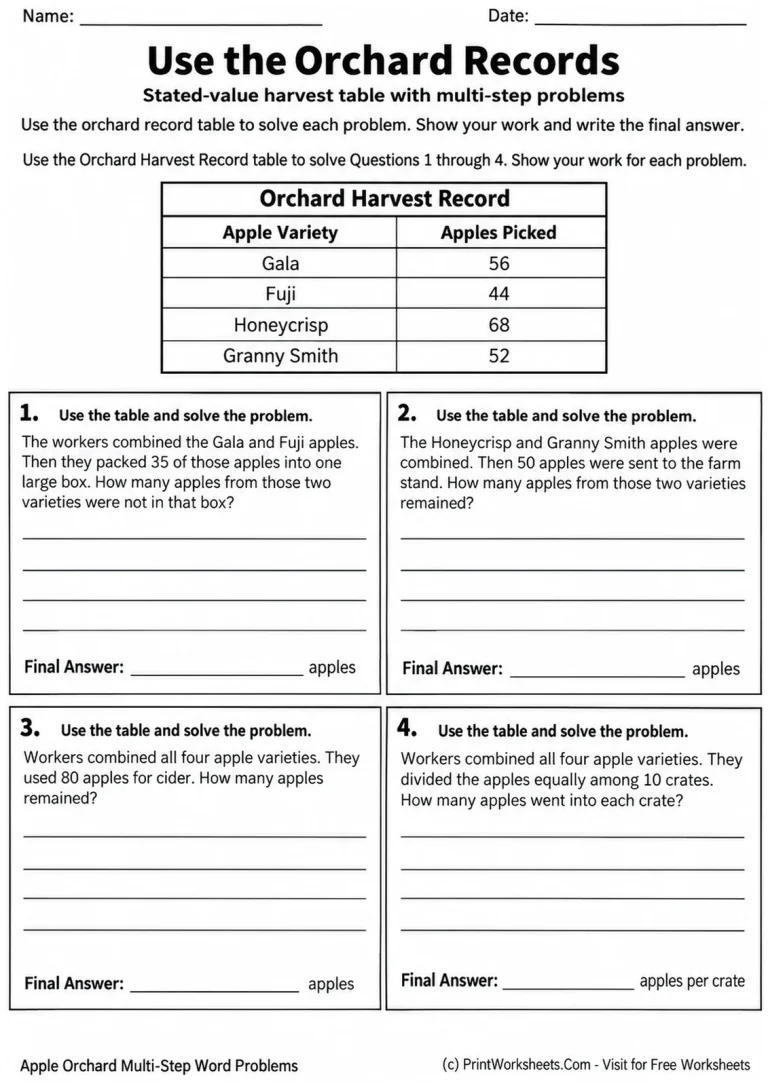
Use the Orchard Records introduces a simple Orchard Harvest Record with four stated values: Gala 56, Fuji 44, Honeycrisp 68, and Granny Smith 52. Students use those exact numbers to solve four new problems. They combine two varieties and subtract apples packed into a box, combine two other varieties and remove apples sent to a farm stand, total all four varieties before subtracting apples used for cider, and finally divide the complete harvest equally among 10 crates.
This format adds a useful reading step before computation. Instead of receiving every number inside the problem sentence, students must locate relevant information in the table, decide which values belong together, and then carry out the required operations. That makes the page suitable for practicing both data interpretation and multi-step reasoning.
Orchard Challenge Problems for Flexible Thinking
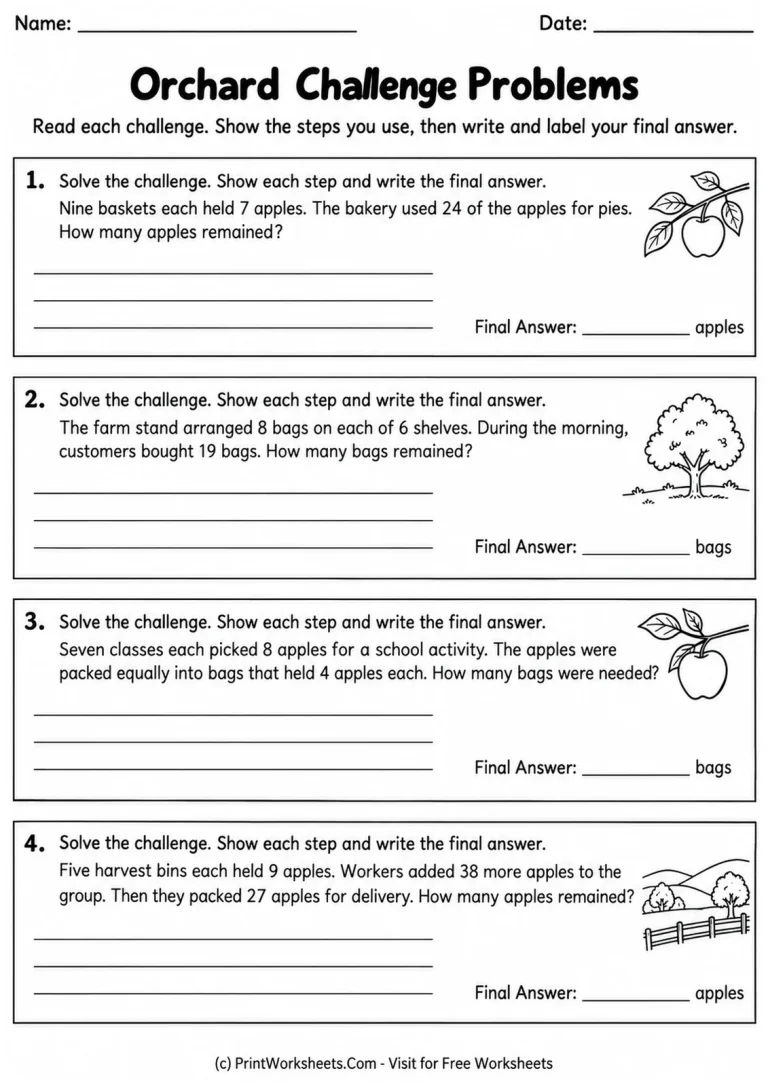
The fourth worksheet broadens the operation combinations. In Orchard Challenge Problems, students work with baskets, bags, classes, harvest bins, and delivery quantities. A student might multiply 9 baskets by 7 apples and then subtract 24 apples used for pies, or multiply the apples collected by several classes and divide the total into equal-size bags. The final challenge requires three calculations: finding the apples in 5 bins of 9, adding 38 more apples, and then subtracting 27 packed for delivery.
These questions work well after students are comfortable identifying the first operation in a word problem. They reinforce the idea that the answer from one step often becomes the starting quantity for the next step.
A Practical Multi-Step Math Set for Grades 3–4
The number sizes, basic multiplication and division facts, multi-digit addition and subtraction, and emphasis on showing steps make this set a practical fit for many 3rd and 4th grade classrooms. Teachers can use the pages in order for a gradual progression, or select a page based on the skill students need most: written two-step work, multiple choice, table-based reasoning, or mixed-operation challenges.
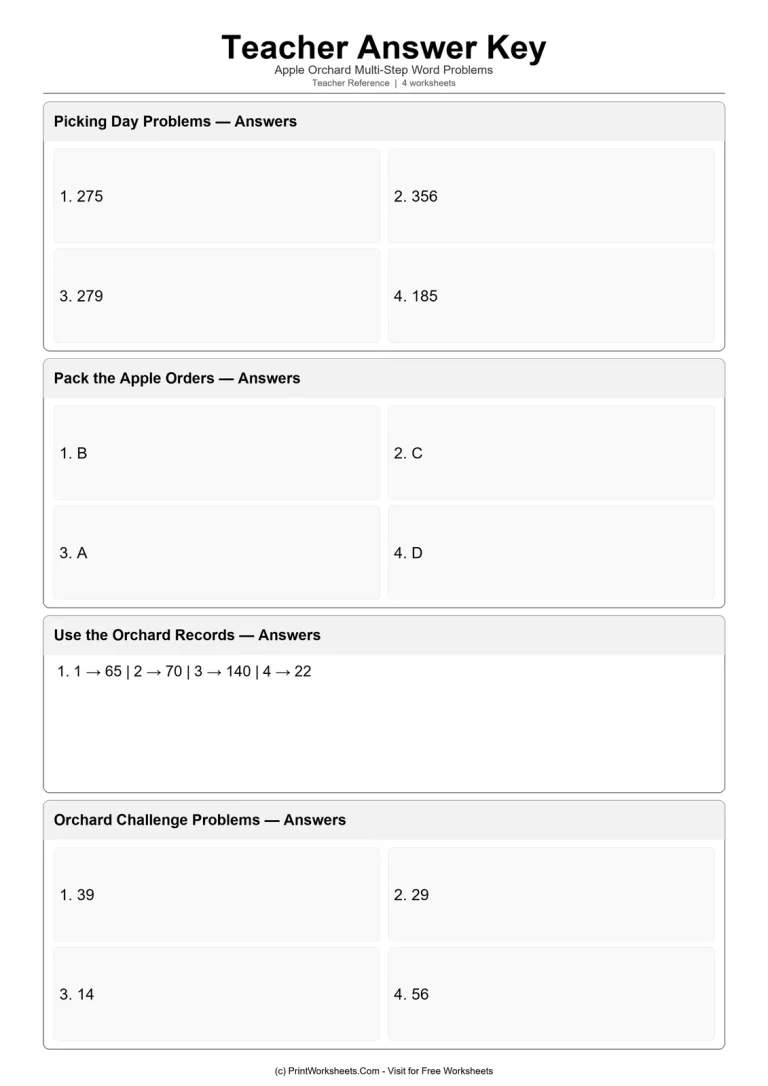
A teacher answer key covers all four student worksheets, including the table-based page and the multiple-choice answers. For additional practice emphasizing multiplication in multi-step situations, students can continue with 4th grade multi-step multiplication word problems. Together, these activities help students practice not only calculating accurately, but also deciding what to do first, carrying a result into the next step, and communicating a complete final answer.