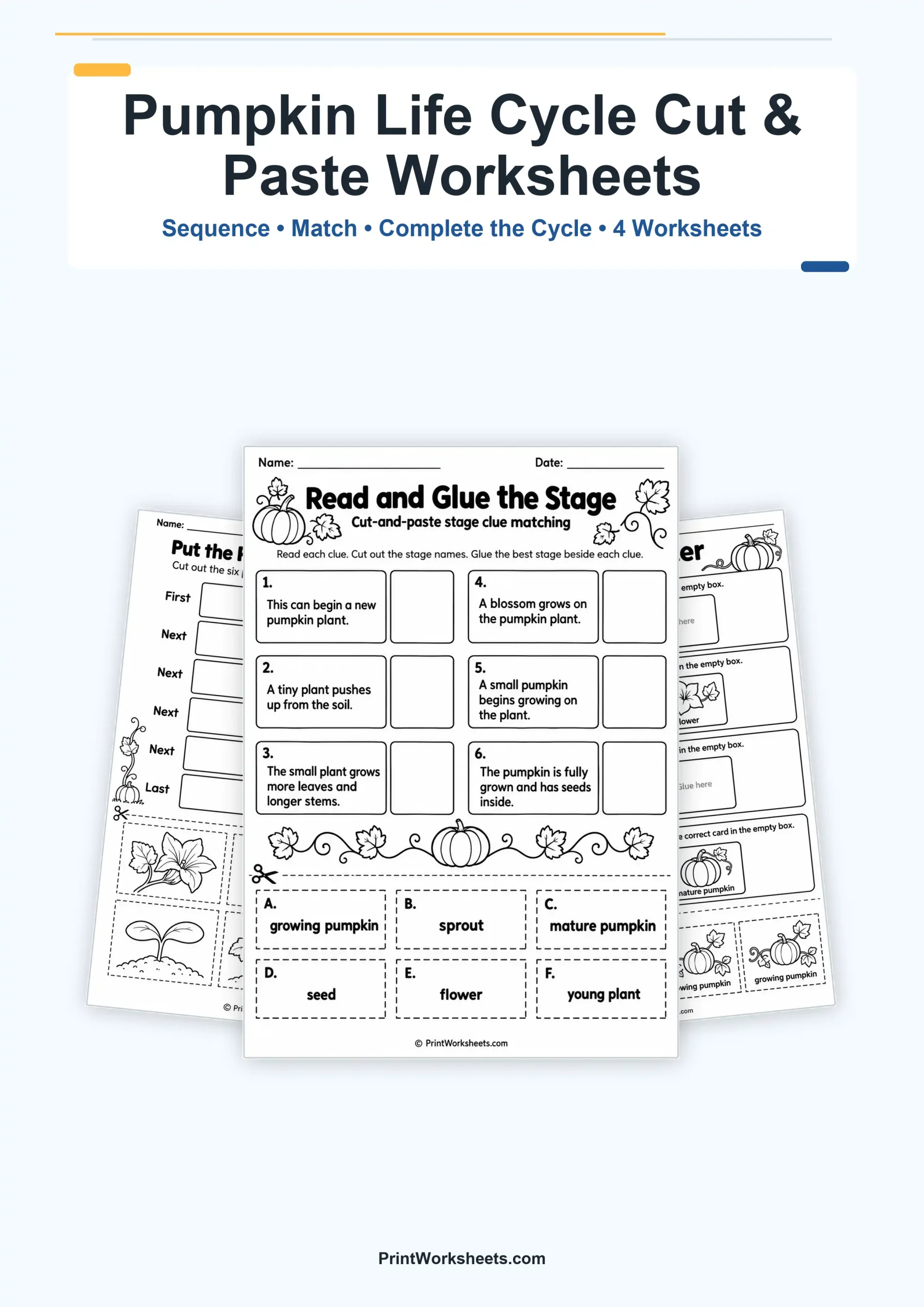
Turn pumpkin science into a hands-on sequencing lesson with these pumpkin life cycle cut and paste worksheets. The four printable activities help children work with the same six stages in several different ways: seed, sprout, young plant, flower, growing pumpkin, and mature pumpkin. Instead of simply looking at a finished diagram, students cut, sort, read, compare, and place each stage where it belongs.
Build the Pumpkin Life Cycle with Cut-and-Paste Practice
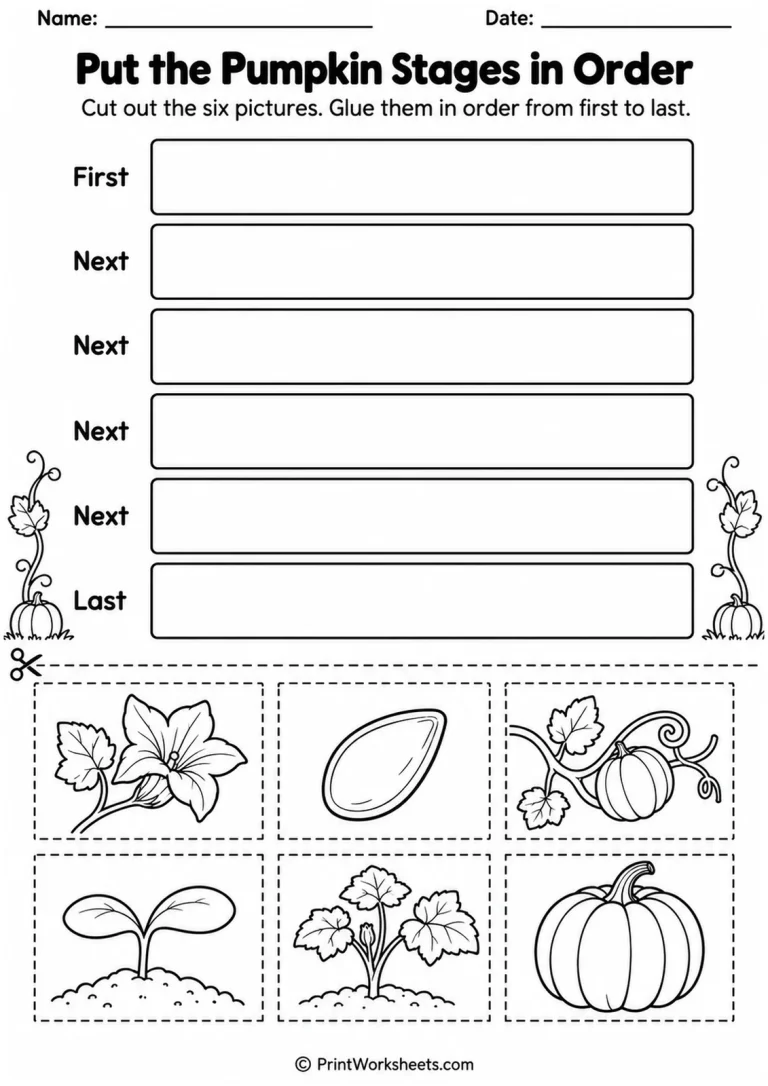
The first worksheet gives students six picture cards and asks them to place the pumpkin stages in order from first to last. The large sequencing spaces labeled First, Next, and Last make the task easy to follow while still requiring students to decide the correct progression. The completed order is seed, sprout, young plant, flower, growing pumpkin, and mature pumpkin.
This picture-based activity is especially useful before moving into more text-heavy life cycle work. Students can focus on visual changes in the plant as it develops from a seed into a mature pumpkin. Cutting and gluing also adds a hands-on element that can keep younger learners engaged while practicing science vocabulary and chronological order.
Move from Pictures to Pumpkin Stage Vocabulary
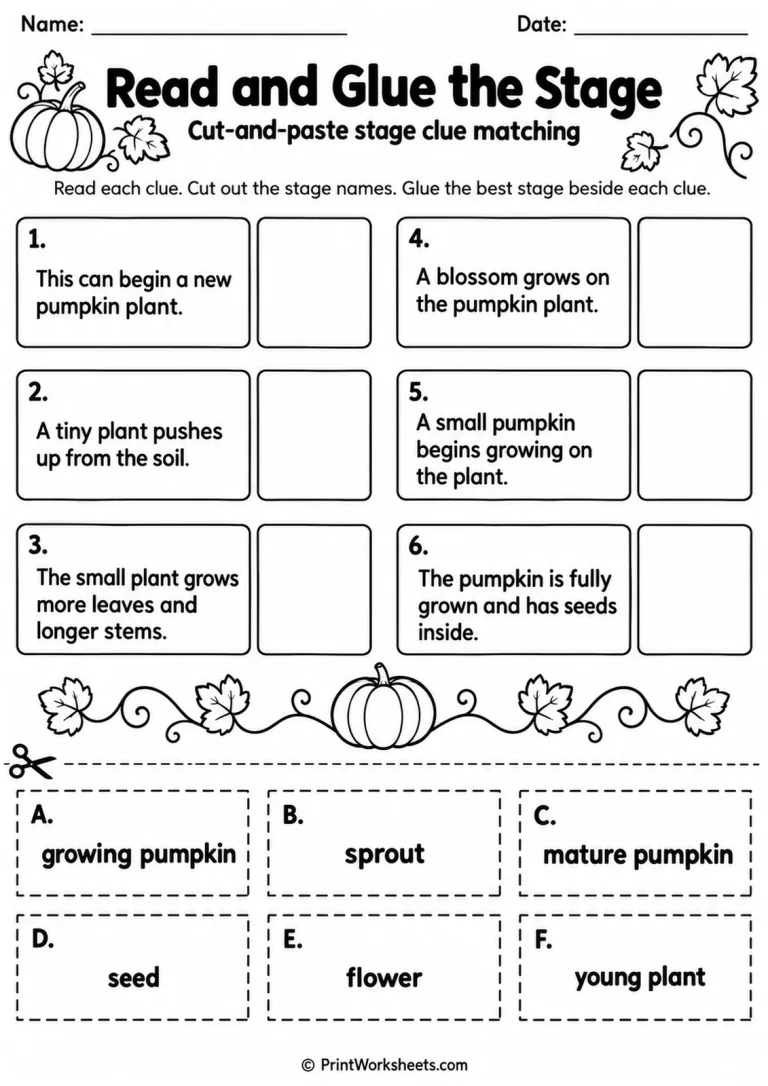
The second page shifts the focus from visual sequencing to reading for meaning. Students read six short clues and glue the matching stage name beside each clue. For example, one clue describes what can begin a new pumpkin plant, another describes a tiny plant pushing up from the soil, and another describes a blossom growing on the pumpkin plant.
The cut-out labels include all six target terms: seed, sprout, young plant, flower, growing pumpkin, and mature pumpkin. Because each clue points to one stage, students must connect the meaning of the sentence with the correct science word rather than relying only on picture recognition.
Practice What Comes Before and After
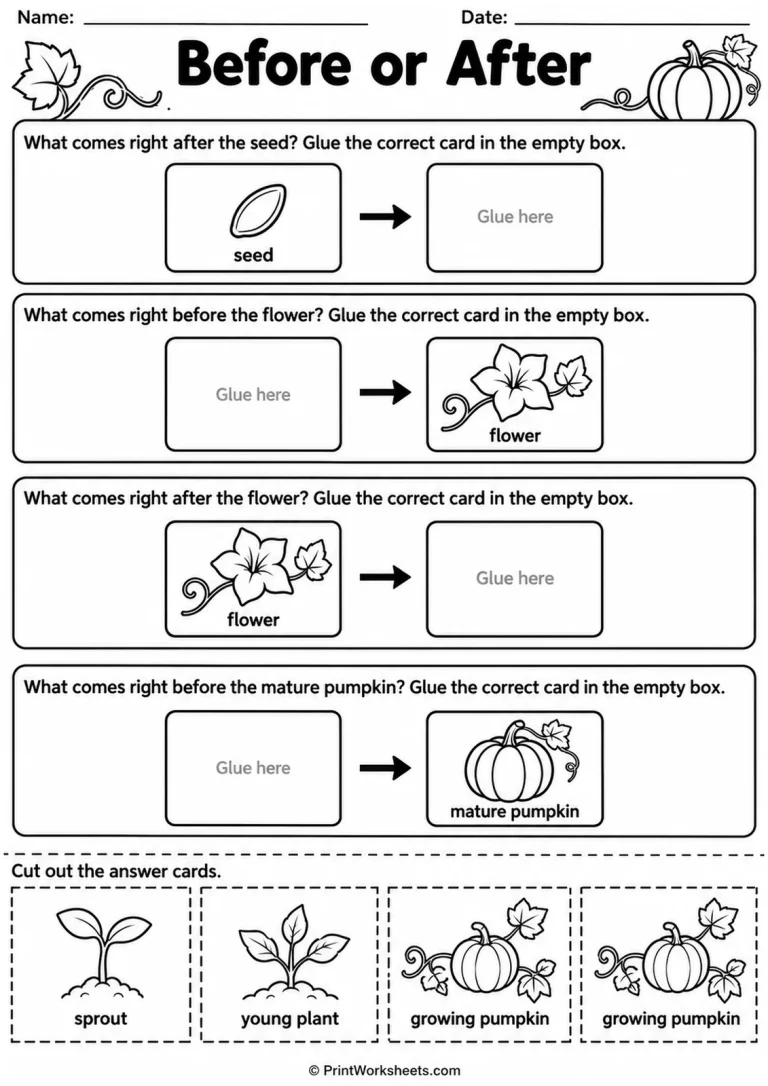
The third worksheet strengthens sequence understanding with immediate before-and-after relationships. Students determine what comes right after the seed, what comes right before the flower, what comes right after the flower, and what comes right before the mature pumpkin. They then cut out the answer cards and glue them into the empty spaces.
This format is useful because it asks students to think about smaller parts of the life cycle instead of always reciting the full sequence from beginning to end. The correct relationships reinforce that the sprout follows the seed, the young plant comes before the flower, and the growing pumpkin sits between the flower and the mature pumpkin.
Complete a Circular Pumpkin Life Cycle
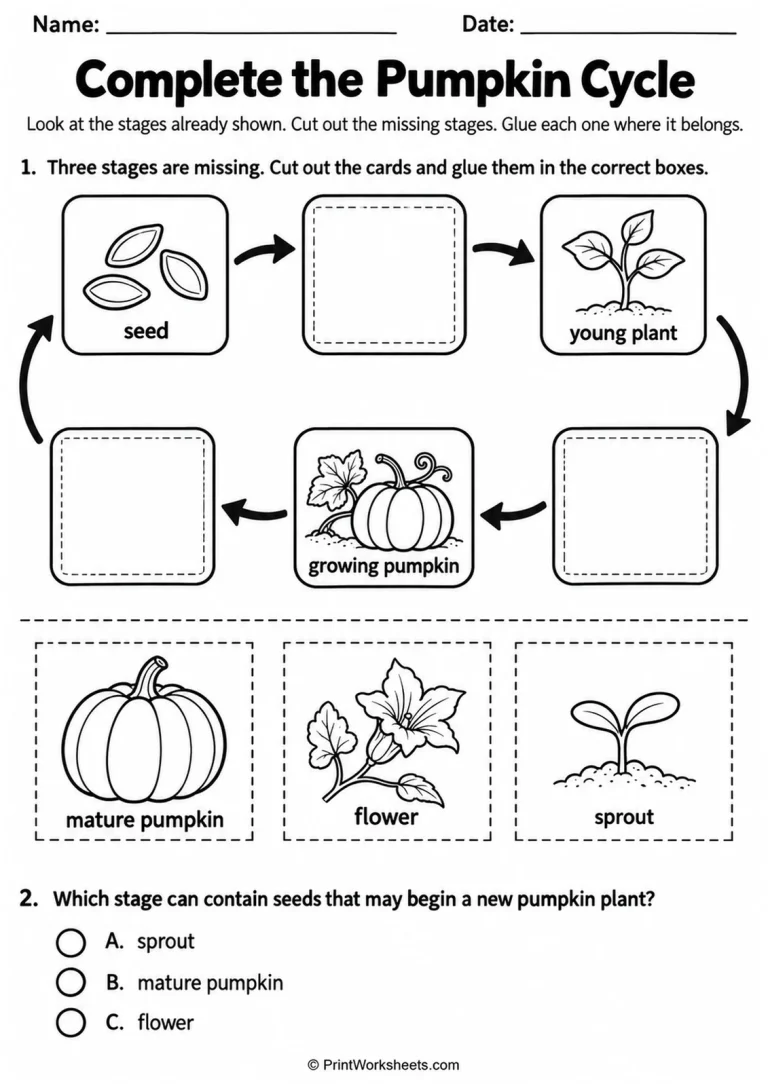
The final activity presents the life cycle as a circle rather than a straight line. Seed, young plant, and growing pumpkin are already shown, while three stages are missing. Students cut out the sprout, flower, and mature pumpkin cards and place each one in the correct location by following the arrows around the cycle.
A short multiple-choice question then asks which stage can contain seeds that may begin a new pumpkin plant. This brings the lesson back to the mature pumpkin and helps students see why a life cycle is a repeating process rather than a sequence with a permanent ending.
Ways to Use These Pumpkin Life Cycle Worksheets
These pages can be used together as a short science sequence or separately for review. Start with the picture-ordering activity when introducing the six stages, then use the clue-matching page to check vocabulary understanding. The before-and-after worksheet works well for a second lesson or science center, while the circular cycle page can serve as a final application activity.
Teachers and parents can also ask children to say each stage aloud before gluing it down. This simple routine combines speaking, reading, visual recognition, and sequencing. For students who need more support, review the six stage names first. Students who are ready for an extra challenge can explain what changes between two neighboring stages.
For another printable introduction to this topic, visit the pumpkin life cycle worksheet. Used together or on their own, these cut-and-paste pages provide repeated practice with the order, vocabulary, and relationships that make up the pumpkin life cycle.