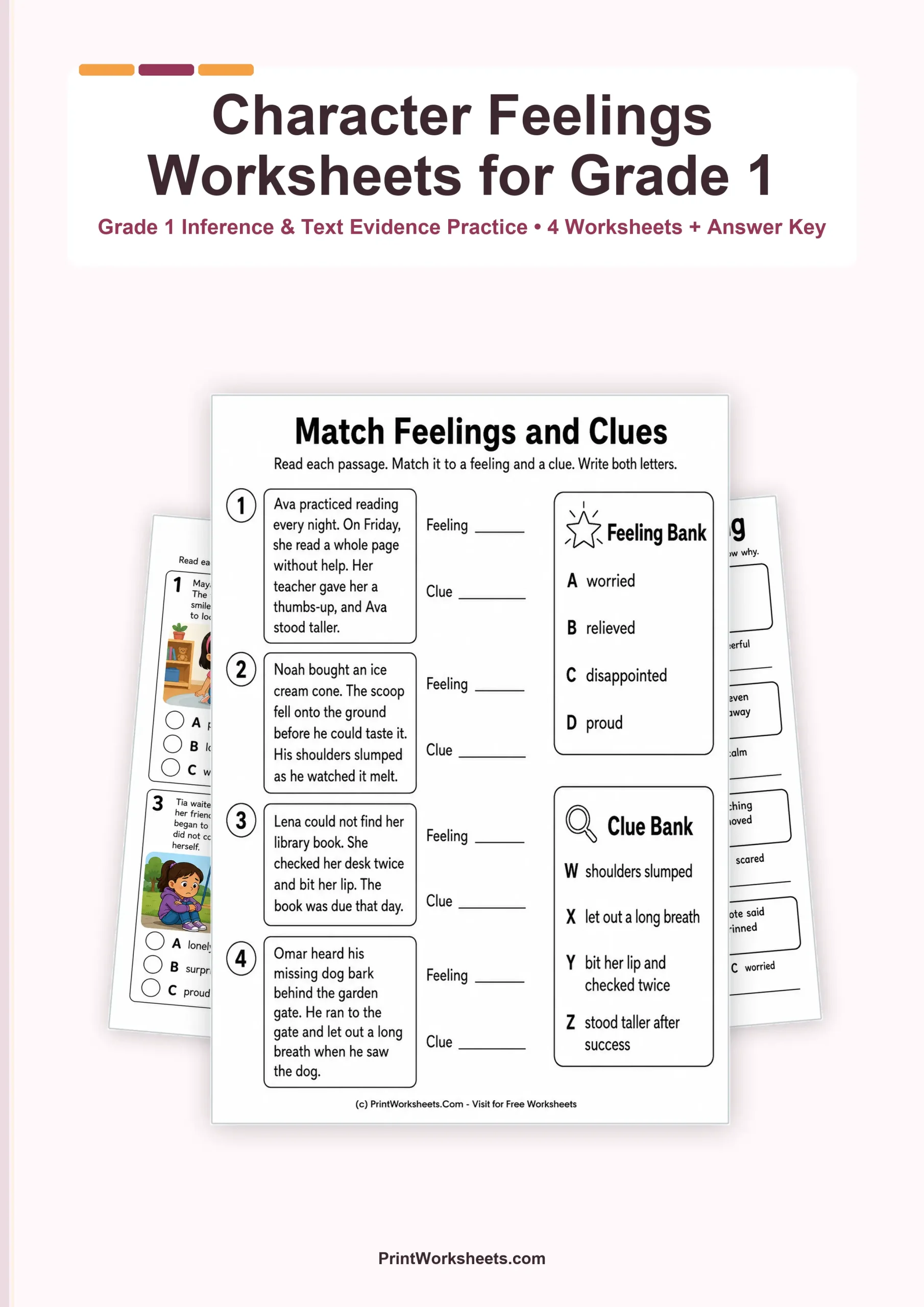
These character feelings passages give first graders a clear way to practice reading beyond the literal words on the page. Instead of simply naming what happened, students look at actions, body language, reactions, and events to decide how a character feels. Across four printable worksheets, the work grows from choosing a feeling to identifying the exact clue that supports it and finally explaining how a character’s emotions change during a short passage.
Character Feelings Passages That Build Evidence-Based Inference
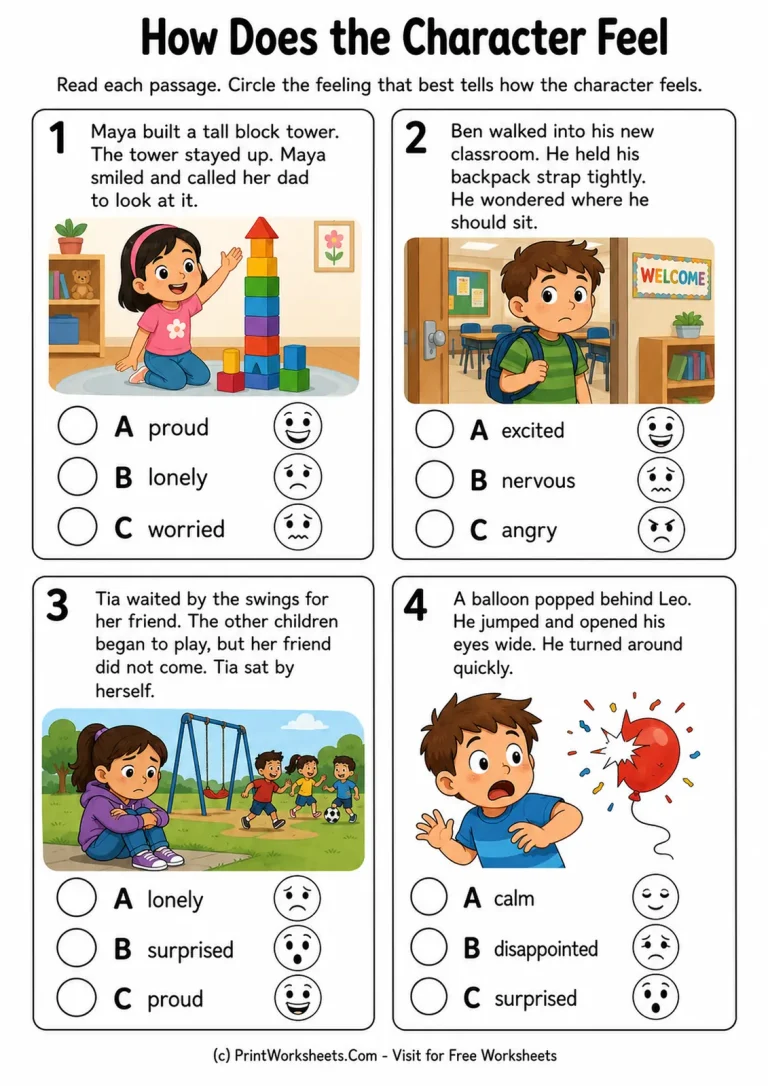
The first worksheet introduces the skill with four short, concrete situations and three answer choices for each one. Maya smiles after building a tall block tower that stays up, so students infer that she feels proud. Ben enters a new classroom while gripping his backpack strap and wondering where to sit, which points to nervousness. Tia waits alone when her friend does not arrive, supporting lonely, while Leo jumps after a balloon pops behind him, clearly showing surprise. The familiar situations make the emotional clues easy enough for beginning readers to discuss while still requiring an inference.
This page works well as an introduction because students can explain why one answer fits better than the distractors. Asking, ‘What did the character do that helped you decide?’ turns each multiple-choice item into a short evidence conversation.
Move From Naming Feelings to Matching Clues
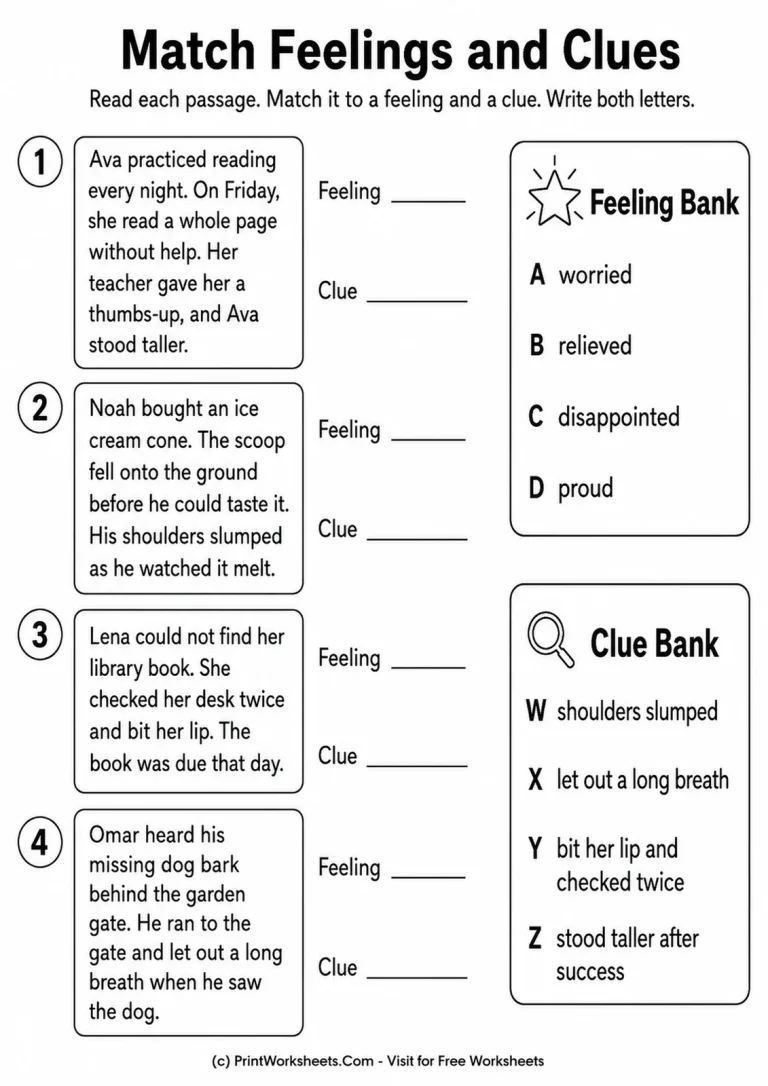
The second worksheet increases the thinking demand by separating the feeling from the evidence. Students read about Ava succeeding in reading, Noah losing an ice cream scoop, Lena searching for a missing library book, and Omar finding his missing dog. They choose one letter from a Feeling Bank and one letter from a Clue Bank for each passage.
The clues are especially useful for teaching body language and physical reactions. Ava ‘stood taller’ after success, Noah’s ‘shoulders slumped,’ Lena ‘bit her lip and checked twice,’ and Omar ‘let out a long breath.’ These details help students see that authors often show a feeling instead of naming it directly. Teachers can have students read the clue first, predict the emotion, and then reread the whole passage to confirm the match.
Underline the Text Evidence for Each Feeling
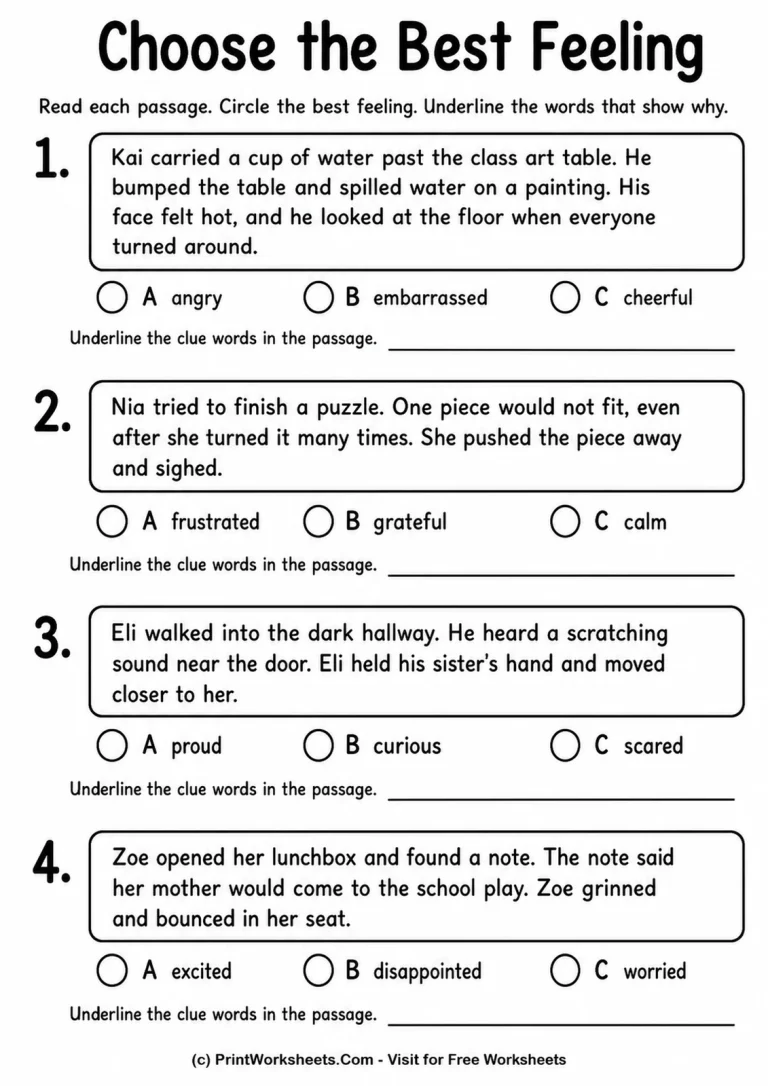
The third worksheet asks students to choose the best feeling and then underline the words that prove it. Kai feels embarrassed after spilling water on a painting and looking at the floor when classmates turn around. Nia becomes frustrated with a puzzle after trying a piece many times, pushing it away, and sighing. Eli is scared in a dark hallway and moves closer to his sister, while Zoe is excited after learning her mother will attend the school play and responds by grinning and bouncing in her seat.
This format is a useful bridge from oral inference to written evidence. Students are not only selecting an emotion; they must return to the passage and locate the specific phrase that supports the answer. That habit prepares early readers for later comprehension questions that ask them to justify an idea with details from the text.
Teach How Character Feelings Can Change
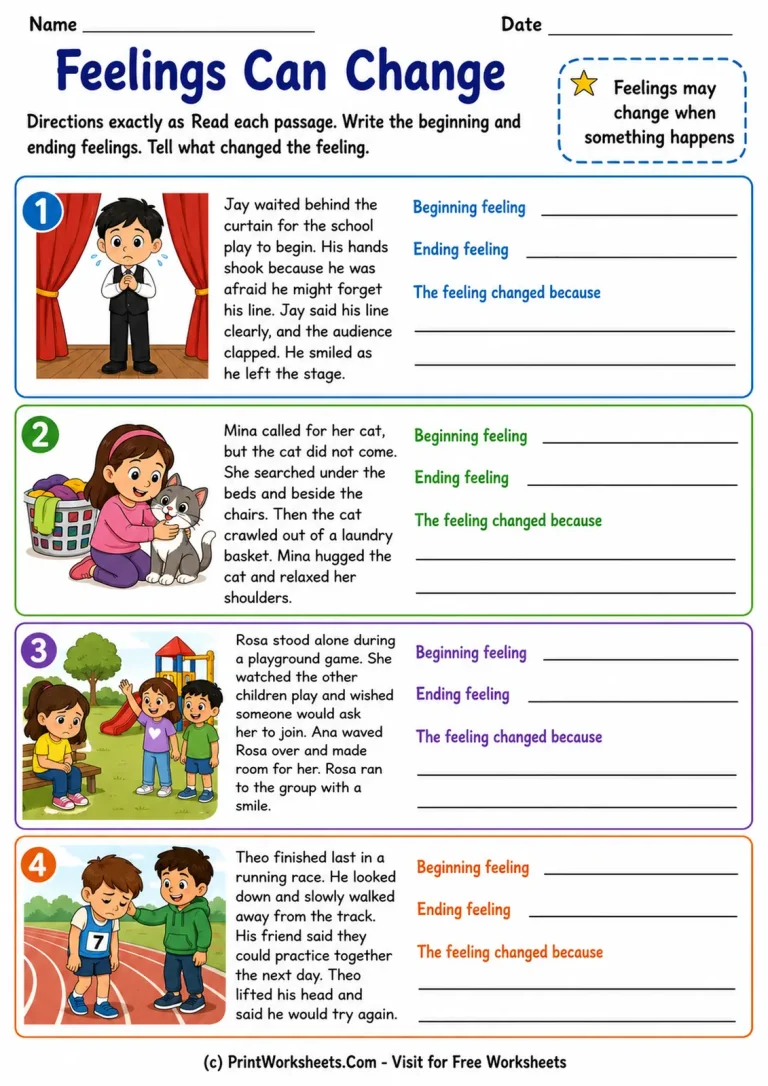
The fourth worksheet moves beyond a single emotion. Students identify a beginning feeling, an ending feeling, and the event that caused the change. Jay begins nervous before a school play but feels proud or happy after saying his line clearly and hearing the audience clap. Mina worries about her missing cat and then relaxes after finding it. Rosa begins lonely when she stands apart from a playground game but becomes happy or included when Ana invites her to join. Theo feels disappointed after finishing last in a race, then becomes hopeful when a friend offers to practice with him.
This page supports richer comprehension because students must follow the sequence of events and connect cause and effect to emotion. A useful small-group routine is to divide each passage into three parts: beginning feeling, changing event, and ending feeling. Students can then retell the passage using that structure before writing their responses.
Ways to Use the Set in Grade 1
Use the pages in order for a short mini-unit, or select one based on the level of support a student needs. The multiple-choice page is useful for guided practice, the matching page adds explicit clue analysis, the underlining page strengthens text-evidence habits, and the final page works well for independent comprehension or a small-group discussion about emotional change.
For students who need extra reading practice before making inferences, pair the activities with 1st grade reading fluency passages. For additional short-passage comprehension in a seasonal context, the fall reading comprehension passages provide another way to practice reading for meaning.
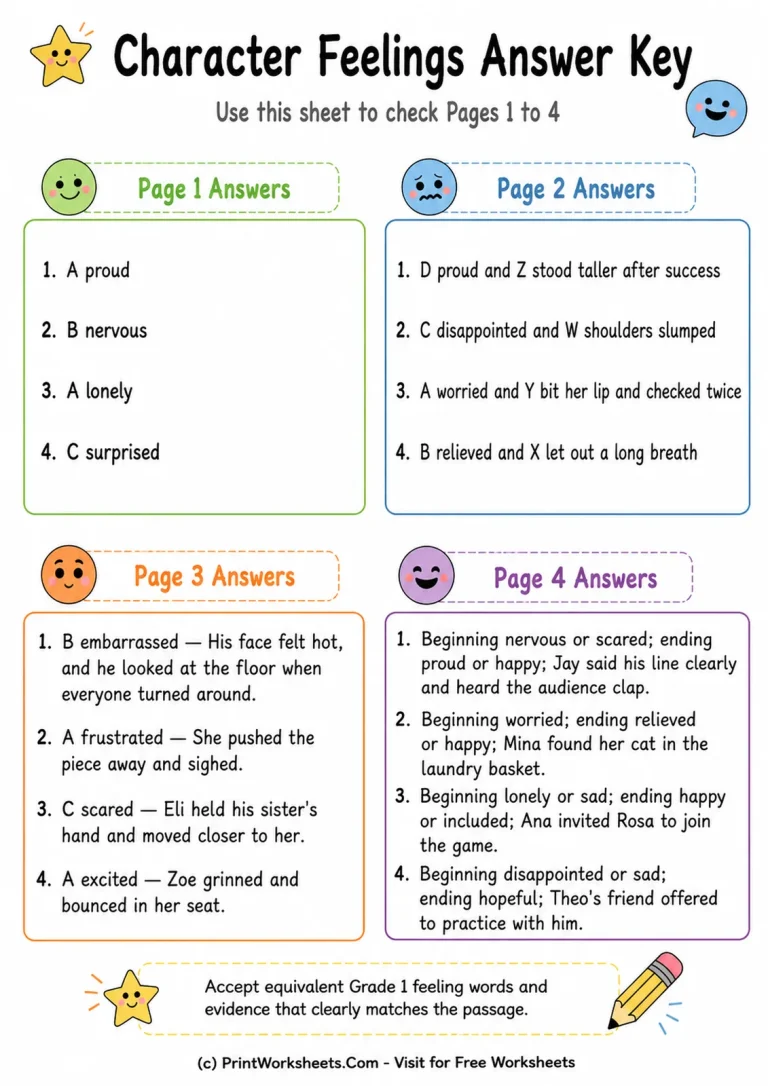
An answer key is included for all four worksheets, including acceptable equivalent feeling words on the open-ended page. This makes the set practical for classroom centers, homework, intervention groups, or parent-supported reading practice while keeping the central goal consistent: notice the clue, infer the feeling, and explain the evidence.