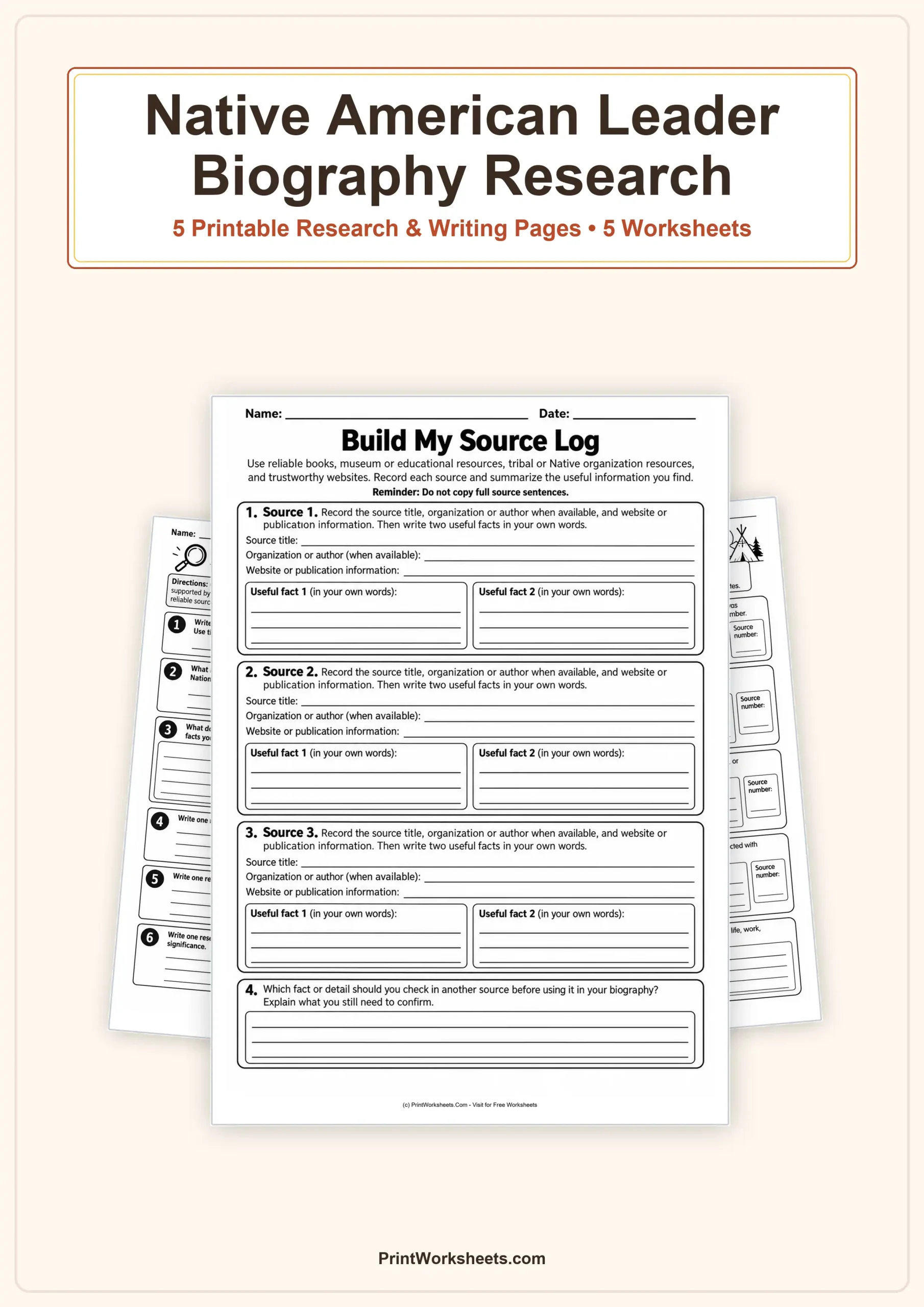
This Native American leader biography organizer gives upper-elementary students a clear path from choosing a research subject to planning a complete evidence-based biography. Instead of asking students to collect disconnected facts, the five-page set guides them through research questions, source notes, chronological events, leadership evidence, impact, and final writing organization. It is especially useful when students need structure for a biography project while still doing the actual reading, checking, and thinking themselves.
Native American Leader Biography Organizer for Research Projects
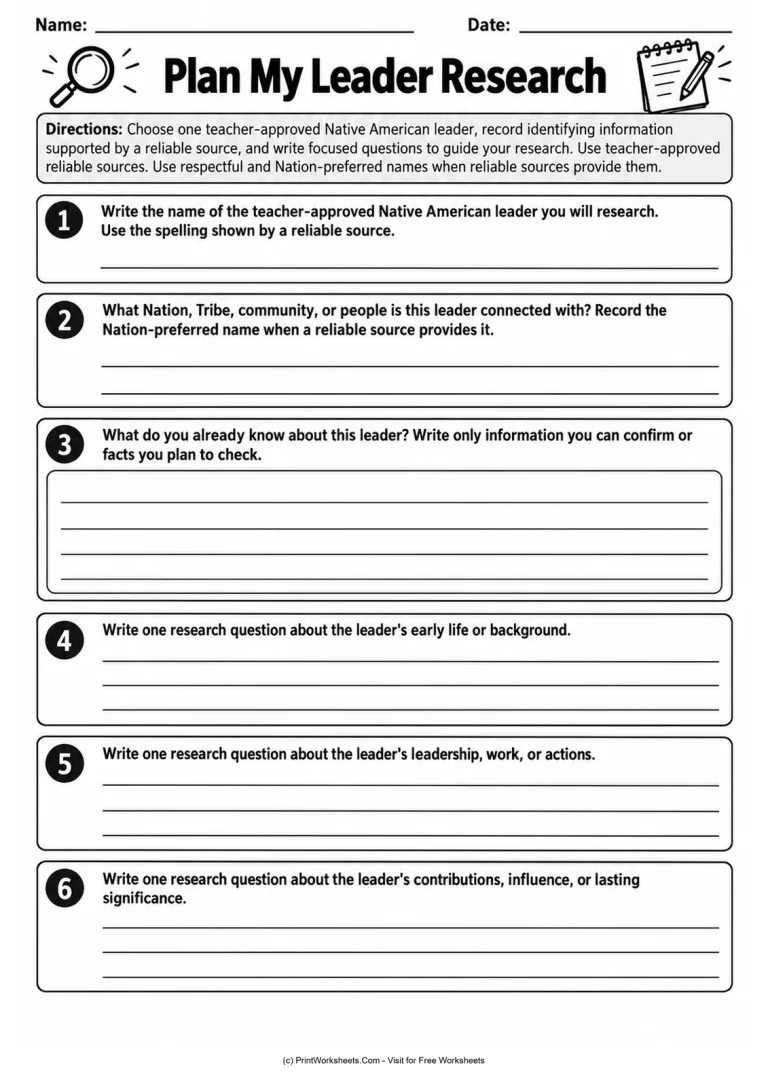
The first page, Plan My Leader Research, helps students begin with a teacher-approved Native American leader and establish a focused direction. Students record the leader’s name using reliable-source spelling, identify the Nation, Tribe, community, or people connected with that leader, and note what they already know or still need to confirm. They then create research questions about early life, leadership or actions, and contributions or lasting significance.
This opening page is valuable because it slows students down before they begin collecting facts. It encourages them to use respectful, source-supported terminology and to distinguish between information they can confirm and information they still need to check.
Build Source Notes Without Copying
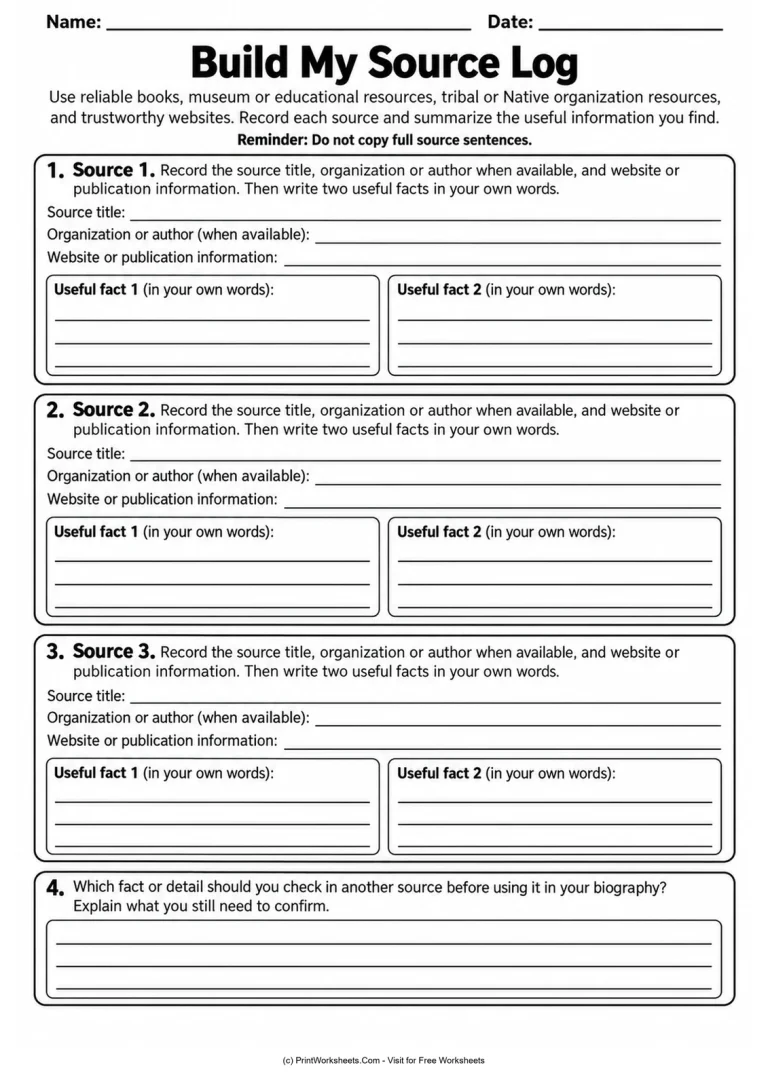
The second worksheet, Build My Source Log, gives students space to record three sources. For each one, they can write the source title, organization or author when available, website or publication information, and two useful facts in their own words. The page also asks students to identify a fact or detail that should be checked in another source before it is used in the biography.
This makes the organizer more than a note-taking sheet. Students practice basic source tracking, paraphrasing, and verification. The structure can work with books, museum resources, educational references, tribal or Native organization resources, and other teacher-approved reliable sources.
Trace Important Events Across the Leader’s Life
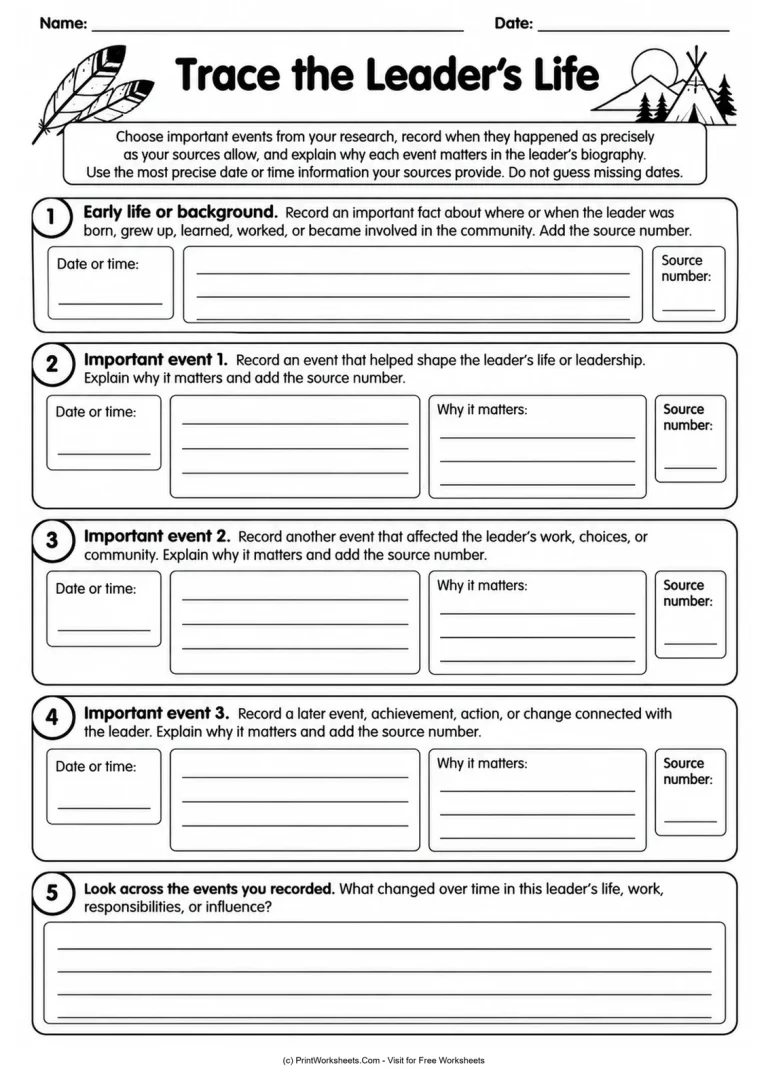
The third page, Trace the Leader’s Life, turns research notes into a simple chronological framework. Students record an early-life or background detail and then add three important events that shaped the leader’s life, work, choices, leadership, or community. Each event includes space for a date or time, the event itself, why it matters, and the source number used.
The directions also remind students to use the most precise date or time their sources provide rather than guessing missing information. A final reflection asks what changed over time in the leader’s life, work, responsibilities, or influence. That question helps students move beyond listing events and begin thinking about development and cause-and-effect.
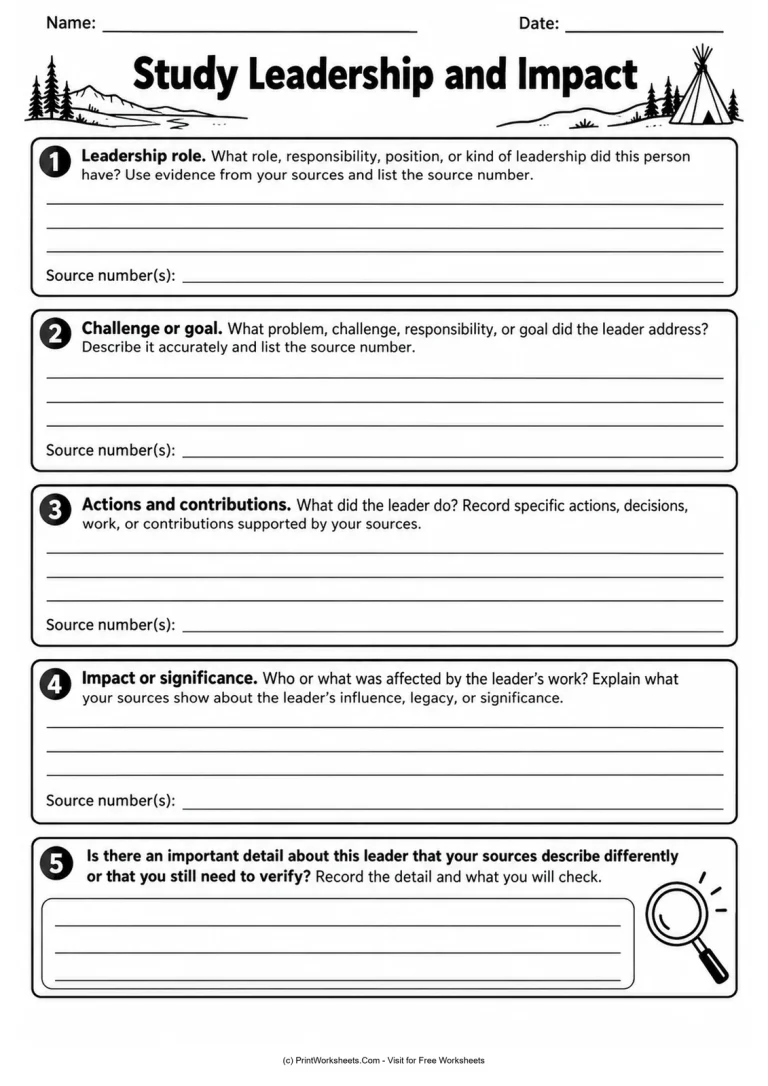
Study Leadership, Actions, and Impact
The fourth worksheet focuses on deeper biography research. Students describe the person’s leadership role, identify a challenge, responsibility, or goal, record specific actions or contributions, and explain the leader’s impact or significance. Each section includes source-number tracking so students can connect claims to the research they collected.
A final prompt asks whether an important detail is described differently across sources or still needs verification. This is a useful research habit because biographies often include names, dates, titles, terminology, or interpretations that require careful checking.
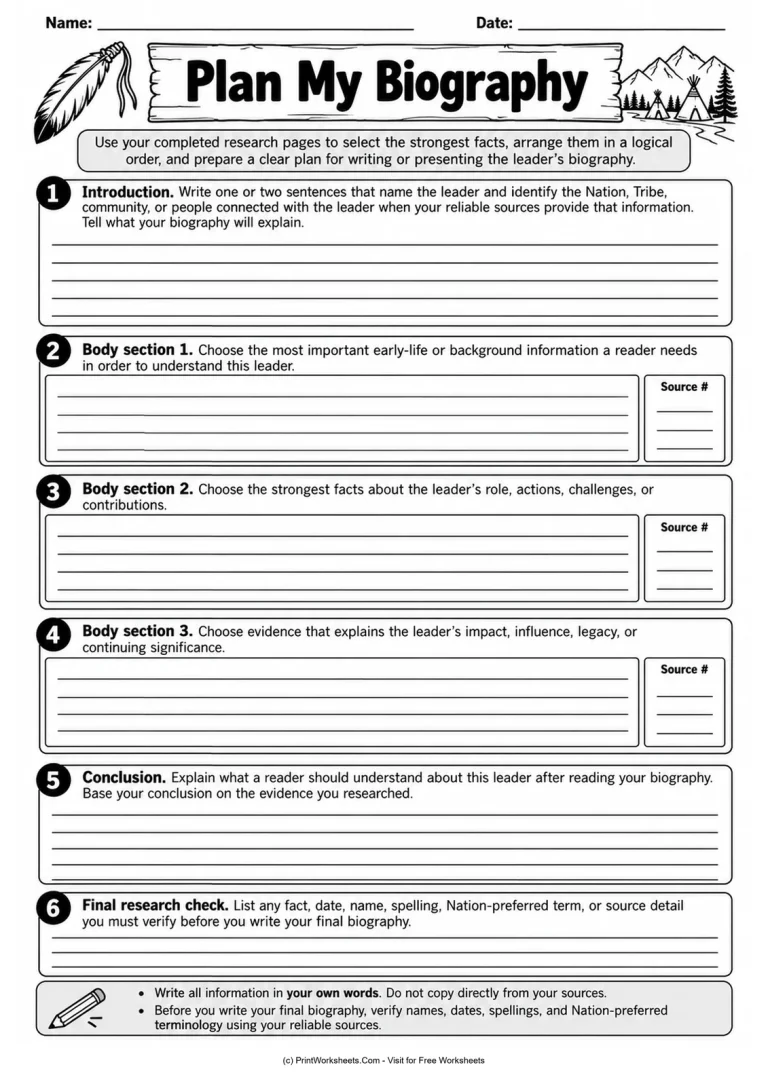
Turn Research Into a Biography Plan
The last page, Plan My Biography, helps students organize their strongest evidence before drafting. The outline includes an introduction, three body sections, and a conclusion. Students choose background information for the first body section, evidence about roles, actions, challenges, or contributions for the second, and evidence about impact, influence, legacy, or continuing significance for the third.
Source-number boxes encourage students to keep track of where their evidence came from. The final research check asks them to verify facts, dates, names, spellings, Nation-preferred terms, and source details before beginning the final biography.
How Teachers and Families Can Use the Set
The five pages can be used together as a complete research packet or assigned in stages over several lessons. A teacher might begin with the planning page, require students to complete the source log before moving forward, and then use the timeline and leadership analysis as checkpoints before students begin writing. Families supporting a research project at home can use the same sequence to make a large assignment feel more manageable.
Because the set emphasizes reliable sources, students’ own words, source numbers, verification, chronology, leadership, and significance, it supports both research skills and biography writing. The result is a practical organizer set that helps students gather stronger evidence and turn that evidence into a more focused, accurate biography.