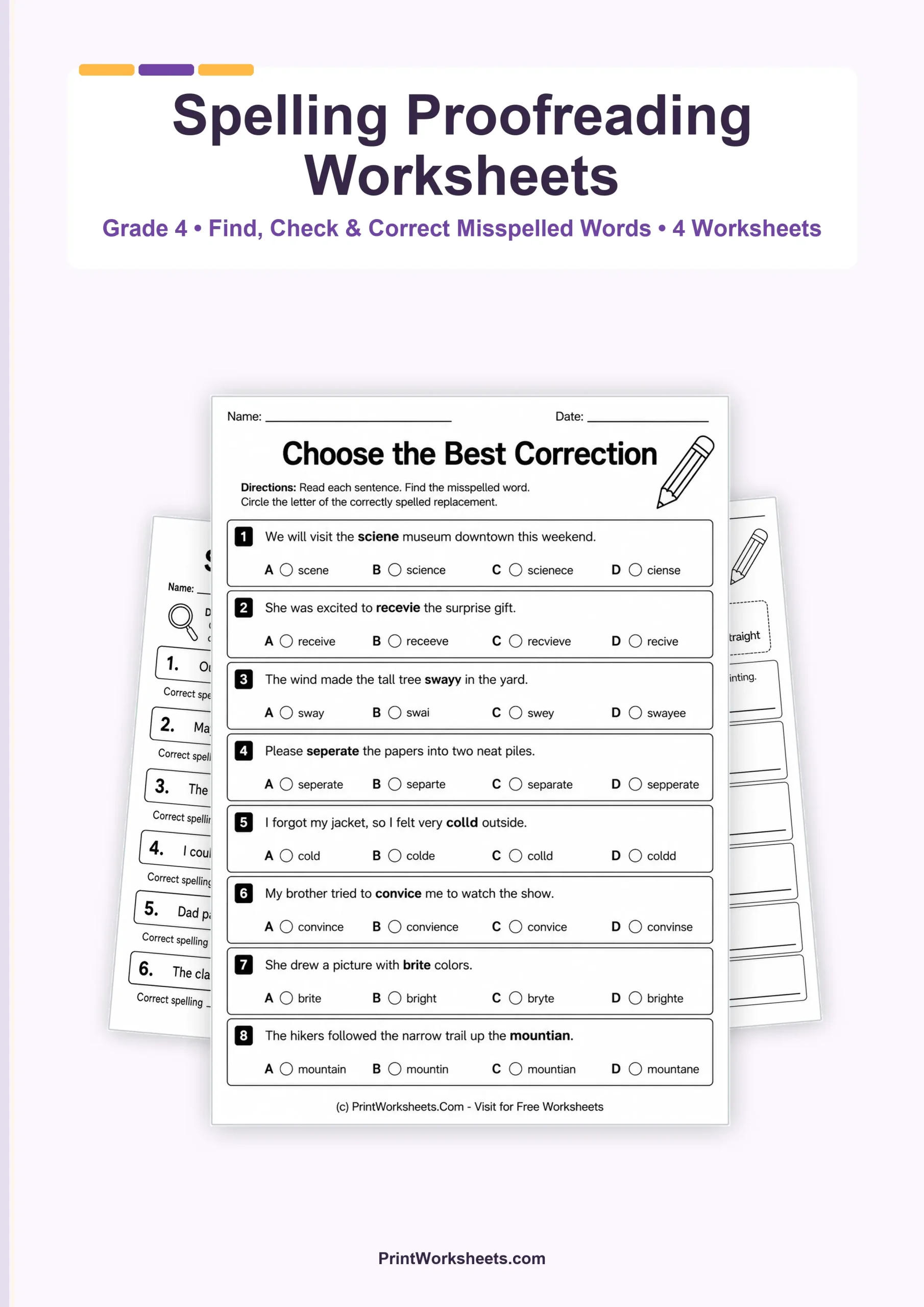
These spelling proofreading worksheets give fourth graders focused practice finding and correcting misspelled words in meaningful sentence and note contexts. Instead of asking students to study isolated word lists, the activities require them to notice when a spelling looks wrong, compare possible corrections, and write the correct form. The four-page set moves from highly focused sentence work toward more independent proofreading, making it useful for spelling review, literacy centers, homework, morning work, or targeted intervention.
Build Grade 4 spelling proofreading skills step by step
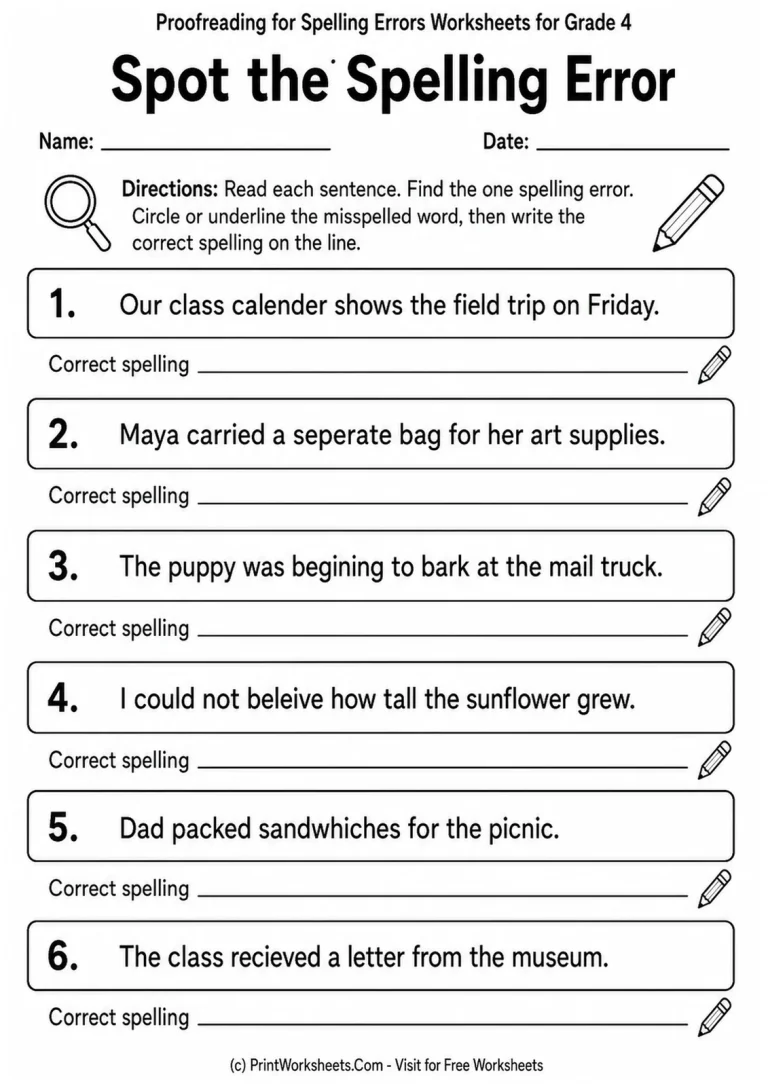
The first worksheet, Spot the Spelling Error, begins with six sentences that each contain exactly one misspelled word. Students identify the error and write the correct spelling on the response line. The target words include calendar, separate, beginning, believe, sandwiches, and received. Because students must produce the corrected spelling rather than simply recognize it, this page encourages close visual attention to letter order, vowel patterns, doubled consonants, and commonly confused spellings.
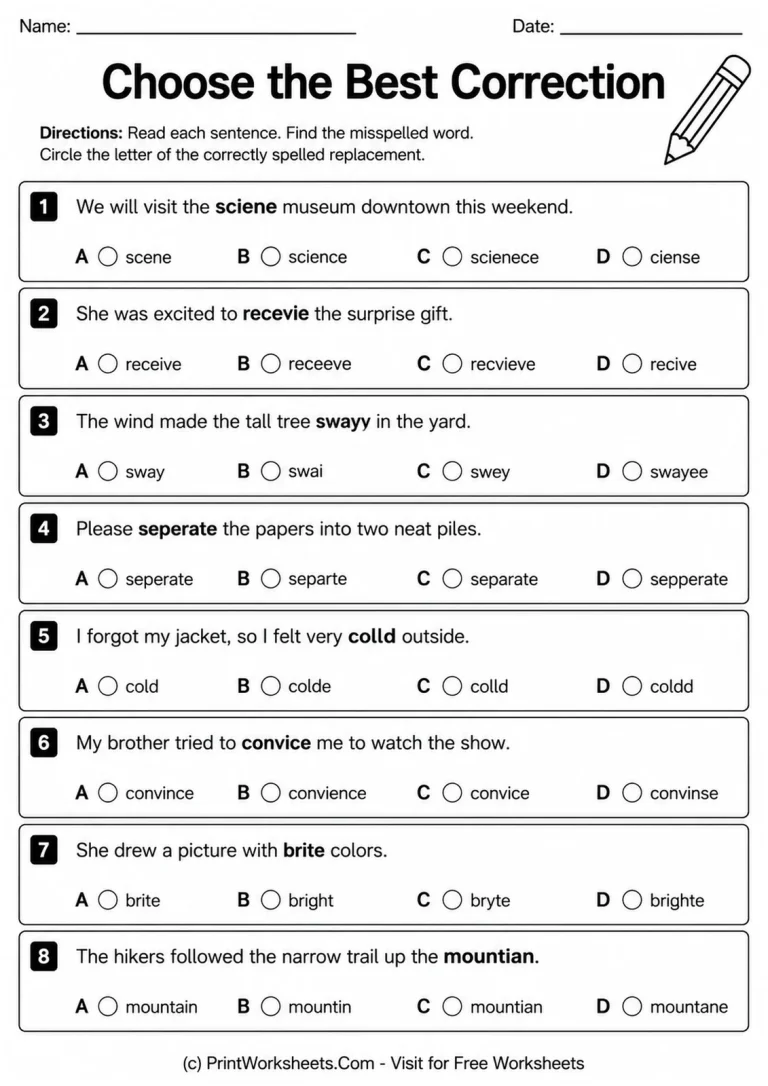
The second worksheet changes the response format with Choose the Best Correction. Students read eight sentences containing a visibly misspelled word and select the correct spelling from four choices. The activity includes words such as science, receive, separate, convince, bright, and mountain. Multiple-choice support makes this page useful when students still benefit from comparing alternatives before producing spellings independently.
Use context clues while correcting spelling errors
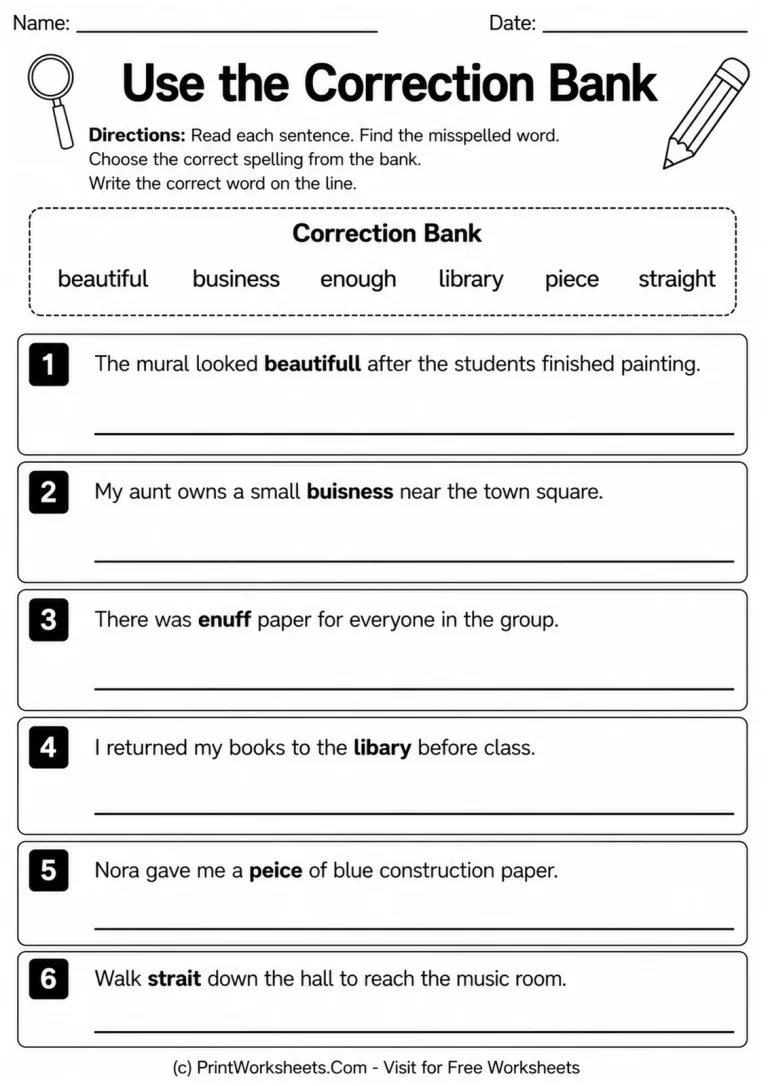
On Use the Correction Bank, students again work with complete sentences, but this time they choose the correct form from a six-word bank. The available words are beautiful, business, enough, library, piece, and straight. Students must first locate the misspelled word in each sentence and then match it to the correct spelling in the bank. This format adds a helpful scaffold while still requiring careful proofreading.
The word-bank activity is especially useful for students who can recognize that a spelling is incorrect but may need support recalling the exact correction. It also creates opportunities to discuss why an incorrect form looks plausible and what spelling feature helps confirm the correct answer. Teachers can extend the page by asking students to cover the word bank after completing the activity and spell the same words from memory.
Proofread short student notes for two errors
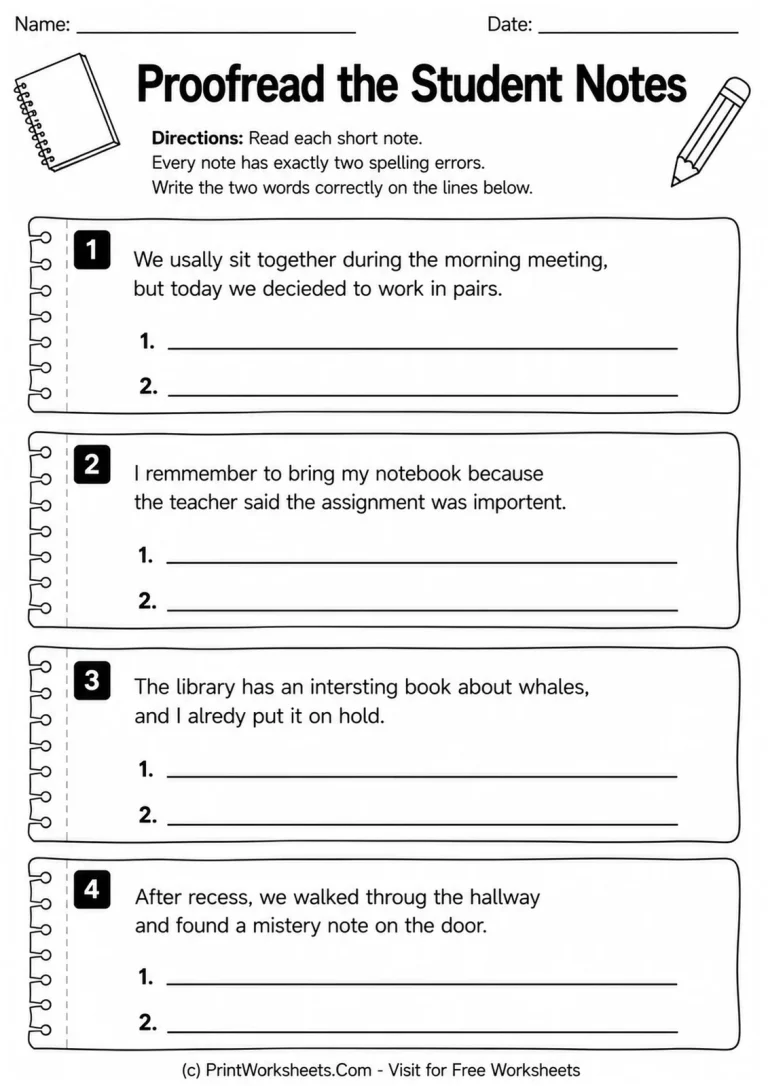
The final worksheet, Proofread the Student Notes, increases the proofreading demand. Students read four short notes, each containing two spelling errors, and record both corrections. The notes include errors connected to words such as usually, decided, remember, important, interesting, already, through, and mystery. Because students must scan a small passage rather than focus on one highlighted target, the page more closely resembles authentic editing work.
This progression helps students move from finding one obvious error in a sentence to managing several spelling decisions within short pieces of writing. That shift is important for students who may spell words correctly during a dedicated spelling lesson but overlook the same errors when reading or revising connected text.
Ways to use these spelling proofreading worksheets
Teachers can assign the pages in order across several lessons or choose the format that best matches a student’s current level of independence. The open-response page works well after explicit spelling instruction, while the multiple-choice and correction-bank pages provide additional support for students who need guided practice. The short-note activity can serve as a later check to see whether students can transfer the skill to less structured text.
Parents can also use the set for short at-home spelling sessions. One practical routine is to have the child read each sentence aloud, point to the suspicious word, explain what looks incorrect, and then write the correction. Asking for a brief explanation encourages students to think about spelling patterns instead of guessing.
Practice proofreading beyond memorized spelling lists
Effective spelling instruction includes more than memorizing a list for a test. Students also need opportunities to notice errors when words appear in real sentences and to make deliberate corrections. These Grade 4 worksheets combine common challenging words with sentence-level and short-text proofreading so students repeatedly practice that editing process. With four different activity structures, the set can support whole-class review, small-group instruction, independent literacy practice, or extra reinforcement at home.