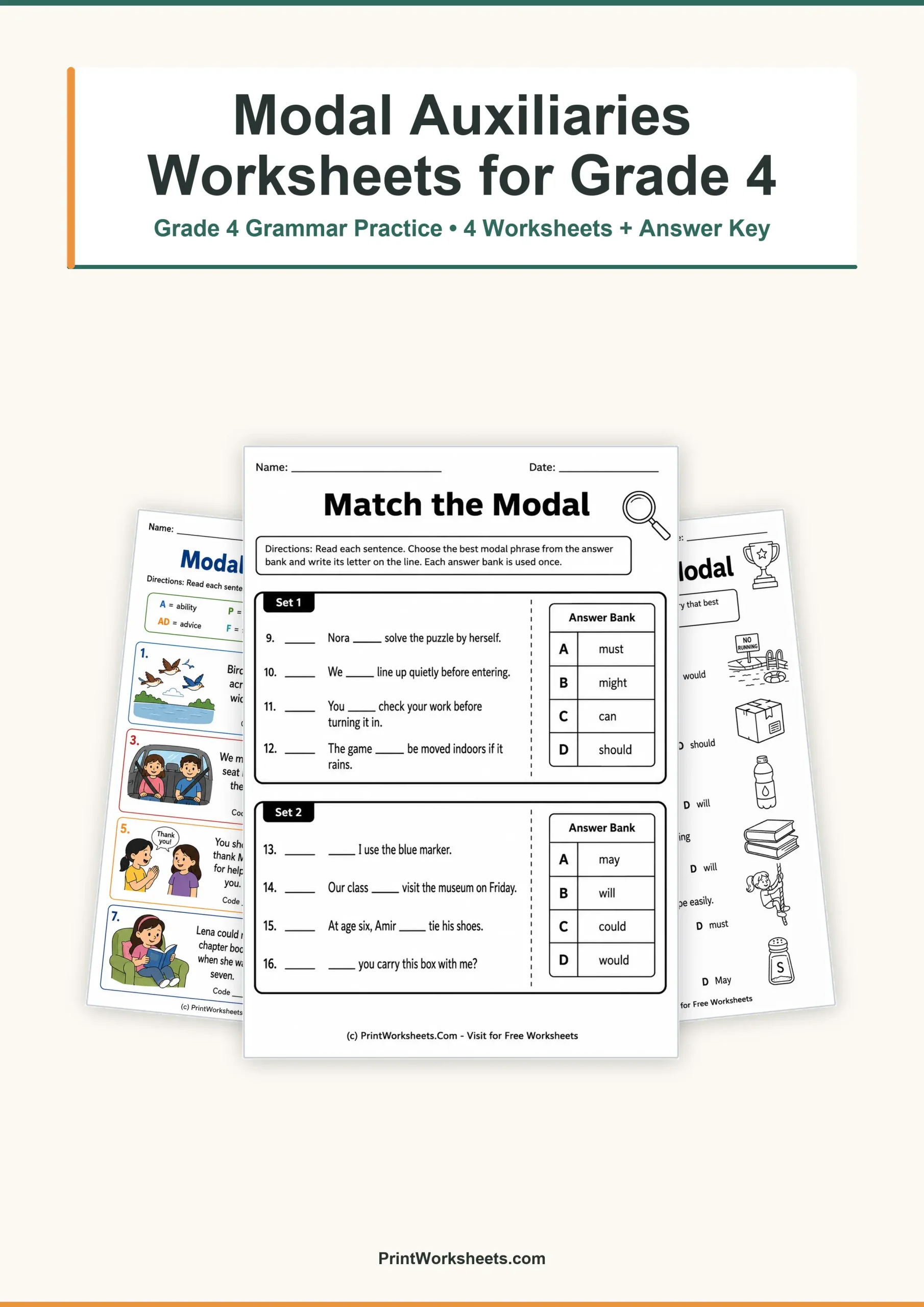
These modal auxiliaries worksheets give fourth-grade students focused practice with can, may, must, might, should, will, could, and would. Rather than treating modal verbs as a list to memorize, the set helps children connect each word to the meaning it adds to a sentence. Students work with ability, permission, necessity, possibility, advice, future intention, past ability, and polite requests before using the same ideas in increasingly independent tasks.
Modal Auxiliaries Worksheets for Meaning and Context
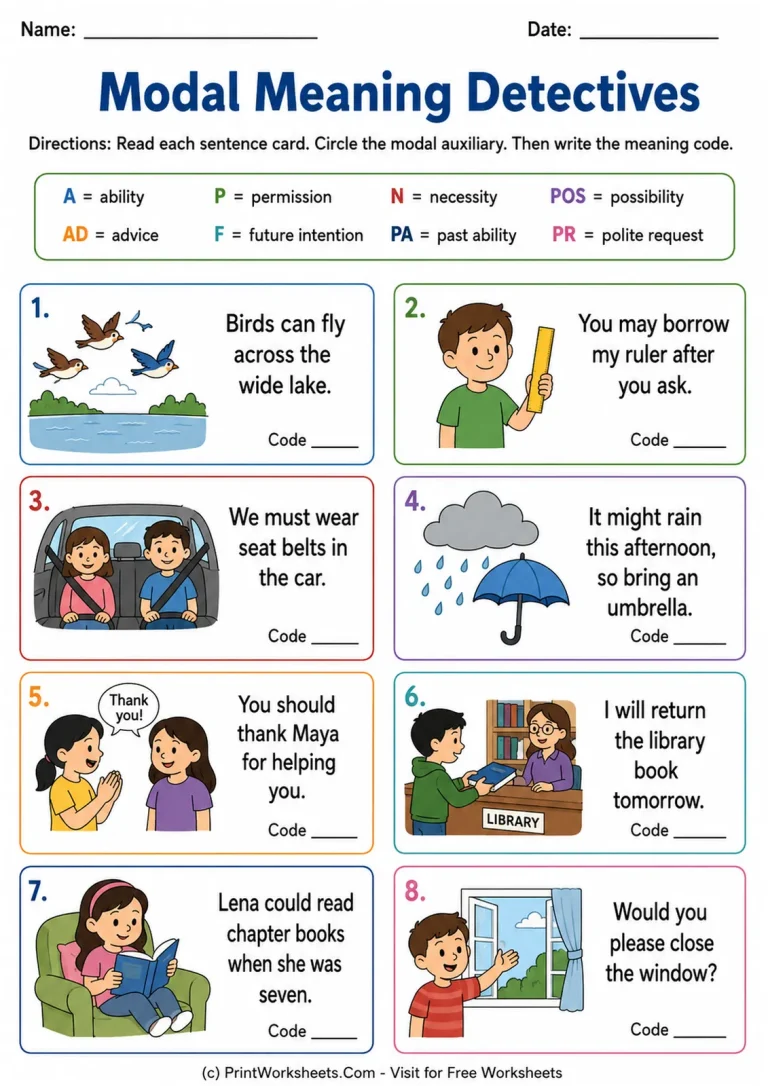
The first worksheet, Modal Meaning Detectives, starts with meaning recognition. Students read eight sentences, identify the modal auxiliary in each one, and assign the correct meaning code. Each target modal appears in a clear context, so learners can compare what the helping verb is doing rather than simply locating it. For example, one sentence may show ability with can, while another uses must for necessity or might for possibility. The page also distinguishes past ability with could and polite requests with would.
This meaning-first approach is useful because many modal auxiliaries can appear in sentences with similar structures while expressing very different ideas. Students need to notice whether the speaker is giving permission, offering advice, describing something possible, or stating something required. That attention to meaning prepares them for the more contextual activities that follow.
Choose the Modal That Fits the Sentence
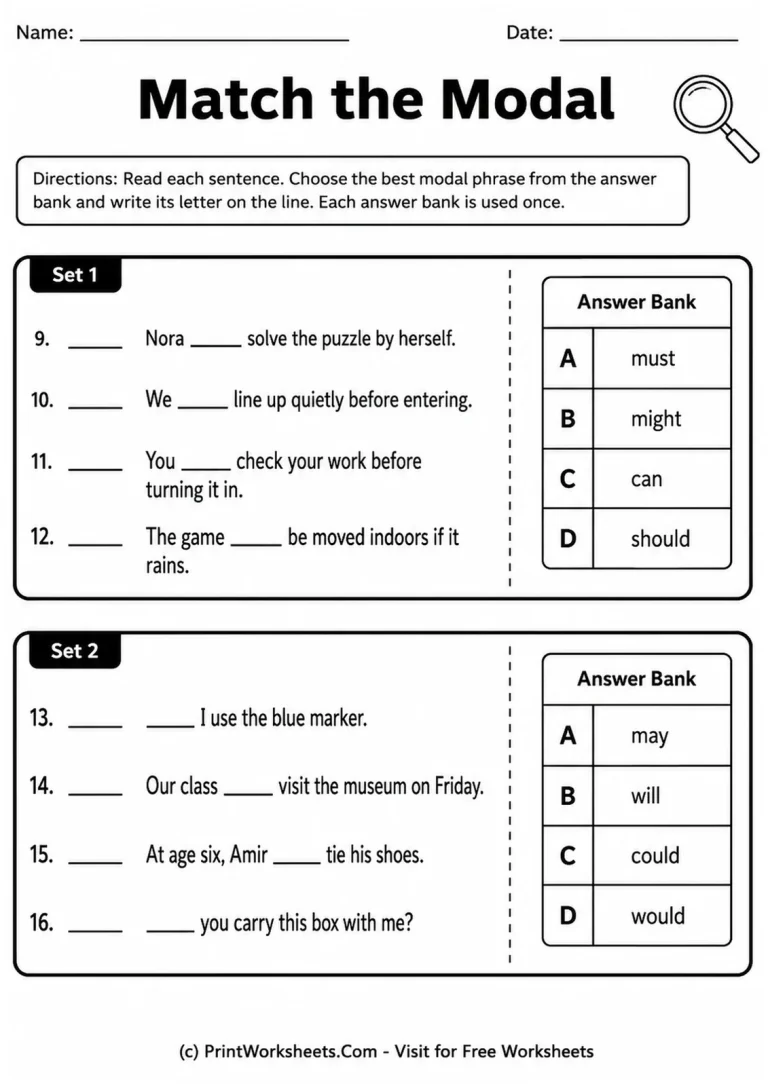
The second page, Match the Modal, moves from identifying a modal to selecting one. It includes two separate answer banks. In the first set, students choose among must, might, can, and should. In the second, they work with may, will, could, and would. Eight sentence-completion items require students to use context clues to determine which modal makes the sentence logical. They also record the letter of their selected answer, giving teachers and parents a quick way to check responses.
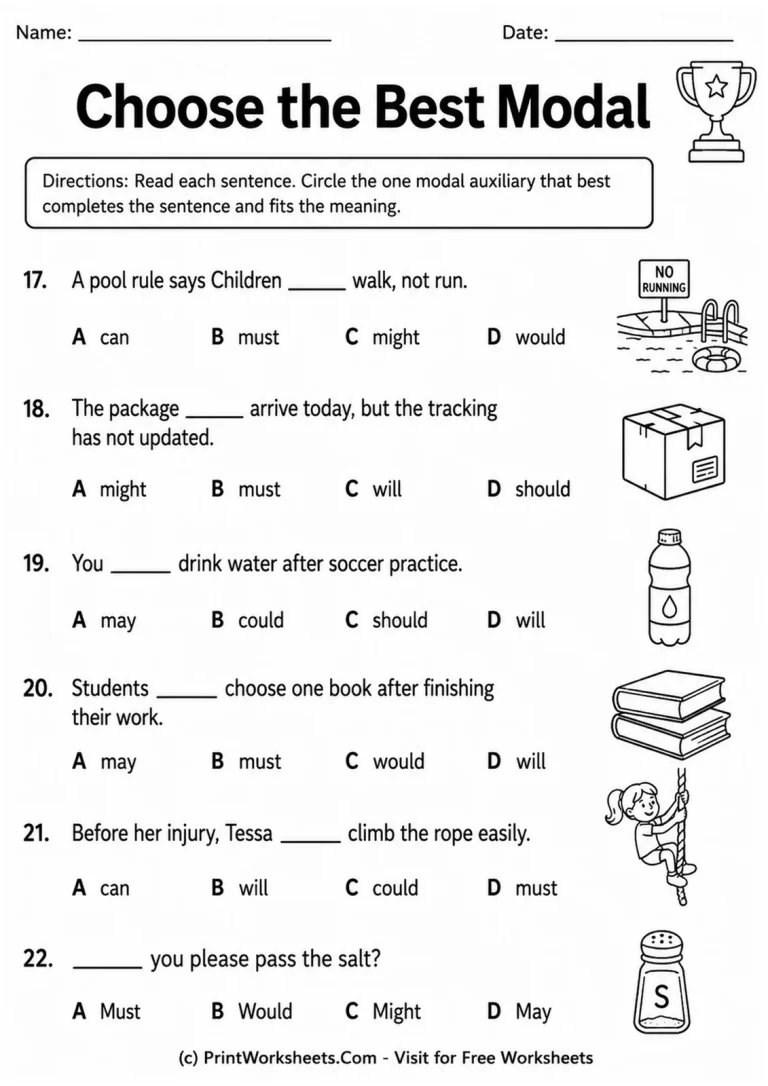
The third worksheet, Choose the Best Modal, adds multiple-choice practice with familiar situations. Students decide which helping verb best completes sentences about rules, a package delivery, drinking water after exercise, choosing a book after finishing work, a person’s ability before an injury, and making a polite request. These examples make the grammar concrete because the correct answer depends on what the sentence is meant to communicate.
Practice Ability, Permission, Advice, Rules, and Possibility
Across the first three pages, students repeatedly compare related but different modal meanings. They see that can may express present ability, while could can describe an ability in the past. They practice may in a permission context, should for advice, must for necessity, and might for possibility. They also encounter will for future intention and would in a polite request.
One especially useful example asks students to recognize past ability in the sentence about Tessa being able to climb a rope easily before an injury. Another uses the situation of choosing a book after completing work to practice permission. These everyday contexts help students connect the grammar term to a purpose they can recognize in real communication.
Use Modal Helpers in Complete Sentences
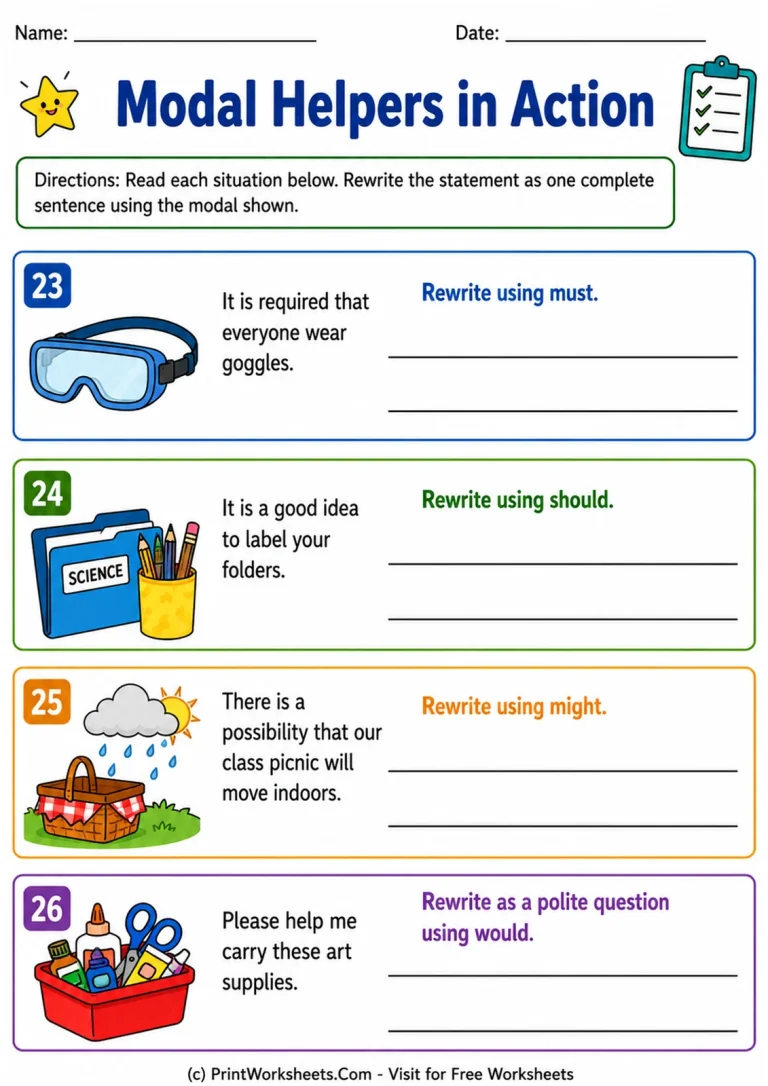
The fourth student page, Modal Helpers in Action, shifts from selecting answers to producing language. Students rewrite four situations as complete sentences while using a specified modal auxiliary. They use must to express an obligation, should to give advice, might to show possibility, and would to form a polite question. Because the target modal is provided, students can concentrate on expressing the required meaning clearly and constructing a complete sentence.
This final step makes the set useful for more than recognition practice. A student who can choose the correct answer from a list may still need support applying the same grammar independently. The rewriting tasks provide that bridge by asking learners to turn a meaning prompt into their own sentence.
How Teachers and Families Can Use This Grade 4 Set
The four worksheets can be completed in sequence as a short modal-auxiliary unit or used separately for review, homework, centers, intervention, or extra grammar practice. The progression moves from identifying meaning to selecting a word and then creating complete sentences, making it easy to see where a learner needs more support.
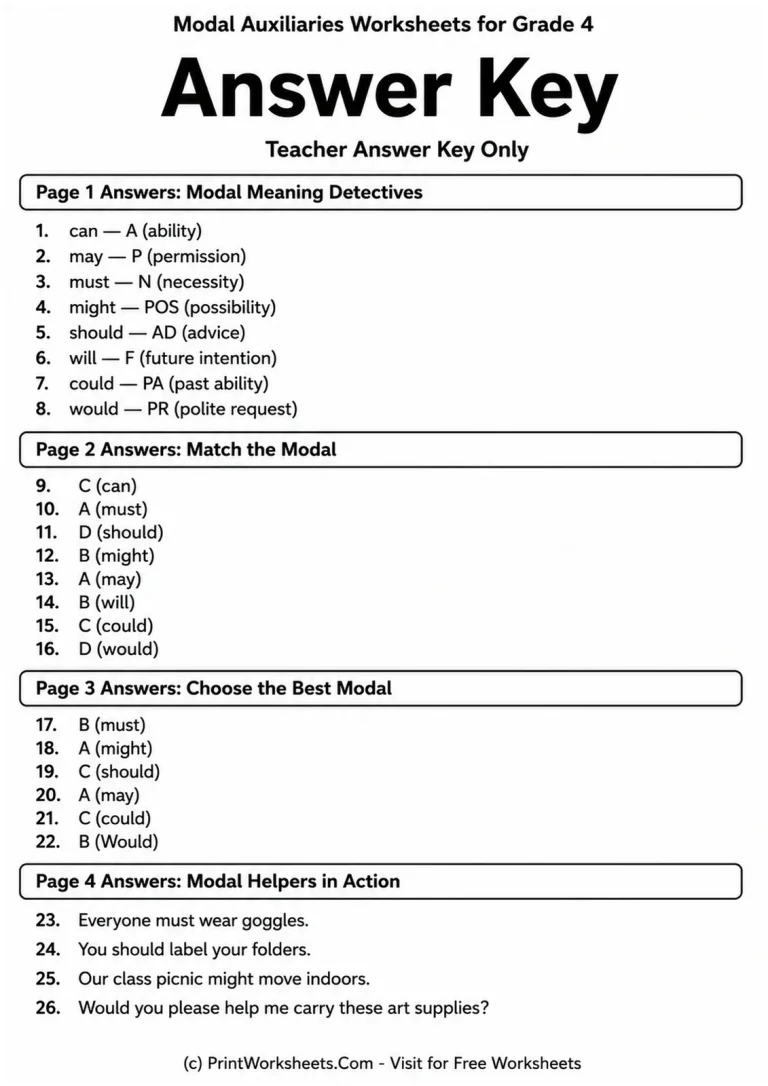
A teacher answer key covers the numbered items from all four student pages. It includes the modal words and meaning codes for the first worksheet, correct selections for the completion and multiple-choice activities, and sample complete-sentence responses for the rewriting page. This makes the printable set practical for classroom checking, independent work, or home practice while keeping the focus on how modal auxiliaries change the meaning of a sentence.