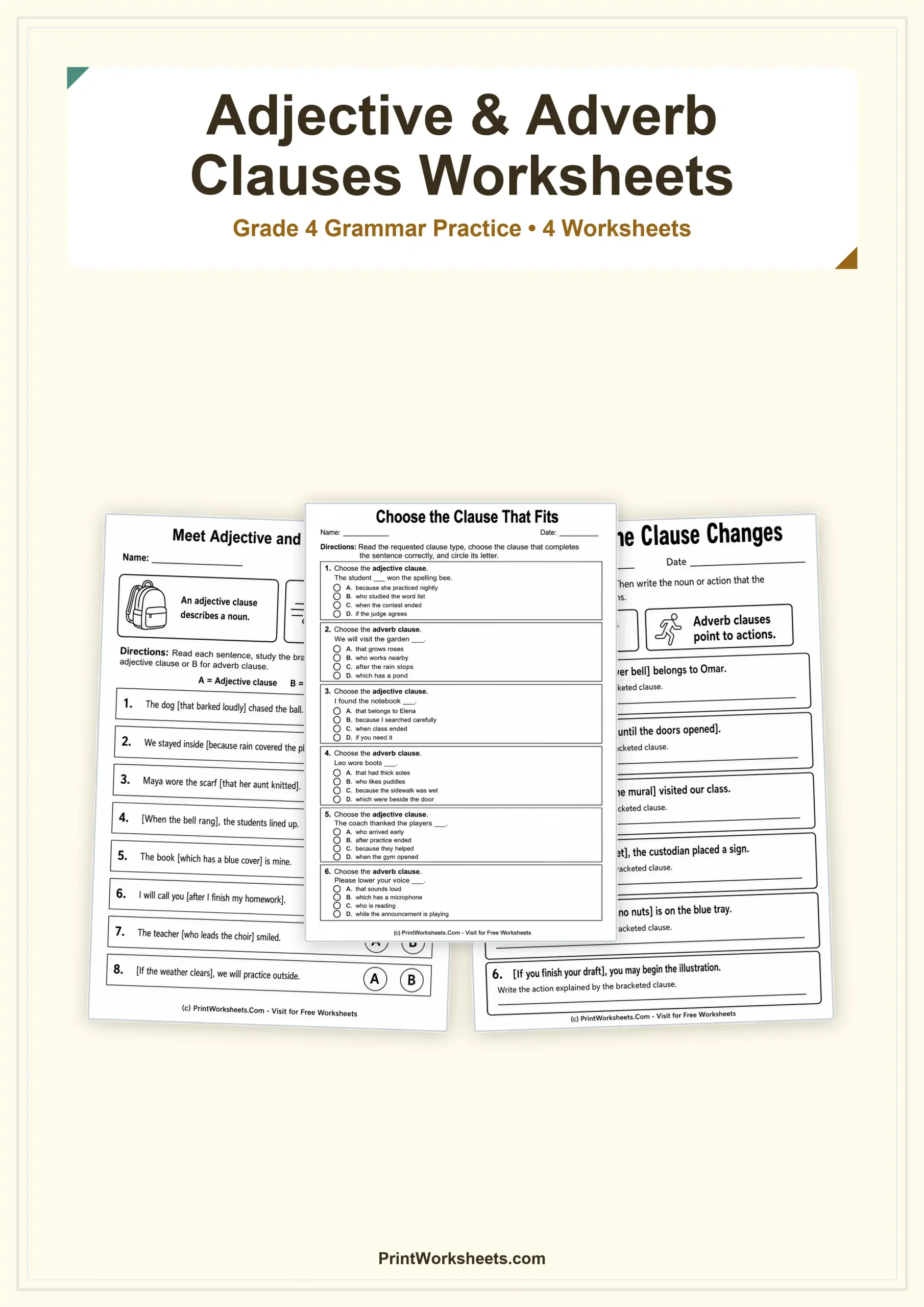
These adjective and adverb clauses worksheets give fourth grade students a structured first look at two clause types that do different jobs inside a sentence. Instead of asking students to memorize definitions in isolation, the four printable activities move from noticing the purpose of a clause to using that understanding in complete sentences. Students work with familiar connectors such as who, that, which, because, when, after, while, until, and if while learning whether a clause describes a noun or explains when, why, or under what condition an action happens.
Adjective and Adverb Clauses Practice for Grade 4
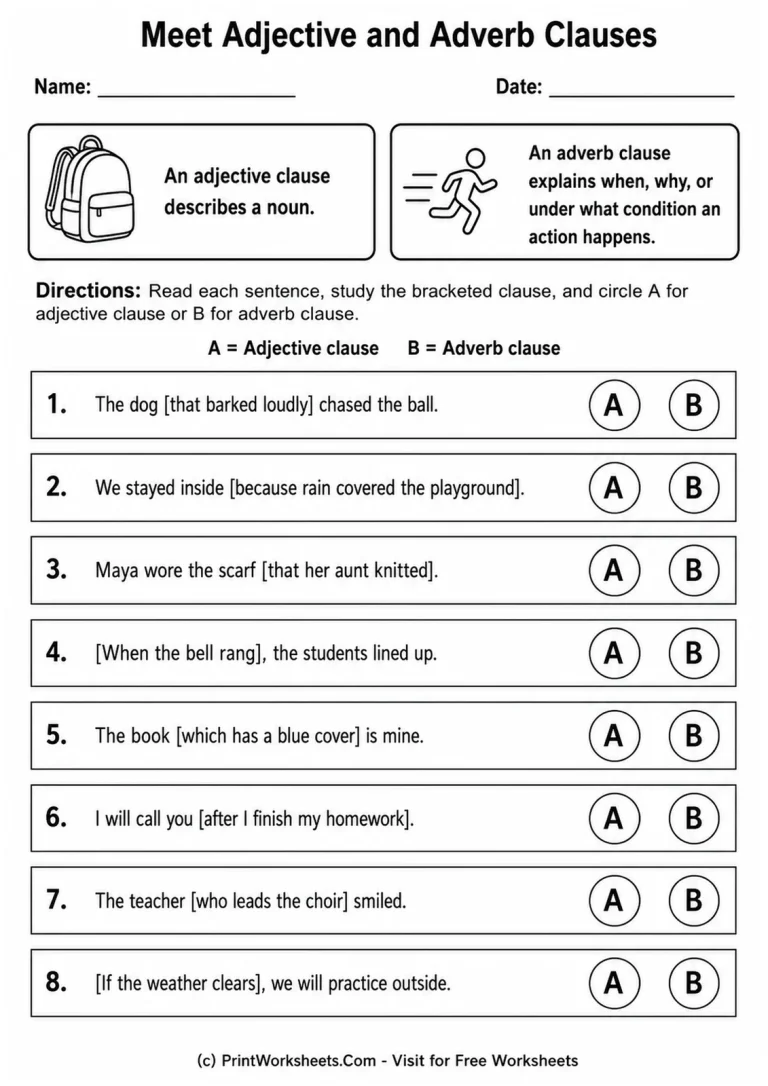
The first worksheet, Meet Adjective and Adverb Clauses, begins with a direct comparison between the two clause types. Students read eight sentences with a clause shown in brackets and decide whether the bracketed words form an adjective clause or an adverb clause. The page keeps the distinction visible: adjective clauses point to nouns, while adverb clauses give information about an action. Examples using that, which, and who help students notice common adjective-clause patterns, while because, when, after, if, until, and while introduce several ways an adverb clause can express time, reason, or condition.
Choose a Clause That Completes the Meaning
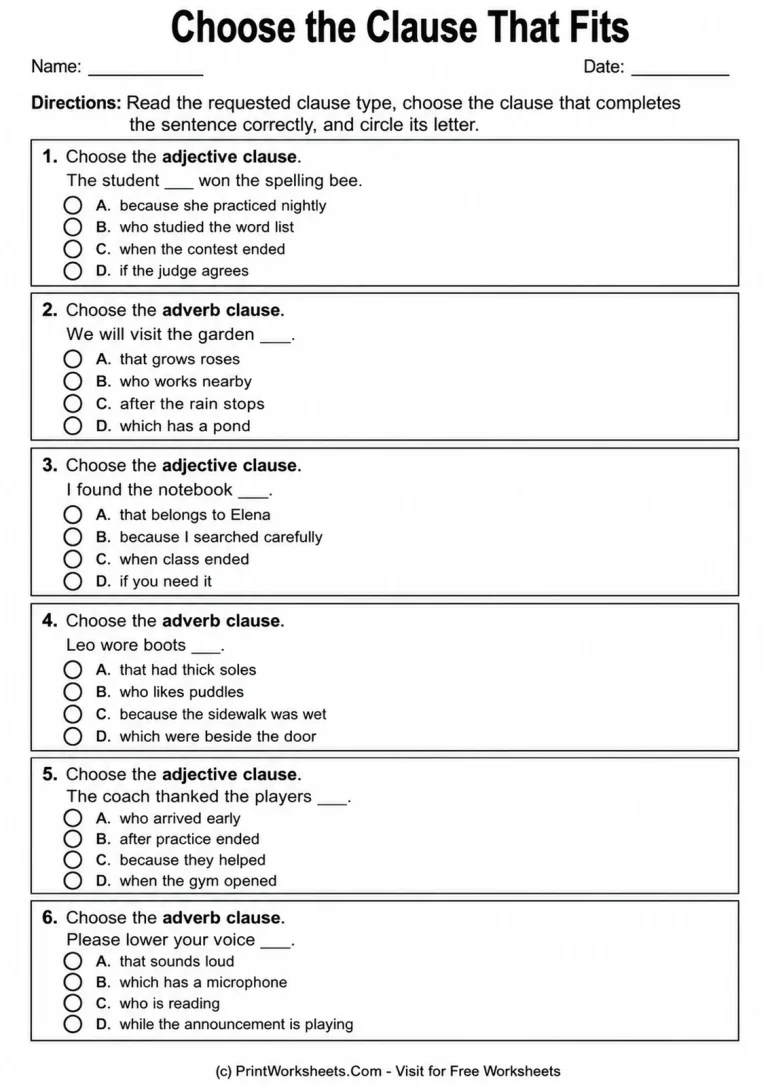
The second worksheet changes the task from classification to selection. In Choose the Clause That Fits, students complete six sentences by choosing one clause from four options. Each item tells the student whether an adjective clause or an adverb clause is needed. This format encourages students to use both grammar and meaning rather than relying on one joining word alone. A choice may fit the vocabulary of the sentence but still perform the wrong grammatical job, so students must consider what the sentence needs the clause to describe or explain.
Find What Each Clause Changes
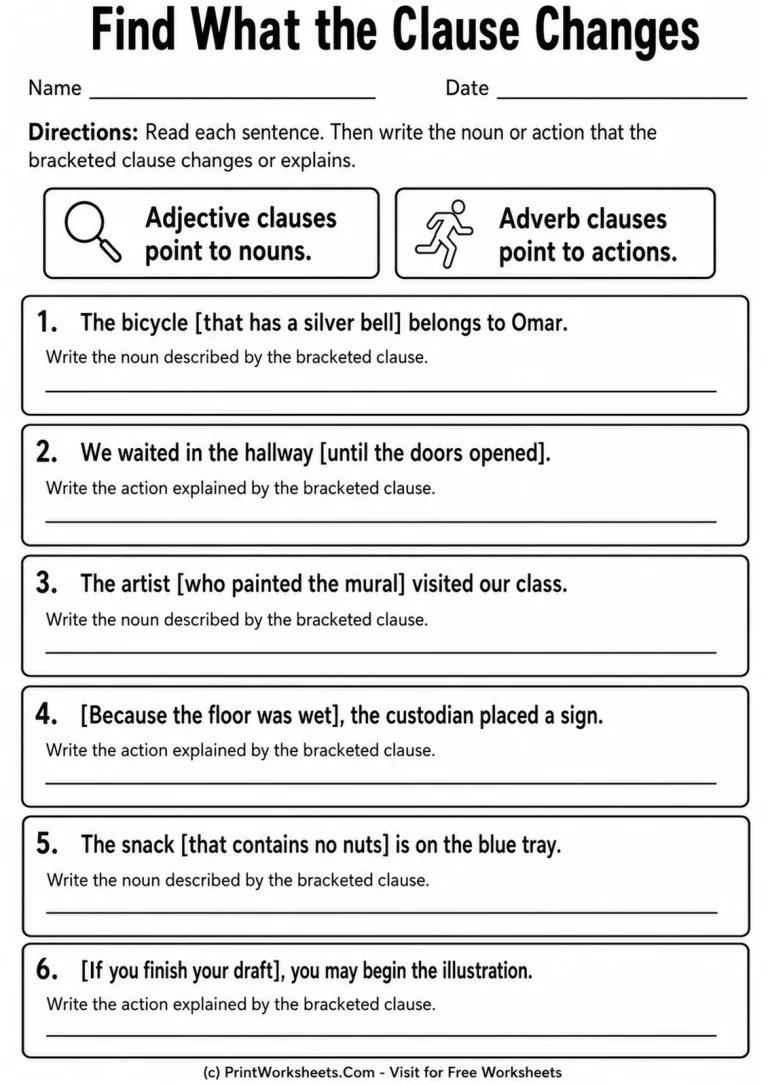
The third page focuses on function. Students study six bracketed clauses and write the noun described by an adjective clause or the action explained by an adverb clause. This is an important bridge between simply naming a clause type and understanding why that clause belongs in the sentence. A student who can connect a clause to the noun or action it affects is better prepared to edit, expand, and combine sentences accurately. The short reminders at the top of the page reinforce this relationship without turning the activity into a definition-only exercise.
Move from Recognition to Sentence Building
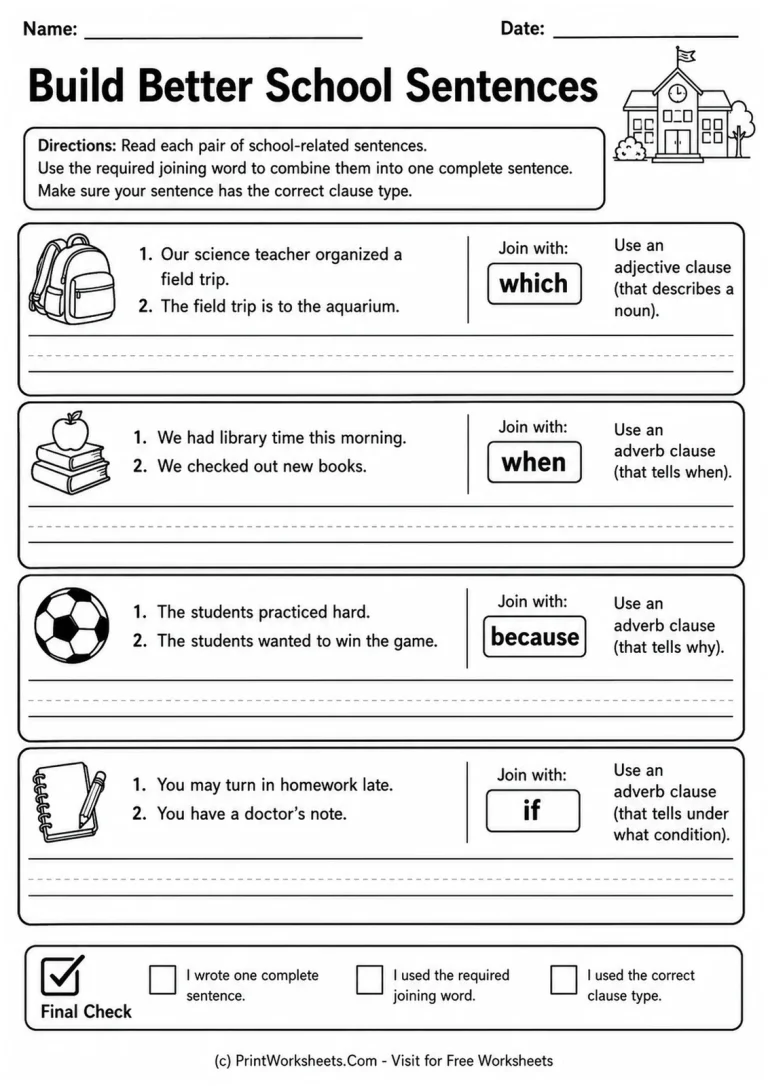
The final student page, Build Better School Sentences, asks learners to put the skill into practice. Students receive pairs of short school-themed sentences and combine each pair into one complete sentence using a required joining word. The prompts use which, when, because, and if and specify whether the new sentence should contain an adjective clause or an adverb clause. Because students must preserve the original meaning while producing the requested clause type, the activity adds a writing component to the earlier identification work.
A simple self-check at the end of the page asks students to confirm that they wrote a complete sentence, used the required joining word, and created the correct kind of clause. This gives learners a practical editing routine they can reuse during independent writing.
A Gradual Introduction to Clause Skills
The sequence of these worksheets makes them useful for a short grammar lesson, guided practice, independent work, or review. Page 1 establishes the basic contrast between adjective and adverb clauses. Page 2 asks students to choose a clause that fits a sentence. Page 3 deepens understanding by connecting each clause to the word or action it changes. Page 4 then moves into sentence construction.
This progression can help teachers and parents see where a learner’s understanding becomes less secure. A student who can classify clauses but struggles to identify the noun or action being changed may need more work with clause function. A student who succeeds on the first three pages but finds sentence combining difficult may understand the concept and simply need additional practice applying it in writing.
Use the pages together as a compact introduction or select individual activities to reinforce a specific skill. By the end of the set, students have practiced recognizing, interpreting, choosing, and creating adjective and adverb clauses in a way that connects grammar terminology with real sentence meaning.