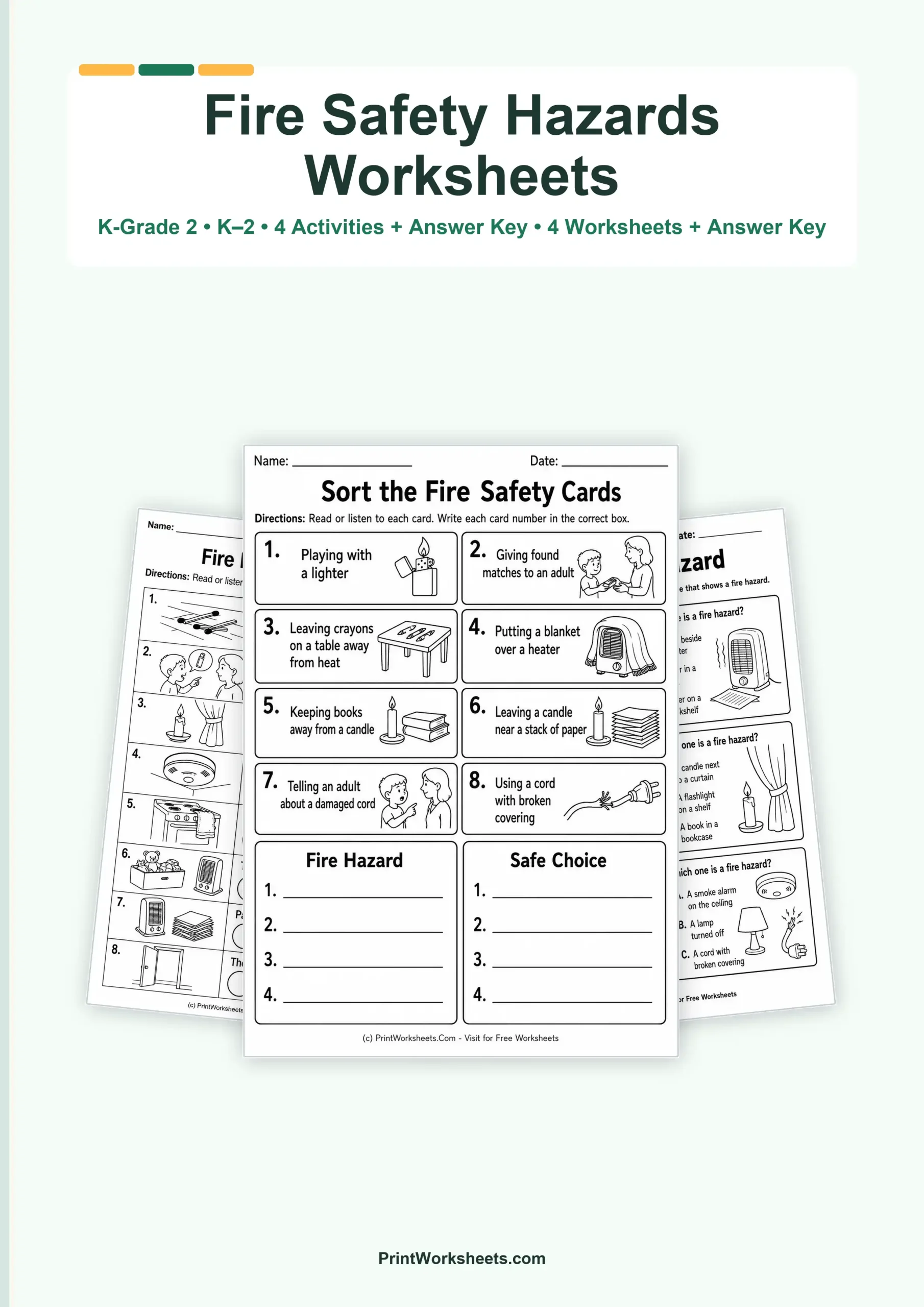
Sorting safe choices from dangerous ones gives young learners a concrete way to think about everyday fire safety. These fire safety hazards worksheets for Kindergarten through Grade 2 use pictures, short sentences, category sorting, multiple-choice questions, and simple situations to help children decide what is safe and what could cause a fire. The printable set includes four student worksheets plus an answer key, making it useful for classroom lessons, safety units, morning work, small-group practice, or learning at home.
Fire Safety Hazards Worksheets for Young Learners
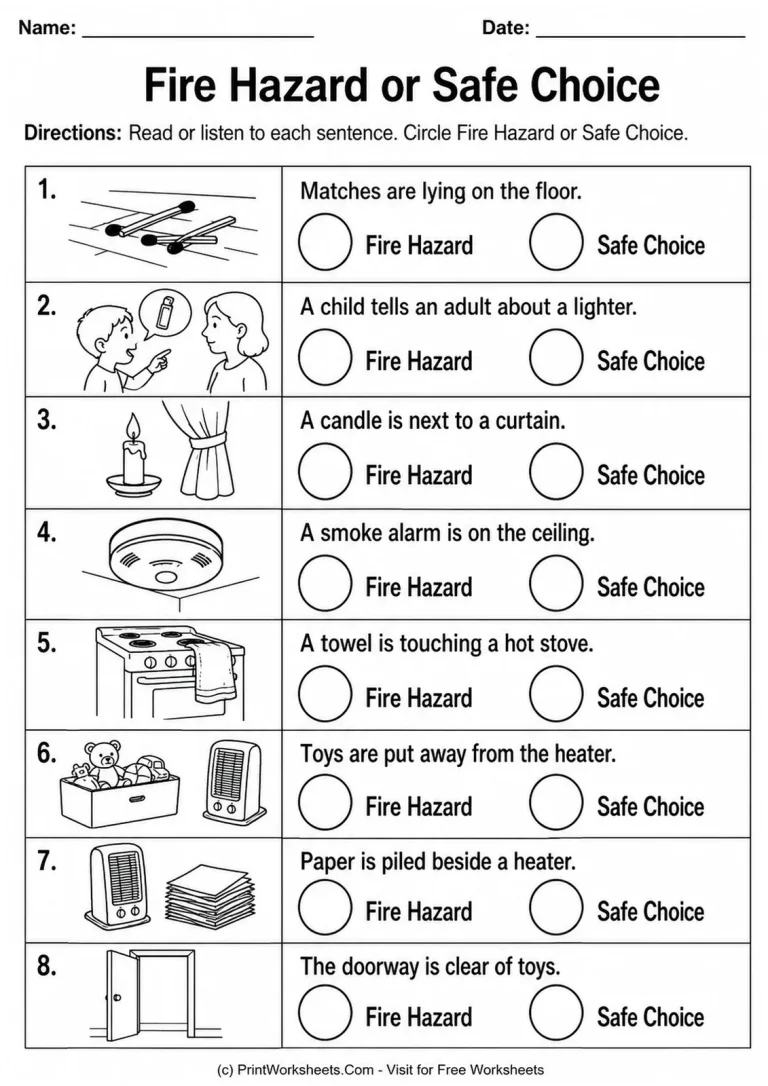
The first worksheet introduces the core idea with eight illustrated situations. Children read or listen to each sentence and circle either Fire Hazard or Safe Choice. The examples are drawn from familiar home settings: matches lying on the floor, a child telling an adult about a lighter, a candle beside a curtain, a smoke alarm on the ceiling, a towel touching a hot stove, toys stored away from a heater, paper piled beside a heater, and a doorway kept clear of toys.
This format works well for beginning readers because the task is consistent from one item to the next. Students do not need to produce long written answers. Instead, they focus on recognizing the important safety idea in each picture and sentence.
Sort Fire Hazards and Safe Choices
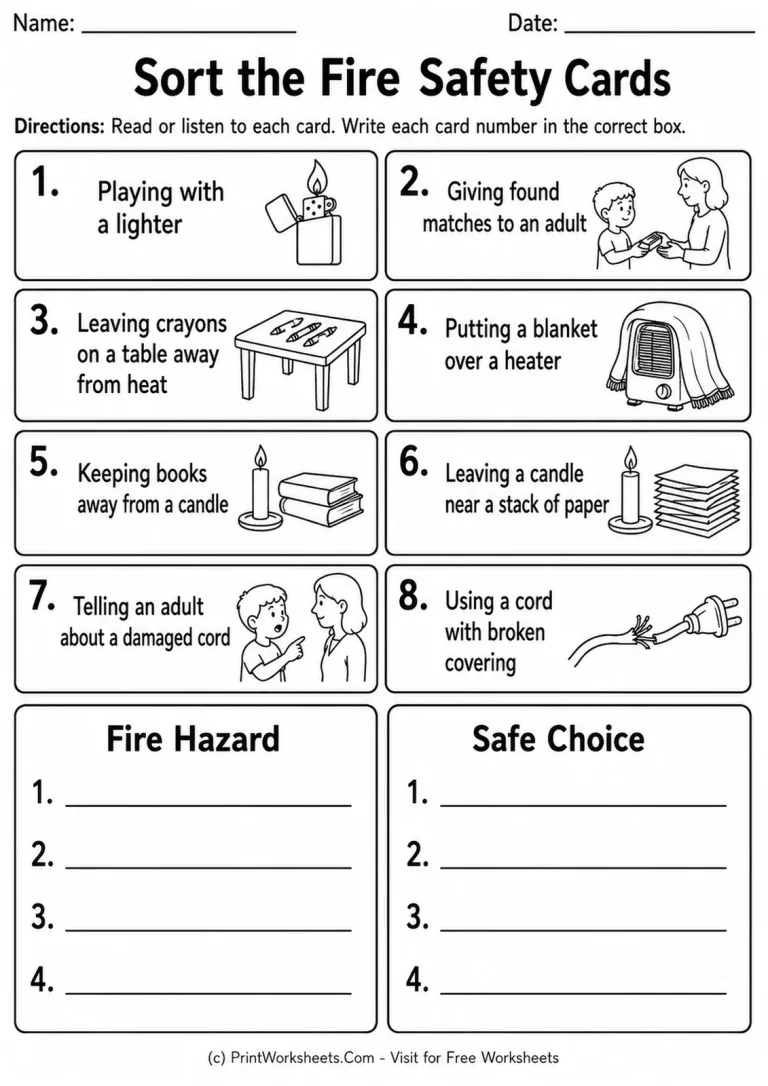
The second worksheet turns the same concept into a sorting activity. Eight numbered fire safety cards show actions such as playing with a lighter, giving found matches to an adult, keeping books away from a candle, covering a heater with a blanket, reporting a damaged electrical cord, and using a cord with broken covering. Students write each card number in either the Fire Hazard box or the Safe Choice box.
This page adds a useful classification step. Instead of answering one item at a time, children must compare several situations and organize them into two groups. It can also support partner discussion because students can explain why a card belongs in one category rather than the other.
Build Hazard-Recognition Skills
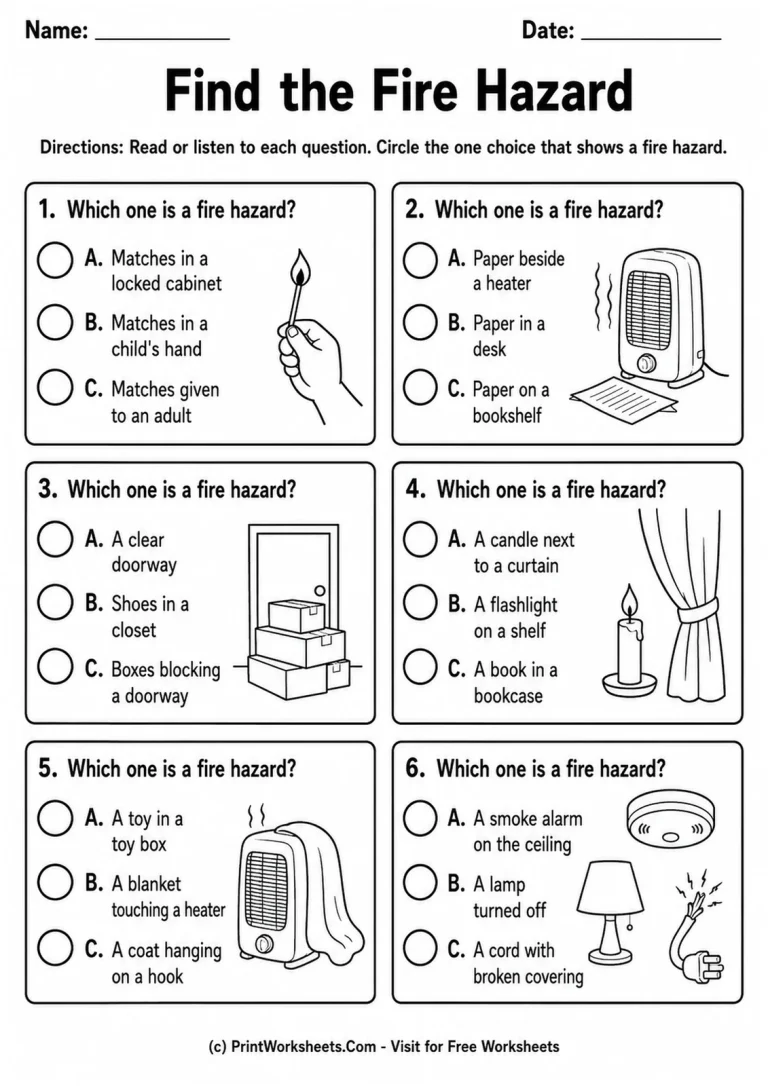
The third worksheet asks students to find the one fire hazard in each group of three choices. Examples include matches in a child’s hand, paper beside a heater, boxes blocking a doorway, a candle next to a curtain, a blanket touching a heater, and a cord with broken covering. Safe distractors such as matches given to an adult, a clear doorway, a flashlight on a shelf, or a smoke alarm on the ceiling help students practice distinguishing a true hazard from an ordinary safe condition.
Because every question has one clear correct answer, the page works well for independent practice after a teacher or parent has introduced basic fire-safety vocabulary.
Move From Identifying a Hazard to Choosing a Safe Response
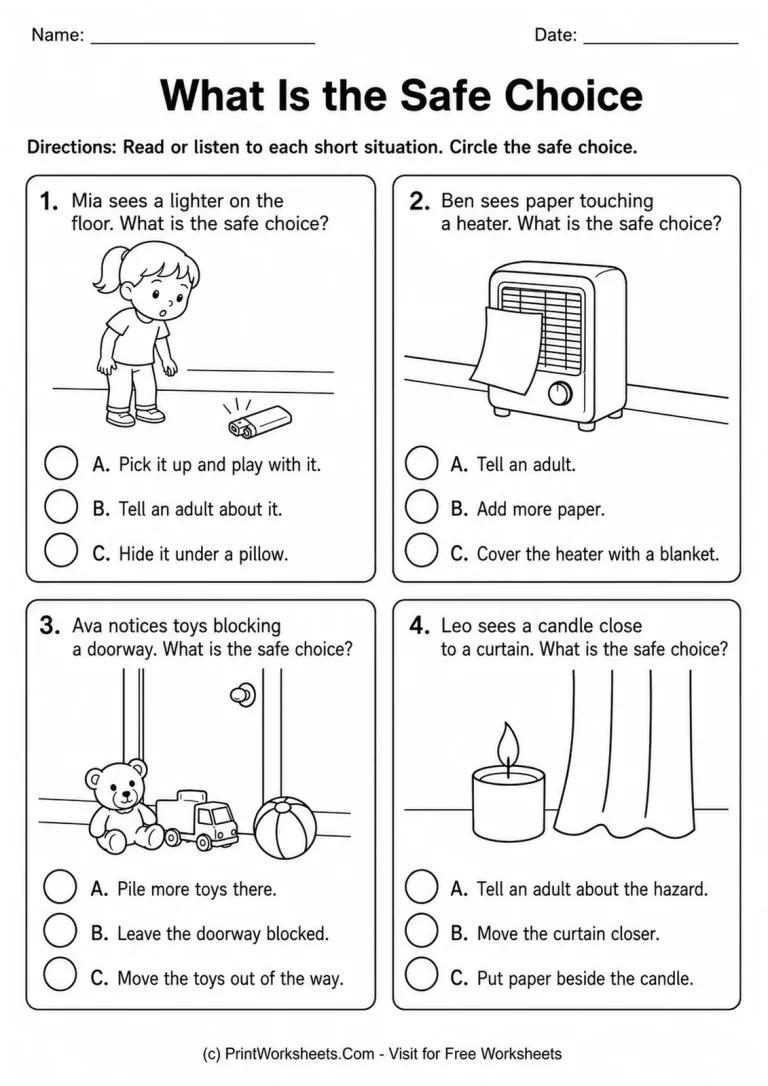
The fourth worksheet shifts from recognition to action. Four short illustrated situations ask what a child should do when seeing a lighter on the floor, paper touching a heater, toys blocking a doorway, or a candle close to a curtain. Students choose among three responses, including telling an adult about the danger or moving toys out of the way when appropriate.
This progression is important because fire safety is not only about naming unsafe objects. Children also need practice deciding what a safe response looks like. The scenarios keep the language short and concrete while reinforcing that young children should involve an adult when they notice dangerous items such as lighters, heaters, or open flames.
Ways to Use the Printable Set
Teachers can use the pages in sequence as a short fire-safety mini-unit: begin with hazard-versus-safe-choice identification, continue with the card sort, check understanding with multiple-choice hazard questions, and finish with scenario-based safe decisions. The same pages can also be used separately for centers, early-finish work, review during Fire Prevention Week, or home safety discussions.
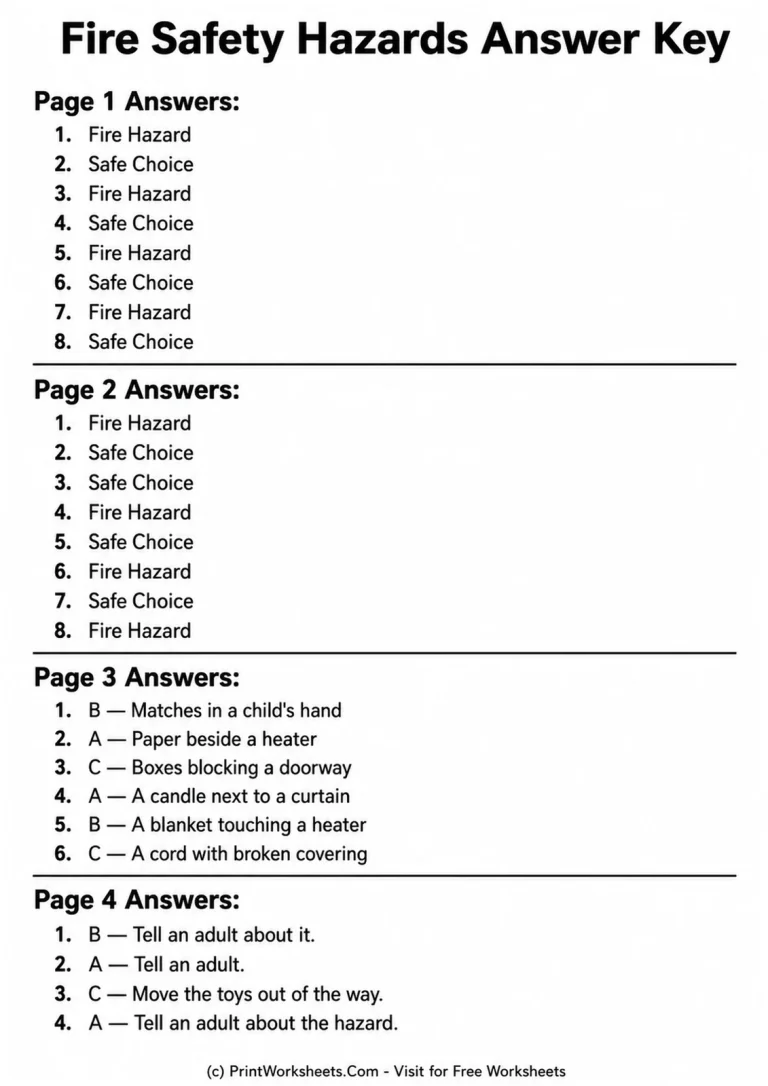
For Kindergarten students, an adult can read the directions and sentences aloud while children use the pictures to support comprehension. Grade 1 and Grade 2 students can complete more of the reading independently and explain the reason behind each choice. The included answer key makes checking all four activities quick and consistent.
Practice Everyday Fire Safety With Clear Examples
Across the set, children repeatedly encounter practical ideas they can recognize in real life: keep matches and lighters away from children, keep paper, blankets, towels, books, and toys away from heat or flames, keep doorways clear, notice damaged cords, and recognize smoke alarms as an important safety feature. By seeing these ideas in several different activity formats, students get repeated practice without simply completing the same worksheet four times.
Use these printable pages to help young learners notice hazards, sort safe and unsafe choices, and choose safer actions in common home situations.