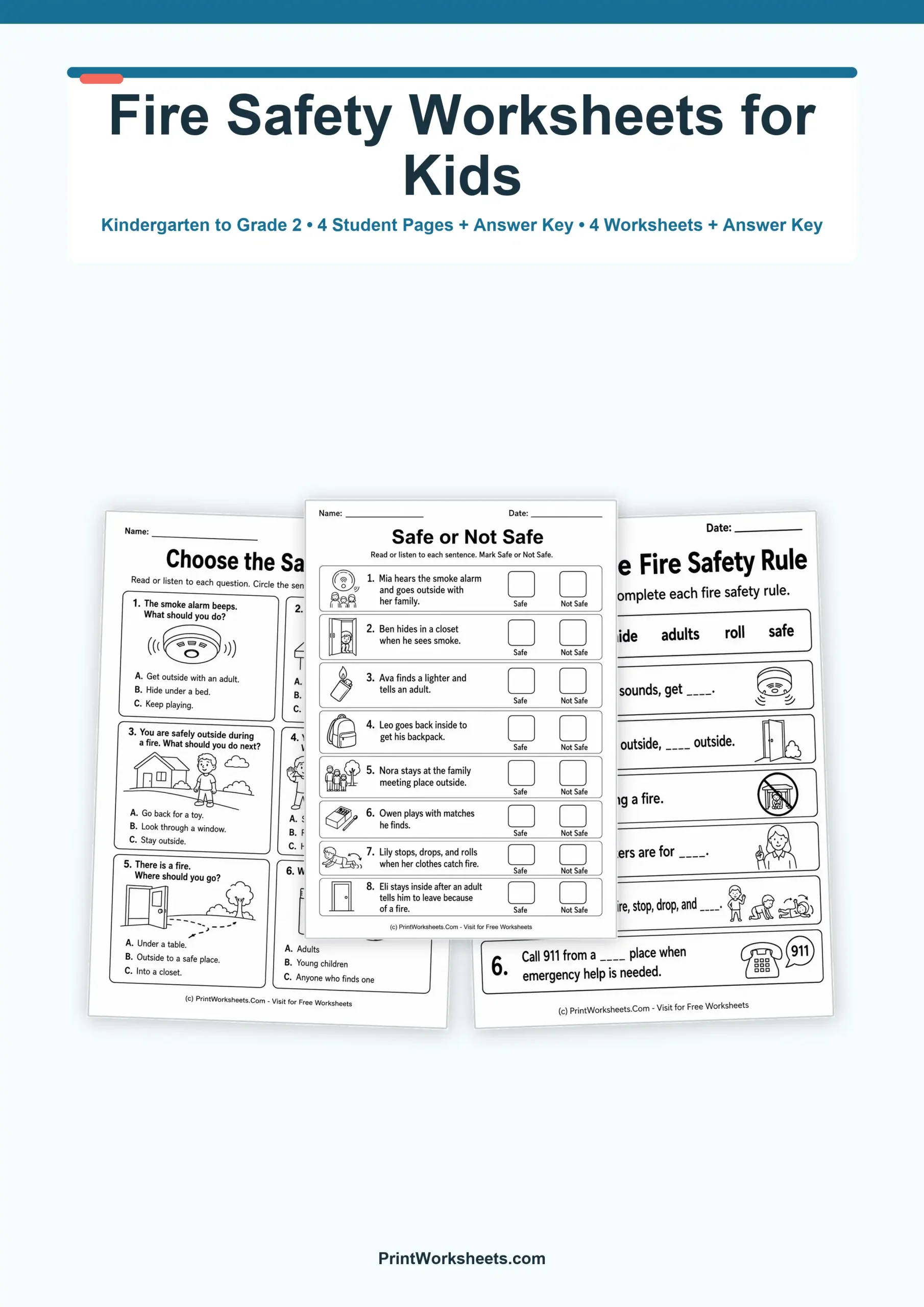
A smoke alarm sounds, a child finds matches, or a favorite toy is still inside the house: these fire safety worksheets turn familiar situations into clear choices young learners can understand. Designed for kindergarten through Grade 2, the set uses simple language, supportive black-and-white illustrations, and repeated safety messages so children can practice what to do before they ever face an emergency. Across four student pages, learners identify safe actions, sort behaviors as safe or not safe, complete key rules with a word bank, and apply those rules to short scenarios.
Fire safety worksheets built around real choices
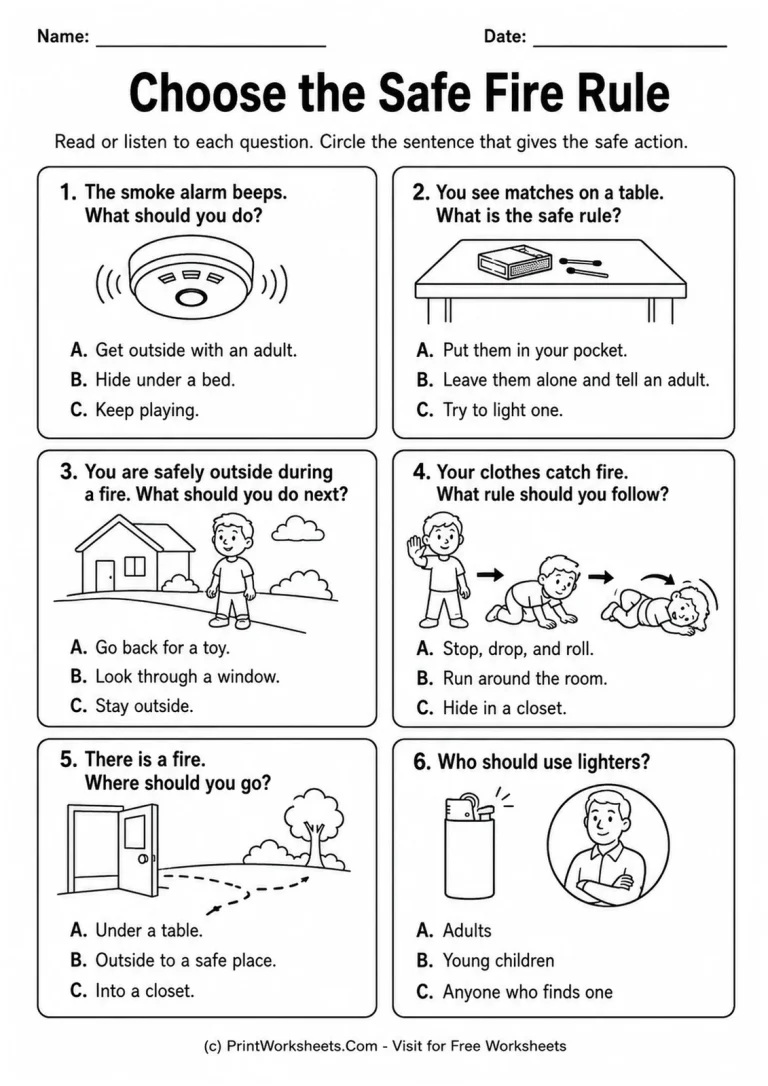
The first worksheet, “Choose the Safe Fire Rule,” gives six multiple-choice questions about everyday fire-safety situations. Children decide what to do when a smoke alarm beeps, how to respond to matches left on a table, why they should stay outside once they are safely out, and what action to take if clothing catches fire. The page also reinforces that a fire means going outside to a safe place and that lighters are for adults. Each question includes a simple picture, helping early readers connect the words with the situation.
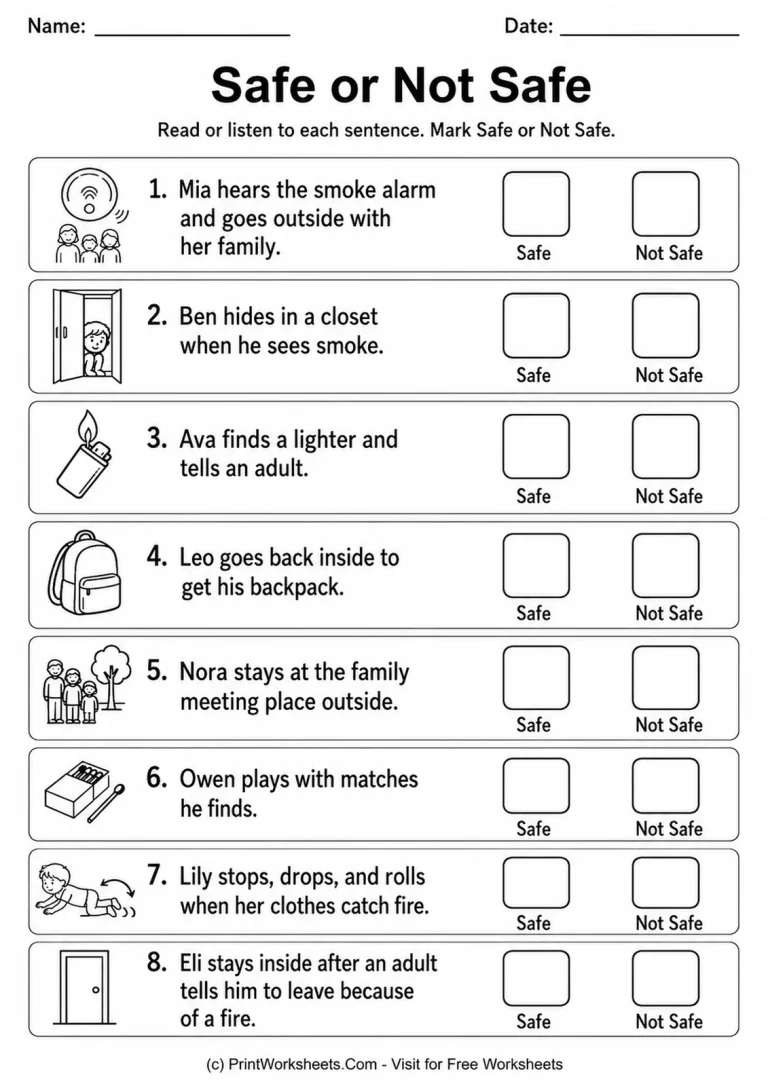
The second page changes the task without changing the core message. In “Safe or Not Safe,” students read or listen to eight short statements and mark each behavior as safe or not safe. Examples include leaving with family when the smoke alarm sounds, hiding in a closet when smoke is present, telling an adult about a lighter, returning inside for a backpack, waiting at a family meeting place, playing with matches, using stop-drop-and-roll, and refusing to leave when an adult says there is a fire. This format makes it easy to check whether children can recognize a correct rule even when it is stated as part of a short story.
From recognition to recall and application
Complete the core fire safety rules
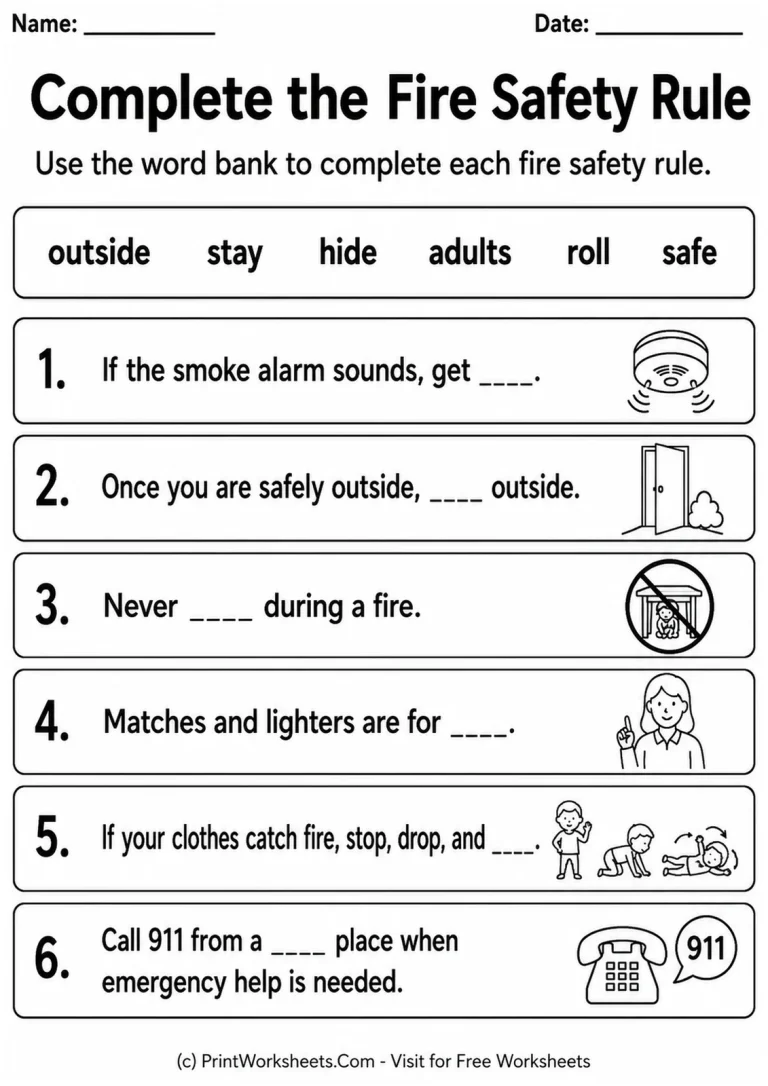
On the third worksheet, students use the word bank outside, stay, hide, adults, roll, and safe to complete six sentences. The missing words cover the same practical ideas in a more language-focused format: get outside when the smoke alarm sounds, stay outside once safe, never hide during a fire, leave matches and lighters to adults, stop-drop-and-roll if clothes catch fire, and call 911 from a safe place when emergency help is needed. Because every word is used in a meaningful sentence, the page supports both safety vocabulary and early reading comprehension.
Choose the safest action in short scenarios
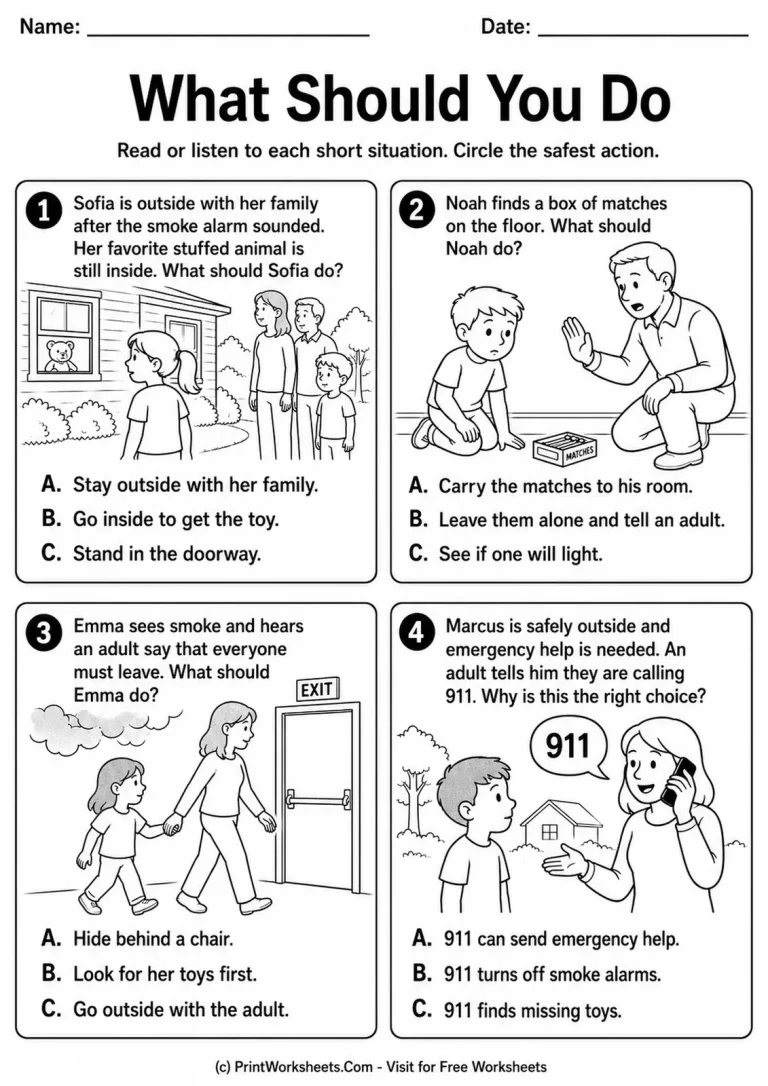
The fourth worksheet asks, “What Should You Do?” and presents four larger situations. One child is already outside but wants a stuffed animal that is still indoors. Another finds a box of matches on the floor. A third sees smoke and hears an adult tell everyone to leave. The final scenario explains that an adult is calling 911 and asks why that is the right choice. Students select the safest action from three options, moving beyond memorized phrases toward practical decision-making.
How teachers and families can use this set
These pages work well as a short fire-safety mini-unit because the activities repeat the same essential rules in different ways. A teacher can begin with the picture-supported multiple-choice page, use the Safe or Not Safe sheet for a quick class discussion, follow with the word-bank activity for independent practice, and finish with the scenario page as a check for understanding. For kindergarten students or developing readers, an adult can read the directions and answer choices aloud while the child focuses on the safety decision.
The repeated ideas are especially useful for reinforcing a few high-priority messages: leave when a smoke alarm sounds, do not hide, do not go back inside for belongings, stay at a safe meeting place, tell an adult about matches or lighters, and use stop-drop-and-roll if clothing catches fire. The 911 example also keeps the emergency-call message tied to being in a safe place and to getting emergency help.
A complete printable fire safety practice set
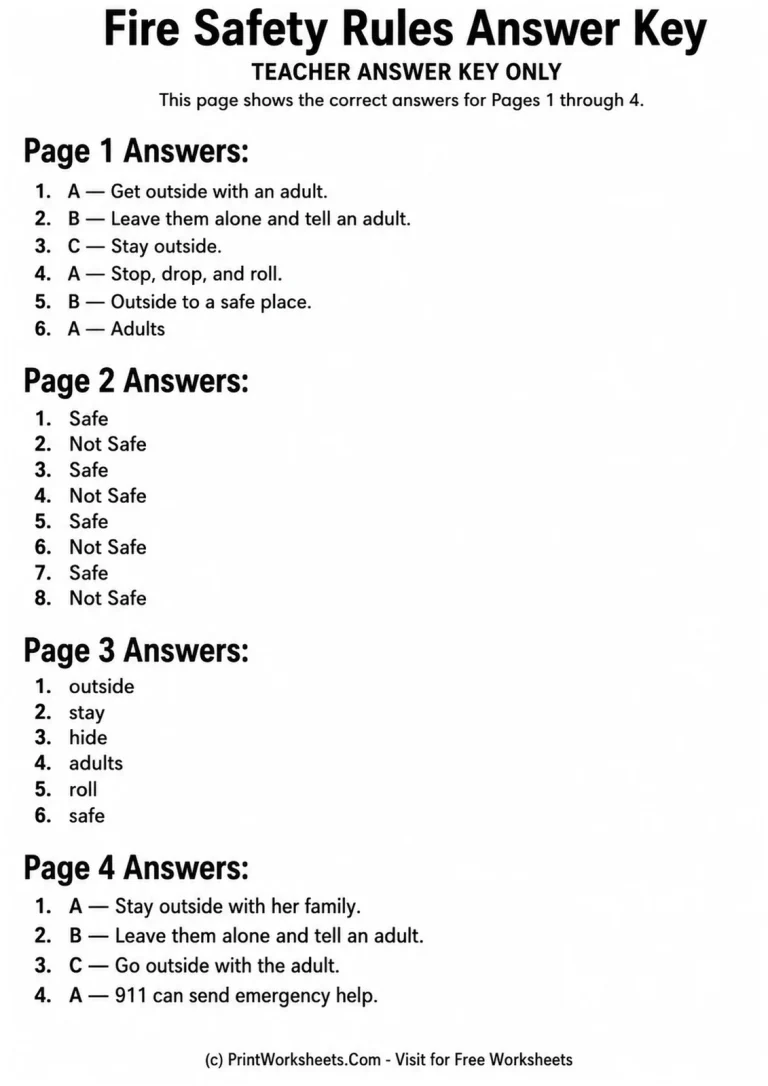
The four student worksheets provide varied practice without requiring children to learn a new activity format on every page. Visual cues support comprehension, while the answer key gives adults a quick way to check all four activities. The set can be used during a classroom safety lesson, sent home for family review, or printed as extra practice after a fire drill or safety discussion. By the end, students have encountered the same important fire-safety rules through choosing, classifying, completing, and applying them.