These Christmas reading comprehension worksheets give second- and third-grade readers four different ways to work with holiday-themed passages instead of repeating the same question format from page to page. Students read about a classroom Christmas tree surprise, several short holiday situations, a school Christmas fair, and a missing gift tag. Across the set, they practice finding details, identifying main ideas, following sequence, using context clues, checking facts, making inferences, and supporting an answer with evidence from the text.
Christmas Reading Comprehension Skills Across Four Activities
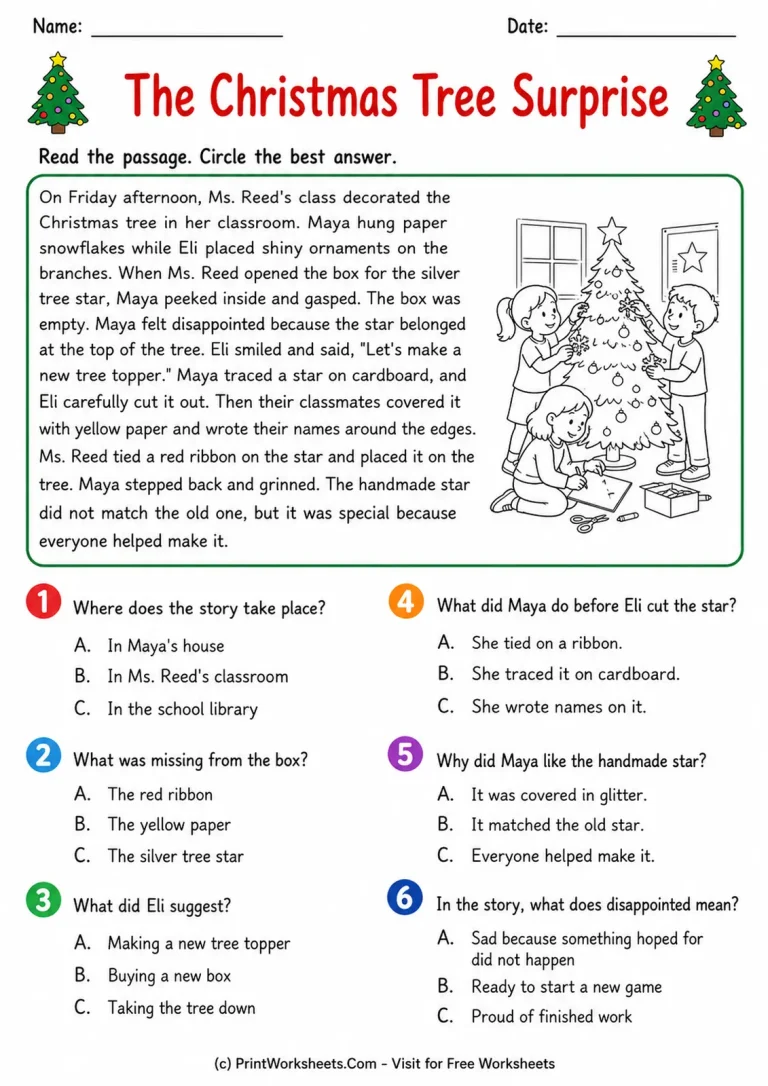
The first worksheet, The Christmas Tree Surprise, begins with a narrative about Ms. Reed’s class decorating a Christmas tree. When the silver tree star is missing, Maya and Eli help the class create a handmade replacement. Six multiple-choice questions ask students to identify the classroom setting, recall what was missing, recognize Eli’s suggestion, place events in order, explain why Maya valued the handmade star, and determine the meaning of disappointed from context. This page works well when students are ready to combine literal comprehension with a simple vocabulary-in-context question.
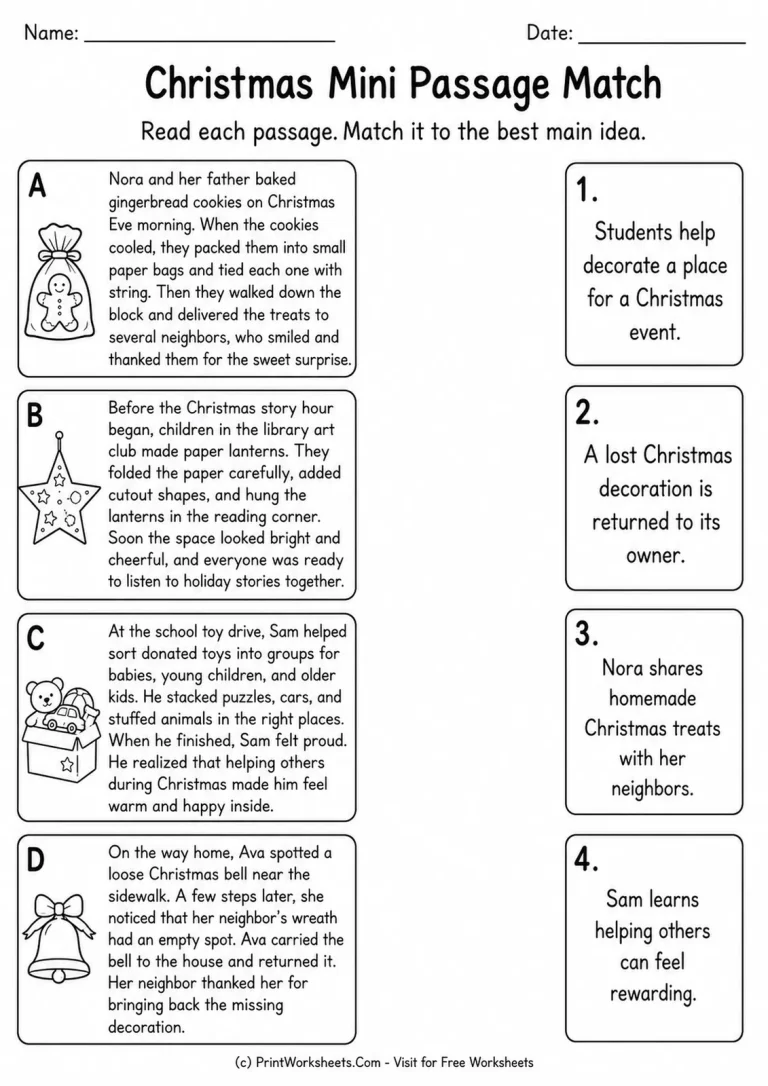
The second activity, Christmas Mini Passage Match, shifts to four compact passages rather than one longer story. Students read about Nora sharing homemade gingerbread cookies with neighbors, children decorating a library reading corner, Sam helping at a toy drive, and Ava returning a lost Christmas bell. They match each passage to the best main idea. Because the details in the passages are intentionally different, readers must think about what each passage is mostly about instead of matching isolated words.
Move From Fact Checking to Written Evidence
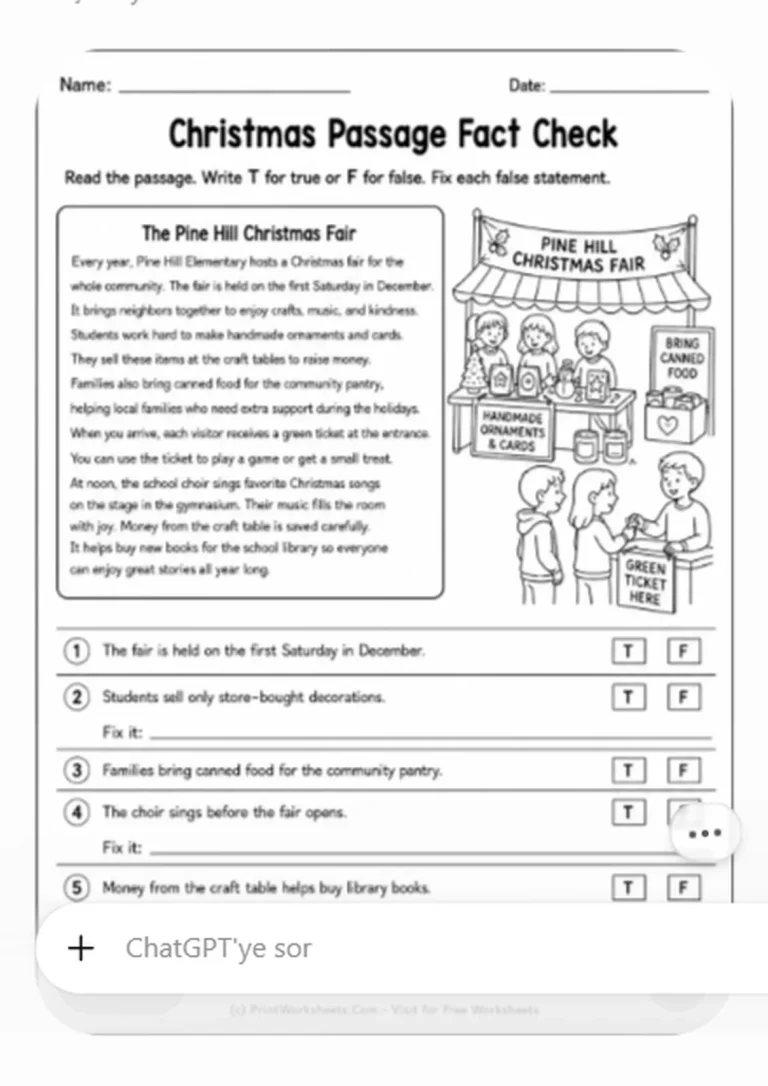
Christmas Passage Fact Check uses an informational passage about the Pine Hill Christmas Fair. Students read details about the first Saturday in December, handmade ornaments and cards, canned-food donations, green tickets, a noon choir performance, and money raised for library books. Five statements are marked true or false, and false statements must be corrected. That extra correction step is useful because students cannot succeed by guessing T or F; they have to return to the passage and replace inaccurate information with a supported detail.
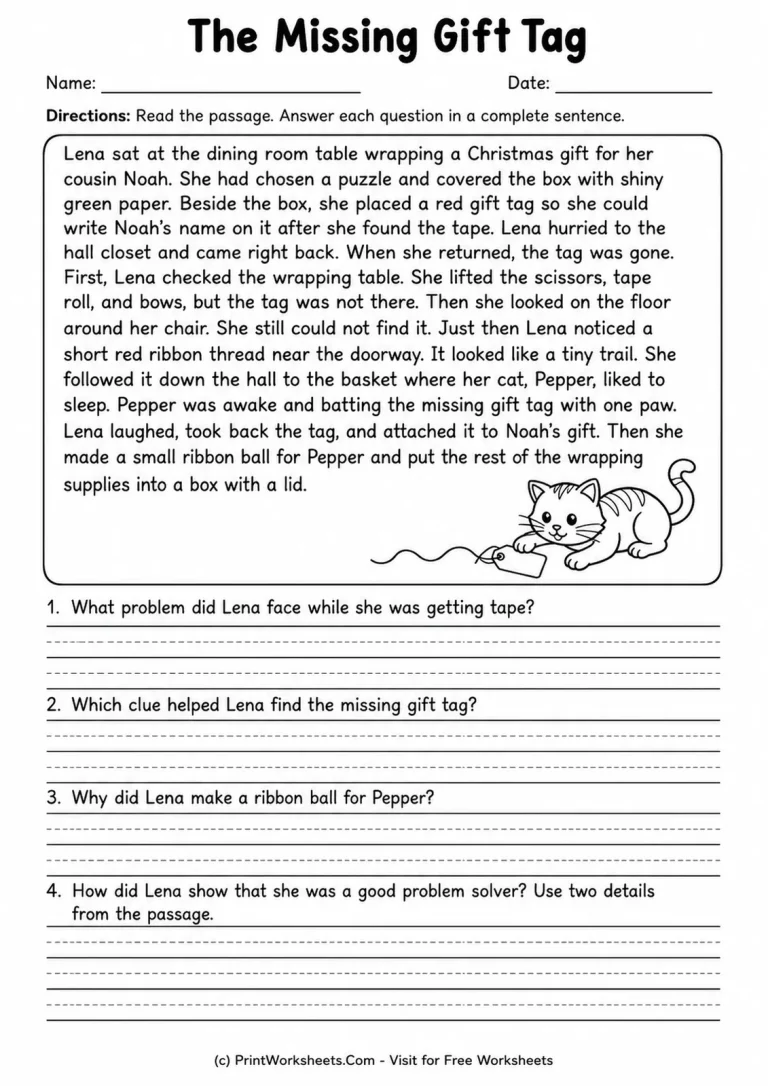
The final approved worksheet, The Missing Gift Tag, asks for complete-sentence responses. Lena leaves a gift tag beside a wrapped present while she goes to get tape. When she returns, the tag is gone. She searches the wrapping table and floor, notices a short red ribbon thread near the doorway, follows the trail, and discovers her cat Pepper playing with the tag. Questions ask students to explain the problem, identify the clue that helped Lena, infer why she made Pepper a ribbon ball, and use two details to show how Lena acted as a good problem solver. This makes the page especially useful for moving beyond selected-response questions into short written explanations.
Ways to Use These Grade 2-3 Christmas Reading Worksheets
The four formats make the set flexible for a short holiday reading unit. A teacher can begin with the multiple-choice story for guided practice, use the mini passages in a small group focused on main idea, assign the fact-check page for independent rereading, and finish with the open-response passage as a written comprehension check. The progression also makes it easy to see whether a student can move from finding an answer to explaining why the answer is supported.
For Grade 2 readers who need support, read the passage aloud once, then have students reread only the paragraph connected to each question. On the main-idea page, ask students to underline one detail that supports their match. On the fact-check page, require students to point to the sentence that proves each true statement before they mark it. For stronger Grade 3 readers, ask them to explain why an incorrect multiple-choice option is not supported or to add a third detail to the problem-solving response.
Pair With Other Seasonal Reading Practice
Teachers building a broader holiday reading sequence can pair this set with Halloween reading comprehension passages for Grades 2-3 for the same grade range in a different seasonal context. Later in the year, Labor Day reading comprehension passages for Grades 2-3 can provide another opportunity to revisit similar comprehension habits with new subject matter.
This Christmas set is most useful when students need variety within one familiar theme. Instead of answering six versions of the same question type, they move through story details, main idea, fact checking, vocabulary, inference, and evidence-based writing. That range gives teachers and parents several meaningful ways to practice comprehension during the holiday season without losing focus on core reading skills.