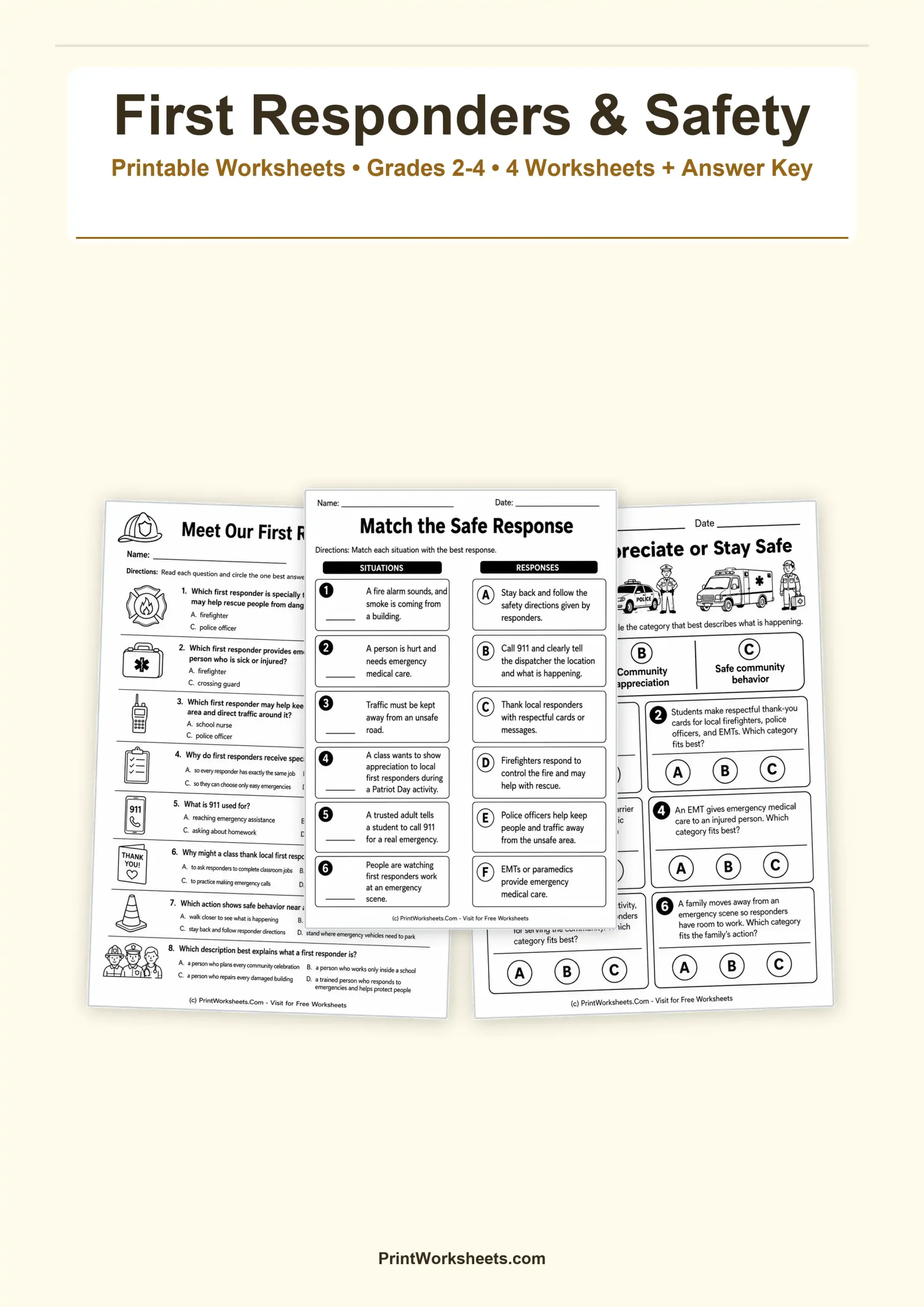
These Patriot Day first responders worksheets help students in Grades 2-4 learn who first responders are, what different responders do, when 911 is appropriate, and how children should behave safely around an emergency scene. The four student pages move beyond simple job-name recognition by asking learners to identify roles, match situations with responses, classify community actions, and apply their knowledge to realistic scenarios involving firefighters, police officers, EMTs or paramedics, traffic safety, emergency medical care, and respectful Patriot Day appreciation.
Patriot Day first responders worksheets for roles and safe choices
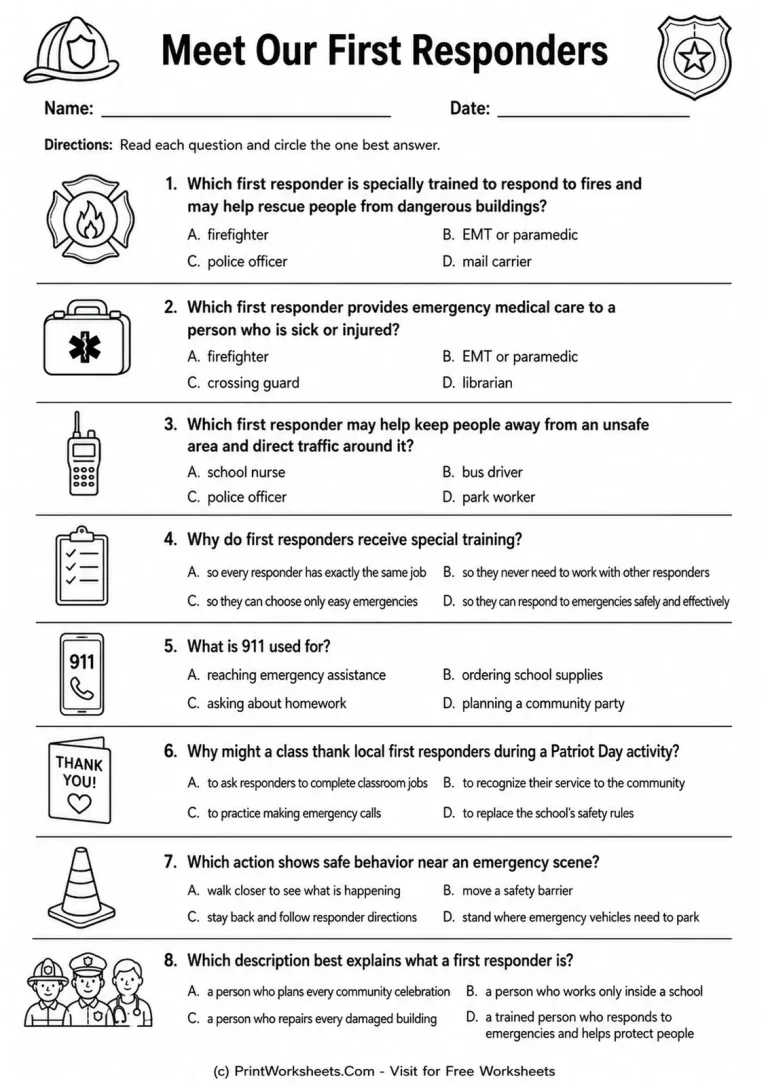
The first page, Meet Our First Responders, introduces the central concepts through eight multiple-choice questions. Students identify firefighters as responders specially trained for fires and possible rescue, recognize EMTs or paramedics as providers of emergency medical care, and connect police officers with keeping people and traffic away from unsafe areas. The page also checks whether students understand why responders receive special training and what 911 is used for. Later questions focus on community behavior: students decide why a class might thank local first responders during a Patriot Day activity and choose staying back and following responder directions as the safe action near an emergency scene. A final definition question brings the ideas together by identifying a first responder as a trained person who responds to emergencies and helps protect people.
Match emergency situations with the best response
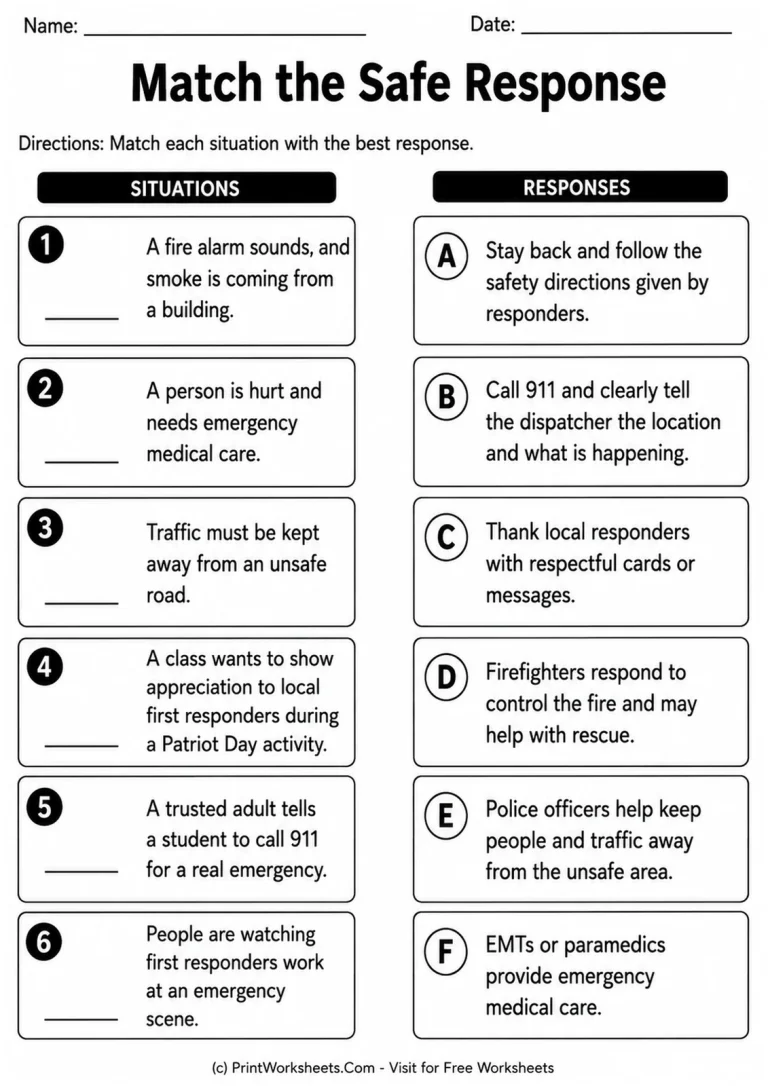
Match the Safe Response changes the activity from selecting an answer to connecting six situations with six different responses. Smoke coming from a building matches firefighters who can control the fire and assist with rescue. An injured person matches emergency medical care from EMTs or paramedics, while an unsafe road matches police officers keeping people and traffic away. The remaining situations reinforce safe community behavior and responsible 911 use. Students match a real emergency call with clearly telling the dispatcher the location and what is happening, and they match watching responders work with staying back and following safety directions. A Patriot Day appreciation situation is paired with respectful cards or messages rather than interrupting emergency work.
Sort responder work, appreciation, and community safety
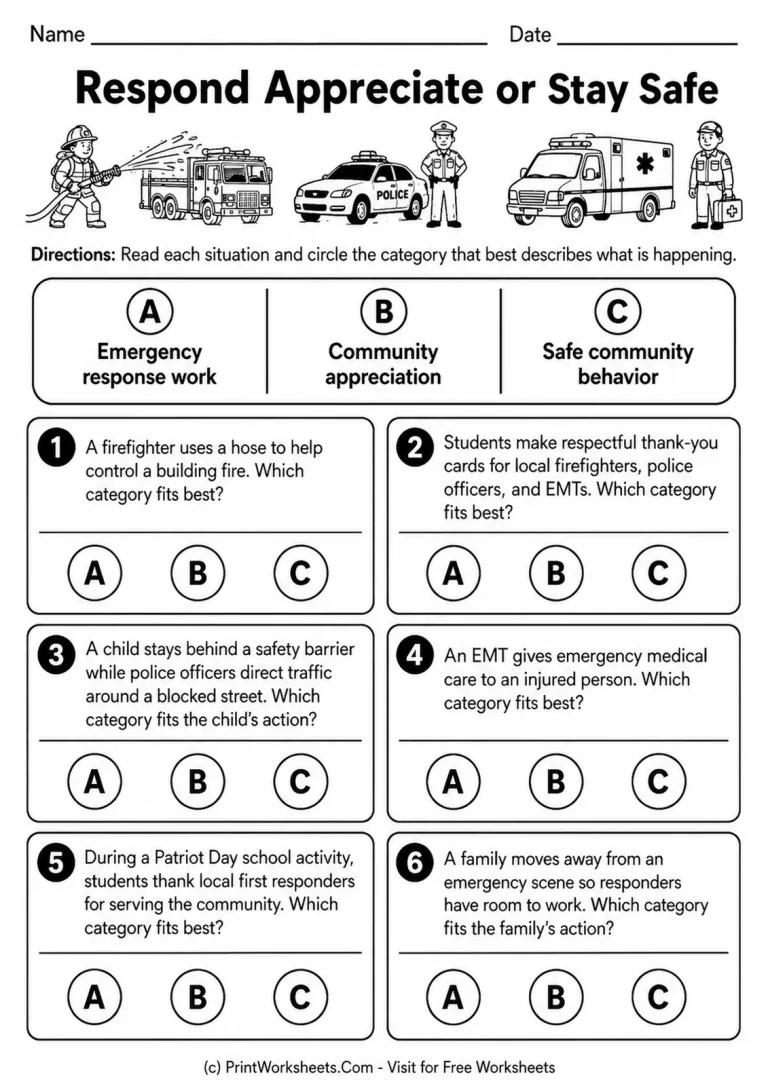
The third worksheet, Respond Appreciate or Stay Safe, introduces three categories: Emergency response work, Community appreciation, and Safe community behavior. Students decide where six short situations belong. A firefighter controlling a building fire and an EMT treating an injured person are examples of emergency response work. Students making thank-you cards and thanking first responders during a Patriot Day school activity represent community appreciation. Staying behind a safety barrier and moving away from an emergency scene so responders have room to work are examples of safe community behavior. This classification format helps students distinguish the responsibilities of trained responders from the respectful and safe actions expected from community members.
Apply first responder knowledge in real-world scenarios
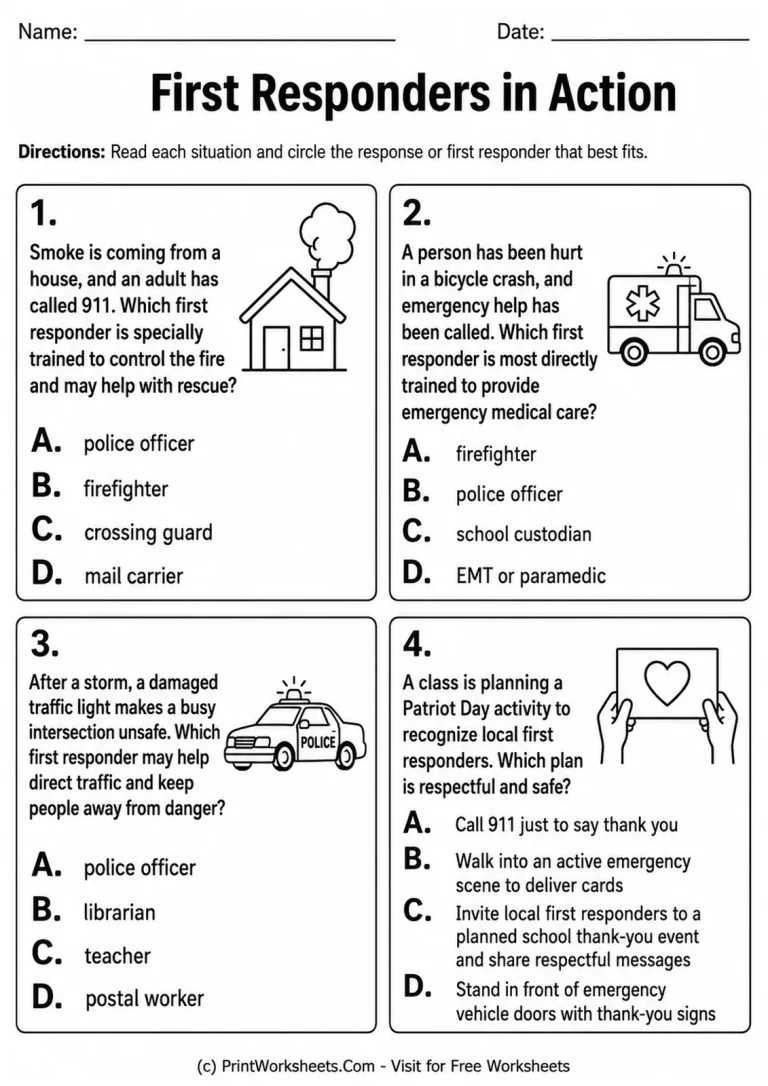
First Responders in Action serves as an application page with four larger scenario cards and supporting black-and-white illustrations. Students identify a firefighter when smoke is coming from a house, an EMT or paramedic when someone has been injured in a bicycle crash, and a police officer when a damaged traffic light makes an intersection unsafe. The final scenario asks students to select a respectful and safe plan for recognizing local first responders. The correct choice is a planned school thank-you event with respectful messages, not calling 911 merely to say thank you, entering an active emergency scene, or blocking emergency vehicle access.
A practical Patriot Day safety resource for elementary students
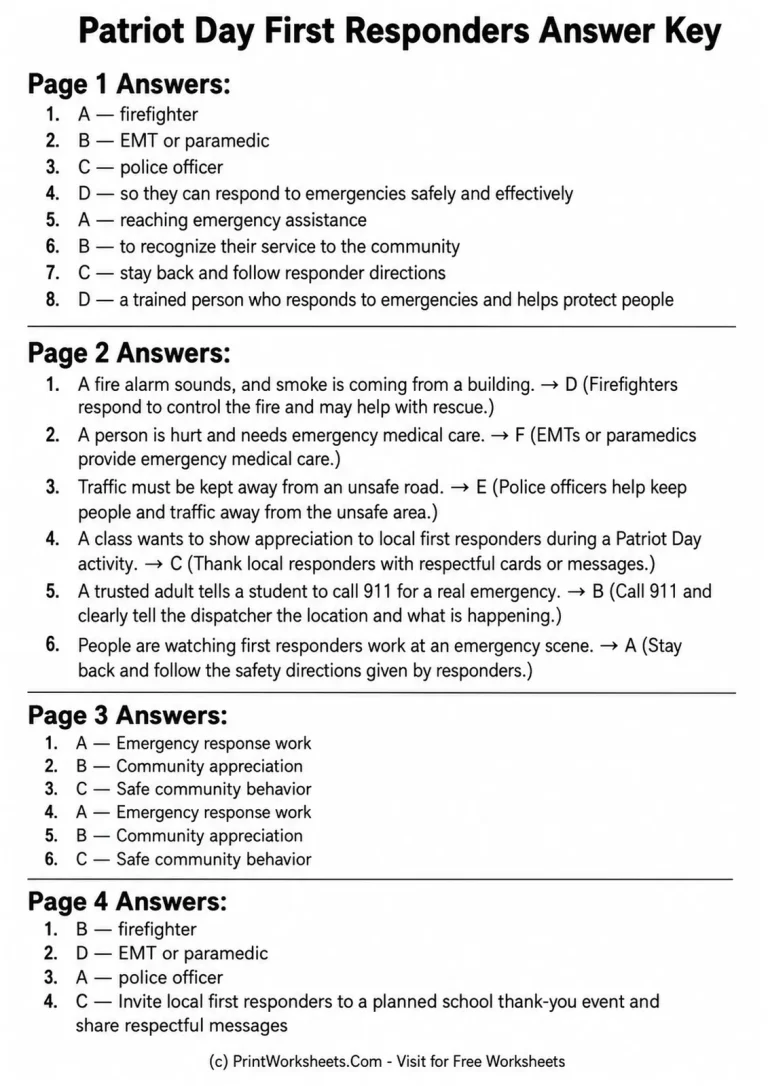
The set combines short reading with decision-making, matching, and categorization, making it accessible to many second graders while still offering meaningful reasoning practice for third- and fourth-grade students. Teachers can use individual sheets for morning work, social studies, health and safety discussions, or a Patriot Day lesson about community service. The included answer key covers all four student worksheets and makes the objective activities easy to check.
Students who are ready to extend the topic through language work can use the Patriot Day vocabulary worksheets for Grades 3-5, which develop words related to remembrance, service, and civic responsibility. For a text-based follow-up, the Patriot Day reading comprehension passages give older elementary students additional practice with reading about remembrance, first responders, memorials, and community action.