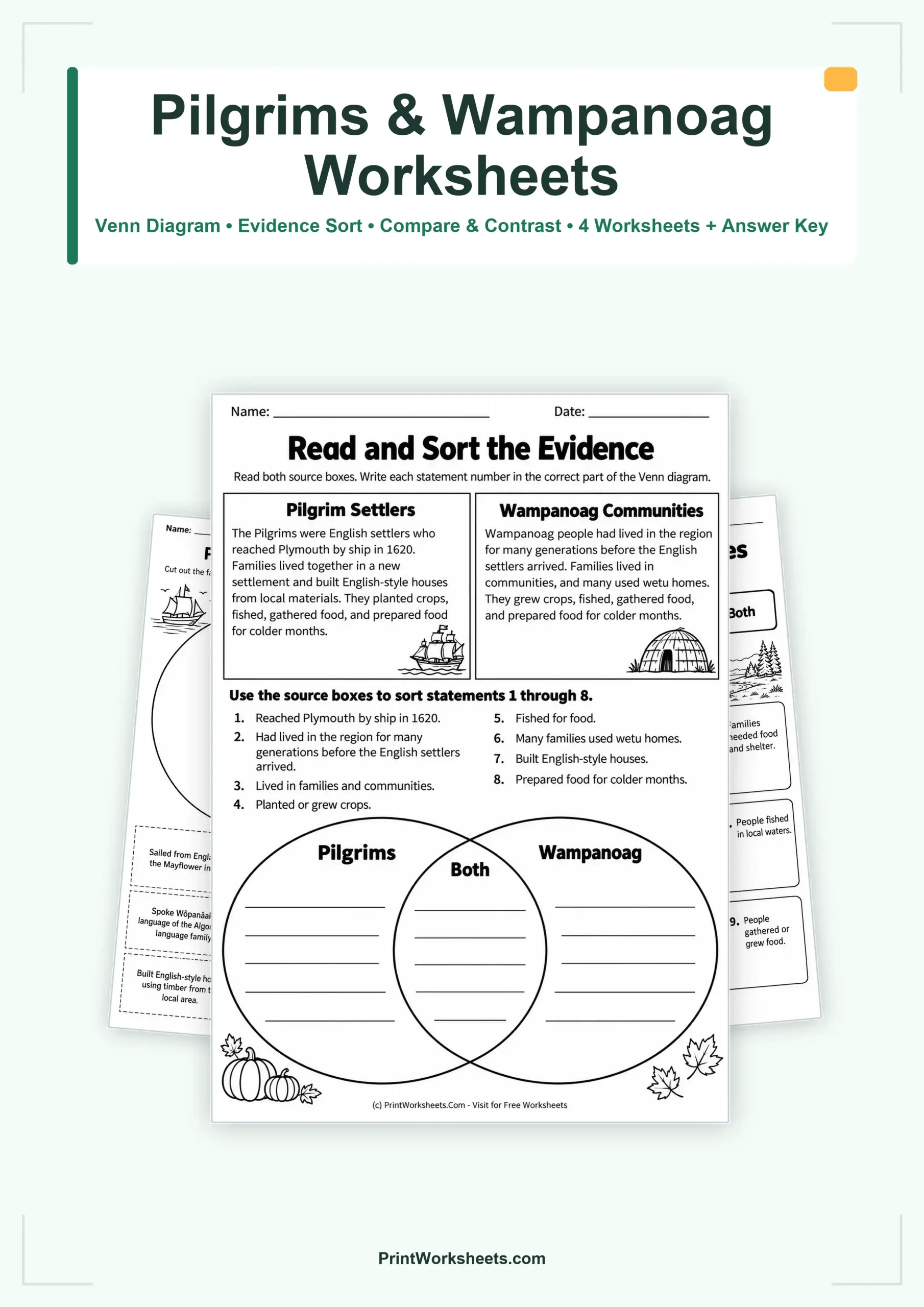
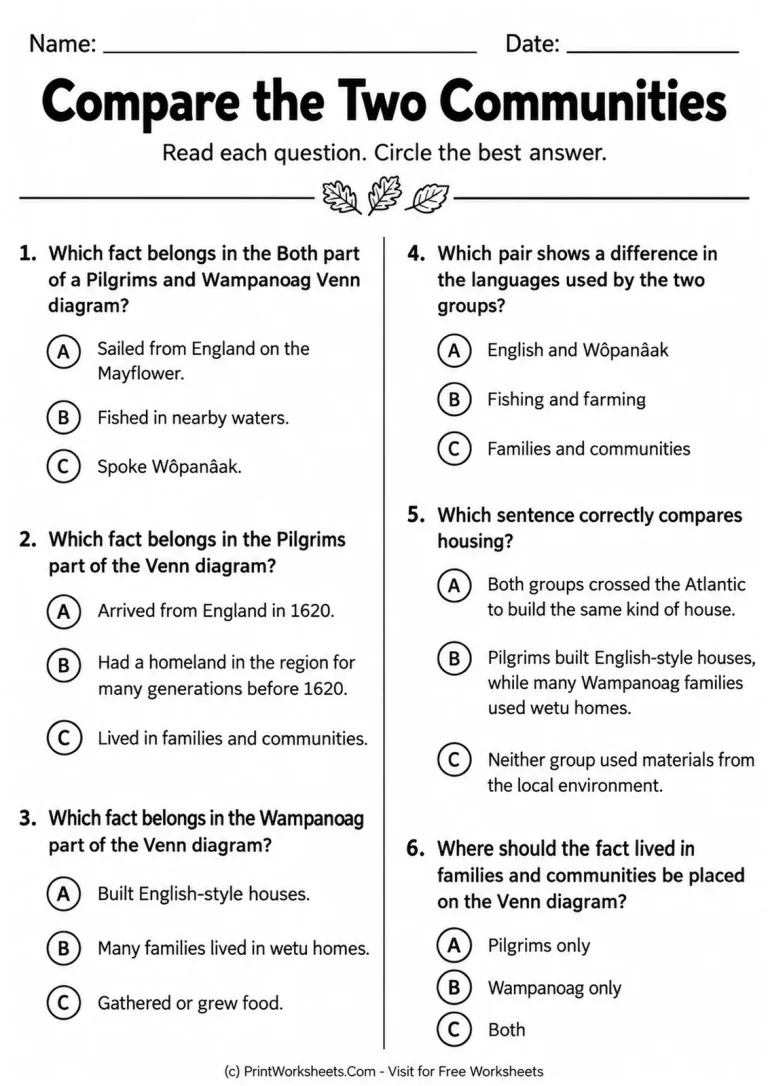
These Pilgrims and Wampanoag worksheets help students compare two communities through sorting, reading, matching, and multiple-choice practice. Instead of relying on one Venn diagram activity, the printable set gives students several ways to work with the same important ideas, including where people lived, the languages they used, housing, food gathering and growing, fishing, community life, and the Mayflower voyage in 1620. The four student pages can be used together as a short social studies sequence or selected individually for classwork, centers, homework, or review.
Pilgrims and Wampanoag Venn Diagram Activities
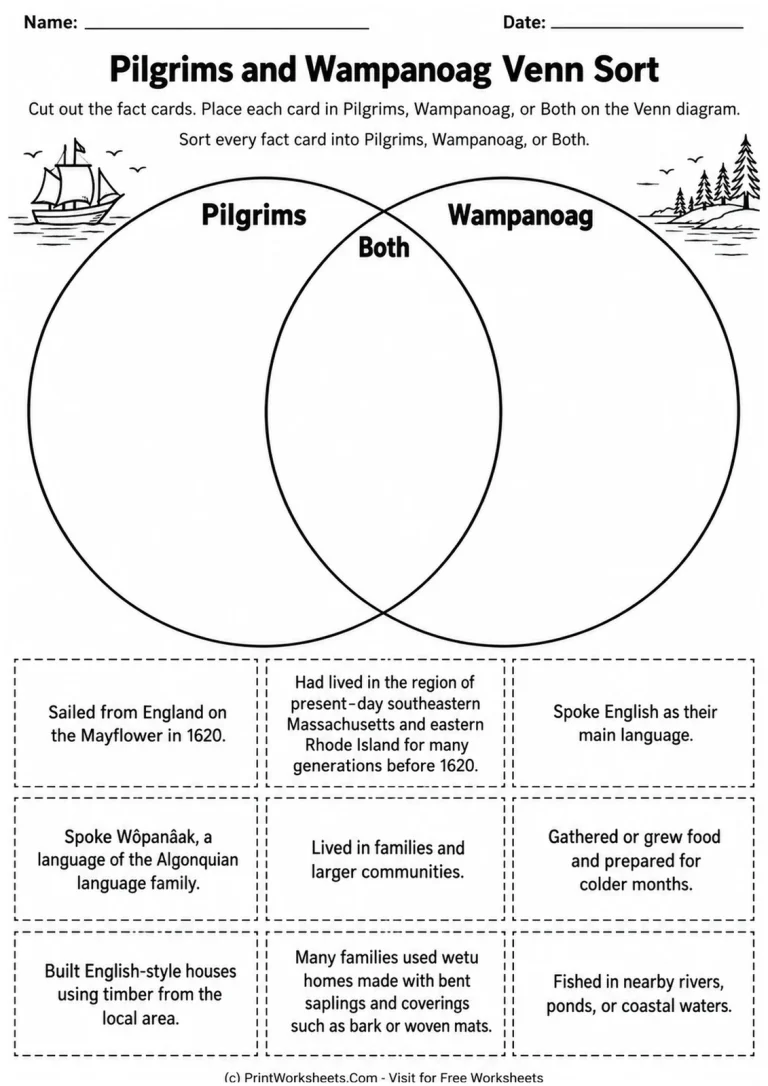
The first worksheet is a hands-on Venn sort. Students cut out nine fact cards and decide whether each statement belongs under Pilgrims, Wampanoag, or Both. The cards include facts about sailing from England on the Mayflower, Wampanoag families living in the region for many generations before 1620, the use of English and Wôpanâak, English-style houses, wetu homes, fishing, and preparing food for colder months. Because students must physically sort the cards into three categories, the page works well for introducing the comparison before moving to more independent tasks.
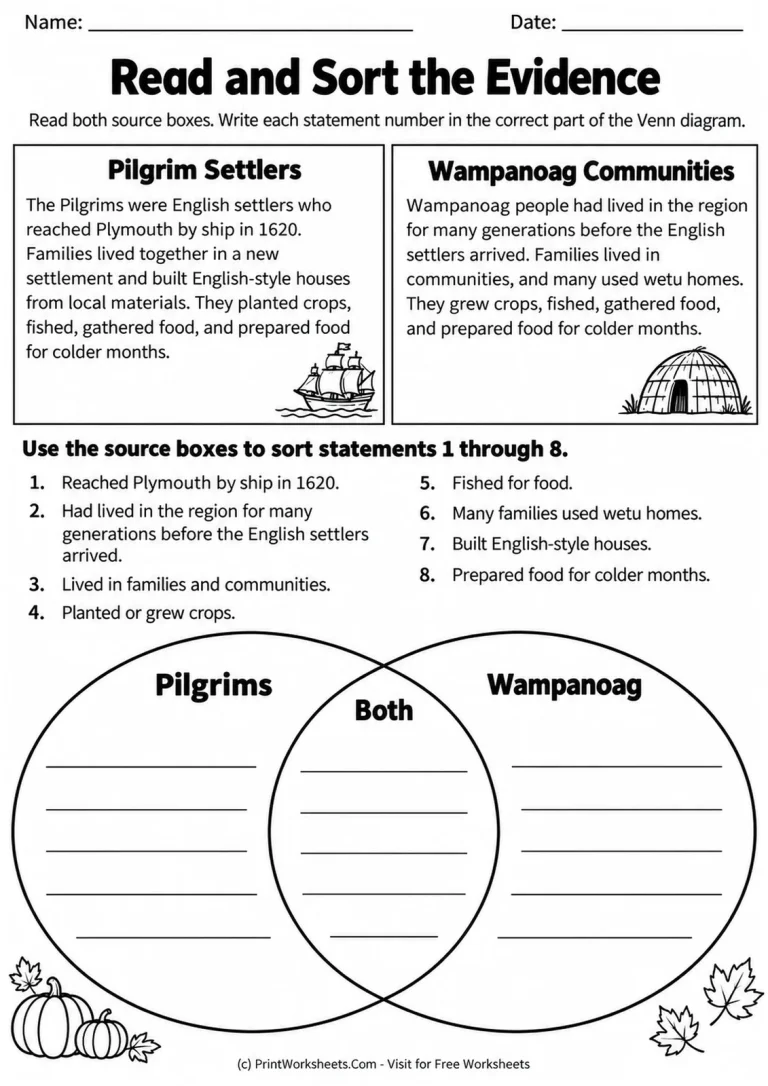
The second page shifts from simple fact sorting to evidence-based reading. Students read two short source boxes, one about Pilgrim settlers and one about Wampanoag communities. They then sort eight numbered statements into a Venn diagram. This format encourages students to look back at the source text and decide whether a detail applies to one group or to both. Shared activities such as fishing, growing crops, and preparing food for colder months become useful examples of similarity, while arrival history and housing provide clear differences.
Build Comparison Skills From Evidence
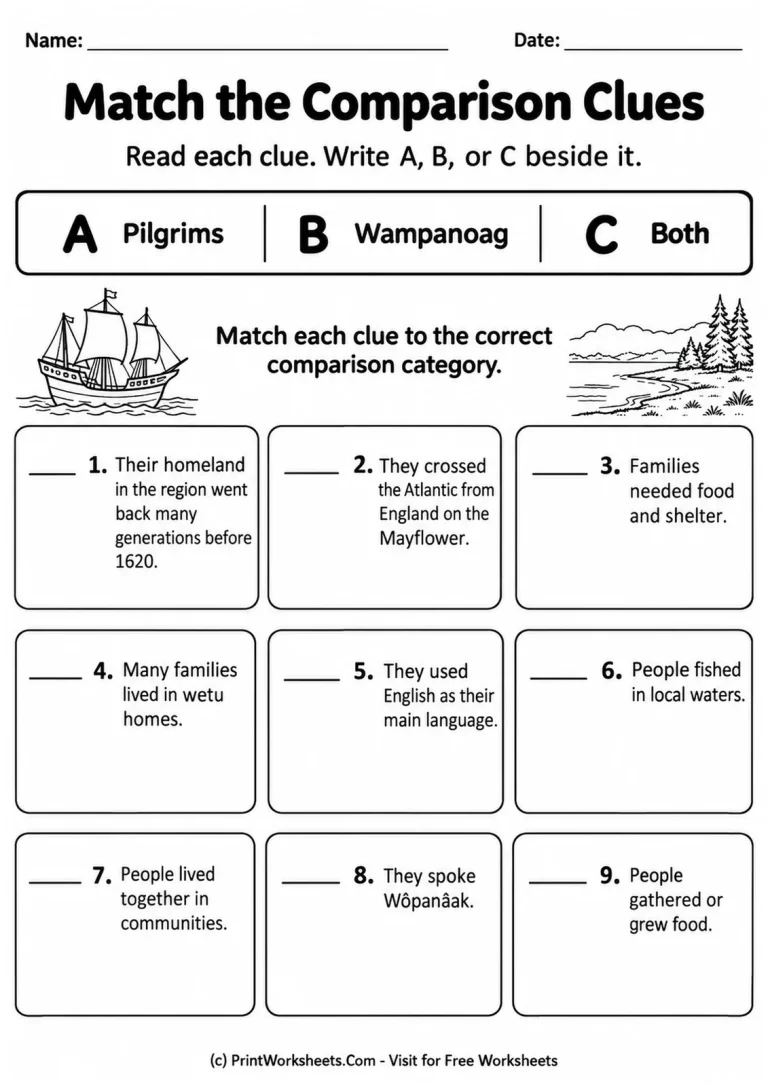
The third worksheet removes the full source passages and asks students to classify nine comparison clues using A for Pilgrims, B for Wampanoag, or C for Both. Students work with ideas such as a homeland that went back many generations before 1620, crossing the Atlantic on the Mayflower, living in wetu homes, using English or Wôpanâak, fishing in local waters, living in communities, and gathering or growing food. This makes the page useful as a bridge between supported reading and independent recall because students must recognize the category that best fits each clue.
The fourth student page provides six multiple-choice questions that require students to apply the comparison concepts in a different way. Questions ask which facts belong in the Both section of a Venn diagram, which details are specific to Pilgrims or Wampanoag, how the languages of the two groups differed, and which statement correctly compares housing. Students also identify where a shared statement about families and communities should be placed. The answer choices make this page suitable for quick independent practice or a short comprehension check after the earlier sorting activities.
Skills Practiced in This Printable Set
Across the four worksheets, students repeatedly practice identifying similarities and differences, sorting information into categories, reading for evidence, recalling details, and applying information to new question formats. The repeated use of Pilgrims, Wampanoag, and Both helps reinforce the structure of a Venn diagram while the changing activity types keep the work from becoming repetitive. The set also connects social studies content with reading comprehension because students must understand short factual statements and source boxes before they can classify them correctly.
Ways to Use the Worksheets
Teachers can begin with the cut-and-sort page as a collaborative activity, then move to the source-based Venn diagram for guided practice. The matching worksheet works well as independent follow-up, and the multiple-choice page can be used for review or assessment. Another option is to place the activities at separate learning stations so students encounter the same comparison ideas through different formats. For students who need additional support, the source boxes on the second page provide a useful reference before they complete the more independent pages.
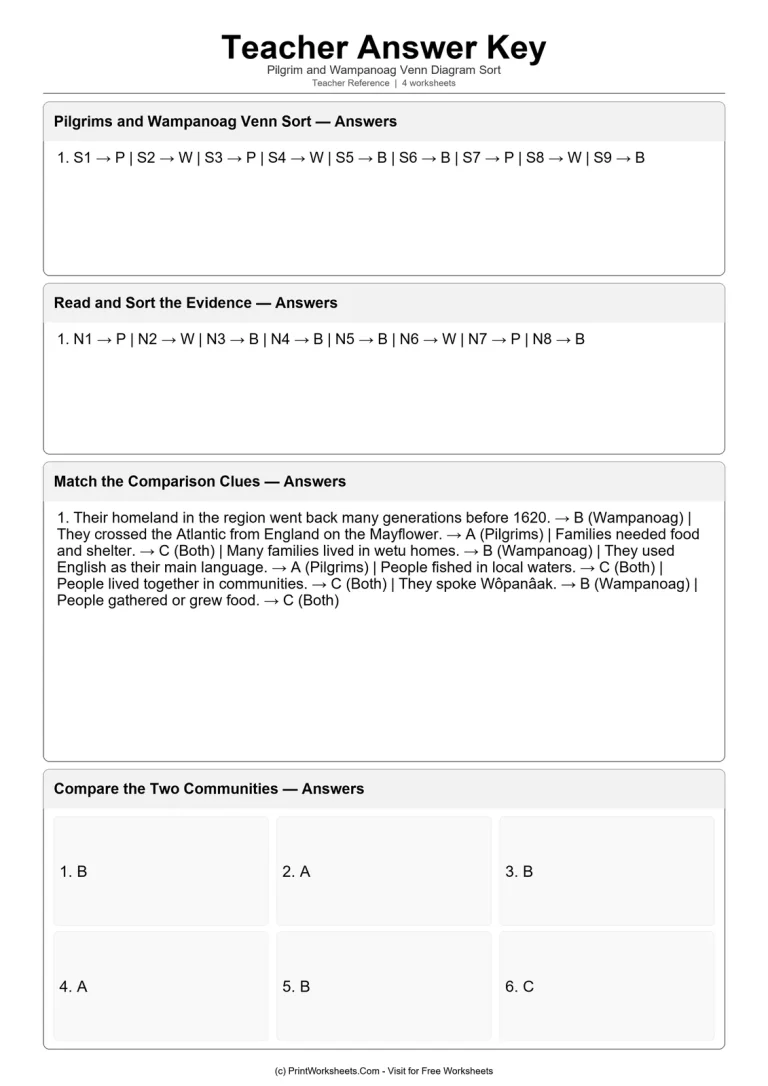
A teacher answer key is included for all four activities, making it easier to check the Venn classifications, clue matches, and multiple-choice responses. With four distinct student worksheets in one printable set, this resource provides a focused way to practice comparing Pilgrim settlers and Wampanoag communities while strengthening evidence-based reading and classification skills.