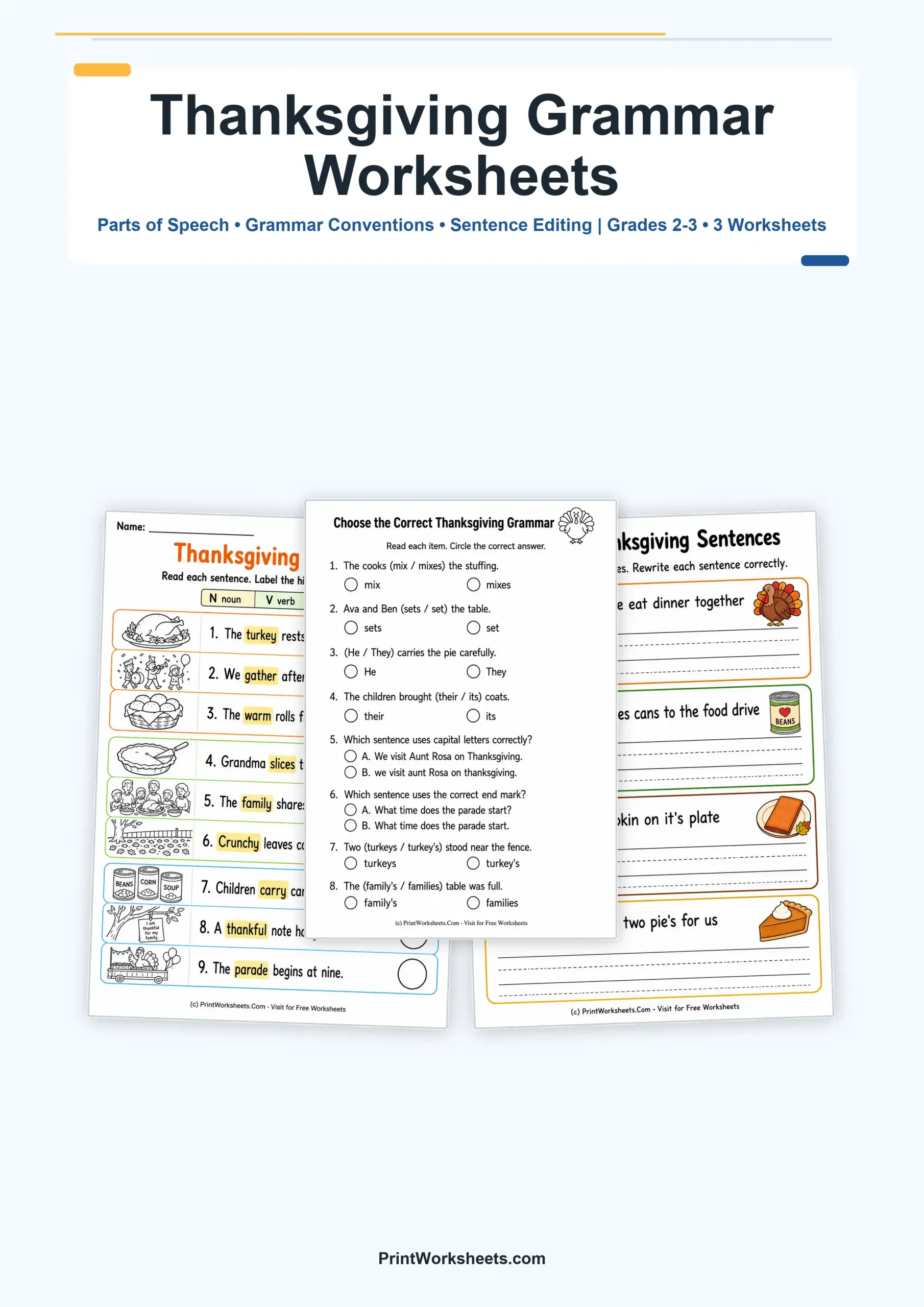
These Thanksgiving grammar worksheets give second- and third-grade students three different ways to work with language in a seasonal context. Rather than repeating one exercise format, the set moves from identifying parts of speech, to choosing correct grammar forms, to editing complete sentences. Thanksgiving vocabulary such as turkey, family, parade, thankful, and gather keeps the practice connected to a familiar November theme while the tasks stay focused on core elementary grammar skills.
Thanksgiving grammar worksheets with three levels of practice
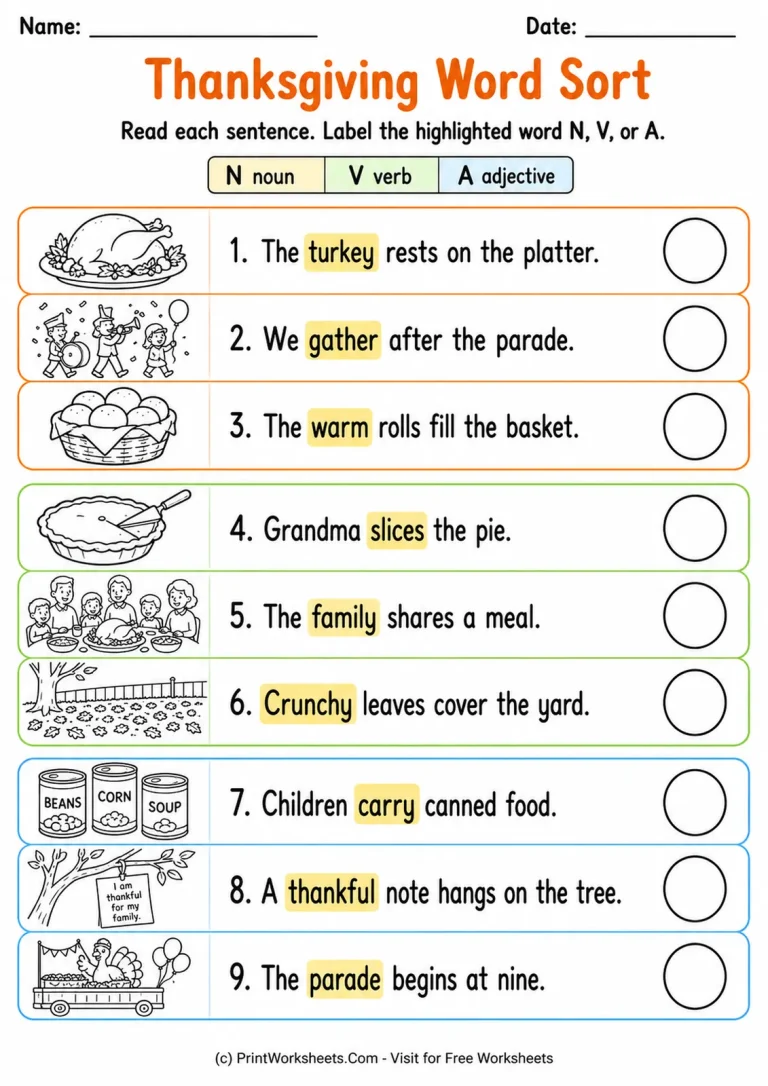
The first worksheet, Thanksgiving Word Sort, asks students to read nine short sentences and classify each highlighted word as a noun, verb, or adjective. The selected words include turkey, gather, warm, slices, family, crunchy, carry, thankful, and parade. Because the words appear inside sentences, students must use both meaning and sentence position instead of sorting isolated vocabulary. This makes the page useful for reviewing how a word functions in context.
A simple teaching routine is to have students read each sentence aloud, identify what the highlighted word is doing, and then mark N, V, or A. Afterward, invite them to explain one example from each category. For instance, they can describe why gather acts as a verb or why crunchy describes a noun. That quick oral explanation adds reasoning without changing the printable activity.
Practice grammar conventions in Thanksgiving sentences
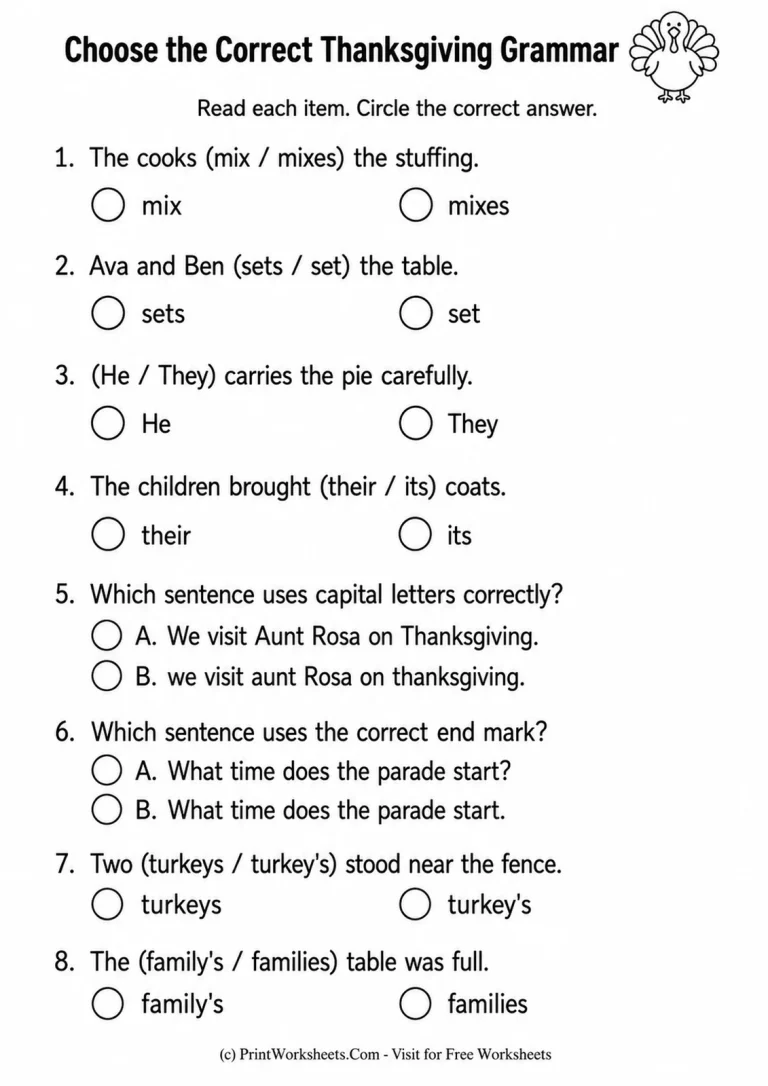
The multiple-choice worksheet shifts attention from word classes to sentence conventions. Eight Thanksgiving-themed items review subject-verb agreement, pronouns, capitalization, end punctuation, plural nouns, and possessive nouns. Students choose the correct form in examples that include subjects such as cooks, Ava and Ben, and He. Other items ask them to distinguish pronoun forms, recognize capitalization in names such as Aunt Rosa and the holiday name Thanksgiving, and select the correct punctuation for a parade question.
This page works well for independent review because each item targets a specific convention and asks for one best choice. Teachers can also use the questions for a short guided lesson by asking students to justify why the other options do not fit. When reviewing subject-verb agreement, for example, students can identify whether the subject is singular or plural before choosing the verb. For capitalization and punctuation items, they can name the rule before selecting an answer.
Move from choosing answers to editing sentences
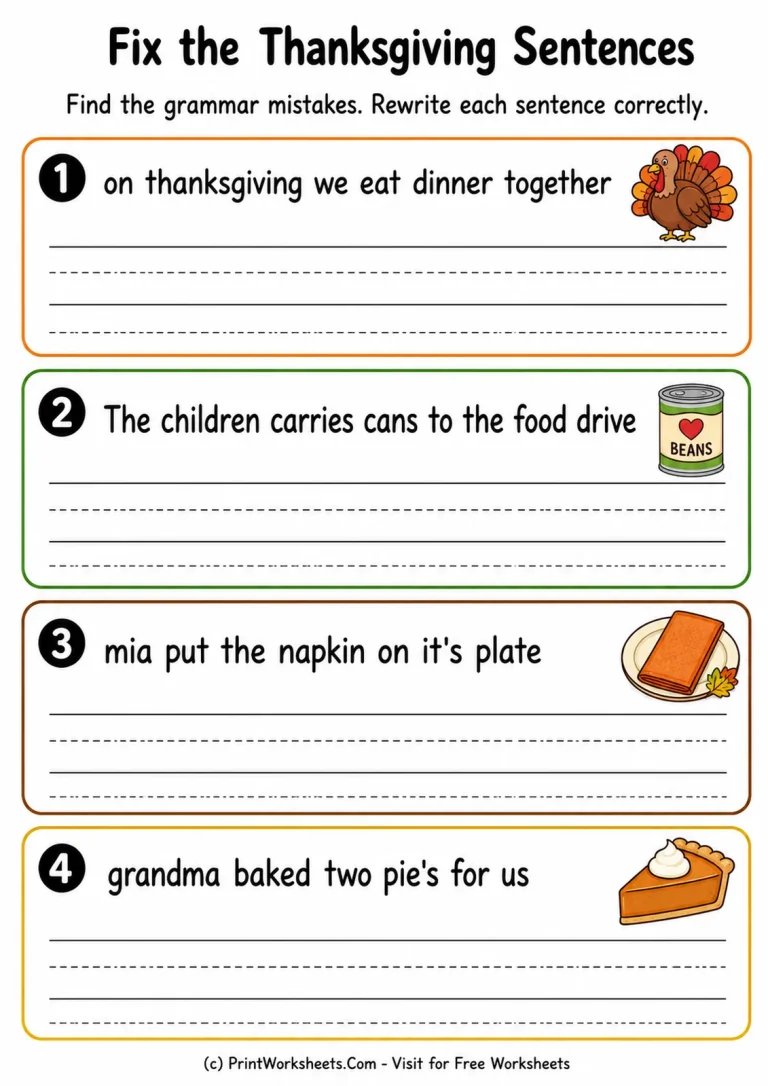
The final worksheet, Fix the Thanksgiving Sentences, raises the level of independence. Students find grammar mistakes in four Thanksgiving-themed sentences and rewrite each sentence correctly. The sentences include errors involving capitalization, subject-verb agreement, apostrophe or possessive use, pronoun wording, plural formation, and sentence punctuation. Instead of recognizing a correct answer from choices, students must notice the problem and produce a corrected sentence on their own.
This progression makes the three pages useful across more than one lesson. Begin with parts of speech when students need a focused warm-up, use the multiple-choice page for targeted conventions practice, and finish with sentence editing as an application task. The editing page can also function as a quick check of whether students can transfer grammar rules into their own written corrections.
Ways to use the set in Grades 2 and 3
For 2nd grade, consider completing the first example from each page together and then allowing students to continue independently or with a partner. Students who need extra support can underline the subject before checking subject-verb agreement, circle capital letters, or box punctuation marks before rewriting a sentence. These small visual steps help separate several conventions that may appear in the same item.
For 3rd grade, ask students to add a short explanation beside selected answers. They might label the rule they used, identify the noun described by an adjective, or explain why a possessive form needs an apostrophe. As an extension, students can write one original Thanksgiving sentence containing a noun, verb, and adjective, then trade sentences with a partner for a grammar check.
The worksheets can fit morning work, literacy centers, homework, seasonal review, or a short grammar block before Thanksgiving break. Teachers working with younger students may also find the Canadian Thanksgiving worksheets for 1st grade useful when planning differentiated holiday activities across grade levels.
A focused Thanksgiving grammar review
Together, the three activities cover recognition, selection, and correction rather than relying on one repeated worksheet pattern. Students identify nouns, verbs, and adjectives; choose forms that follow common grammar conventions; and then apply those conventions while rewriting sentences. That sequence makes the set practical for a compact Thanksgiving grammar review while still giving students varied, grade-appropriate work.