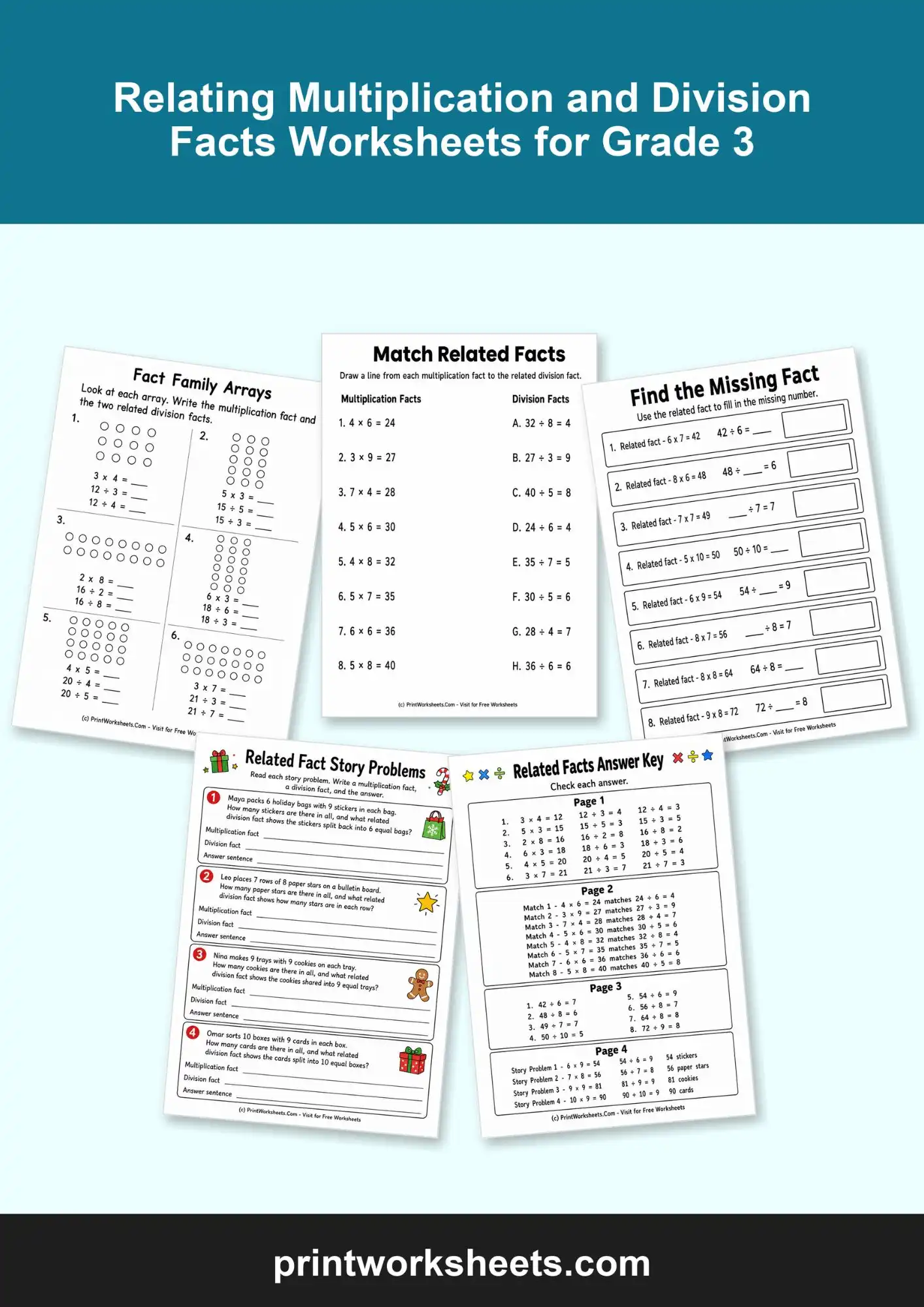
Relating multiplication and division facts worksheets for Grade 3 help students understand that the two operations are closely connected. When students know a multiplication fact such as 6 × 7 = 42, they can use that relationship to solve 42 ÷ 6 = 7 and 42 ÷ 7 = 6.
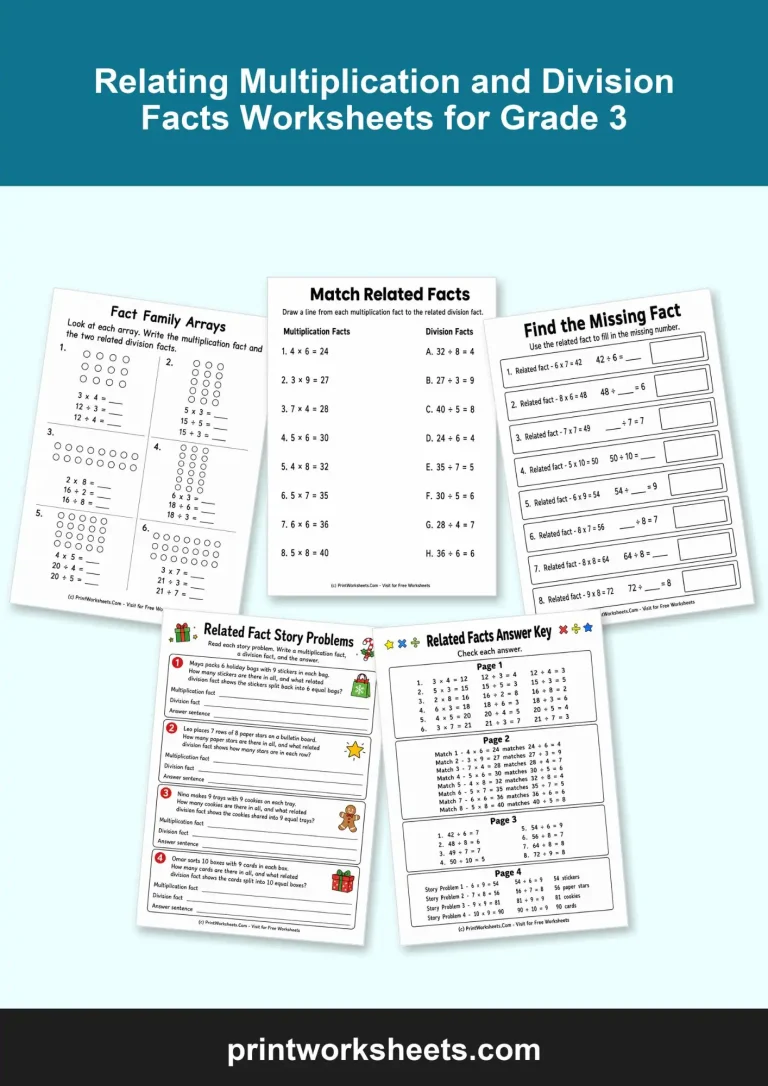
This five-page PDF contains four student activities and a complete answer key. Students begin with visual arrays, connect multiplication equations to related division equations, complete missing facts, and then apply the same relationship in story problems.
Understanding Related Multiplication and Division Facts
Multiplication and division are inverse operations. Multiplication combines equal groups to find a total, while division separates the same total into equal groups or finds how many objects belong in each group.
Teaching these operations together helps students rely on known multiplication facts instead of treating every division equation as a completely separate fact to memorize.
2 and 3 times table worksheets.
What Students Practice in This Worksheet Set
The activities approach the multiplication–division relationship from several useful angles:
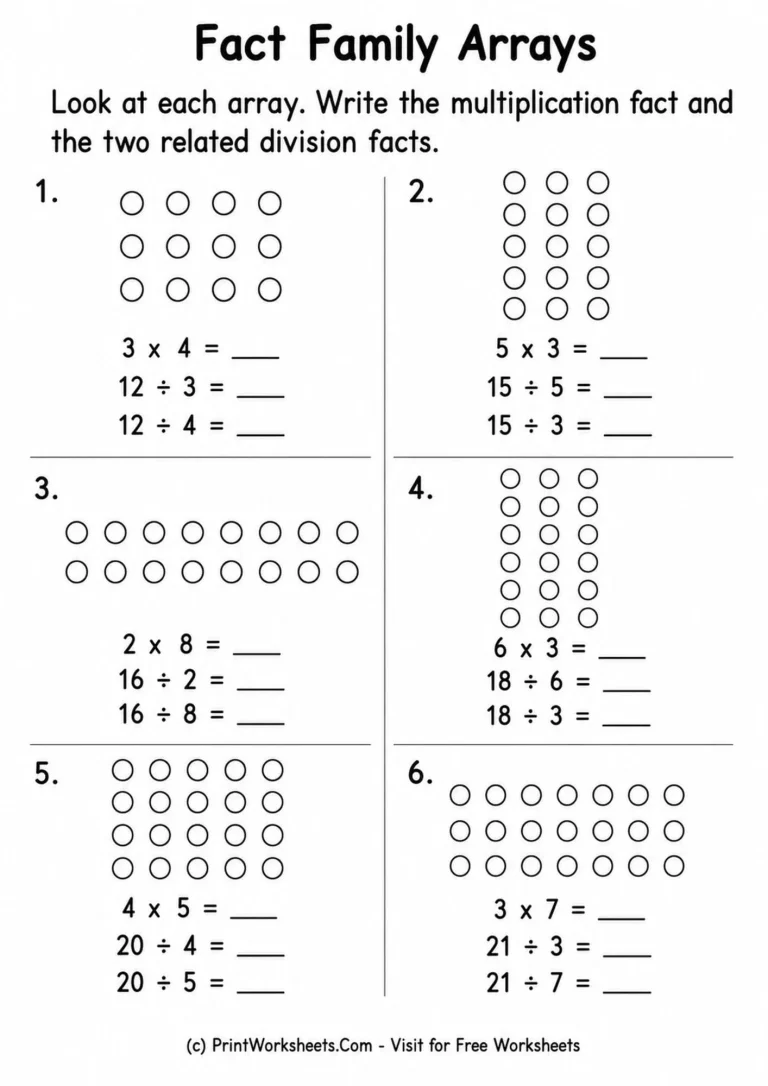
- Fact Family Arrays: Students examine six arrays and complete one multiplication fact and two related division facts for each model.
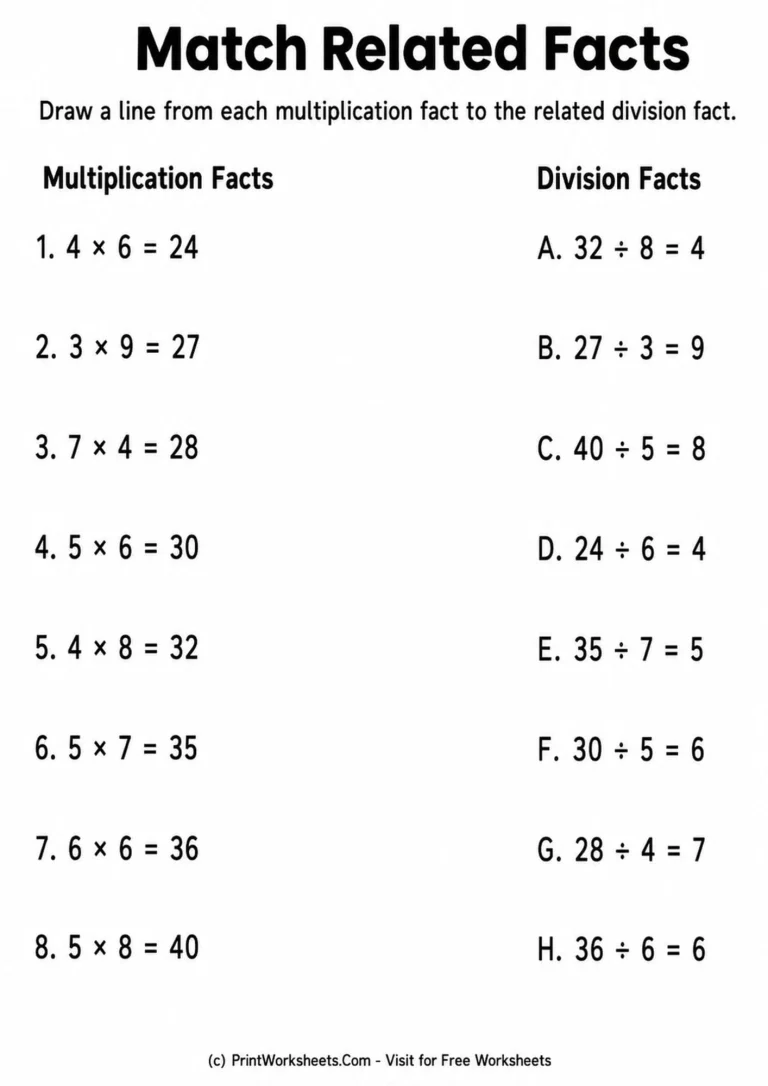
- Match Related Facts: Students connect eight multiplication equations with their matching division equations.
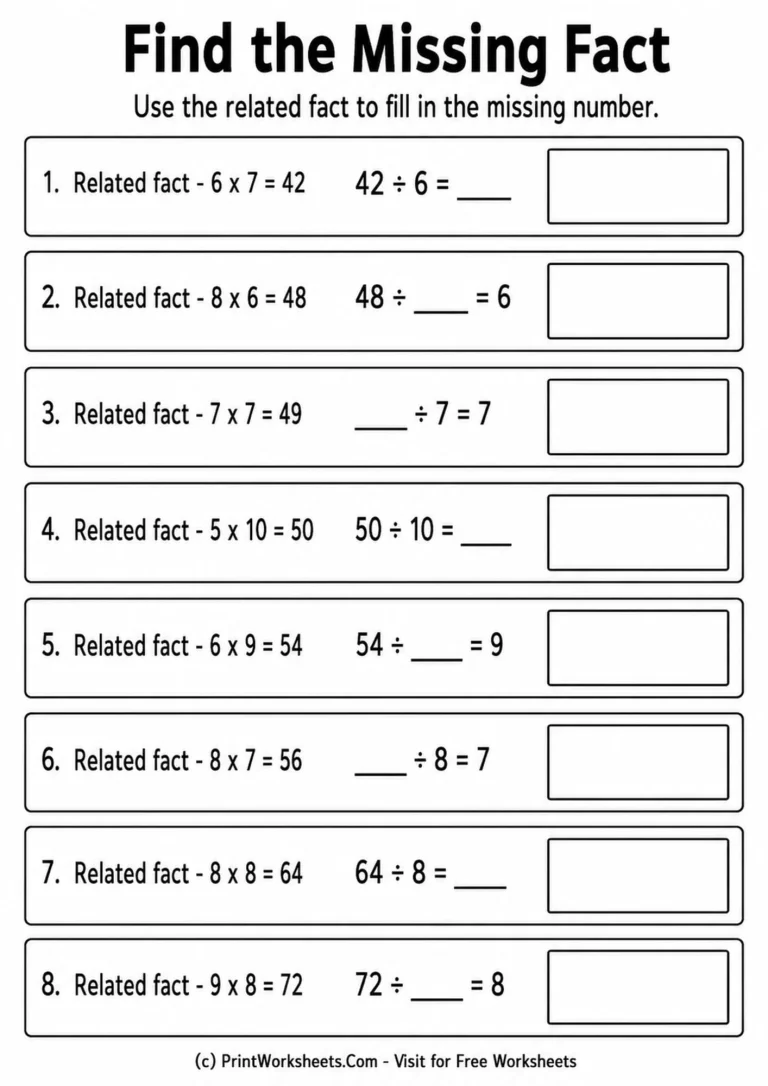
- Find the Missing Fact: Students use a provided multiplication fact to determine a missing dividend, divisor, or quotient.
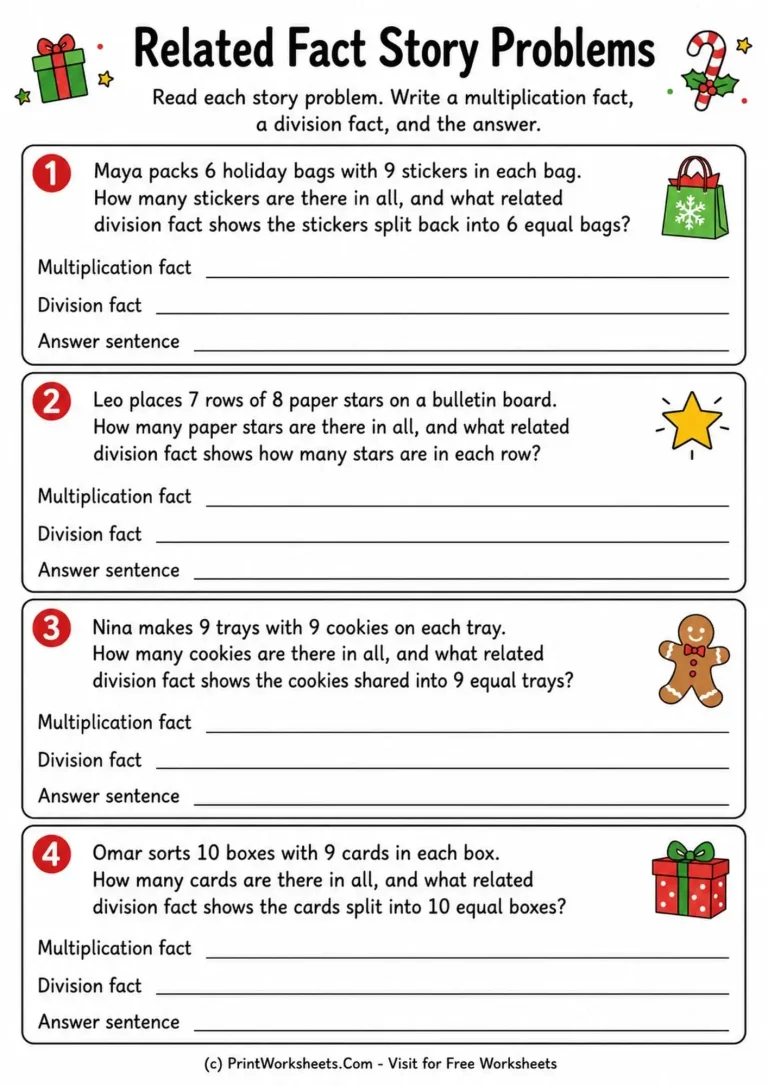
- Related Fact Story Problems: Students write both operations and use an answer sentence to explain the total in context.
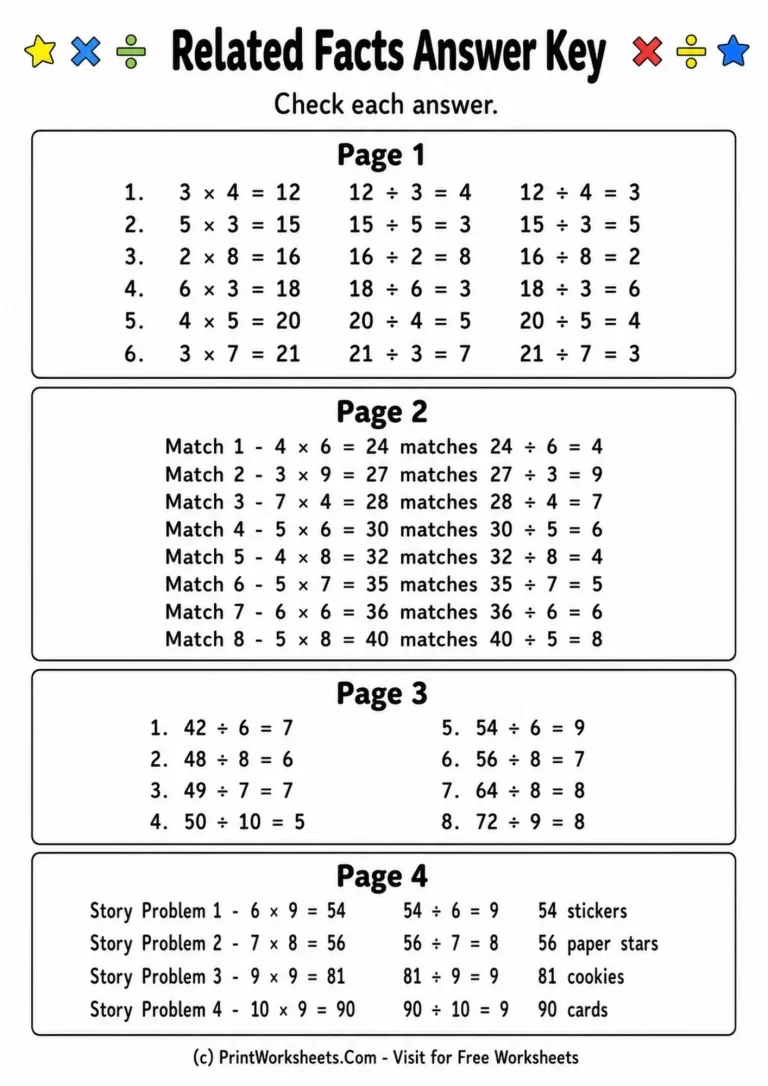
- Answer Key: The final page provides answers for all four student activities.
Build Fact Families with Arrays
The first activity uses arrays to make the relationship between the operations visible. Students can identify the number of rows, the number of objects in each row, and the total number of objects before completing the equations.
For example, an array with three rows of four objects represents 3 × 4 = 12. The same model also supports 12 ÷ 3 = 4 and 12 ÷ 4 = 3.
Seeing all three equations together helps students recognize that the numbers in a multiplication and division fact family do not change. Only their roles in the equations change.
Match and Complete Related Facts
The matching worksheet requires students to analyze each equation instead of relying on page order. The related division facts are scrambled, so learners must identify the shared factors and product before drawing each matching line.
The missing-number activity provides additional flexibility. Sometimes students find the quotient, while other questions require them to determine the missing divisor or dividend. A related multiplication fact is provided as a clue for every problem.
4 and 5 times table worksheets.
Apply Fact Families to Story Problems
The final student page presents four situations involving stickers, paper stars, cookies, and cards. Students first write the multiplication equation that finds the total. They then write the related division equation that separates the total back into equal groups.
This structure helps students connect abstract equations with meaningful situations. It also provides space for a complete answer sentence, allowing teachers to check whether students understand what the calculated total represents.
Grade 3 multiplication and division word problems.
Skills Reinforced
- Understanding multiplication and division as inverse operations
- Building multiplication and division fact families
- Reading multiplication facts from arrays
- Writing two related division facts
- Finding missing dividends, divisors, and quotients
- Matching related equations
- Applying multiplication and division in word problems
- Writing mathematical answer sentences
Classroom Uses
Teachers can use the pages in sequence during an inverse-operations unit or select individual activities for math centers, small-group intervention, homework, morning work, or assessment.
The array page provides visual support, the matching activity checks recognition, the missing-number page develops flexible reasoning, and the story problems assess whether students can apply related facts in context.