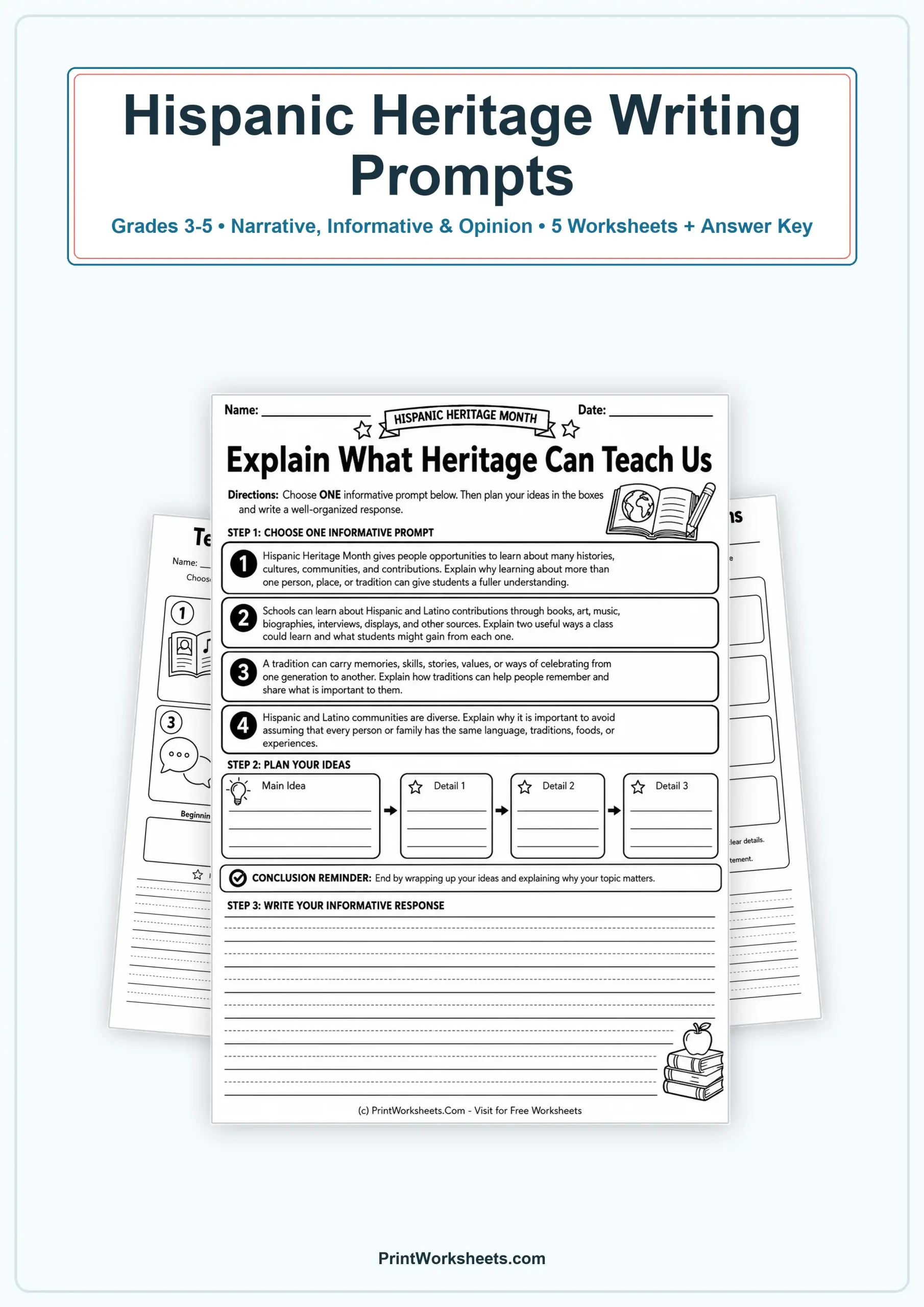
These Hispanic Heritage Month writing prompts help students in Grades 3-5 practice several kinds of purposeful writing without reducing the topic to a single person, food, or tradition. Across five printable pages, students choose from narrative, informative, opinion, and real-audience tasks, plan before drafting, and use reminders or self-checks to strengthen organization, details, clarity, and endings. The prompts repeatedly invite students to notice a variety of people, communities, histories, achievements, stories, and perspectives, giving the set a clear writing focus as well as a respectful heritage-learning context.
Hispanic Heritage Month writing prompts across five writing purposes
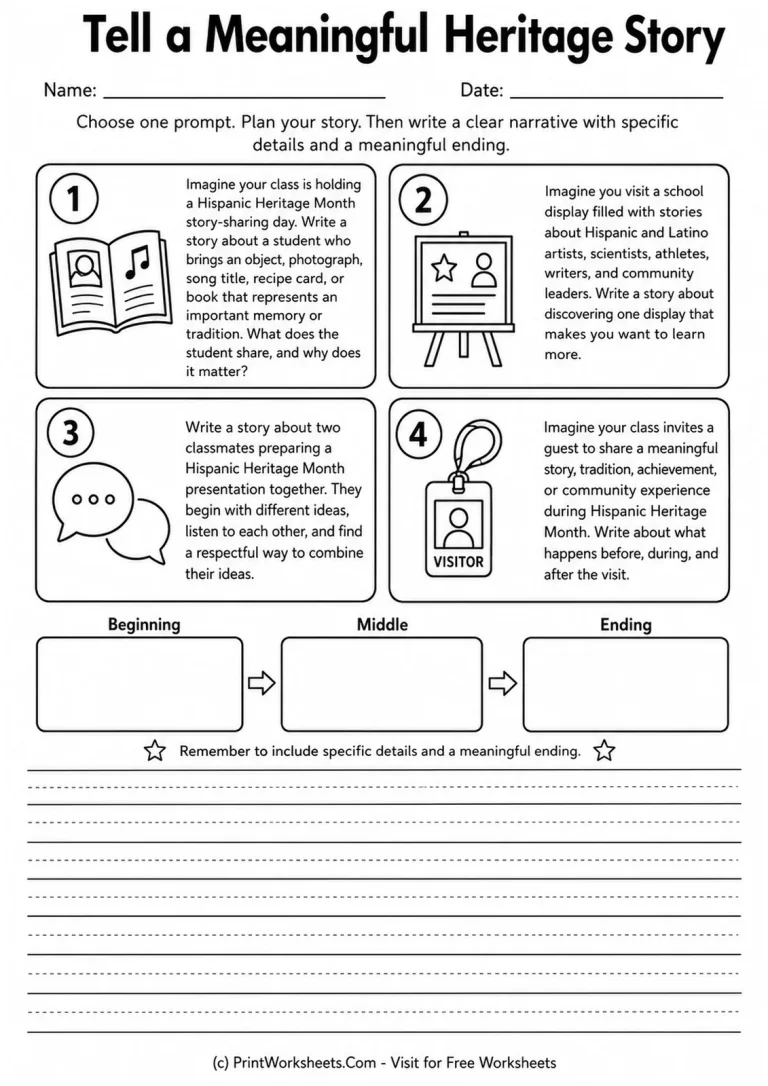
The first worksheet, Tell a Meaningful Heritage Story, is built for narrative writing. Students choose one of four scenarios, such as sharing an object or photo connected to a memory or tradition, discovering a school display that inspires curiosity, combining different ideas for a class presentation, or responding to a guest visit. A Beginning-Middle-Ending organizer helps students shape the sequence before they move into the lined writing space. This makes the page especially useful for students who have ideas but need help turning them into a complete story.
Move from explanation to supported opinion
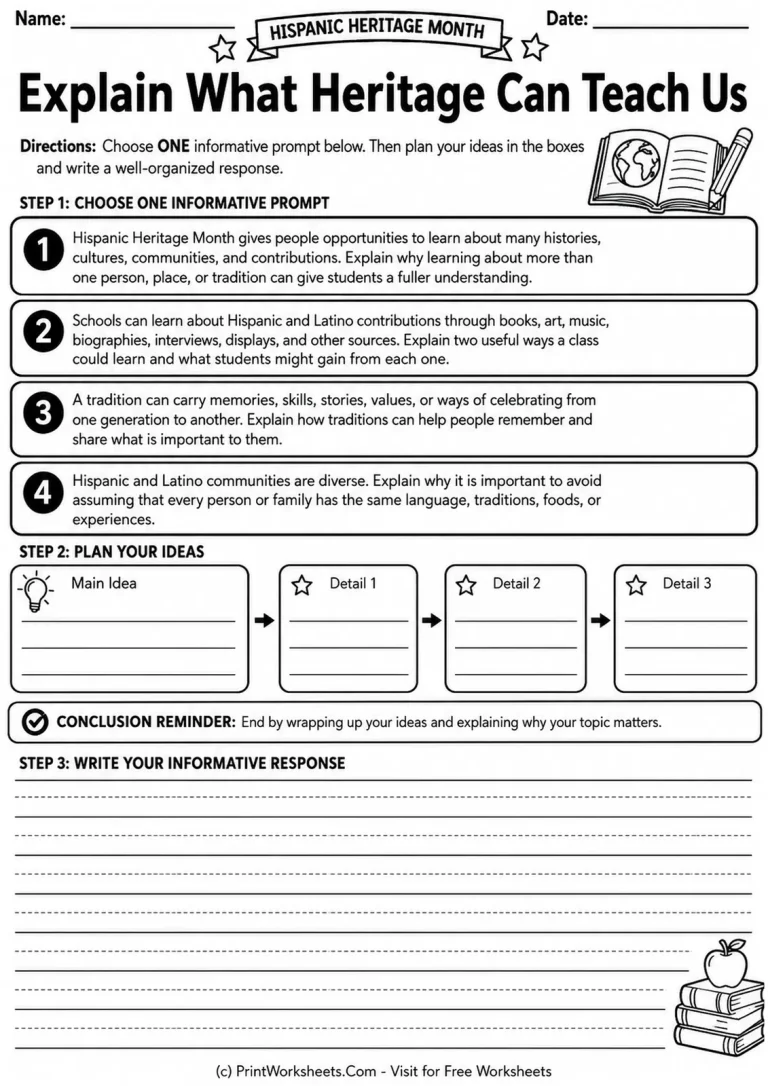
The second page shifts to informative writing with prompts about what heritage can teach us. Students may explain why learning about more than one person, place, or tradition gives a fuller understanding; compare useful sources such as books, art, music, biographies, interviews, and displays; explain how traditions can carry memories and values; or discuss why it is important not to assume that every Hispanic or Latino person has the same language, traditions, foods, or experiences. A main-idea box, three detail boxes, and a conclusion reminder make the expected structure visible.
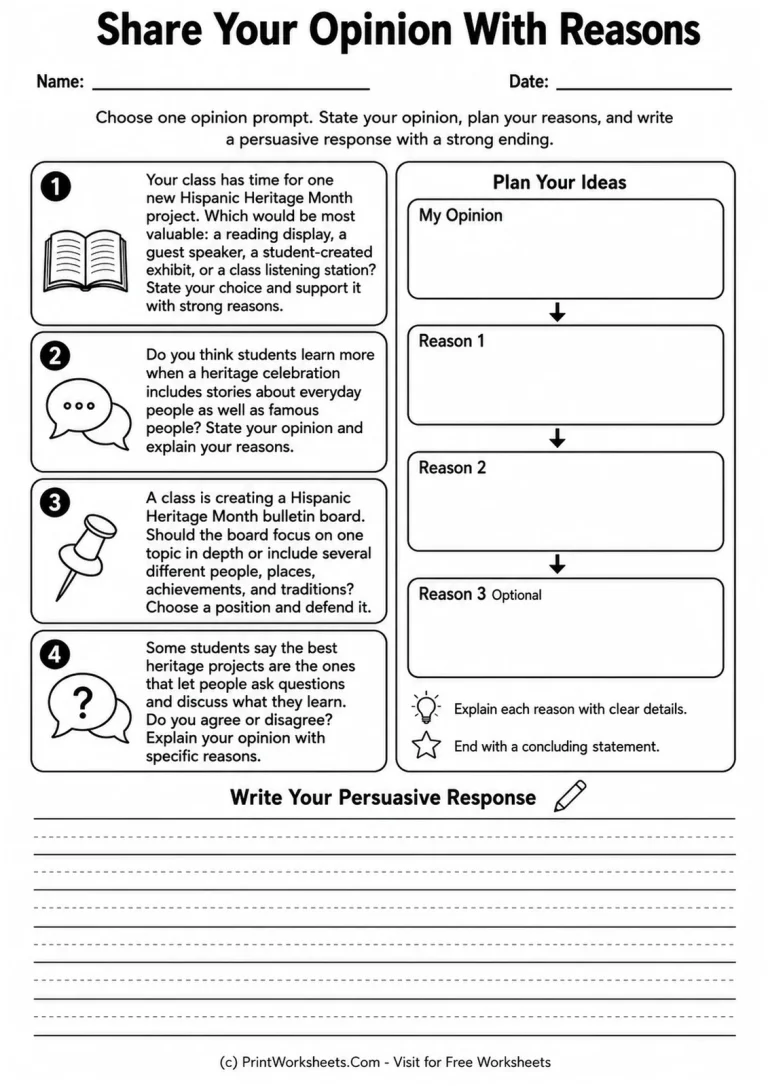
The third worksheet asks students to Share Your Opinion With Reasons. Choices include selecting the most valuable class project, deciding whether everyday stories should be included alongside famous people, choosing between a focused or broad bulletin board, and considering whether discussion-based projects are most effective. Students first state an opinion and then plan two required reasons plus an optional third reason before writing a persuasive response. This page is a practical bridge from simple preference writing to evidence-based opinion writing.
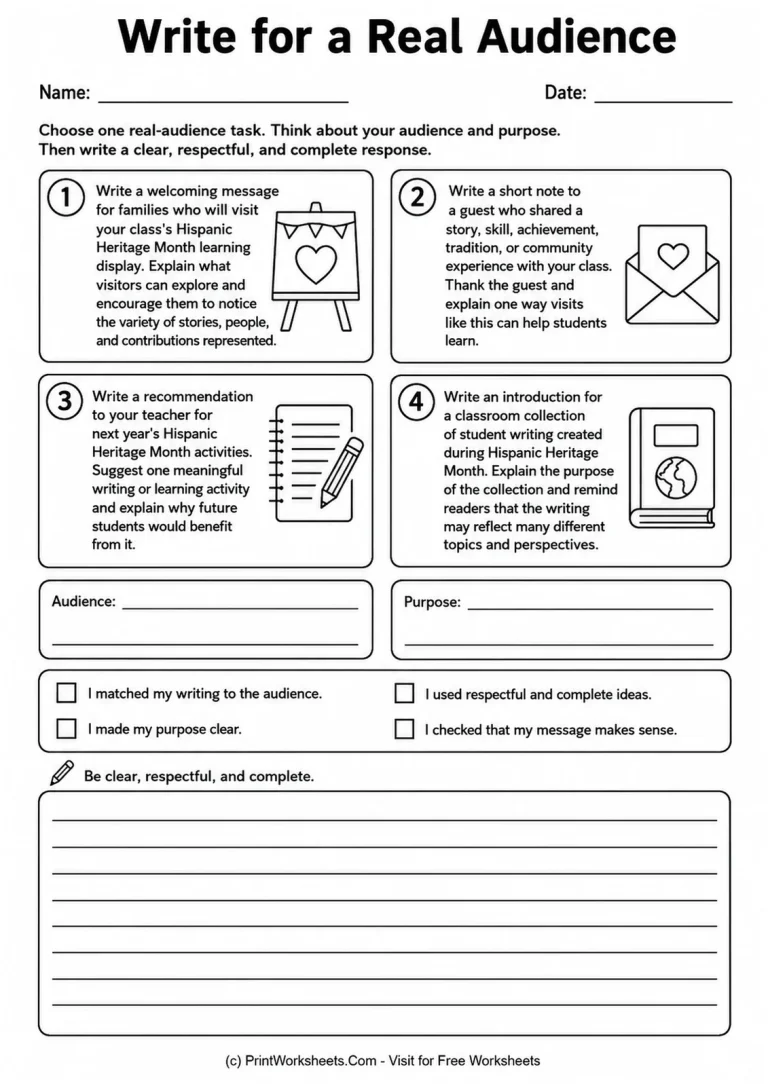
Write for a real audience
The fourth worksheet changes the purpose of the writing by giving students an actual audience to imagine. They can write a welcome message for families visiting a class display, a thank-you note to a guest speaker, a recommendation to the teacher for next year’s activities, or an introduction for a classroom collection of student writing. Separate Audience and Purpose lines make the communication goal explicit, while a four-part checklist asks students to check audience match, purpose, respectful completeness, and overall sense. This is useful practice for showing that writing changes depending on who will read it and why it is being written.
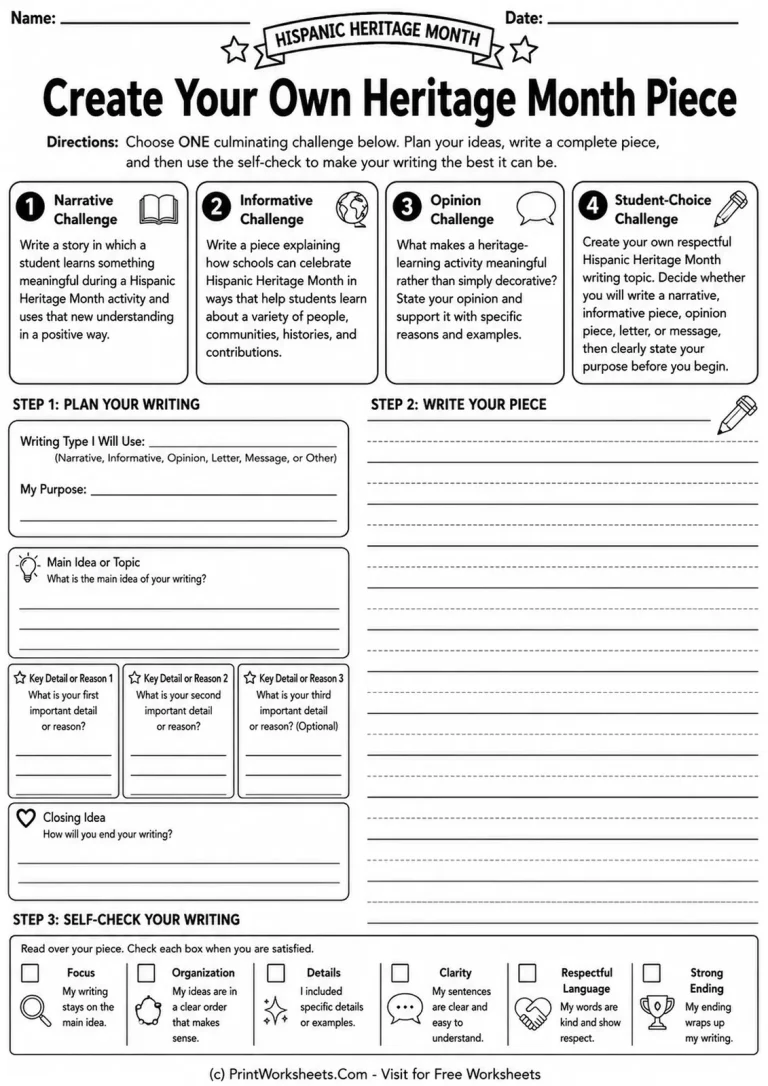
Finish with an independent writing challenge
The final page brings the earlier skills together in Create Your Own Heritage Month Piece. Students can choose a narrative, informative, opinion, or student-choice challenge. The planning section asks for writing type, purpose, main idea or topic, key details or reasons, and a closing idea. After drafting, students complete a self-check for focus, organization, details, clarity, respectful language, and a strong ending. Because this page requires students to select and apply a writing form with less step-by-step prompting, it works well as a culminating assignment, writing-center task, or portfolio piece.
Build background before students draft
Students who need more topic knowledge before writing can first work with the Hispanic Heritage Month reading comprehension passages. Those passages can supply examples and information students may later draw on when explaining ideas or forming questions. The Hispanic Heritage Month vocabulary worksheets can also help students become comfortable with relevant academic and heritage-related words before they draft.
A flexible sequence for Grades 3-5
Teachers do not need to use the pages in order, but the set supports a natural progression. Start with the narrative page when students benefit from a clear Beginning-Middle-Ending structure. Use the informative and opinion pages to practice organizing ideas by purpose. Move to the real-audience page when the class is ready to think about tone and reader needs. End with the student-choice challenge to see whether students can independently transfer those skills to a new piece. For younger or less confident writers, the planning boxes can be completed orally with a partner before writing. More advanced writers can be asked to add examples, transitions, elaboration, or a stronger concluding paragraph while using the same printable page.