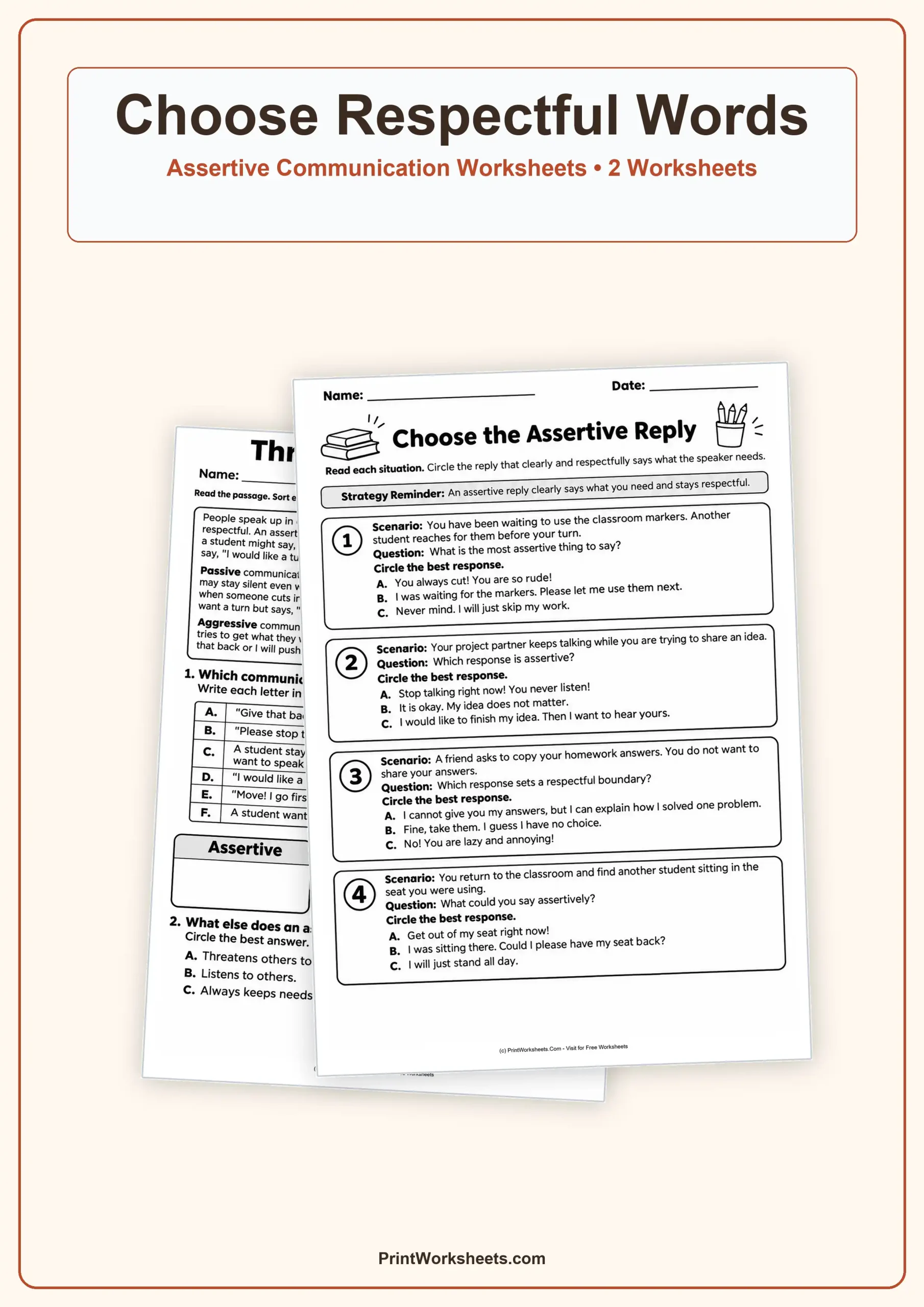
Knowing what to say when someone interrupts, takes a turn, or asks for something uncomfortable is an important classroom skill. These assertive communication worksheets help children recognize the difference between speaking respectfully, staying silent about their needs, and responding aggressively. Through a short reading passage, a communication-style sorting activity, and realistic classroom situations, students practice choosing words that are clear, calm, and considerate.
Assertive Communication Worksheets for Elementary Students
Assertive communication means expressing what you need, want, or feel without threatening or disrespecting someone else. It also involves listening to the other person’s perspective. This printable set introduces that concept by comparing three approaches children may encounter during everyday interactions.
The activities are designed around familiar school experiences rather than complicated definitions. Students first identify examples of different communication styles. They then consider how to respond when classmates interrupt, take materials, ask to copy homework, or use a seat someone else was occupying.
These situations allow children to connect the meaning of assertiveness to specific words they could use during a school day.
Learn the Difference Between Three Communication Styles
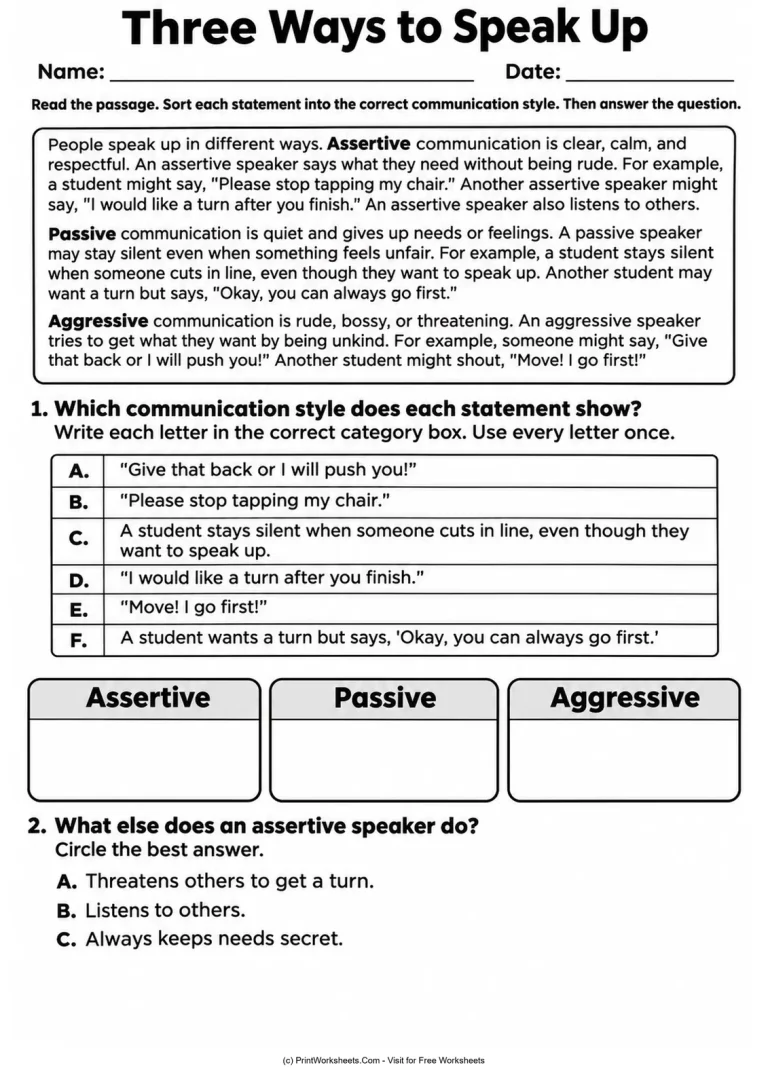
The activity titled Three Ways to Speak Up introduces three distinct communication styles through a reading passage and concrete examples.
Assertive Communication
An assertive speaker states a need clearly and respectfully. For example, a student might ask someone to stop tapping their chair or request a turn after another person finishes. These responses communicate a need without blaming, insulting, or intimidating anyone.
Passive Communication
A passive speaker may avoid expressing a need even when something feels unfair. The passage describes a student who remains silent after someone cuts in line and another who gives up a turn despite wanting to participate. Students learn that staying quiet is not always the same as solving a problem respectfully.
Aggressive Communication
Aggressive communication involves rude, bossy, or threatening behavior. The passage includes demands and threats that help students recognize how an aggressive response differs from a calm, respectful request. Children are encouraged to identify the communication style rather than imitate the hurtful language.
Sort Communication Examples and Check Understanding
After reading, students sort six lettered statements into Assertive, Passive, and Aggressive categories. The statements include polite requests, giving up a turn, staying silent about unfair treatment, and demanding something through intimidation.
Students write each letter in the appropriate category box, using every letter once. This task requires them to apply the definitions from the passage instead of simply repeating them.
A follow-up multiple-choice question asks what else an assertive speaker does. It reinforces a central lesson: speaking up respectfully also includes listening to others. Teachers can use this question to discuss why assertiveness is different from always getting one’s own way.
Choose the Assertive Reply in Classroom Situations
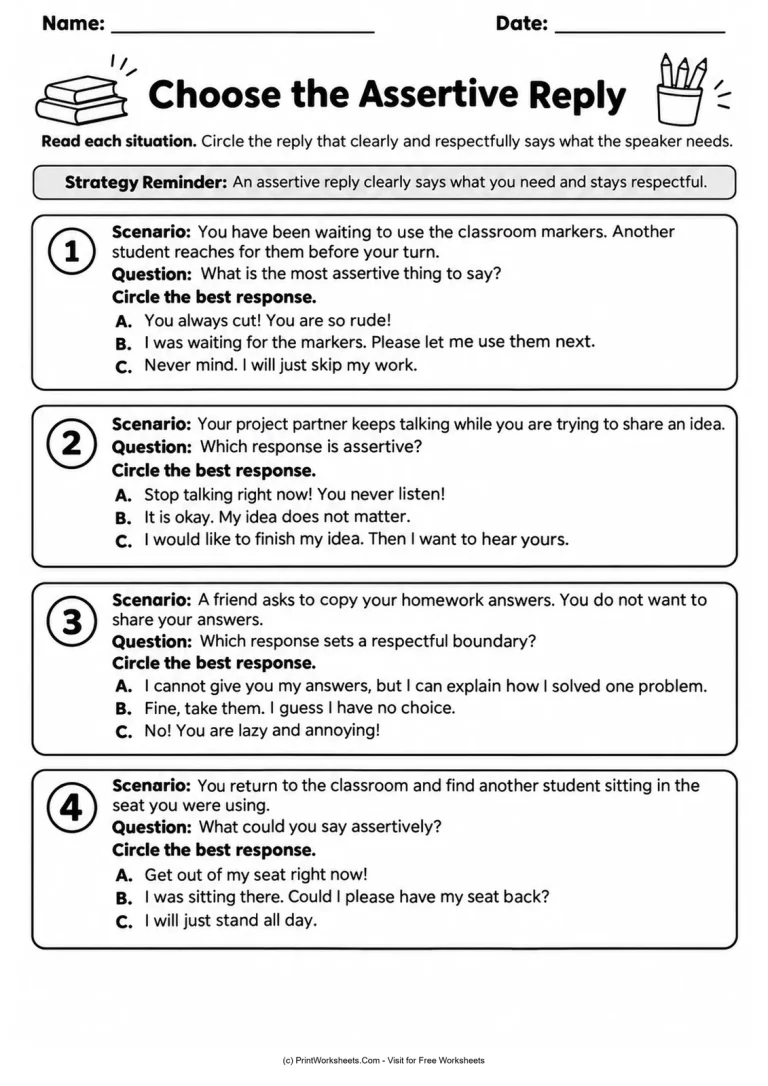
The next activity, Choose the Assertive Reply, moves from identifying communication styles to making practical decisions. Students read four classroom situations and select the response that expresses a need or boundary respectfully.
Waiting for Shared Classroom Materials
A student has been waiting to use the classroom markers when another student reaches for them. The choices contrast an angry accusation, a polite request for the next turn, and giving up the task. Children identify the reply that communicates the student’s position clearly.
Sharing Ideas During Group Work
A project partner keeps talking while another student tries to contribute. Students choose between demanding silence, dismissing their own ideas, and respectfully asking to finish speaking before listening to the partner. This situation highlights the balance between self-expression and listening.
Setting a Boundary About Homework
A friend asks to copy homework answers. The student does not want to share them. The options show how to refuse without insulting the friend, including an alternative offer to explain how a problem was solved. This scenario demonstrates that an assertive response can be both firm and helpful.
Asking for a Classroom Seat Back
A student returns to find someone else in the seat they were using. Children compare an angry demand, a polite request, and a response that avoids speaking up entirely. They select the reply that makes the request without escalating the disagreement.
How to Use These Activities in a SEL Lesson
Begin with the reading passage and ask students to describe what makes a request respectful. Have them complete the sorting task independently or with a partner. Discuss how the meaning of each statement changes depending on whether the speaker expresses a need, avoids speaking up, or attempts to control someone else.
Next, introduce the classroom scenarios. Students can read the choices silently, circle their preferred answers, and explain which words make each response assertive. For extra speaking practice, invite pairs to say the respectful responses aloud using calm voices.
The activities also work well for classroom guidance lessons, small-group social-emotional learning, and conversations at home about friendship challenges. Students who need reading support can listen as an adult reads the passage and response options aloud.
Helping Children Speak Up With Respect
The goal is not to teach children that every disagreement has one perfect sentence. It is to help them notice useful patterns: describe what you need, choose respectful words, avoid threats, and allow others to be heard. Those habits can make classroom conversations more constructive.
Use the printable PDF from PrintWorksheets.com to introduce communication styles, practice real-life response choices, and encourage students to speak up with both confidence and kindness.